
You eat a good breakfast, a reasonable lunch, and by 3pm you’re standing at the pantry again, telling yourself this is the last time. Then it happens again around 8pm. You’re not overeating at meals. You’re not skipping workouts. So why does “eating enough” keep leaving you hungry an hour and a half later? The honest answer usually isn’t willpower, it’s that your meals and snacks are low on the two things that actually shut hunger off: protein and fiber. This is where high protein snacks stop being a diet trend and start being the fix.
Most “healthy” snacking advice focuses on calories: pick the 100-calorie pack, choose the baked chips over the fried ones, skip the candy. None of that addresses why you’re hungry again 90 minutes later. A rice cake at 35 calories and a boiled egg at 70 calories aren’t close to equal once you factor in what actually keeps your blood sugar and appetite hormones steady. The angle here isn’t “eat less.” It’s “eat food that turns hunger off,” which for most people means more protein and more fiber, not fewer calories.
This isn’t a niche complaint, either. People are actively searching for a fix, not just wondering about it in passing, which tells you the standard advice (just eat clean, watch your portions) has left a lot of people still hungry and still confused about why.
Key Takeaways
- “High protein snacks” was searched an estimated 19,480 times a month in our own July 2026 keyword research, more than double the volume for “low calorie snacks” at roughly 9,734 a month, a sign people have already figured out that cutting calories alone isn’t the fix.
- Protein is widely considered the most satiating macronutrient because amino acids trigger gut hormones like GLP-1, PYY, and CCK, the same signals your brain uses to register fullness.
- In peer-reviewed trials, an extra 14 grams of fiber a day was linked to a 10 percent drop in daily energy intake and close to 1.9kg of weight loss over roughly 3.8 months.
- “Healthy snacks” gets searched around 44,753 times a month and “high protein meal prep” around 72,070, which means people are searching for this fix at every stage, from grabbing something now to planning a whole week ahead.
- Constant hunger despite “eating enough” is far more often a low-protein, low-fiber pattern than a willpower problem.
- Pairing a protein source with a fiber source, not eating protein alone, is what actually slows digestion and keeps you full between meals.
Why “Eating Enough” Doesn’t Mean You’re Actually Full
Eating “enough” calories doesn’t guarantee you feel full, because fullness is driven by hormones triggered by specific nutrients, mainly protein and fiber, not by total calorie count. A 400-calorie bagel and a 400-calorie serving of eggs and vegetables send very different signals to your brain, which is why one leaves you hungry in an hour and the other doesn’t.
Protein triggers the release of gut hormones like GLP-1, PYY, and CCK, the same signals your body uses to tell your brain to stop eating, which is part of why a peer-reviewed review of protein’s role in satiety describes it as the most satiating macronutrient of the three. Fiber works differently: it slows digestion, adds bulk, and stretches out the window before you feel hungry again. A systematic review and meta-analysis on fiber and appetite regulation found that adding just 14 grams of fiber a day was linked to a 10 percent drop in daily energy intake, and close to 1.9kg of weight loss over roughly 3.8 months across the trials it reviewed. Neither number has anything to do with cutting calories. It has to do with what you’re eating them with.
Calorie counting isn’t wrong, exactly. It’s just incomplete. If you’re hitting your calorie target and still raiding the pantry at 3pm, the problem probably isn’t quantity. It’s composition.
How to Pick High Protein Snacks That Actually Hold You Over
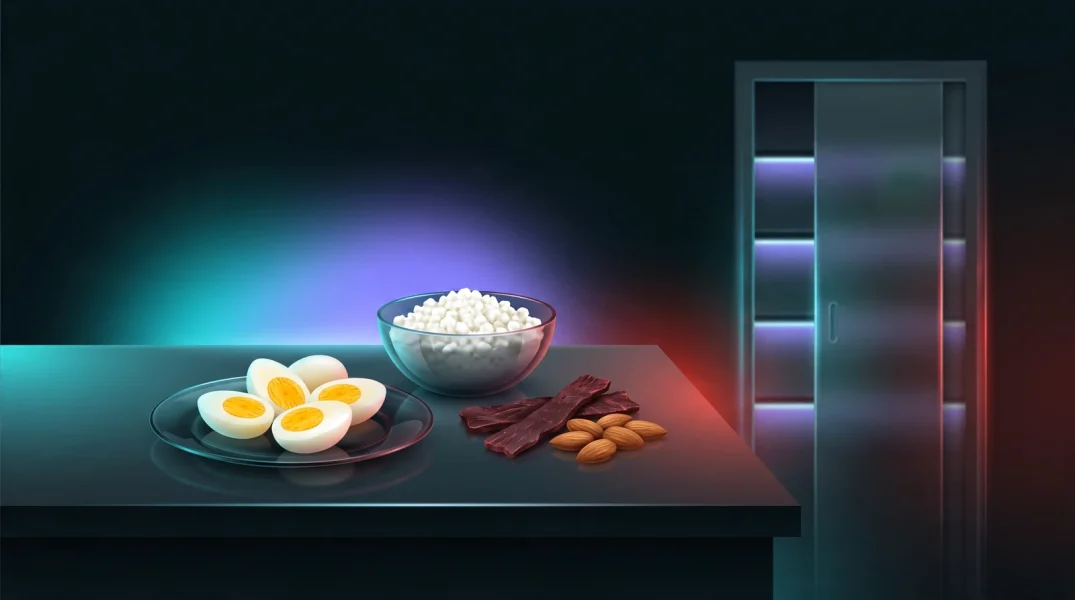
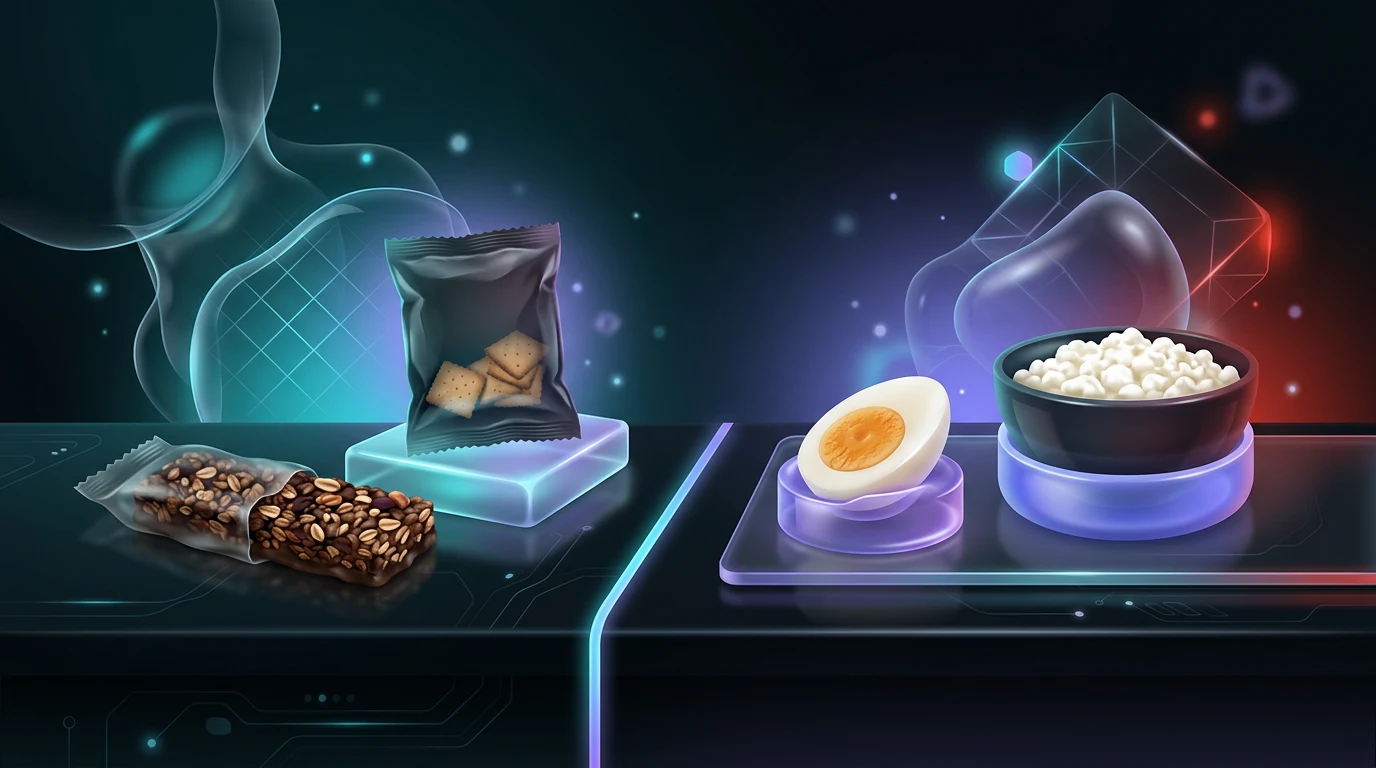
A snack worth eating between meals should combine a real protein source with some fiber, not just carbs dressed up as “healthy.” Think Greek yogurt with berries, hard-boiled eggs, jerky with an apple, or cottage cheese, rather than granola bars, crackers, or fruit snacks that spike blood sugar and leave you hungry again within the hour.
Protein bars are the worst offender here. Read the label on most of them and you’ll find close to a candy bar’s worth of sugar dressed up in a wrapper that says “protein.” A handful of almonds and a piece of string cheese does more for your appetite than most bars on a gas station shelf, and costs less too.
If planning this from scratch every day feels like one more job on top of everything else, that’s the gap the ThriveXDNA recipe packs are built for. The Snacks pack has 35 animal-based recipes, no seed oil, no wheat, no corn syrup, built around the same protein-plus-fiber logic instead of relying on packaged bars and rice cakes. It’s $5.99, and it sits alongside matching Breakfast, Lunch, and Dinner packs if you’d rather have the whole day covered the same way.
The Real Numbers Behind Why Everyone’s Searching for This
You’re not the only one looking for an answer here. In our own July 2026 keyword research, “high protein snacks” pulled an estimated 19,480 searches a month, more than double the volume for “low calorie snacks” at roughly 9,734, a sign people have already figured out that cutting calories isn’t the fix they need.
Zoom out and the pattern gets bigger. “Healthy snacks” pulls roughly 44,753 searches a month, a much broader, less specific version of the same problem. “High protein meal prep” pulls an estimated 72,070, which tells you the frustration doesn’t stop at snack time. People are trying to fix the whole day, not just the 3pm slump, and a lot of them are planning ahead instead of improvising in the moment.
That gap between “low calorie snacks” and “high protein snacks” search volume tells you something on its own: a lot of people already tried cutting calories, it didn’t fix the hunger, and now they’re looking for what actually does.
Timing Snacks So You’re Not Rescuing a Bad Meal
A snack that shows up because your last meal didn’t have enough protein is doing damage control, not adding value. The better move is fixing the meal, and using snacks to bridge a genuinely long gap, like a 5 to 6 hour stretch between lunch and dinner, not to patch a lunch that was mostly bread.
If you’re hungry constantly, even on days your meals looked fine on paper, it’s worth asking whether your body is sending a bigger signal than “you didn’t eat enough protein at noon.” The same logic behind a readiness-based approach to training applies to appetite: poor sleep, high stress, and under-recovery all push hunger hormones around, independent of what you actually ate for lunch. Treating every hunger pang as a food problem misses the ones that aren’t.
Playing the Long Game Instead of Chasing a Quick Fix
Snacking well isn’t a two-week fix, it’s a habit you’re building for years, not just for a summer. The same reasoning that makes chasing a personal record at the expense of your joints a bad long-term bet applies to chasing rapid weight loss at the expense of actually feeling satisfied: it works for a while, then it stops.
That’s a similar case to the one laid out in why chasing PRs over the long game can sabotage your future self: the version of “eating healthy” that only works if you’re white-knuckling hunger all day isn’t actually working. It’s just deferred failure.
If you’d rather not guess your way through protein targets and snack timing on your own, the ThriveX App can build a personalized plan around your actual numbers instead of a generic template, the same shift covered in our look at the AI workout plan generators worth using in 2026, where static PDFs got replaced by something that actually adjusts to you.
Related guides
- more on High Protein Breakfast: The Real Fix for Your 2 PM Crash
- How Much Protein Do You Actually Need?
- more on High Protein Meal Prep for Muscle Gain: The Under-Eating
- a closer look at High-Protein Meal Prep for Weight Loss That Keeps
- a closer look at Post Workout Meal Guide: What to Eat After Training
Sources
- additional detail from eating and diet guidance for gas
- clinical research on higher-protein weight-loss diets
- USDA MyPlate guidance on protein food sources
Summary
Constant hunger on a diet that looks “healthy” on paper is almost always a protein and fiber problem, not a willpower problem, and not a sign you need to eat less. High protein snacks that pair a real protein source with fiber, think eggs, yogurt, cottage cheese, or jerky with fruit, do more to shut hunger off than any 100-calorie pack ever will. Fix the composition of your meals and snacks before you touch the total. If you’d rather have that built out for you instead of pieced together from nutrition labels, that’s what the Snacks recipe pack and the ThriveX App are there for.
Frequently Asked Questions
How much protein does a snack need to actually keep me full?
There’s no single number backed by research specific to snacks, but the pattern across studies is consistent: snacks built mostly around refined carbs (crackers, chips, most granola bars) satisfy for a much shorter window than snacks that include a real protein source. Pair protein with fiber, a piece of fruit, vegetables, or a whole grain, rather than eating protein alone, and you’ll typically go longer between hunger signals.
Are protein bars a good high protein snack?
Some are, most aren’t. Check the sugar line before the protein line. A lot of bars marketed around protein carry 15 to 20 grams of added sugar, which spikes blood sugar and can leave you hungrier an hour later, working against the exact thing you bought the bar to fix. Whole-food options like a hard-boiled egg, plain Greek yogurt, or jerky are usually the safer default.
Why am I hungrier now than I was before I started “eating healthy”?
This usually means the swap wasn’t actually a swap, it just looked healthier. Trading white bread for whole wheat, or chips for pretzels, still leaves you in the same low-protein, low-fiber pattern you started with. The fix isn’t eating less of what you’re already eating, it’s changing what the meals and snacks are built from.
Can high protein snacks actually help with weight loss?
Indirectly, yes, mostly by keeping you from white-knuckling through the day. Snacks that keep you satisfied lower the odds you overeat at the next meal or give in to something worse later on. That said, a snack alone won’t offset a diet that’s still low on protein and fiber everywhere else. It works best as one piece of a bigger pattern, not a standalone fix.
What are simple high protein snacks I can make without buying special products?
Hard-boiled eggs, plain Greek yogurt with berries, cottage cheese, beef or turkey jerky, canned tuna or salmon with crackers, and a handful of nuts with a piece of fruit all fit the same protein-plus-fiber pattern without needing a recipe. If you want more variety without reinventing this every week, that’s exactly what a dedicated snacks recipe pack is for.