


You’ve logged every meal for six weeks straight. You haven’t missed a workout. The app says you’re in a deficit. And the scale has shown the same number for three weeks now, maybe longer. If that’s you, you already know how demoralizing a weight loss plateau feels, especially when you’re doing everything the guides told you to do.
Here’s what most calorie-counting apps won’t tell you: two meals with an identical calorie count on paper don’t always behave the same way in your body, and they definitely aren’t always logged the same way in your app. A chicken breast pan-seared in butter and a chicken breast fried in soybean oil can log as “the same” if you’re eyeballing portions. The seed oils restaurants cook in, the wheat-based fillers hiding in sauces and “crispy” coatings, and the corn syrup tucked into dressings and protein bars add up in ways a quick barcode scan doesn’t catch. If your tracking looks right on paper and the scale still won’t move, the ingredient list is worth a second look before the calorie count is.
This isn’t another “eat less, move more” post. It’s a look at the specific, checkable calorie sources that slip past most tracking apps, plus the other real (non-food) reasons a plateau happens, so you know which problem you’re actually solving.
Key Takeaways
- A weight loss plateau commonly shows up around six to eight months into sustained weight loss, driven partly by metabolic adaptation, where the body’s resting energy expenditure drops to match its new, lower weight.
- Seed oils, wheat-based fillers, and corn syrup are dense, easy-to-miss calorie sources because they’re baked into sauces, breading, dressings, and “protein” snacks rather than eaten on their own.
- In a National Institutes of Health inpatient trial, adults eating an ultra-processed diet consumed about 508 more calories per day than on a minimally processed diet matched for presented calories and macros, and gained roughly 0.9 kg over two weeks (they lost about the same amount on the unprocessed diet).
- Our own keyword research from July 2026 found “weight loss plateau” pulls an estimated 29,669 monthly searches, a fraction of broader terms like “fat loss” (about 183,312/mo) and “how to lose belly fat” (about 133,004/mo), suggesting most people default to generic calorie-cutting fixes instead of troubleshooting the plateau itself.
- Research modeling weight-loss behavior points to a slow, often unconscious loosening of portion sizes and food choices as the biggest driver of most early plateaus, more so than a “broken” metabolism.
- Swapping seed-oil-cooked, wheat-heavy meals for animal-based, whole-food meals across a full day (breakfast through snacks) removes several of the most common hidden-calorie sources at once, rather than fixing them one meal at a time.
What Actually Causes a Weight Loss Plateau
A weight loss plateau happens when your body’s energy expenditure drops to match your new, lower body weight, a process researchers call metabolic adaptation, combined with hormonal shifts that quietly push your appetite up. It tends to show up around six to eight months into sustained weight loss, not because you did something wrong, but because your body adjusted to what you’re already doing.
Metabolic adaptation is real and it lasts. Researchers studying it have found the drop in resting energy expenditure can persist for years after weight loss, not just during the diet itself. But there’s a second, less talked-about factor that tends to matter more day to day: a slow, often unconscious loosening of adherence. Portions creep up a little. A “just this once” snack becomes a nightly habit. Nobody’s lying on their food log, they’re just drifting, and the drift is easy to miss because the app still says the numbers add up. A useful primer on the mechanism itself is NIDDK researcher Kevin Hall’s modeling work on metabolic adaptation, which covers why resting energy expenditure drops during and after weight loss.
If your training is part of the picture too, it’s worth checking whether you’re actually recovering between sessions or just grinding through fatigue, since chronic under-recovery can mess with appetite and adherence just as much as the food itself. Our piece on recovery-first fitness and the readiness metric covers how to tell the difference between pushing hard and pushing blind.

The Hidden Calorie Sources Nobody’s Counting
Seed oils, wheat-based fillers, and corn syrup (or corn syrup solids) are the three most common hidden calorie sources in a diet that looks clean on a tracking app. They show up in sauces, dressings, deli meat, “protein” bars, and breading rather than as their own line item, so they get under-logged even by people who track carefully.
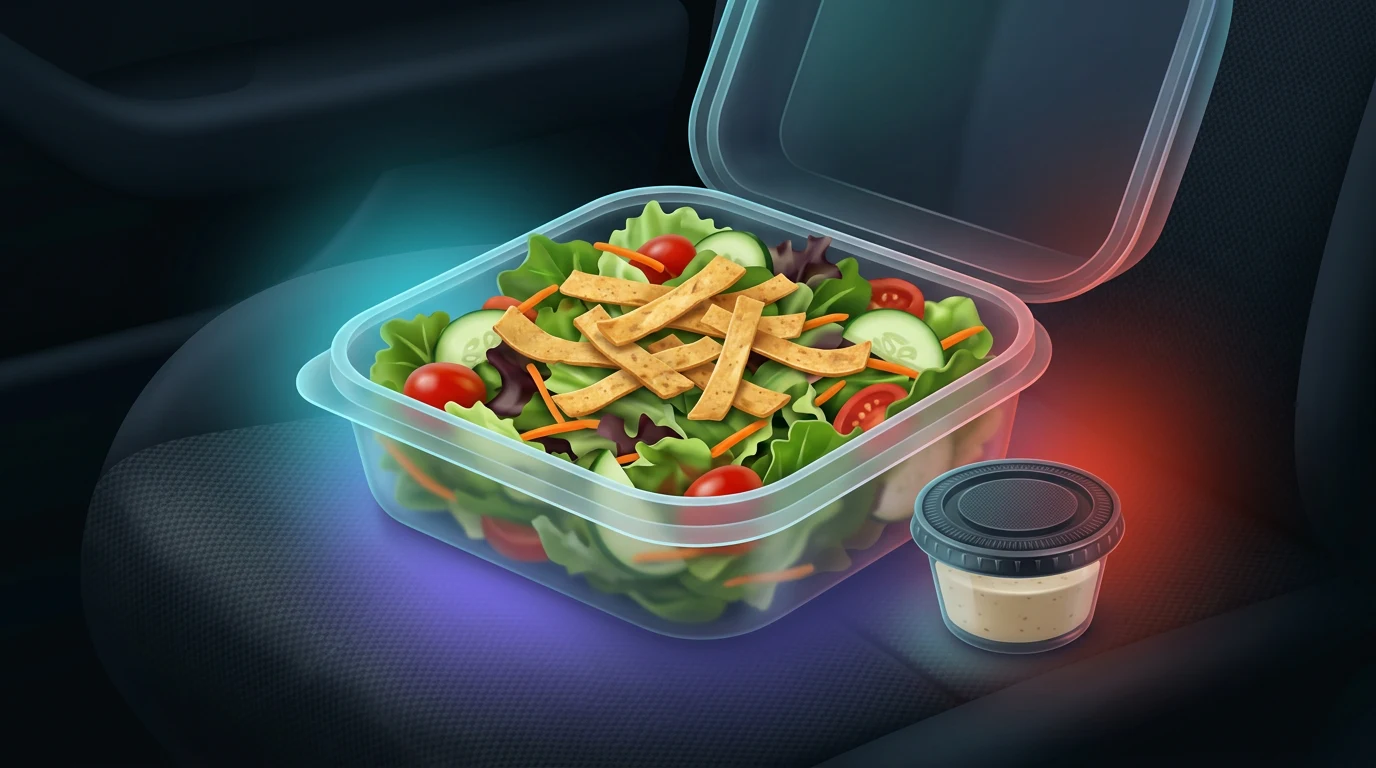
Think about what actually happens at a restaurant “grilled” chicken salad: the chicken is often marinated in a soybean or canola oil blend, the “light” dressing has corn syrup or corn syrup solids as its third or fourth ingredient, and the crispy wonton strips or croutons on top are wheat flour fried in the same seed oil. None of that shows up if you log “grilled chicken salad, medium” from a generic database entry. Multiply that gap across three meals a day and it stops being a rounding error.
This isn’t a fringe theory. In a randomized, controlled inpatient trial run at the NIH Clinical Center, adults were fed either an ultra-processed diet or a minimally processed diet, with both diets matched for presented calories, energy density, macronutrients, sugar, sodium, and fiber. Left free to eat as much or as little as they wanted, people on the ultra-processed diet still ate about 508 more calories a day and gained roughly 0.9 kg over two weeks, while they lost about the same amount on the unprocessed diet. The food quality itself, not the macros on the label, changed how much people actually ate. That’s a strong argument for looking at ingredient lists, not just calorie totals, when a plateau won’t budge.
Why Calorie Counting Alone Keeps Missing the Answer
Most people troubleshoot a weight loss plateau by searching for more calorie-cutting or fat-loss tips, not by questioning the quality of what they’re already eating. Our own keyword research from July 2026 found “weight loss plateau” gets an estimated 29,669 monthly searches, dwarfed by broader terms like “fat loss” (about 183,312/mo) and “how to lose belly fat” (about 133,004/mo). That gap suggests most people default to generic, broader fixes instead of digging into what’s specifically stalling their progress.
There’s a similar pattern with “weight loss journey,” which pulls about 142,756 searches a month, roughly five times the volume of “weight loss plateau” itself. People are searching for the overall story of losing weight far more than they’re searching for the specific mechanics of getting unstuck. That’s not a criticism, it just means the internet is heavy on motivation content and thin on troubleshooting content, which is exactly where a lot of people get stuck cutting calories further instead of checking what those calories are actually made of.
A calorie-tracking app can only work with what you enter, and generic database entries almost never account for the oil a restaurant cooked in or the syrup in a bottled sauce. That’s a data problem, not a willpower problem. Zooming out on your approach, rather than chasing another short-term number, is the same shift covered in Longevity Training vs Peak Performance, which is about training but applies just as directly to how people chase the scale.
Swap the Inputs Before You Cut Calories Again
Before cutting calories further or adding another cardio session, changing what a day of eating is actually built from (the cooking fat, the flour, the sweetener) tends to close more of a weight loss plateau’s gap than another round of restriction. Removing seed oils, wheat-based fillers, and corn syrup from a full day of meals is a concrete, checkable change, not a vague “eat cleaner” suggestion you can’t actually measure.
That’s the exact framework behind the ThriveXDNA recipe packs on the ThriveXDNA store: four digital packs (Breakfast, Lunch, Dinner, and Snacks), 35 recipes each, at $5.99 a pack, or all four together (bundle pricing shown on the store page). Every recipe across all four packs is animal-based, with no seed oil, no wheat, and no corn syrup, so buying all four covers a full day of eating built around removing the exact hidden-calorie sources this article is about. If you’d rather have a plan built around your own numbers instead of a general framework, the ThriveX App can put together a personalized eating and training plan from there.
If you’ve been meaning to work with a coach instead of doing this alone, it’s worth reading Is Your Personal Trainer Worth the Cost? before you commit to a monthly rate, since the right structure matters more than the price tag.
When It’s Not Food Quality: Other Real Reasons the Scale Won’t Move
Not every stall is a hidden-calorie problem. Sleep debt, high stress, water retention from a new training block, added muscle from strength work, certain medications, and the normal swing of a menstrual cycle can all hold the scale flat for a couple of weeks without anything being wrong with your diet at all. The trick is telling a real plateau apart from a normal, temporary stall before you change anything.
A useful gut check: has your weight genuinely not moved for four or more weeks, with your sleep, stress, and training load roughly steady? If yes, food quality and portion drift are worth a hard look. If your training just got harder, you started a new lift program, or you’re a few days out from your period, give it two more weeks before you touch anything. If you’re not sure whether you’re actually recovering enough to see progress in the first place, the readiness-metric approach in Recovery-First Fitness is a good place to check, and if your training plan itself feels random or inconsistent, our roundup of the best AI workout plan generators covers tools built to keep that piece steady.
Related guides
- more on How to Track Macros for Weight Loss: A Practical Guide
- more on Best AI Nutrition Apps for Weight Loss in
- more on High-Protein Meal Prep for Weight Loss That Keeps You Full
- How to Increase Testosterone Naturally With Food (Before You Consider
- Best MacroFactor Alternatives 2026 (Free and Adaptive)
Sources
- study on dietary fat quality and serum androgens in middle aged men
- research on diet’s role in chronic low-grade inflammation
- 1 to 2 pounds per week
Summary
A weight loss plateau usually isn’t a sign that your metabolism broke or that you need to eat even less. It’s more often a combination of normal metabolic adaptation and calories you’re not actually seeing: seed oils in the cooking, wheat-based fillers in the coating and sauces, corn syrup in the dressing and the “healthy” bar. Before you cut your calorie target again, look hard at what’s actually in the food you’re already eating, rule out the non-food causes (sleep, stress, water, training load), and give any real change at least a few weeks before judging it. If you want that food-quality change handled for you, the ThriveXDNA recipe packs remove seed oil, wheat, and corn syrup from a full day of meals by design, and the ThriveX App can build the rest of the plan around your specific numbers.
Frequently Asked Questions
How long does a normal weight loss plateau last?
Most true plateaus that are driven by metabolic adaptation settle in gradually and can last for weeks to months if nothing about the diet or training changes. A short two-to-three-week stall is usually just water retention, a training adaptation, or normal day-to-day fluctuation, not a real plateau yet.
Should I cut calories even further if I hit a weight loss plateau?
Not as a first move. Cutting calories further without checking food quality or adherence drift tends to make a diet harder to sustain without fixing the actual problem. Check what’s hiding in your sauces, dressings, and “healthy” packaged snacks first, since that’s often where the real gap is.
What foods most commonly hide extra calories?
Bottled salad dressings, marinades, deli meat, restaurant “grilled” proteins cooked in seed oil, breaded or “crispy” items, flavored yogurts, and protein bars are the usual suspects. Seed oils and corn syrup rarely appear as the star ingredient, so they get skipped when people estimate portions instead of reading the label.
How can I tell if it’s a real plateau or just water retention?
Water retention usually resolves within one to two weeks and tends to follow a specific trigger: a new training block, extra sodium, poor sleep, or hormonal timing. A real plateau holds steady for four or more weeks with no obvious trigger and no change once the usual culprits are ruled out.
Do I need to give up seed oils and wheat completely to break a plateau?
Not necessarily forever, but removing them for a defined stretch, say a few weeks of eating built entirely around animal-based, whole-food meals, gives you a clean read on whether they were the issue. If the scale moves again, you have your answer and can decide how strict to stay long term.