

Last reviewed: June 2026
389 PGA Tour athletes generated over 35,000 nights of sleep and recovery data, and every 10-point increase in their recovery score was linked to about half a stroke fewer per round. That’s the difference between making the cut and going home. If you’re still planning workouts without a readiness metric, you’re essentially guessing with your body and your long-term health.
Key Takeaways
| Question | Answer |
|---|---|
| What is a readiness metric in recovery-first fitness? | It is a daily score that combines sleep, heart-rate data, recovery trends, and stress to tell you how hard you should train today, not how hard you wish you could train. |
| Why does readiness matter in 2026? | Because data from elite athletes now shows clear links between recovery metrics and performance, and consumer tools like the Thrive X Fitness App make that level of insight accessible to everyday people. |
| How does readiness protect long-term health and finances? | By reducing injury risk, burnout, and medical surprises that can derail income, savings, and carefully built financial plans, which is why we connect training with resources like our personal finance guides. |
| Can AI actually adjust workouts based on readiness? | Yes, AI engines like Thrive X Fitness can adapt your workout volume, intensity, and exercise selection based on your day-to-day recovery scores. |
| Is recovery-first fitness only for athletes? | No, it is a framework for anyone who wants sustainable energy for work, family, and wealth-building, supported by integrated resources like our education hub. |
| What safeguards should I consider before using readiness data? | Always balance wearable and AI insights with professional medical guidance and understand the limitations outlined in our health disclaimer. |
1. Why Recovery-First Fitness Is Non-Negotiable
For a vetted, regularly updated list of tools that can help, explore our AI health and wellness tools directory.
Recovery-first fitness starts with a blunt truth: progress happens when your body has capacity, not just when you have motivation. The readiness metric is our way of turning that capacity into a daily, understandable number you can actually act on.
Constant stress, long workdays, and financial pressure collide with ambitious training plans. When you ignore recovery, you’re not just risking sore muscles, you’re risking time off work, medical bills, and the retirement contributions you could have made instead.
We built our approach at ThriveX DNA on one question: how do you train in a way that makes your future self wealthier, healthier, and still able to enjoy what you’re building? The answer is to stop guessing and start using readiness as a daily decision filter.

2. What the “Readiness” Metric Actually Measures
Readiness isn’t a vibe, it’s a composite of measurable signals that reflect how prepared your body and nervous system are for stress today. A readiness score typically combines sleep duration, sleep quality, heart rate variability, resting heart rate, prior training load, and sometimes subjective metrics like soreness or mood.
In practical terms, a high readiness score means your system has recovered and you can push harder. A low score tells you to scale back, prioritize active recovery, or rest. This turns training into a responsive system instead of a rigid calendar that ignores your reality.
Our Recovery & Thrive philosophy in tools like the Thrive X Fitness experience uses this type of metric to adjust how many sets you do, how intense your intervals are, and whether today is a good day for heavy lifting or technique work. The goal is simple: hit the gas when your tank is full, and protect the engine when it’s not.

3. The Science Linking Recovery Scores to Performance
We’re no longer guessing about whether recovery scores matter. In the PGA Tour data that opened this article, every 10-point bump in a WHOOP Recovery score was tied to roughly 0.5 fewer strokes per round, a concrete, measurable performance gain that shows up in the final numbers.
Other research on elite golfers shows their average sleep ran about 7.2 hours with a mean recovery score near 59 percent, and both sleep and recovery trends correlated with better scores. Similar studies in baseball athletes found that better sleep duration and efficiency tracked with greater gains in power output across a training block.
Here’s what that means for you: the same biology that makes recovery scores predictive for pros is working in your body too. Ignoring it wastes your training effort and your time, two of your most limited assets right now.
Did You Know?
Within-athlete season-to-season changes show that improvements in sleep consistency, heart-rate variability, and Recovery are each associated with lower golf scores, meaning ongoing gains in core recovery metrics track directly with better performance over time.
Source: Grosicki et al., WHOOP preprint
4. Inside a Recovery-First Training Day: How Readiness Guides Choices
Recovery-first fitness doesn’t mean you train less, it means you train appropriately for today. We use readiness as a traffic light that guides three core decisions: how hard, how long, and what type of stress to apply.
Here’s a simple framework you can use with any readiness score system.
- High readiness: prioritize heavy lifts, interval work, complex skills, and progress tracking.
- Moderate readiness: use tempo work, moderate volume strength, technical practice, and aerobic conditioning.
- Low readiness: focus on walking, mobility, light cycling, easy swims, and sleep-focused habits.
The smartest athletes and busy professionals build flexibility into their plans so they can pivot based on this traffic light. That pivot protects both your performance curve and your career, because you avoid the wipeout weeks that come with ignoring fatigue.
5. How Thrive X Fitness Uses AI to Interpret Readiness
AI Personalization That Respects Recovery
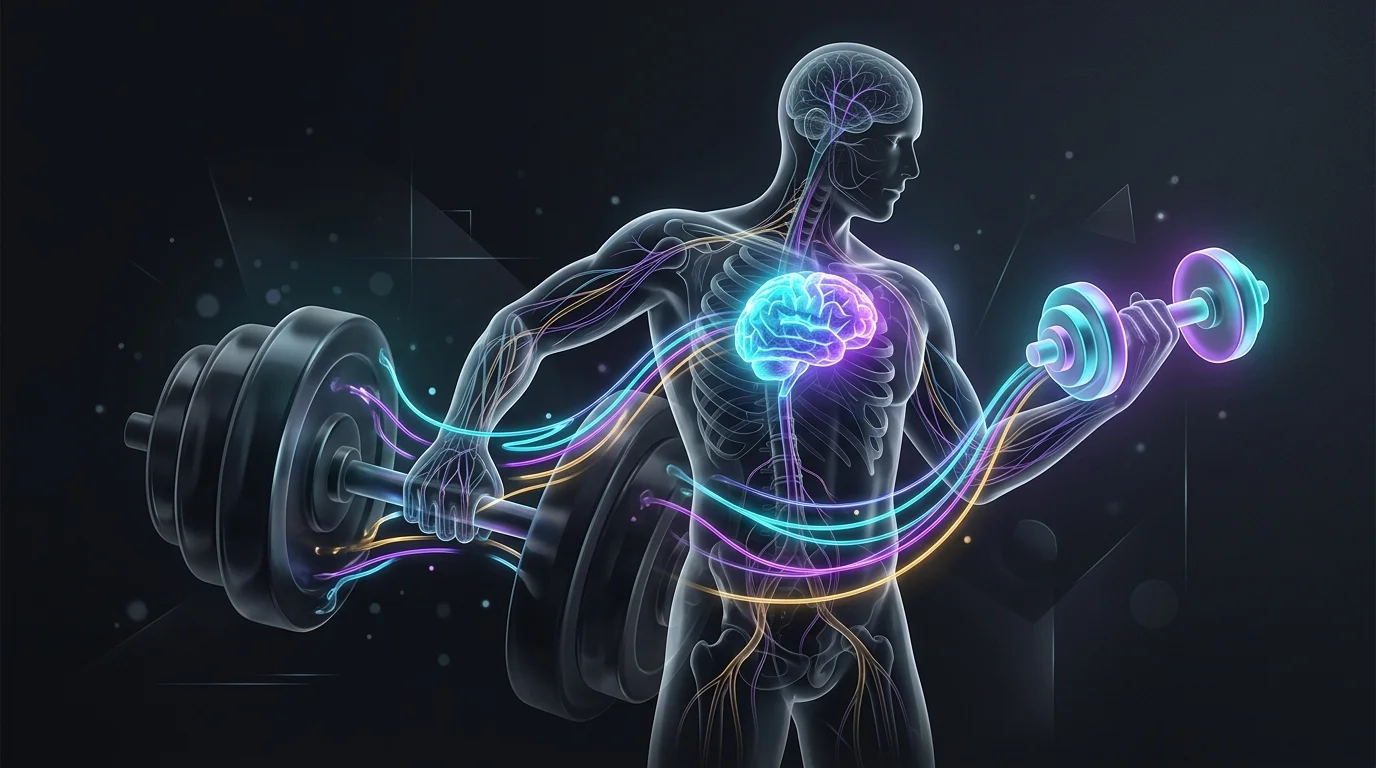
Most training plans were written for perfect weeks that you rarely have. With Thrive X Fitness style AI personalization, your plan can adjust automatically when your readiness is lower or higher than expected.
When your recent recovery trend is strong, AI can safely progress your volume and intensity. A dip in readiness triggers a shift toward technique work, shorter sessions, or active recovery. You’re no longer forcing Monday’s workout onto a Thursday body.
Daily Goal and Recovery & Thrive Logic
In experiences like the Thrive X Fitness App, the Daily Goal feature can use your readiness to set realistic targets so that you keep your streaks without overreaching. Recovery & Thrive logic then tracks how your muscles and nervous system respond over time.
That’s exactly why we see this as a bridge between ambition and sustainability. Your drive to get stronger or leaner is honored, but filtered through data that protects your long-term health and financial capacity.
6. Readiness, Sleep, and Your Nervous System
Most readiness systems lean heavily on sleep for a reason. In the golfer dataset, each additional hour of sleep was associated with a measurable improvement in competition scores, and higher sleep consistency tracked with better outcomes as well.
Your autonomic nervous system, especially metrics like heart-rate variability and resting heart rate, reflects how well you’re coping with total life stress. Poor sleep and chronic stress drive these markers in the wrong direction, and your readiness score follows.
From a holistic prosperity view, high-quality sleep isn’t a luxury. It’s a performance enhancer, mood stabilizer, and financial risk reducer, because better sleep is linked to fewer injuries, fewer sick days, and better decision-making at work and with money.

7. Readiness, Women’s Health, and Cycle-Aware Training
Readiness metrics are finally starting to respect the physiology of women in a more precise way. The ŌURA Readiness Score, for example, now includes cycle-related biometrics and has cut disproportionately low luteal-phase readiness days by about 81 percent for cycling members.
For roughly a third of users there’s no cycle-related readiness impact, but when it does matter, readiness can rise 4 to 5 points with cycle consideration. That accuracy matters when you’re planning heavy training, work deadlines, and recovery windows across the month.
We see cycle-aware readiness as a core piece of integrated prosperity for women. It supports smarter training, reduces overreaching risk, and gives better context for energy fluctuations that could otherwise be misread as laziness or lack of discipline.
Did You Know?
ŌURA’s cycle-aware Readiness Score update led to 81% fewer days with disproportionately low readiness in the luteal phase and, when there is an impact, a 4-5 point average rise in readiness, making training decisions more accurate for many women.
Source: ŌURA, Readiness Score Cycle Consideration
8. Financial Security, Injury Risk, and Why Readiness Protects Your Wallet
We talk a lot about muscles and metrics, but readiness is also about money. Injury, chronic fatigue, and burnout are expensive, and they hit hardest when there’s no emergency fund or income buffer to absorb the hit.
When you train in line with your readiness, you reduce the odds of the overuse injuries that lead to missed work and unexpected medical bills. That helps preserve your cash flow for things that actually build your future, investing and paying down debt.
Our integrated approach at ThriveX DNA links the way you move with the way you manage money. That’s exactly why our fitness philosophy lives alongside tools such as the net worth calculator and other planners, so that your body and balance sheet can both stay strong.
9. Practical Steps to Start Using Readiness in Your Training
You don’t need a full lab to start using readiness intelligently. If you already wear a device that tracks sleep, resting heart rate, and HRV, you probably have a readiness or recovery score available today.
Here’s how we suggest you begin.
- Track your readiness and basic training log for at least 21 days without making big changes.
- Look for patterns between low readiness days and poor sessions, mood dips, or higher soreness.
- Create three versions of your workout plan, aggressive, moderate, and recovery, that you can rotate based on your score ranges.
- Commit to adjusting only one variable at a time, such as volume, when readiness drops, so you can see cause and effect clearly.
The young dog in you needs to take care of the old dog you become later, by building this habit now. This is about sustainable training that supports decades of earning, parenting, building, and enjoying life.
10. Data, Boundaries, and Health Disclaimers You Should Not Skip
As powerful as readiness metrics are, they have limits. No wearable can diagnose medical conditions, and no AI can replace a qualified healthcare professional who knows your history.
We take this seriously, which is why we publish a dedicated Thrive X Fitness Health Disclaimer and separate terms of use. These documents clarify what our technology can and cannot do, and how you should and shouldn’t use it.
You also need to protect your data as much as your body. Before you integrate any wearable or app deeply into your life, read its privacy commitments, like the ones in our Thrive X Fitness Privacy Policy, so you know how your health and training information is handled.
Stop Guessing, Start Listening to Your Body
Recovery-first fitness is a strategic shift from forcing your body to listening to it. The readiness metric gives you a daily, data-backed answer to the question: “Can I afford this workout today, physically and financially?”
When you respect that answer, you reduce injury risk, improve performance, and protect the wealth you’re working so hard to build. Our commitment at ThriveX DNA is to keep building tools, education, and integrated systems that help you stop surviving and start thriving, in your training, your money, and your future.
Related guides
- Recovery-First Fitness: How The “Readiness” Metric Helps You Stop Gues
- a closer look at Thrive X Fitness vs Traditional Personal Training: 7
- more on Best Wearable Tech for AI Fitness Tracking in 2026: 9 Devices
- a closer look at Top 5 Best AI Workout Plan Generators in 2026 That
- a closer look at Best AI Fitness Apps for Beginners in
- Longevity Training vs Peak Performance: Why Chasing PRs Is Sabotaging
- a closer look at Best AI Recovery Apps for Athletes in
- more on Is Your Personal Trainer Worth the Cost? Thrive X Fitness vs
- Source: additional detail from Habits form through repetition over time
- Source: MedlinePlus overview of healthy sleep practices
- Source: NIH’s official resource on this topic
Frequently Asked Questions
What signals go into a readiness score?
A readiness score is a composite of measurable signals that reflect how prepared your body and nervous system are for stress today. It typically combines sleep duration, sleep quality, heart rate variability, resting heart rate, and your prior training load. Some systems also factor in subjective inputs like soreness or mood, so the number reflects your real recovery state rather than how hard you wish you could train.
Do I need to buy a new device to start?
Not necessarily. You do not need a full lab to use readiness intelligently. If you already wear a device that tracks sleep, resting heart rate, and HRV, you probably have a readiness or recovery score available today. A good first step is to track that score alongside a basic training log for at least 21 days without making big changes, then look for patterns between low readiness days and poor sessions.
Does training with readiness mean doing less?
No. Recovery-first fitness does not mean you train less, it means you train appropriately for today. Think of readiness as a traffic light guiding three choices: how hard, how long, and what type of stress to apply. On high readiness days you prioritize heavy lifts and interval work. On low readiness days you shift toward walking, mobility, light cycling, or sleep-focused habits, so you avoid the wipeout weeks that come from ignoring fatigue.
How does AI use my readiness data?
An AI engine can adapt your plan automatically when your readiness is lower or higher than expected. When your recent recovery trend is strong, it can safely progress your volume and intensity. A dip in readiness triggers a shift toward technique work, shorter sessions, or active recovery. In tools like the Thrive X Fitness experience, a Daily Goal feature can also use readiness to set realistic targets so you keep your streaks without overreaching.
Why does the article connect fitness to money?
Because injury, chronic fatigue, and burnout are expensive, and they hit hardest when there is no emergency fund or income buffer to absorb them. When you train in line with your readiness, you reduce the odds of overuse injuries that lead to missed work and unexpected medical bills. That helps preserve cash flow for things that build your future, like investing and paying down debt. ThriveX DNA links the way you move with the way you manage money.
Can a readiness score replace seeing a doctor?
No. As powerful as readiness metrics are, they have limits. No wearable can diagnose medical conditions, and no AI can replace a qualified healthcare professional who knows your history. You should always balance wearable and AI insights with professional medical guidance. It is also worth protecting your data as much as your body, so read a tool’s privacy commitments before you integrate any wearable or app deeply into your daily life.