High-Protein Meal Prep for Weight Loss That Keeps You Full
Search the internet on any given day and you will find a small army looking for the same thing. "Meal prep" pulls in hundreds of thousands of searches a month. Narrow it to the people who actually want results and the intent gets sharper: "high protein meal prep" runs tens of thousands of searches a month, and "meal prep for weight loss" adds tens of thousands more. That is a lot of people opening their fridge on a Sunday night with the same quiet worry.
The worry is never really about the cooking. It’s about being hungry. Everyone has tried the plan that "works" for four days and then falls apart around 3 p.m. on a Wednesday when the deficit turns into a headache and a vending machine. The angle winning right now, the one that keeps showing up in the highest-performing content, is blunt about it: high protein, big portions, stay full while the scale still moves.
That’s the whole game. You do not lose weight by eating less food and feeling miserable. You lose weight by eating the right food in the right amounts so that "less" never feels like less. Protein is how you pull that off. Here’s the plan.
This article is general wellness information, not medical or nutrition advice. Talk to your doctor or a registered dietitian before making big changes, especially if you have a health condition.
Key Takeaways
- High protein meal prep for weight loss works because protein is the most filling of the three macros, costs your body energy just to digest, and protects the muscle you already have, so a large plate can still land under your calorie target.
- A widely used daily protein starting point is 0.7 to 1 gram per pound of bodyweight, which is roughly 112 to 160 grams a day for a 160-pound person.
- Spread protein across the day in roughly 20 to 30 gram servings per meal instead of a tiny breakfast and a giant dinner, and base the target on your goal weight rather than a very high starting weight.
- Every high-protein weight-loss plate follows the same four moves: anchor with a lean protein, pile on high-volume vegetables, add one measured carb portion of about a cupped handful, and finish with a small amount of fat for flavor.
- A realistic 3-day prep lands around 135, 130, and 125 grams of protein per day, built from meals like savory egg cups at about 30 grams, a chicken burrito bowl at about 40 grams, and Greek yogurt with berries at about 20 grams.
- One 90-minute batch session covers three days: cook proteins in bulk, roast one big tray of vegetables, make one pot of a carb, assemble the cold items, and portion everything into containers.
Why Protein Is the Whole Trick
Protein is the trick because it does three things carbohydrates and fat do not do as well: it keeps you full longer, it costs your body energy just to digest, and it protects the muscle you already have. Together those effects let you hold a calorie deficit without white-knuckling hunger every day.
Protein changes the math because it does three things carbs and fat don’t do as well. It’s the most filling of the three: a high-protein meal keeps hunger quiet for hours longer than a bagel does, an effect documented in research on protein and satiety. It costs your body energy just to digest, so a portion of what you eat is burned in the processing. And it protects the muscle you already have, so the weight you lose comes off as fat instead of the lean tissue that keeps your metabolism humming.
Put simply: protein lets you eat a genuinely large, satisfying plate while the calories still land under your target. That’s why the "59g protein and I’m still full" style of content works. It isn’t a gimmick. It’s the mechanism.

Spreading that protein across the day is what turns the number into actual fullness.
How Much Protein You Actually Need
A widely used starting point is about 0.7 to 1 gram of protein per pound of your bodyweight per day, a range broadly in line with clinical research on higher-protein weight-loss diets. If you weigh 160 pounds, that’s roughly 112 to 160 grams a day.
Two quick adjustments most people get wrong:
- Base it on your goal weight, not a very high starting weight. If you have a lot to lose, calculating off your target range keeps the number sane.
- Spread it out. Your body uses protein best in moderate doses across the day. Aim for roughly 20 to 30 grams per meal rather than a tiny breakfast and a giant dinner.
If mental math on targets isn’t your idea of fun, this is exactly the kind of thing to hand off. The AI meal planner inside ThriveX Fitness takes your bodyweight and goal, sets a calorie and protein target for you, and builds meals to hit it, so you’re not guessing whether "enough protein" is 90 grams or 150.
Building the Plate
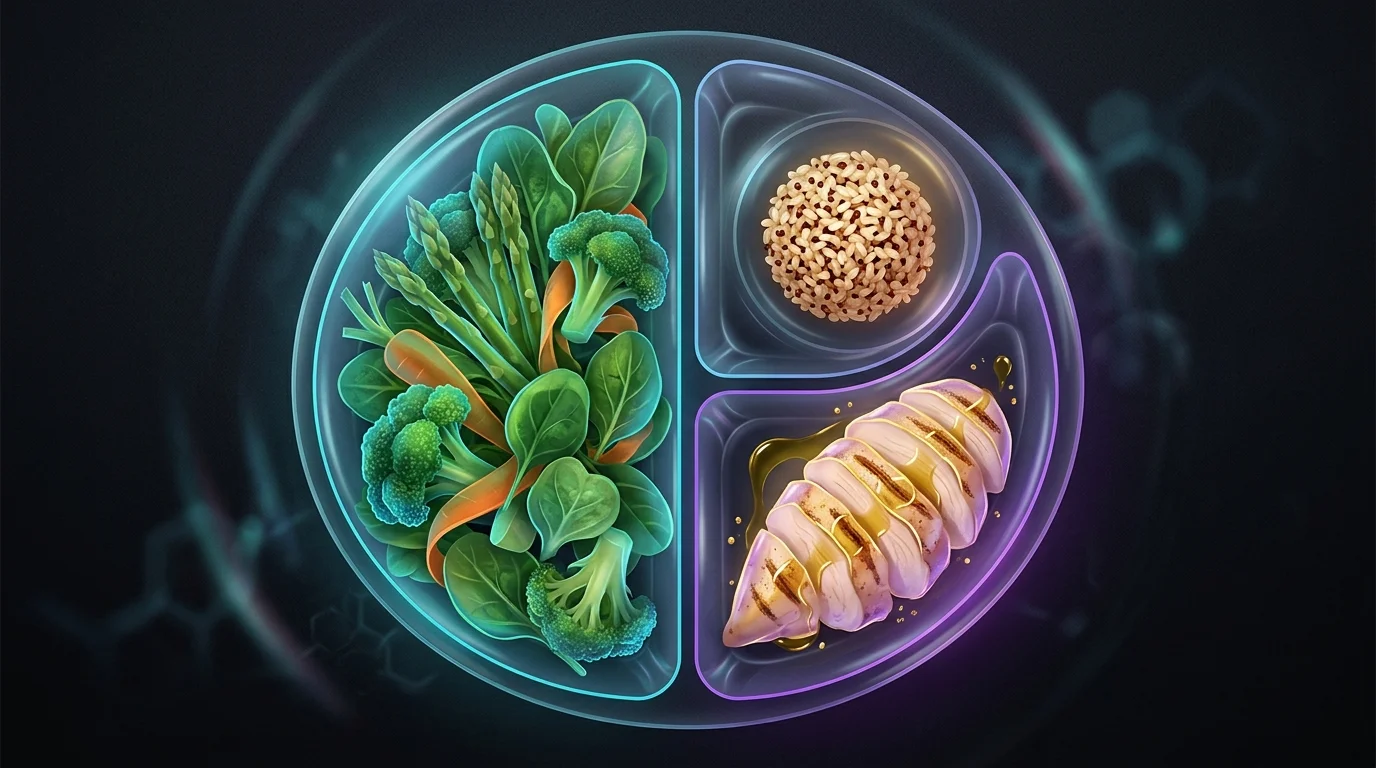
Building the plate means repeating the same four moves every time: anchor with a lean protein, pile on high-volume vegetables, add one measured portion of carbs, and finish with a small amount of fat for flavor. Protein and vegetables stay generous; carbs and fat are the two dials you adjust to control speed of loss.
- Anchor with a lean protein. Chicken breast, lean ground turkey or beef, eggs and egg whites, fish, shrimp, Greek yogurt, cottage cheese, tofu, or lentils. This is the non-negotiable center of the plate.
- Pile on the high-volume vegetables. Peppers, broccoli, zucchini, spinach, cauliflower, cabbage, salad greens. These fill the plate and your stomach for almost no calories.
- Add a measured carb. Rice, potatoes, oats, beans, tortillas: one controlled portion, roughly a cupped handful, for energy.
- Finish with a little fat for flavor. A drizzle of olive oil, half an avocado, a sprinkle of cheese. Small, because fat is calorie-dense.
Protein and vegetables are unlimited-ish. Carbs and fats are the dials you turn down when you want to lose faster. Master this and you never need a recipe again, but here’s a plan to make this week easy.
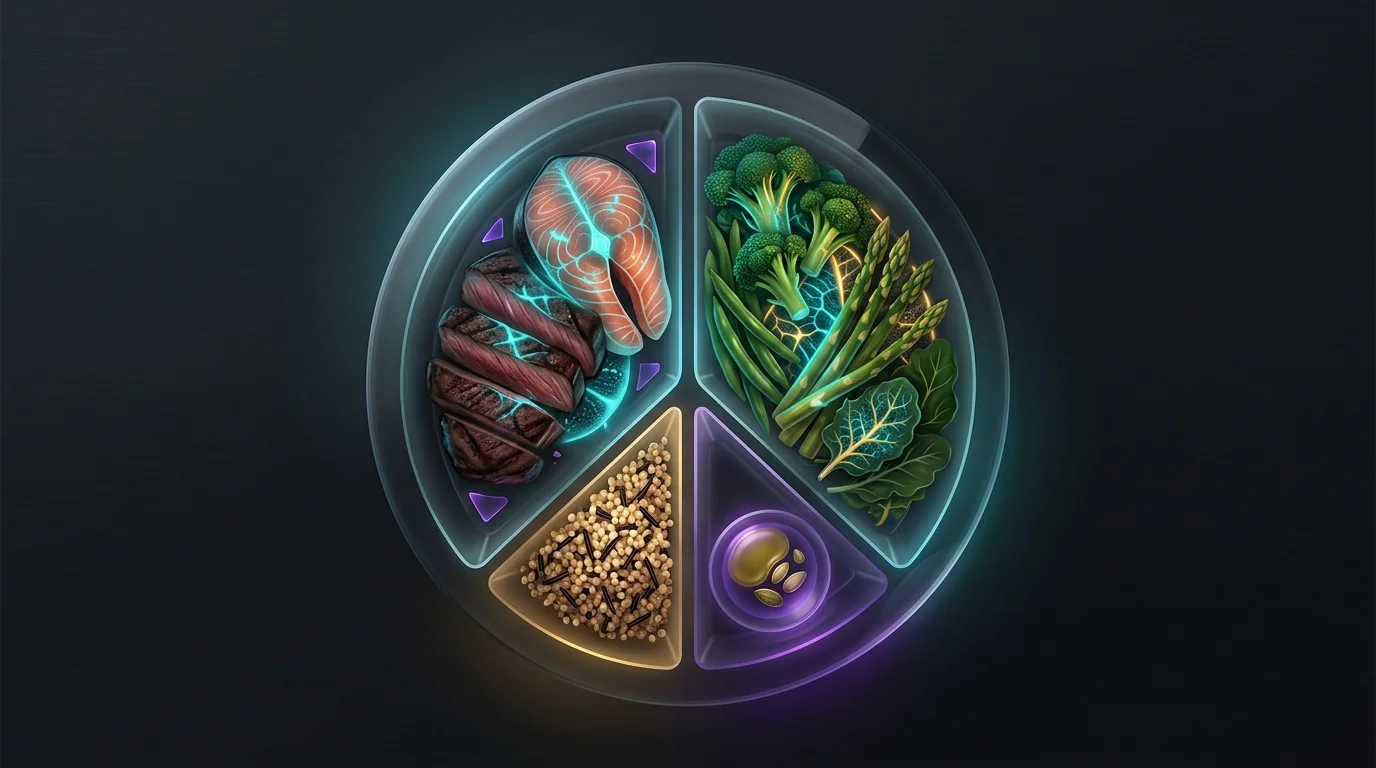
Build the plate once, then repeat it into containers for the week.
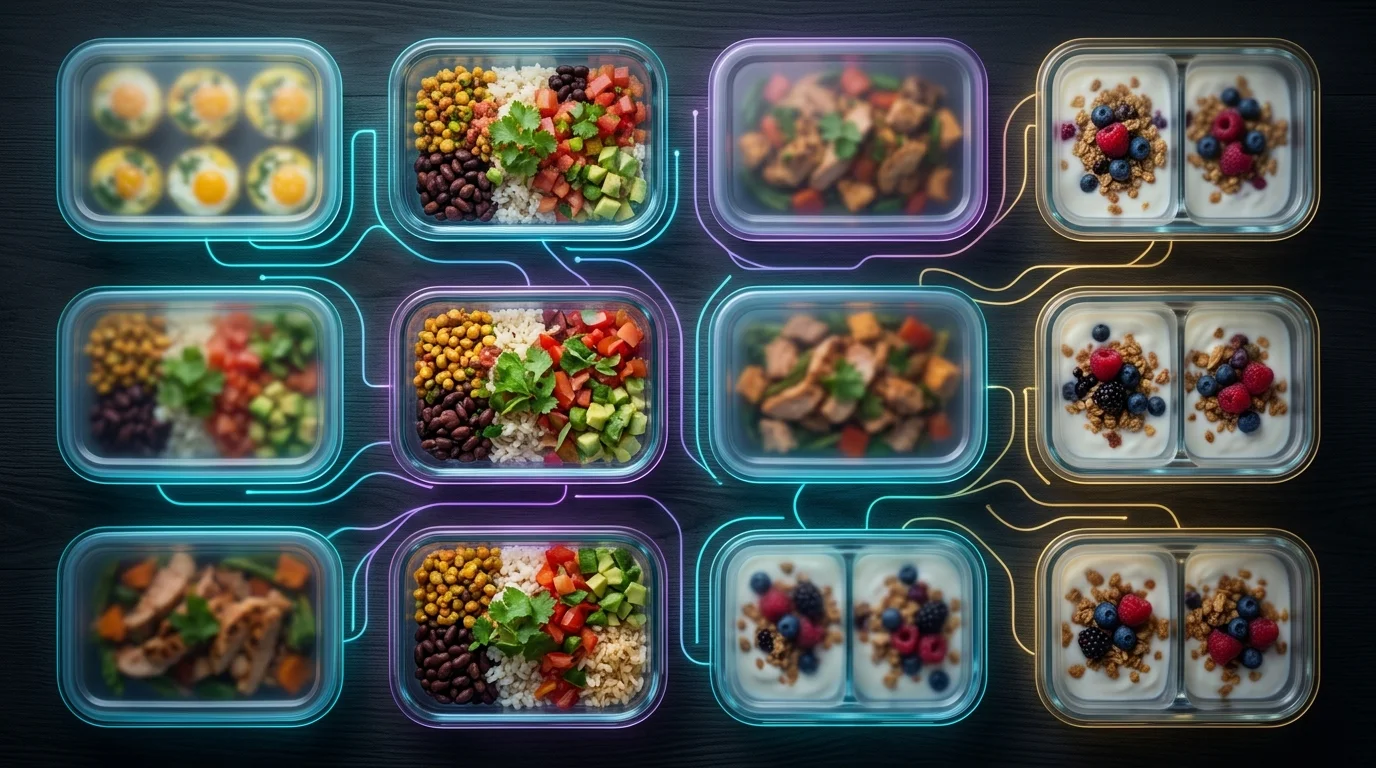
A Real 3-Day High-Protein Meal-Prep Plan
Here is a full 3 day plan, portions listed per person per meal so you can see exactly what a real day looks like. Each meal lists its approximate protein so the daily totals add up on their own, and you can adjust the carb portions up or down to match your own calorie target without changing the protein anchor.
Day 1: around 135g protein
- Breakfast, Savory egg cups (~30g): 3 whole eggs plus a splash of egg whites, baked in a muffin tin with diced peppers and spinach. Batch a dozen; they keep all week.
- Lunch, Chicken burrito bowl (~40g): 5 oz grilled chicken breast, a cupped handful of rice, black beans, salsa, and shredded lettuce.
- Dinner, Turkey and veggie skillet (~40g): 5 oz lean ground turkey browned with zucchini, onion, and marinara over a small portion of pasta.
- Snack, Greek yogurt and berries (~20g): A cup of plain Greek yogurt with a handful of frozen berries.
Day 2: around 130g protein
- Breakfast, Protein overnight oats (~30g): Rolled oats, a scoop of protein powder, and milk left in the fridge overnight. Grab and go.
- Lunch, Tuna crunch wrap (~35g): Two pouches of tuna mixed with a spoon of light mayo and mustard, loaded into a high-fiber tortilla with lettuce and tomato.
- Dinner, Sheet-pan chicken and vegetables (~45g): 6 oz chicken thigh (skinless), broccoli, and baby potatoes roasted together on one tray.
- Snack, Cottage cheese and cucumber (~20g): A cup of cottage cheese with sliced cucumber and pepper.
Day 3: around 125g protein
- Breakfast, Yogurt protein bowl (~30g): Greek yogurt topped with a spoon of granola and sliced banana.
- Lunch, Shrimp fried rice (~35g): 6 oz shrimp stir-fried with frozen mixed vegetables, egg, and a cupped handful of rice.
- Dinner, Lean beef and pepper stir-fry (~40g): 5 oz lean sirloin strips with peppers, onion, and a little soy sauce over cauliflower rice.
- Snack, Hard-boiled eggs and an apple (~14g): Two eggs and a piece of fruit.
Notice the pattern: every plate is genuinely full, and not one of them is a sad little diet portion. That’s the point.
Batch-Prep Steps: One Session, Three Days Done
One 90 minute session covers three days: bake a full tray of protein and brown your ground meat while a tray of vegetables roasts alongside it, boil a pot of rice or potatoes, then assemble the cold items like egg cups, overnight oats, and yogurt bowls and portion everything into containers by meal.
- Cook proteins in bulk. Bake a full tray of chicken and brown all your ground turkey and beef at once. Boil a half-dozen eggs while that’s going.
- Roast a big tray of vegetables (broccoli, peppers, zucchini) while the proteins cook. One oven, one cleanup.
- Make one pot of a carb (rice or potatoes) to portion across meals.
- Assemble the cold stuff. Egg cups, overnight oats, and yogurt bowls get built now and stored in the fridge.
- Portion into containers by meal so lunch is grab-and-go, not a decision.
Log each meal as you build it, and the guesswork disappears. In ThriveX Fitness you can search a food, scan a barcode, or snap a photo of the plate to log it, then push the whole plan to a shopping list so the grocery run is one trip.
Budget-Friendly Protein Swaps
High protein does not require expensive food. Eggs, canned tuna, dried beans, and frozen chicken are some of the cheapest proteins available, and buying in bulk to portion at home beats paying for pre-cut convenience. If you would rather skip a cooking day, ThriveXDNA’s animal-based recipe packs follow the same template with none of the prep.
- Eggs are one of the cheapest complete proteins there is.
- Canned tuna and canned chicken store forever and need no cooking.
- Dried lentils and beans deliver protein and fiber for very little.
- Cottage cheese and plain Greek yogurt stretch across breakfasts and snacks.
- Frozen chicken and frozen fish are usually cheaper than fresh and never go bad on you.
- Buy in bulk and portion at home rather than paying for pre-cut convenience.
Over-35 and Perimenopause Considerations
If you’re over 35, eating less is the wrong move. Muscle gets harder to hold and easier to lose with age, a shift documented in research on protein and aging muscle, and losing it slows you down. The fix: more protein near the top of the 0.7-to-1-gram range, plus resistance training to keep it.
Perimenopause adds shifting energy, more stubborn hunger, and cravings that arrive on their own schedule. High-protein meals are your best defense: they blunt the hunger swings and stabilize the day so one hard afternoon doesn’t sink the whole week. Prioritize protein and vegetables, keep the plates big, and be patient. Steady beats dramatic here, the same logic behind training for the long game instead of chasing quick wins.
Related guides
Summary
You walk away from this with a target and a template. The target is 0.7 to 1 gram of protein per pound of bodyweight, split into roughly 20 to 30 gram servings across the day. The template is the four-move plate: a lean protein anchor, a pile of high-volume vegetables, one measured carb, and a small amount of fat. Once you have both, the recipes become optional, because you can build a compliant meal out of whatever is in the fridge.
The most distinctive point here is that the plates are deliberately big. Nothing in the 3-day plan is a sad diet portion, and that is the entire mechanism: protein and vegetables let you eat a genuinely full plate while the calories still come in under your target, so the deficit is not something you have to white-knuckle. If you are over 35 or in perimenopause, the answer is not fewer calories but more protein at the top of that range, paired with resistance training to keep the muscle you are feeding.
Start This Week
The people searching for this by the tens of thousands each month all learn the same thing eventually: the plan that keeps you full is the plan you actually finish. High protein, big portions, a real deficit you don’t have to white-knuckle.
You already have the template and three days of meals. If you want the targets calculated and the plan built for you, try ThriveX Fitness, free to start. Get a high-protein plan built to your calorie and protein numbers, then log it by photo, barcode, or search as you go. Prep once, stay full, and let the scale do the quiet work.
FAQ
How much protein should I eat to lose weight?
A common starting range is about 0.7 to 1 gram of protein per pound of bodyweight, based toward your goal weight rather than your current weight. From there, split that total into servings of 20 to 30 grams spread across the day rather than loading it all into one meal, since that is what actually keeps you full and makes the number easy to hit without thinking about it too hard.
Can I meal prep for the whole week?
Yes, though most cooked proteins and vegetables are at their best within 3 to 4 days, so a single Sunday batch stretched across seven days will taste noticeably worse by the end. A more practical rhythm is prepping twice a week: one big Sunday session to cover the first half, then a smaller mid-week top-up session, or freezing the back half of what you cooked so it is ready to reheat later in the week.
Will I stay full eating in a deficit?
Yes, that is exactly what the high-protein, high-vegetable approach is built for. Volume is the trick: lean protein and vegetables take up a lot of physical space on the plate and in your stomach for relatively few calories, which lets you eat a large, visually satisfying plate while the calories still land under your target. You end the meal full, not just finished, and that is what makes the deficit sustainable day after day.
Do I need protein powder?
No. Protein powder is simply a convenient way to hit your daily number, especially at breakfast when whole food options can feel heavier or take more time to prepare. But it is not required. Whole foods like eggs, chicken, yogurt, and beans cover your protein target completely on their own, and plenty of people build a full high-protein meal-prep plan without ever opening a tub of powder.
What if I don’t have time to cook three days of food?
Lean on no-cook proteins that need zero prep: canned tuna, pre-cooked chicken, Greek yogurt, and hard-boiled eggs you buy already made. Then let an app do the planning instead of you. ThriveX Fitness can build a plan to your protein targets so all you actually do is assemble the plate from what is already in the fridge and log it, no cooking session or spreadsheet required.