
You've stretched your hamstrings, watched a quick curl tutorial, and still can't tell whether you're strengthening anything or just irritating the back of your legs. That frustration is common. A routine can look easy on a screen and feel completely different when your pelvis shifts, your lower back takes over, or your heels slide farther than you can control.
Effective hamstring strengthening exercises at home don't require a machine or a long list of movements. They require a progression. Start by learning to create tension without movement, then earn greater range, slower eccentrics, unilateral loading, and finally external resistance. That order gives you a better chance of building strength without turning every session into a test of how much discomfort you can tolerate.
Table of Contents
- Why Home Hamstring Training Often Fails
- Foundational Isometric Holds for Safe Activation
- Primary Strength Movements and Form Cues
- Progressions and Equipment Additions
- Sample Weekly Routines for Every Level
- Common Mistakes and Injury Precautions
- Summary
- Frequently Asked Questions
Why Home Hamstring Training Often Fails
A person who sits for much of the day may stand up feeling tight, bend forward, and immediately reach for a long static stretch. The stretch may feel relieving, but relief isn't the same as strength. Static stretching changes how movement feels for a while, while strengthening asks the hamstrings to produce or resist force under control.
The common online mistake is starting with the most dramatic-looking exercise. A fast slider curl or unsupported Nordic lower creates a strong sensation, so beginners assume it must be the right choice. In practice, the person may arch the back, let the hips drop, or use momentum to get through the difficult part. The hamstrings then receive an inconsistent stimulus, and the movement becomes harder to assess.
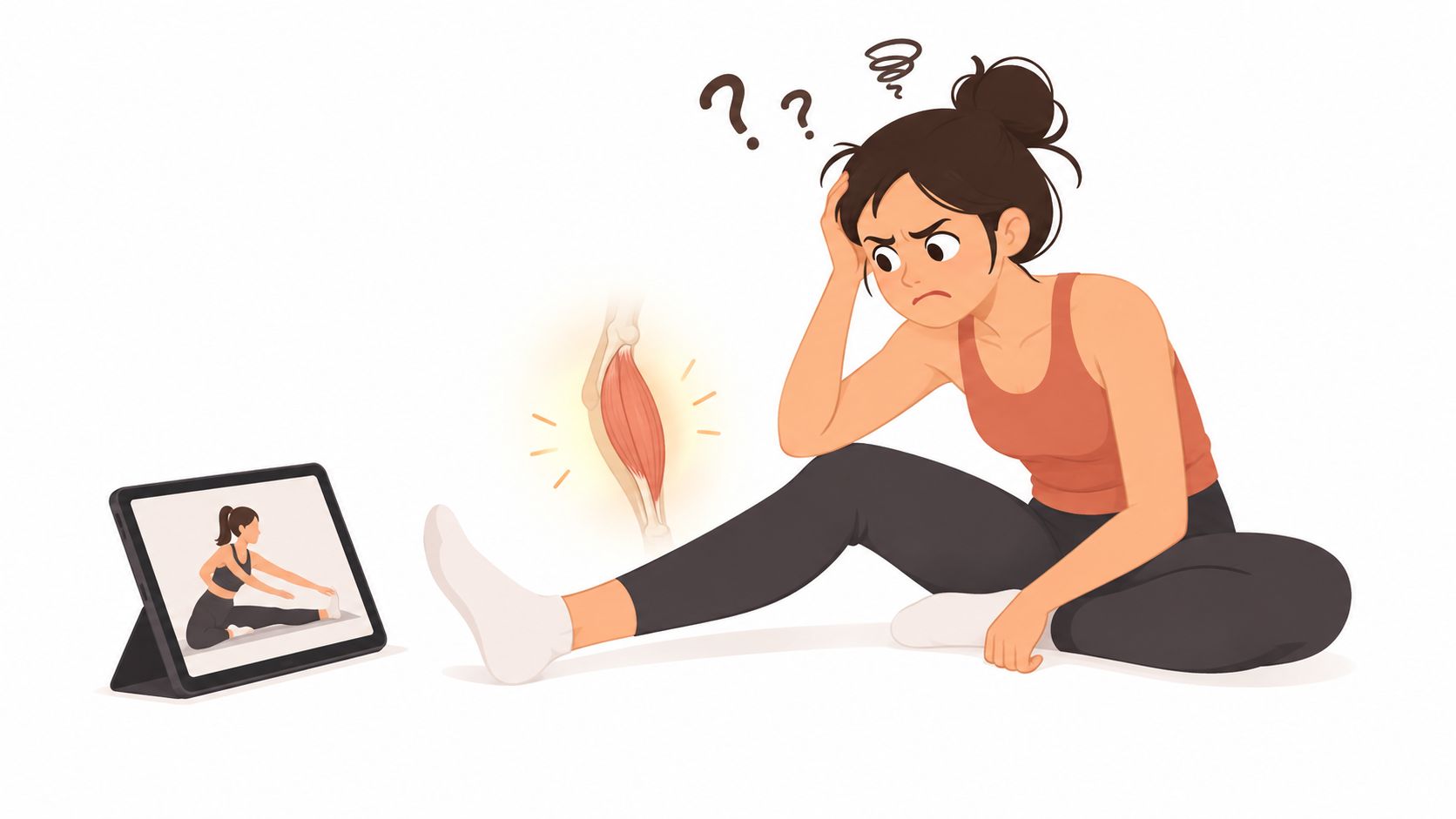
Tightness isn't a readiness test
A tight feeling can reflect limited tolerance to length, fatigue, protective tension, or poor control. It doesn't tell you that the muscle needs aggressive stretching, and it certainly doesn't prove that a deep eccentric exercise is appropriate.
Clinical rehabilitation has long used frequent home exercise, including isometric holds, balance work, Swiss-ball curls, bridges, and hip extension, rather than relying on stretching alone. One published rehabilitation review describes exercise blocks performed daily or 5 to 7 days per week, with isometrics at 90°, 60°, and 30° knee angles in its evidence-based hamstring rehabilitation guidance.
Coaching rule: If you can't control the easiest version, adding speed only hides the weakness.
The answer isn't to avoid hamstring loading. It's to lower the entry point, establish repeatable tension, and progress one variable at a time. That approach is less exciting than a maximal Nordic, but it's far more useful for someone who wants to train consistently.
Foundational Isometric Holds for Safe Activation
Isometrics teach you to produce tension while the joint stays still. They're useful when movement feels uncertain, because you can focus on pressure, breathing, pelvic position, and effort without managing a large range.
Begin lying face down with one knee bent to 90°. Press your heel gently into a firm surface, as if you're trying to drag it toward your hips without allowing the leg to move. Keep the pelvis heavy and avoid lifting the thigh. Progressively repeat the same heel press with the knee positioned at 60° and then 30°, where the hamstring works at different lengths. These angles are included in clinical home rehabilitation guidance for hamstring strengthening.
The prescribed infographic includes shorter holds for simple activation:
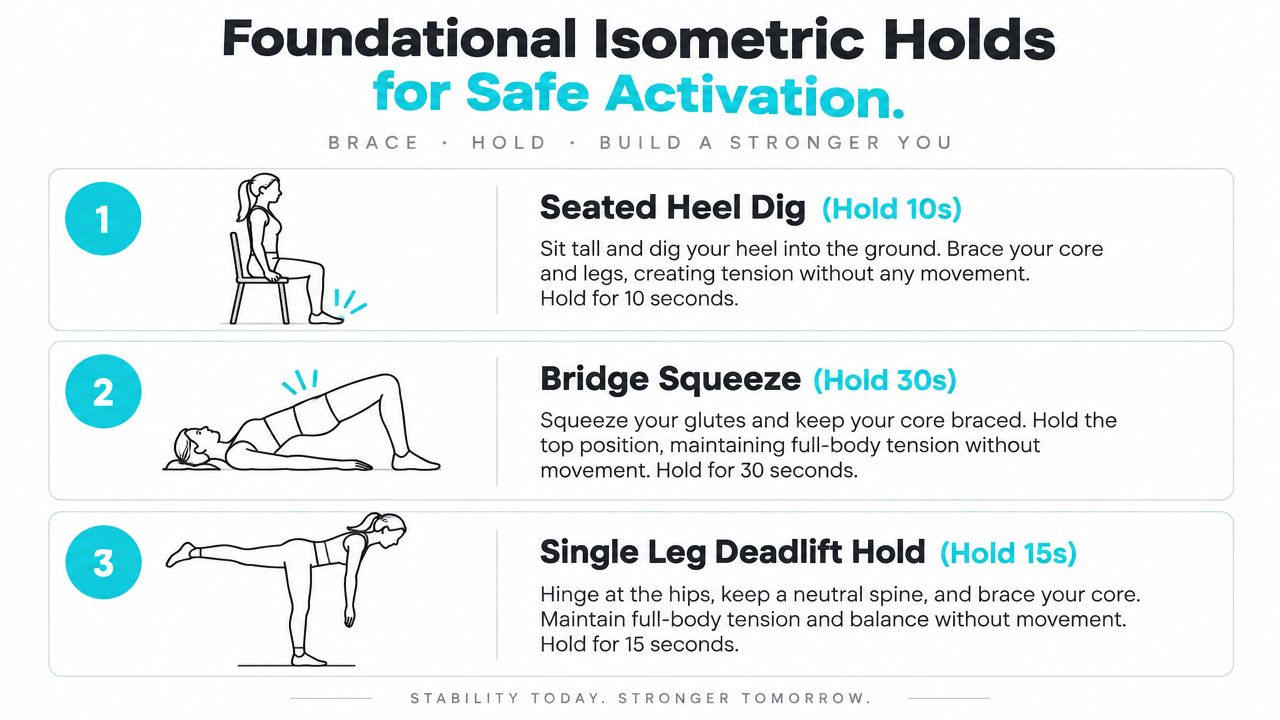
Three ways to practise tension
- Seated heel dig: Sit with one heel planted slightly forward. Press down and back without letting the foot travel. The infographic uses a 10-second hold.
- Bridge squeeze: Lie on your back, press through both heels, lift the pelvis, and hold without arching. Use the infographic's 30-second hold only if your hips and ribs stay organized.
- Single-leg deadlift hold: Stand near a wall, hinge slightly on one leg, and pause with your pelvis square. The infographic uses a 15-second hold. Use fingertip support rather than sacrificing alignment.
For someone returning from a strain or starting from scratch, begin with a tolerable effort and a quiet breathing pattern. The aim is not to create a cramp or chase a maximum contraction. You're building confidence in the position, then increasing effort only when the hold remains symmetrical and pain-free.
Isometrics also expose a useful distinction. If the hamstring can create tension but the pelvis immediately rotates or the lower back tightens, the limiting factor may be coordination rather than a lack of effort. Fix that position before adding dynamic range.
Primary Strength Movements and Form Cues
Once you can create stable tension, use movements that train both major hamstring actions. The hamstrings contribute to hip extension, as in a hinge, and knee flexion, as in a curl. A complete home routine should include both rather than repeating bridges indefinitely.
Single-leg Romanian deadlift
Stand on one leg with a soft knee. Send the hips backward while the torso inclines forward and the free leg reaches behind you. Keep both hip bones facing the floor, maintain a long spine, and stop the descent when your pelvis or back position changes.
Use a wall or chair for balance at first. The support should help you keep the working hip square, not pull you upright between repetitions. Return by driving the standing foot into the floor and bringing the hips forward, rather than lifting the chest first.
An EMG comparison found that single-arm and single-leg Romanian deadlifts produced hamstring activation comparable to the prone leg curl, while kettlebell swings, stability-ball curls, reverse hip raises, and equipment-free glute-ham raises also performed strongly in the tested movements in the ACE-sponsored comparison. Activation isn't the same as guaranteed strength gain, but it supports choosing exercises with clear mechanical demands.
Slider or stability-ball curl
Lie on your back with your heels on towels, furniture sliders, or a stability ball. Lift your pelvis, slide or roll the heels away slowly, then pull them back without allowing the hips to collapse. Keep the ribs from flaring and shorten the range if the return becomes jerky.
The eccentric phase is the part that matters most here. If you can slide out but can't bring the heels back, lower the pelvis before returning the feet. That modification keeps the exercise repeatable instead of turning every repetition into a rushed rescue.
Reverse hip raise
Lie face down with the hips near the edge of a stable surface, or use a floor variation that allows the legs to lift without compressing the lower back. Raise the legs from the hips with the knees softly bent, pause briefly, and lower under control. Keep the movement small enough that the lumbar spine doesn't become the main mover.
The rep ends when control ends. A longer range is useful only when your pelvis, ribs, and knee position remain organized.
Progressions and Equipment Additions
Bodyweight movements are excellent for learning mechanics, but they eventually stop providing enough challenge. Progression doesn't mean adding weight immediately. It means changing one demand while keeping the movement recognizable.
| Starting point | Next progression | What changes |
|---|---|---|
| Two-leg bridge | Heel walkout | The hamstrings control a longer lever |
| Two-leg curl | Slider curl with a shorter return | Eccentric control becomes more demanding |
| Supported hinge | Single-leg Romanian deadlift | Balance and unilateral control increase |
| Bodyweight hinge | Closed backpack or kettlebell | External load increases force demand |
| Assisted Nordic | Shorter, slower Nordic lower | Eccentric braking becomes more difficult |
A light kettlebell or securely closed backpack works well for a hip hinge once you can keep the back position without resistance. Hold the load close to the body. A resistance band can add challenge to curls, but it changes the resistance across the range, so it isn't automatically better than a towel on a smooth floor.
For muscle growth, a strength-focused guideline places most hamstring work between 6 and 15 repetitions per set, while strength-focused work usually falls between 3 and 8 repetitions per set in this hamstring training guideline. Use the lower end when the exercise is demanding and the upper end when the movement is lighter and technically stable.
Progress in this order
- Improve position. Remove wobbling, pelvic rotation, and back compensation.
- Increase range. Move farther only while the eccentric remains controlled.
- Slow the lowering phase. Don't use speed to escape the hardest point.
- Shift to one leg. Unilateral work raises the coordination demand.
- Add load. Use a kettlebell or backpack when bodyweight no longer challenges you.
A Nordic curl belongs near the demanding end of this sequence. The prevention evidence is substantial. A 2019 systematic review and meta-analysis of 8,459 athletes found that including the Nordic exercise in prevention programs approximately halved hamstring injury rates in the British Journal of Sports Medicine paper. That evidence supports progressive eccentric work, not reckless full-range attempts on a living-room floor.
Sample Weekly Routines for Every Level
A useful schedule should make the next session obvious. Keep the exercise menu small, record what you did, and progress only when the current version looks the same from the first repetition to the last.
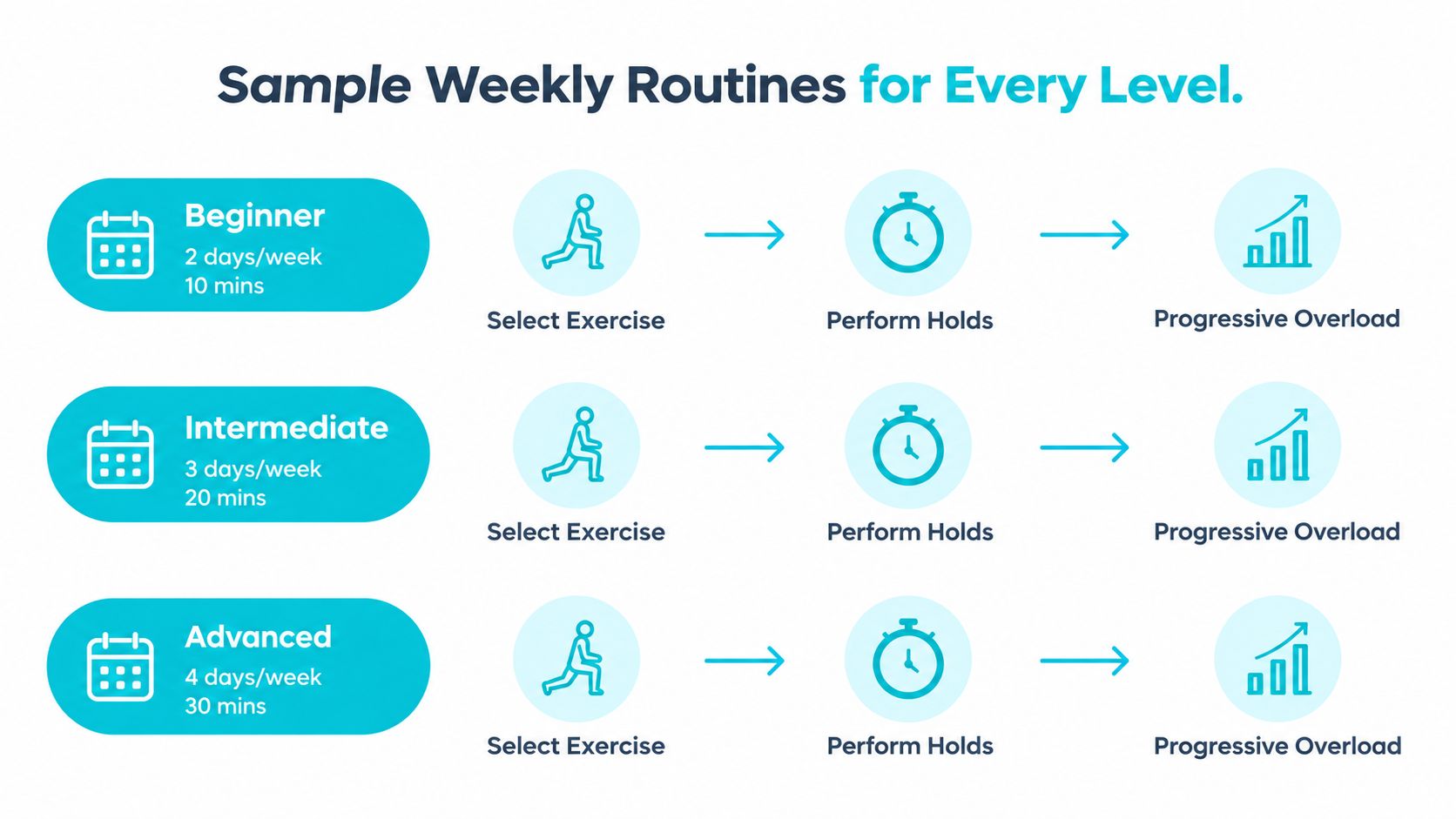
Beginner routine
Perform this routine on 2 days per week, using the isometric options and simple movement patterns.
- Heel press at 90°: 2 controlled holds per side.
- Bridge squeeze: 2 holds, stopping before the pelvis tilts.
- Supported hip hinge: 2 sets of 8 repetitions.
- Two-leg slider curl: 2 sets of 6 repetitions when you can control the return.
Rest enough to regain clean technique. The session should leave you more confident, not unsure whether you've irritated the tissue.
Intermediate routine
Use 3 days per week when bridges, hinges, and two-leg curls are consistent.
- Single-leg Romanian deadlift: 3 sets of 8 per side.
- Slider or stability-ball curl: 3 sets of 8.
- Reverse hip raise: 3 controlled sets.
- Kettlebell or backpack hinge: 3 sets using a load that doesn't change your back position.
The sliding curl progression offers a concrete benchmark. Start with 2 sets of 6 repetitions and 90 seconds of rest, then advance to 3 sets of 8 and later 3 sets of 10, using controlled tempo and 60 seconds of rest for the later stages in this beginner progression.
Advanced routine
Use 4 days per week only when you can recover and maintain eccentric control.
Pair a loaded hinge with a knee-flexion movement on the harder days. Use supported Nordics or short-range Nordics rather than treating a full repetition as a requirement. The advanced target is not theatrical range. It's the ability to brake consistently, keep the hips extended, and finish without momentum.
Common Mistakes and Injury Precautions
The most dangerous habit in home hamstring training is using speed to escape the eccentric. A slider curl becomes much easier when the feet shoot out and the pelvis drops. A Romanian deadlift becomes deceptive when you chase depth by rounding the spine. Both choices make the movement look complete while reducing the control you're trying to build.
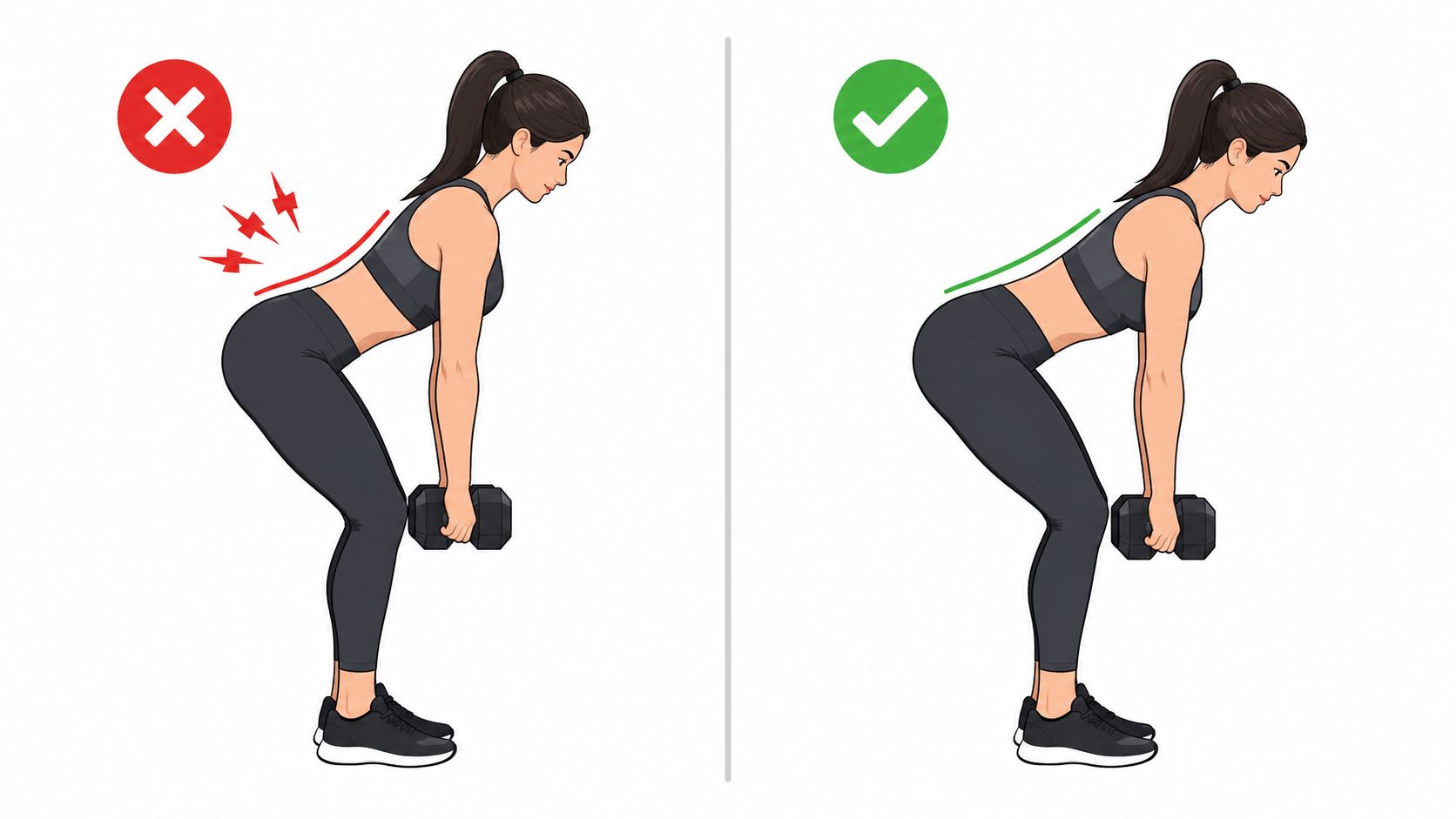
Read the signal, not just the sensation
Normal training discomfort tends to feel like local muscular effort or soreness that settles. A sharp pain, sudden pulling sensation, marked asymmetry, pain while walking, or symptoms that worsen afterward should change the plan. Medical guidance separates prevention from recovery, and acute strain symptoms call for tissue recovery rather than aggressive strengthening in this sports medicine guidance.
Reduce the range, lower the effort, or return to isometrics when symptoms appear. If pain persists, keeps worsening, or follows an acute injury, seek assessment from a qualified clinician rather than trying to diagnose the problem with more exercises.
Protect the setup
Never anchor a Nordic to loose furniture or use a support that can slide. Knees need padding, ankles need secure fixation, and your hands must be ready to catch the descent. A short, assisted range is a valid exercise. Falling through an uncontrolled range isn't.
For readers building a broader personal-care routine alongside training, a resource such as vegan skincare for US shoppers can sit alongside practical recovery habits, but it doesn't replace load management or clinical care. Keep the training decision focused on movement quality and symptoms.
Pain isn't proof of progress. Control, repeatability, and appropriate progression are better measures.
Summary
Strong home hamstring training starts with controlled tension, not an advanced exercise performed at full speed. Isometric heel presses at different knee angles help establish activation before dynamic loading. Bridges, single-leg Romanian deadlifts, slider or stability-ball curls, and reverse hip raises then train hip extension and knee flexion with minimal equipment. Progress by improving position, increasing range, slowing the eccentric, moving to unilateral work, and adding a kettlebell or backpack. The Nordic curl can be valuable later, but sharp pain, worsening symptoms, and poor control are reasons to reduce the challenge or seek assessment.
Frequently Asked Questions
Can I strengthen my hamstrings at home without machines?
Yes. Bridges, heel presses, hip hinges, single-leg Romanian deadlifts, towels or sliders, and stability balls can all support home training. A kettlebell or securely closed backpack can add load later. Equipment matters less than choosing a movement you can repeat with stable hips, controlled tempo, and no sharp pain.
Should I stretch tight hamstrings before strengthening them?
Stretching may change how tightness feels, but it doesn't replace strengthening. A tight sensation isn't a reliable readiness test, and aggressive stretching won't teach the hamstrings to produce or resist force. Begin with tolerable isometric tension and progress toward controlled movement instead.
Are Nordic curls suitable for beginners?
A full Nordic is usually too demanding as a first exercise. Begin with isometrics, bridges, hinges, or sliders, then use hand-supported or short-range Nordic lowers when you can control the descent. You don't need a full repetition to benefit from practicing eccentric braking.
How do I know when to make an exercise harder?
Make one change at a time. First improve your position, then increase range, slow the lowering phase, move to a unilateral variation, or add external load. If your hips drop, your back compensates, or your next-day movement worsens, the progression is too large.
What should I do if a hamstring exercise causes pain?
Stop the painful variation and reduce the range or effort. Mild muscular discomfort can occur during training, but sharp pain, a sudden pull, pain while walking, clear asymmetry, or worsening symptoms need caution. With an acute strain or persistent symptoms, get an assessment from a qualified clinician.
How can I track progress at home?
Record the exercise, sets, repetitions, range, hold duration, support used, and whether you controlled the eccentric. Repeat a small selection of exercises long enough to compare performance. Progress when the same movement remains technically consistent and your recovery is acceptable.
Thrive X Fitness offers AI-generated workouts matched to your goals, equipment, and fitness level, plus step-by-step exercise guidance and form review from a short video clip. Visit ThriveXDNA to explore a way to organize your home hamstring routine and keep your progression consistent.