
Last reviewed: June 2026
Two years of Whoop membership at $239 per year adds up to $478 in subscription fees alone, which exceeds the retail price of a Garmin Forerunner 265 purchased outright. That arithmetic does not make Whoop the wrong call, but it is the most clarifying number to have in front of you before you decide. Both platforms track heart rate variability, sleep staging, and daily readiness in 2026, and both have meaningfully improved their algorithms over the past few years. You can compare both alongside dozens of other AI health and wellness tools at AI health and wellness tools directory to see where they sit relative to the broader market.
What separates these two devices is not sensor quality or app design. It is the fundamental question of ownership versus access. Garmin sells you a GPS watch you keep forever. Whoop sells you entry into a recovery platform that stops functioning the moment you cancel. Once you see that clearly, most of the other comparison points fall into place quickly.
Key takeaways
- Garmin watches are a one-time hardware purchase; Whoop 4.0 requires an active subscription at roughly $239 per year or $30 per month to keep the band functional and your data accessible.
- Whoop has no GPS and no screen; Garmin watches have both, making Garmin the clear default for runners, cyclists, or hikers who want real-time data without carrying a phone.
- Whoop’s recovery coaching goes deeper on HRV trend context and sleep debt tracking; Garmin’s Body Battery and Training Readiness are useful but serve a broader athletic audience rather than recovery specialists.
- Canceling a Whoop subscription cuts off data access entirely; your Garmin watch keeps recording and syncing whether you pay for Garmin Connect+ or not.
- Long-term Whoop cost can exceed $700 over 3 years; at that spend you could own a Garmin Fenix 8 with years of use still ahead and nothing further owed.
The Ownership Divide: Why This Is Not a Normal Hardware Comparison
Most wearable comparisons come down to specs: whose optical sensor is more accurate, which app has better sleep stage labeling, which device lasts longer on a charge. Garmin vs Whoop in 2026 has a threshold question that comes before any of that. Do you want to own a device, or do you want access to a platform? Those are different purchases, and treating them as equivalent leads to buyer regret on both sides.
Garmin sells hardware. You pay once for a Forerunner 265, Fenix 8, Venu 3, or any other model in the lineup. The companion app, Garmin Connect, is free and carries no usage gates. An optional Garmin Connect+ tier exists at roughly $6.99 per month and adds AI-generated coaching plans and more detailed analytics, but it is genuinely optional. Remove Connect+ and your watch still records GPS routes, sleep, HRV, stress, and heart rate. The data stays on the device even without internet access.
Whoop is built the opposite way. The hardware ships included with a subscription, but the band is tied to the platform. If you cancel, your data becomes inaccessible and the band stops syncing. There is no fallback mode that lets the device operate independently. Whoop is transparent about this in its terms; it is not hidden. But it means you are not buying a $0 wearable when you sign up. You are entering a recurring payment relationship where the hardware holds no standalone value once the subscription lapses.
What Whoop 4.0 Actually Measures and Why Recovery-Focused Athletes Use It
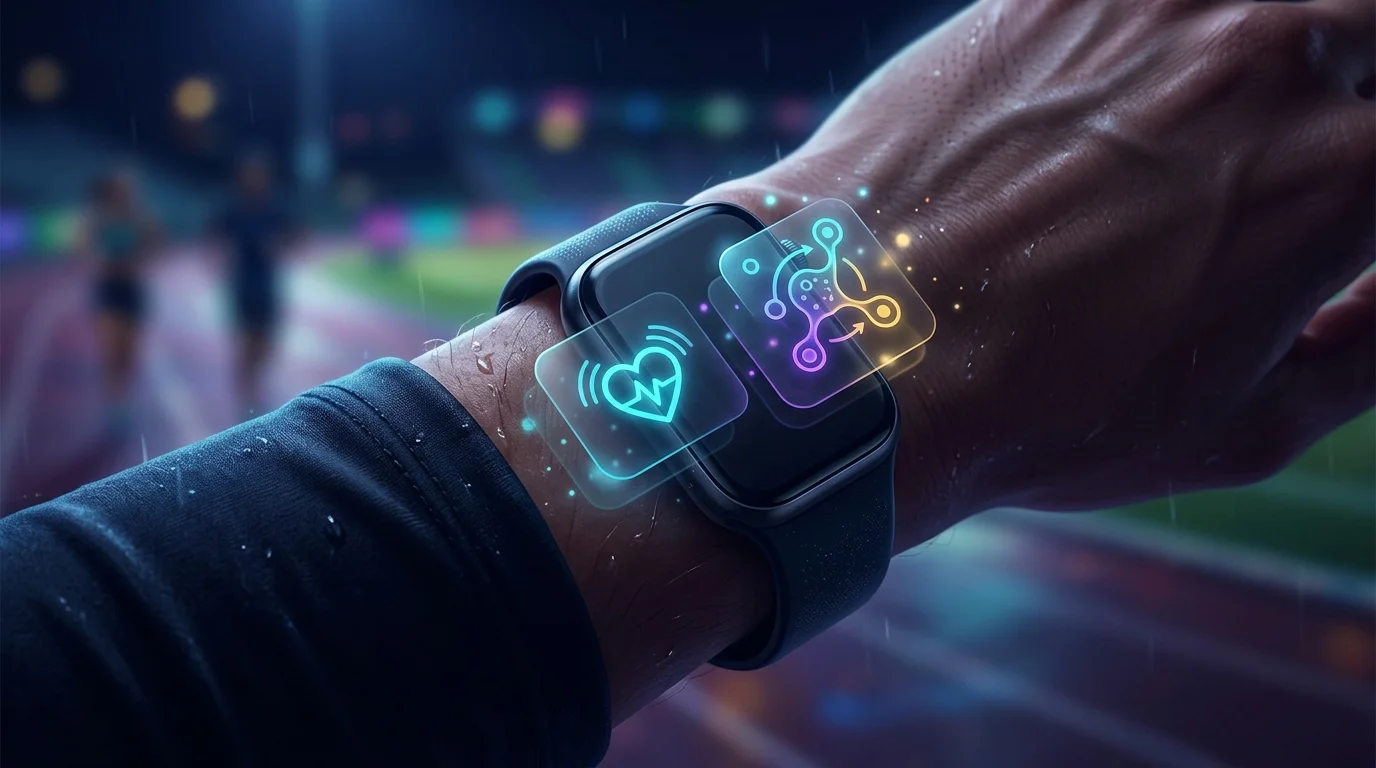
Whoop 4.0 tracks five physiological signals continuously: heart rate, heart rate variability, respiratory rate, skin temperature, and blood oxygen saturation. The band is designed to be worn 24 hours a day and charges via a slide-on battery pack while still on your wrist, which means you never remove it for a charge cycle. That continuous collection is part of why Whoop’s recovery model can detect subtle HRV trend shifts over weeks rather than just measuring a single overnight reading. See the National Institutes of Health for official guidance.
The platform translates those signals into three daily metrics. Strain runs on a 0 to 21 scale and reflects cardiovascular load accumulated across the day. Recovery is a percentage from 0 to 100 showing how prepared your body is to handle stress, calculated from HRV, resting heart rate, sleep performance, and respiratory rate compared to your personal baselines. Sleep gets scored on adequacy relative to your individual calculated sleep need. The word ‘personal’ matters here. Whoop calibrates all three scores against your own historical data, not population averages, and the system needs about 30 days to fully initialize before it produces its most useful output.
Whoop introduced what it calls MG (medical-grade) monitoring capabilities in 2024 and 2025, including irregular heart rhythm detection and blood pressure tracking on select plan tiers. These features are in a monitored rollout and not available universally in all regions as of mid-2026. The Whoop Journal feature lets you log lifestyle variables such as caffeine intake, alcohol, stress level, and workout type, and the app then surfaces correlations between those logs and your recovery scores over time. That feedback loop is one of the more practical use cases for athletes trying to identify which daily habits actually shift their recovery numbers rather than guessing.
- Continuous HRV tracking with trend analysis across 30-day rolling windows
- Strain, Recovery, and Sleep scores calibrated to your personal baseline rather than population norms
- Whoop Journal correlates logged lifestyle factors with recovery outcomes over time
- Slide-on charging pack lets you charge without removing the band, eliminating data gaps
- No screen, no GPS, no notifications: designed to disappear and collect data passively
What Garmin Covers: GPS, Display, and the Full Athlete Dashboard
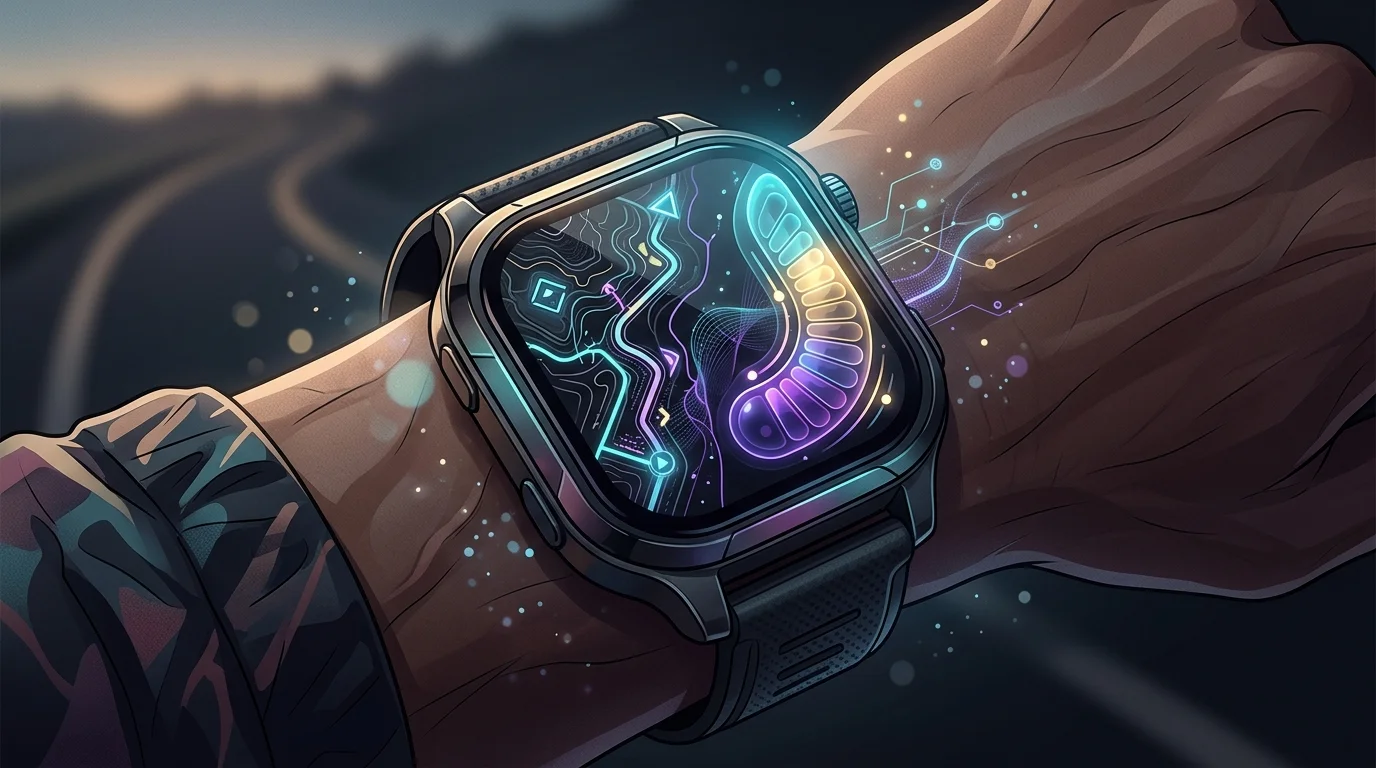
The Garmin lineup in 2026 spans roughly 6 product families with prices from about $199 for a Forerunner 55 to over $1,000 for a Fenix 8 Sapphire Solar. What connects every model is GPS and an on-wrist display, which puts Garmin in a category Whoop cannot touch: real-time navigation and sport metrics without a phone. If you run trails, cycle with route navigation, or train across multiple sports, that gap is not minor.
On the health tracking side, Garmin has expanded its recovery-focused metrics substantially across the past 3 software generations. Body Battery is Garmin’s proprietary energy reserve indicator, updated continuously from HRV and activity data and shown on the watch face throughout the day. Training Readiness, available on the Forerunner 265 and higher, synthesizes HRV status, sleep quality, recovery time since your last workout, and training load into a single 0 to 100 score each morning. HRV Status monitors your overnight average and flags when it drifts outside your normal range. These metrics are not as central to Garmin’s brand identity as recovery is to Whoop, but on a mid-range or premium model they are substantive tools.
The free Garmin Connect app covers over 30 sport modes, plus menstrual cycle tracking, VO2 max estimates calibrated to running and cycling, race predictor tools, and a daily stress score derived from HRV data. The app can feel dense if your only goal each morning is to know whether to train hard or go easy. That usability gap is real. But for athletes who want a single device to serve as GPS computer, training load tracker, and recovery monitor simultaneously, no subscription band in the market currently matches what a Garmin Forerunner 965 or Fenix 8 delivers without any ongoing fees.
- GPS and onboard mapping across most models in the lineup
- Body Battery and Training Readiness available on Forerunner 265 and higher
- HRV Status tracked overnight and flagged when outside your personal normal range
- 30-plus sport modes with automatic activity detection on many models
- Garmin Connect free indefinitely; Connect+ optional at roughly $6.99 per month
Long-Term Cost: The Numbers That Should Drive Your Decision
Most people price Whoop at $0 because the hardware ships with the subscription. The accurate framing is that you are prepaying for platform access in recurring installments. A 12-month Whoop plan runs about $239 per year as of mid-2026. At 24 months you have spent $478. At 36 months, $717. At no point in that timeline do you own anything that functions without a payment.
Compare that to a Garmin Forerunner 265 at roughly $449 retail. You pay that once. Garmin Connect stays free. If you never subscribe to Connect+, your total 3-year cost is $449. The Forerunner 265 has a typical useful lifespan of 4 to 6 years with normal wear. By year 3 your effective annual cost is under $150 and falling. The Whoop per-year cost stays fixed at $239 or rises if Whoop adjusts its pricing tiers.
There is a counter-argument worth taking seriously: the Whoop subscription includes continuous algorithmic improvements and new features without requiring new hardware. When Whoop upgraded its recovery algorithm or added blood pressure monitoring, existing subscribers received those capabilities. Garmin also ships firmware improvements at no cost, but its most significant new features often require a newer hardware generation. Neither approach is obviously superior. The honest framing is that Whoop’s cost is predictable and perpetual, while Garmin’s is front-loaded with optional incremental spend on hardware upgrades every 4 to 6 years. For most budgets, the Garmin model is lower total cost at any horizon beyond 24 months.
Form Factor and Daily Wearability: What Matters at 2 AM
Whoop was designed from the start to disappear on your wrist. The 4.0 band weighs about 25 grams and sits roughly 12mm thick. You can wear it on the wrist, bicep, or calf using different accessory mounts, which matters for athletes who need consistent placement during contact sports or activities where a wrist device would interfere. Because there is no screen and no haptic notifications, it does not pull your attention during the day. You put it on and forget it is there, and that is the design intent.
Garmin watches range from the relatively slim Venu 3 to the substantial Fenix 8 46mm. Even a mid-size Forerunner 265 weighs about 47 grams and sits noticeably on your wrist while you sleep. For people who find a traditional watch uncomfortable at night, that bulk can reduce sleep tracking accuracy because they take it off before bed. The irony is that a device meant to track your sleep works best when it barely registers as present, which is where Whoop has a structural advantage for sleep-priority users.
Battery life approaches the problem differently on each platform. Whoop charges while you wear it, taking about 60 minutes for a full charge via the slide-on pack without any data gap. You never miss a night of sleep data because the band ran out of power. Garmin battery life varies: the Forerunner 265 lasts about 13 days in smartwatch mode but roughly 20 hours with GPS active and the display on. A Fenix 8 Solar extends that considerably, but you still remove the watch periodically. Whether the charging gap matters to you depends on how strictly you want overnight HRV data to be continuous.

Where Each Platform Falls Short
Whoop’s core limitations are structural, not fixable through software updates. No GPS means it cannot replace a running watch, cycling computer, or trail navigation device. No screen means you cannot check your current heart rate, pace, or elapsed time mid-workout without pulling out your phone. If those things are part of how you train, Whoop functions as a supplement to another device rather than a replacement. That is a real added cost: if you own a Whoop subscription and still need GPS data, you are paying for both a subscription band and a separate GPS device simultaneously.
Data quality on Whoop also degrades under specific conditions. If the band fits loosely or shifts during sleep, motion artifacts corrupt the HRV readings. Illness, travel across time zones, and irregular sleep schedules can produce recovery scores that feel misaligned with how you actually feel. The 30-day initialization period means the device is not outputting its most calibrated numbers for the first month of use. Some users find that after that window the scores feel accurate and actionable. Others find that the recovery percentage drifts from subjective reality during high-stress non-training periods, making it harder to trust.
Garmin’s weak points cluster around feature distribution and app complexity. Entry-level models including the Forerunner 55 and Forerunner 165 have basic sleep tracking and no Training Readiness score. You only get the full recovery picture at the 265 tier and above. The Garmin Connect app has improved but still surfaces a large quantity of data without strong prioritization. If you want one clear answer each morning about whether to train hard today, Whoop’s three-number summary is faster to interpret than navigating the Garmin Connect home screen. That usability gap is real even if the underlying data depth on higher-end Garmin models is comparable.
- Whoop: no GPS, no screen, full subscription lock-in, data access lost on cancellation
- Whoop: recovery accuracy depends on consistent fit, regular sleep schedule, and 30-day initialization
- Garmin: Training Readiness and full recovery tools only on Forerunner 265 and higher
- Garmin Connect: broad and data-rich but not optimized for quick daily decision-making
- Neither platform has independent clinical validation published for all proprietary scoring algorithms
A Clear Decision Framework: Which One Fits Your Actual Situation
If GPS matters to your training at all, Whoop is not a standalone solution. This covers runners who care about pace, cyclists who need route data, hikers, triathletes, and anyone whose sport involves outdoor navigation. Garmin is the straightforward answer in those cases. The only question is which Garmin model fits your budget and sport profile, not whether Garmin is the right category.
If you train primarily indoors, use gym-based programming or coached sessions where GPS is irrelevant, and want the most focused daily readiness system available without a screen interrupting your day, Whoop is a legitimate primary wearable in 2026. That profile fits CrossFit athletes, competitive weightlifters, swimmers in coached lane sessions, and people whose primary concern is sleep quality and recovery trend awareness rather than sport-specific data. The subscription cost is the trade-off you accept in exchange for the depth of recovery coaching.
There is a third scenario worth naming explicitly: using both. A number of competitive athletes wear a Whoop band on one wrist or on the bicep and a Garmin watch on the other, covering GPS sport tracking and Whoop recovery depth simultaneously. The platforms do not integrate directly, so you manage two separate apps. It is not a cheap setup, but it is a common one among athletes who tried to force a single-device answer and concluded the two products are solving different problems. If your budget allows and you want the most complete data picture, running both is a defensible choice rather than a compromise.
What the Data Accuracy Question Actually Comes Down To
Both Garmin and Whoop use optical photoplethysmography for heart rate and HRV measurement, the same underlying technology found across nearly all consumer wearables. The differentiation is in algorithm methodology and how each company validates its output. Whoop has published several peer-reviewed studies examining the agreement between its HRV and sleep staging measurements and clinical polysomnography results. Those studies show reasonable correlation for healthy adults in controlled conditions, with higher error rates in populations with irregular sleep or underlying conditions. Garmin has been less active in publishing formal validation data, though independent sports science research on specific Garmin models appears periodically in academic literature.
For most users the practical accuracy question is about consistency rather than absolute precision. HRV-based recovery scoring is most useful as a relative measure of how your current state compares to your own historical baseline. Whether a given reading deviates by 3 to 5 percent in absolute terms matters less than whether the trend direction is reliable over days and weeks. Both platforms are generally considered accurate enough for that relative comparison. Accuracy degrades on both during high-intensity intervals, contact sport impacts, and periods of severe sleep disruption that destabilize the personal baseline.
One meaningful difference is that Whoop collects HRV continuously throughout the day and night, giving it more data points per 24-hour period than Garmin’s overnight-focused reading. For athletes who want to track HRV response to specific training sessions rather than just morning readiness, Whoop captures a more granular picture. For athletes whose primary concern is simply whether they are ready to train hard today, the practical difference between the two approaches is small once both devices have had enough time to calibrate against your individual baseline.
How these tools compare
| Feature | Whoop 4.0 | Garmin Forerunner 265 |
|---|---|---|
| GPS | No | Yes (built-in) |
| Screen | No | Yes (1.3-inch AMOLED) |
| Hardware cost | $0 bundled with subscription | Approx. $449 retail |
| Ongoing subscription | Approx. $239/year required to function | Garmin Connect free; Connect+ approx. $6.99/month optional |
| Battery life | Approx. 4 to 5 days; charges while worn | Approx. 13 days smartwatch mode; approx. 20 hours GPS mode |
| Recovery score | Yes (0 to 100 percent, HRV-based) | Yes (Training Readiness, 0 to 100) |
| HRV tracking | Continuous 24/7 | Overnight HRV Status reading |
| Sleep staging | Yes (REM, light, deep, awake) | Yes (REM, light, deep, awake) |
| Sport modes | Auto activity detection only | 30-plus dedicated sport modes |
| Weight | Approx. 25 grams | Approx. 47 grams |
| Works after subscription cancels | No | Yes |
Related guides
- What Is TrumpRx.gov? Good or Bad? Your Complete Guide to Lower Prescription Drug Prices in 2026
- Your Guide to the Best Cyber Liability Coverage Options That Won’t Break the Bank
- Best Identity Theft Protection Plans in 2025: Secure Your Personal Data Now
- Is Whoop Worth It in 2026? An Honest Breakdown
- Whoop vs Oura 2026: Which Recovery Tracker Wins
- Best AI Recovery Apps for Athletes in
- 7 Best Whoop Alternatives 2026 (No Monthly Fee)
- Best Wearable Tech for AI Fitness Tracking in 2026: 9 Devices That Act
- Thrive X Fitness vs Traditional Personal Training: 7 Big Differences Y
- Recovery-First Fitness: How The “Readiness” Metric Helps Y
- Best Runna Alternatives 2026 for AI Run Coaching
- Is Your Personal Trainer Worth the Cost? Thrive X Fitness vs Tradition
Sources
- industry perspective on long-term personal training adherence
- Habits form through repetition over time
- Physical Activity Guidelines for Americans
- NIA’s hub on exercise and physical activity for healthy aging
Summary
You keep the Garmin if you want reliable GPS and an on-wrist display without ongoing cost, and you pick Whoop if deep recovery coaching around HRV and sleep debt matters more than navigation or exercise mapping. Just factor in that Whoop only works while you keep paying for it, roughly $239 a year or $30 a month, and losing access means losing your data too. Over three years that can pass $700, enough to have bought a Garmin Fenix 8 outright with nothing further owed. Match the choice to whether you train outdoors and need GPS, or your priority is tracking recovery and sleep more closely.
Frequently asked questions
Can you use Whoop without paying a subscription?
No. Whoop requires an active subscription to sync data and access the app. If you cancel, the band stops syncing and you lose access to your historical data. There is no offline or standalone mode. This is the single most important functional fact to understand before you commit to the platform, because the hardware has no independent value once the subscription ends.
Does Garmin have a recovery score like Whoop?
Yes, on mid-range and premium models. Garmin’s Training Readiness score, available on the Forerunner 265, Forerunner 965, Fenix 8, and several other models, synthesizes sleep quality, HRV status, recent training load, and recovery time into a 0 to 100 score each morning. It is comparable in concept to Whoop’s recovery percentage. Whoop’s HRV trend context and daily coaching commentary are generally more detailed, but Garmin’s implementation is substantive and not just a checkbox feature.
Is Whoop more accurate than Garmin for HRV?
Whoop collects HRV data continuously throughout the day and night, producing more data points than Garmin’s primary overnight reading. For athletes who want to track HRV response to individual training sessions in real time, Whoop captures more granular data. For athletes who primarily care about morning readiness, both platforms produce reliable trend data once they have 30 or more days of your personal baseline established.
Which is better for sleep tracking, Garmin or Whoop?
Whoop has a structural advantage because the band weighs about 25 grams and charges without being removed, so you never have a data gap or a reason to take it off before bed. Many users find Garmin watches too bulky at roughly 47 grams for consistent overnight wear. Whoop also provides a calculated personal sleep need and tracks cumulative sleep debt over time, which Garmin does not. That said, Garmin’s sleep staging accuracy on models like the Forerunner 265 and Fenix 8 is solid for general health tracking purposes.
Can you use Garmin and Whoop at the same time?
Yes, and a number of competitive athletes do exactly that. Wearing Whoop on the bicep or non-dominant wrist and a Garmin on the other wrist is a common setup among endurance and strength athletes who want both GPS sport tracking and Whoop’s recovery depth. The platforms do not integrate directly with each other, so you review data in two separate apps. It is not inexpensive, but it resolves the tradeoff without forcing a compromise.
Which has better long-term value, Garmin or Whoop?
On a cost-per-year basis, Garmin produces lower total spend after roughly 24 months. A Forerunner 265 at $449 with free Garmin Connect costs less per year than a Whoop subscription once you pass the 2-year mark, and a Garmin watch typically remains functional for 4 to 6 years. The value equation shifts if you factor in Whoop’s continuous algorithmic updates included in the subscription price, or if you upgrade Garmin hardware every few years. For most users without a clear preference for Whoop’s recovery coaching depth, Garmin is the lower total cost at any horizon beyond 24 months.