

Most advice on protein powder without artificial sweetener stops at “avoid sucralose.” That's an incomplete buying rule. A tub can skip sucralose and still give you a weak protein source, a vague flavor system, undisclosed additives, or no meaningful contaminant testing.
Use a stricter screen. Check the protein source, the entire sweetener system, and third-party verification together. That approach matters because “sugar-free,” “natural,” and “clean” describe different things, and none of them replaces reading the ingredient panel.
Consumer preference supports taking sweetener choice seriously. In ready-to-mix protein beverage purchases, 66.0% of respondents considered a “naturally sweetened” label important, while 48.7% valued reduced sugar, 42.7% valued sugar-free claims, and 26.7% valued a calorie-free sweetener claim, according to research in the Journal of Dairy Science30677-5/fulltext). The signal is clear: buyers care about how a powder tastes and what sweetens it, not just how much protein appears on the front.
| Buying filter | What to inspect | What should make you pause |
|---|---|---|
| Protein quality | Whey, isolate, soy, pea, rice, egg, casein, or another named source | Vague “protein blend” language |
| Sweetener transparency | Unsweetened, stevia, monk fruit, or clearly declared sugar alcohols | “Sugar-free” with no obvious replacement |
| Product verification | Third-party testing, lot details, contaminant screening | Unsupported “clean” or “natural” claims |
Table of Contents
- Why No Artificial Sweetener Is Not Enough
- The Six Artificial Sweeteners on Every Protein Label
- Whey, Plant, and Isolate Compared
- What Replaces the Sweetness and Why It Matters
- Reading the Label in Under Sixty Seconds
- Matching Protein Powders to Real Fitness Goals
- The Three Question Decision Rule
- Summary
- Frequently Asked Questions
Why No Artificial Sweetener Is Not Enough
Walk through a big-box supplement aisle and you'll see tubs selling no artificial sweeteners as if that single phrase settles the quality question. It doesn't. The claim only tells you what the manufacturer says it left out. It says nothing about whether the remaining protein is suitable for your goal, whether the flavor system is transparent, or whether the finished product has been checked for contaminants.
A powder can pass the sweetener test and still rely on a vague proprietary blend, heavy gums, or a protein combination that makes comparison difficult. In the United States, protein powder is generally regulated as a dietary supplement under DSHEA. Manufacturers carry responsibility for safety substantiation before sale, while the FDA doesn't require pre-market approval for most supplements, so front-label language shouldn't replace your own review of the full formula (Elchemy).
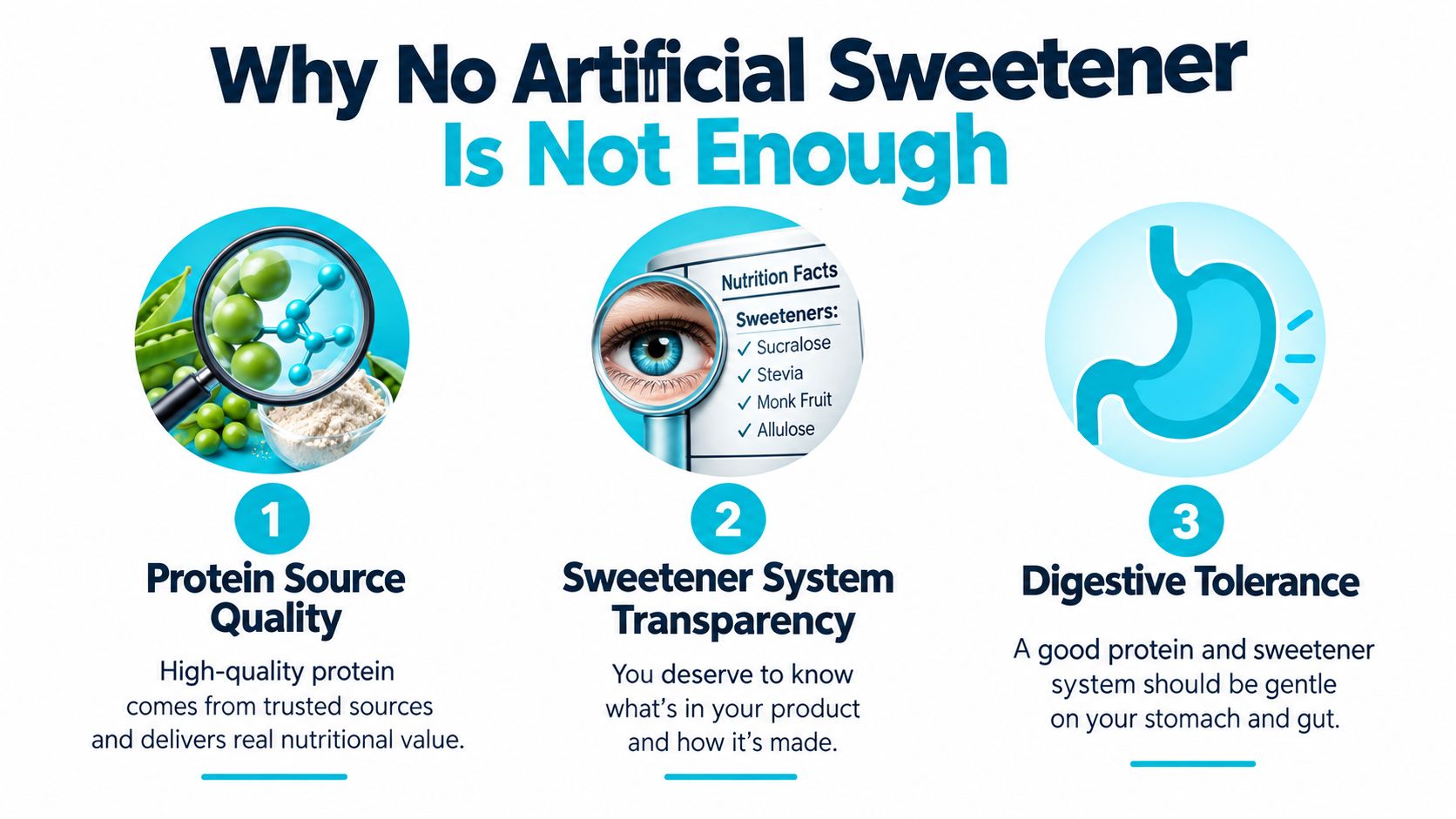
The three-question screen
Start with the protein. A named source such as whey isolate, egg white, soy, or a pea-rice blend tells you more than “premium matrix.” You need to know whether the formula matches your digestion, dietary pattern, and training objective. Protein quality also matters beyond the scoop's headline gram count, especially when a plant blend depends on combining sources for a more complete amino acid profile.
Next, identify what replaces artificial sweetness. Stevia and monk fruit are plant-derived, but they can still affect taste, aftertaste, and your willingness to use the powder daily. Sugar alcohols create a separate issue. Polyols such as erythritol may cause bloating for some users, so “not artificial” doesn't automatically mean comfortable.
Finally, check independent verification. A 2026 Harvard summary of a 2025 Clean Label Project report said 134 protein powders were screened for 130 toxins, with many containing heavy metals, pesticides, or BPA. The summary also reported that one product had 25 times the allowed BPA limit (Harvard Health). You can also review certification programs directly through NSF Certified for Sport, Informed Sport, and USP Verification Services. A powder without sucralose can still fail the safety question that matters most to a daily user.
Buying rule: “No artificial sweetener” is the starting line. Don't buy until the protein, sweetener, and testing checks all pass.
The Six Artificial Sweeteners on Every Protein Label
The FDA currently recognizes six artificial sweeteners commonly relevant to protein powders: acesulfame K, sucralose, saccharin, aspartame, neotame, and advantame (Total Shape's label guide). Treat any one of them as a disqualifier if your goal is a protein powder without artificial sweetener.
| Sweetener | Common Label Name | Typical Label Location | Relative Sweetness vs Sugar |
|---|---|---|---|
| Sucralose | Sucralose, sometimes Splenda | Ingredient list | High-intensity sweetener |
| Acesulfame potassium | Acesulfame K, Ace-K | Ingredient list | High-intensity sweetener |
| Aspartame | Aspartame, sometimes Equal or NutraSweet | Ingredient list | High-intensity sweetener |
| Saccharin | Saccharin, sometimes Sweet'N Low | Ingredient list | High-intensity sweetener |
| Neotame | Neotame | Ingredient list | High-intensity sweetener |
| Advantame | Advantame | Ingredient list | High-intensity sweetener |
Scan the back, not the marketing panel
FDA labeling rules require sugar substitutes to appear in the ingredient list, below the Nutrition Facts panel and above the allergen statement (AGN Roots). Read that line carefully. A flavor system may list sucralose and acesulfame potassium together, particularly when the manufacturer is engineering a strong, familiar sweetness profile.
The front may say “sugar-free,” “zero sugar,” or “no added sugar.” Those claims aren't interchangeable with “without artificial sweetener.” In the United States, a product may claim “sugar-free” when it contains less than 0.5 grams of sugar per serving, but that rule doesn't limit what replaces the sugar (PaleoPro).
Also check for sugar alcohols. Erythritol, maltitol, sorbitol, and similar ingredients aren't the six artificial sweeteners listed above, but they can change digestive tolerance. The label may disclose them separately in the ingredient panel or nutrition information.
Watch for sweetened carriers
Dextrose, maltodextrin, and crystalline fructose signal a sweetened formula even when the product avoids the six artificial sweeteners. They also make “zero sugar” and “no artificial sweetener” claims less useful if you're trying to control the overall ingredient load.
“Natural flavors” deserve scrutiny, too. The phrase doesn't tell you whether the product is unsweetened, naturally sweetened, or built around a broader flavor carrier system. If the label won't clearly identify the sweetener, skip the tub.
Whey, Plant, and Isolate Compared
Protein type determines more than texture. It affects lactose exposure, amino acid balance, cooking behavior, and how easy it is to keep the formula simple. Don't choose a powder by the word “clean” on the front. Choose the format that meets your protein and digestion needs before you evaluate the flavor.
| Protein Type | Typical Sweetener Pairing | Digestibility | Best Use Case |
|---|---|---|---|
| Whey concentrate | Often sucralose or acesulfame potassium in mainstream formulas | Suitable for people who tolerate dairy, with more lactose than isolate | Budget-conscious muscle gain |
| Whey isolate | Stevia, monk fruit, or artificial sweeteners depending on the product | Lower lactose exposure than concentrate | Post-workout shakes and lower-lactose diets |
| Plant protein blend | Stevia, monk fruit, or unsweetened formulas | Depends on source, fiber, gums, and individual tolerance | Vegan diets and dairy avoidance |
Whey concentrate
Whey concentrate usually wins on price and delivers a familiar shake texture. The tradeoff is that many conventionally positioned products pair it with sucralose or Ace-K to cover dairy notes and create a dessert-like profile. A short ingredient list and a clearly named whey source matter more than a bright flavor name.
Choose concentrate when you tolerate dairy, want a practical everyday powder, and can accept some additional carbohydrate and fat. Walk away if the ingredient panel leads with a vague blend or stacks multiple sweeteners and thickeners.
Whey isolate
Whey isolate is the sharper choice when lactose tolerance and protein density matter. It commonly appears in post-workout formulas, but don't assume isolate means unsweetened. Many products use stevia or monk fruit, while others still rely on sucralose and acesulfame potassium.
For vegan shoppers, the NZ Supps top vegan picks offers a useful comparison point for plant-based formats. Pea-rice blends are a practical clean-label default because each source helps address the other's amino acid limitations. Soy deserves separate attention because its protein quality can match whey on the PDCAAS measure.
Plant blends
Pea, rice, hemp, and soy powders vary widely. A single plant source may produce a less balanced amino acid profile, while a thoughtful blend can improve completeness at the cost of a grittier texture. Flavor systems also tend to carry more weight in plant formulas because earthy and grassy notes need management.
My ranking is simple. Choose whey isolate for dairy-tolerant post-workout use, whey concentrate for budget-led muscle gain, and a pea-rice or soy formula for vegan training. If you're highly sensitive to sweetness, buy unflavored first. If taste is the barrier to consistency, choose a clearly declared monk fruit or stevia formula and test your tolerance with a small purchase.
What Replaces the Sweetness and Why It Matters
Removing sucralose doesn't create a vacuum. Manufacturers generally choose stevia, monk fruit, or no sweetener. The right choice depends on whether you want a ready-to-drink shake, a baking ingredient, or total control over taste.
There isn't enough verified data here to assign a typical concentration in a 25-gram serving or a cost per kilogram of protein, and those figures vary by extract, formula, and serving size. Don't trust a precise comparison unless the product provides the actual formulation and the calculation behind it.
| Sweetener | Source | Potency vs Sugar | Aftertaste | Cost/Serving | 2025 CLP Concern |
|---|---|---|---|---|---|
| Stevia | Stevia leaf extract | High intensity | Can be bitter or licorice-like for some users | Not established here | Natural sourcing still requires contaminant testing |
| Monk fruit | Monk fruit extract | High intensity | Often softer, but product formulation controls the result | Not established here | Natural sourcing still requires contaminant testing |
| Unsweetened | No sweetener | None | Tastes like the protein source | Depends on protein formula | Fewer sweetener concerns, but protein still needs testing |
Stevia
Stevia uses steviol glycosides extracted from stevia leaves. It contributes negligible calories and generally has minimal blood-sugar impact, but some people notice bitterness or a lingering herbal note. That sensory tradeoff matters because a shake you dislike won't support consistent protein intake.
Look for clear wording such as stevia leaf extract, steviol glycosides, or a named rebaudioside. Avoid formulas that say “natural flavors” while implying a naturally sweetened experience without identifying the actual sweetener.
Monk fruit
Monk fruit extract comes from the monk fruit and uses mogrosides for high-intensity sweetness. It also contributes negligible calories and generally has minimal blood-sugar impact. Proper formulation can produce a smoother taste than stevia, but no natural sweetener guarantees sensory parity with sucralose.
The hidden issue is sourcing. The Harvard summary of the 2025 Clean Label Project report shows why buyers should assess contaminants rather than assume a plant-derived ingredient is automatically clean. Heavy metals, pesticides, and BPA remain relevant screening questions for the finished powder, regardless of whether its sweetener grew in a field or came from a laboratory.
Unsweetened
Unsweetened powder is the most transparent option. You can add cinnamon, cocoa, berries, or fruit yourself, and you can use the same protein in savory recipes or baking. The downside is obvious: mixed with water alone, the drink will taste like its protein source.
Practical rule: Choose a tested stevia or monk fruit blend when convenience matters. Choose unsweetened when you want maximum control over sweetness and ingredient load.
Reading the Label in Under Sixty Seconds
A label check should be mechanical. Don't let packaging color, a “zero sugar” badge, or a fitness photograph decide for you.
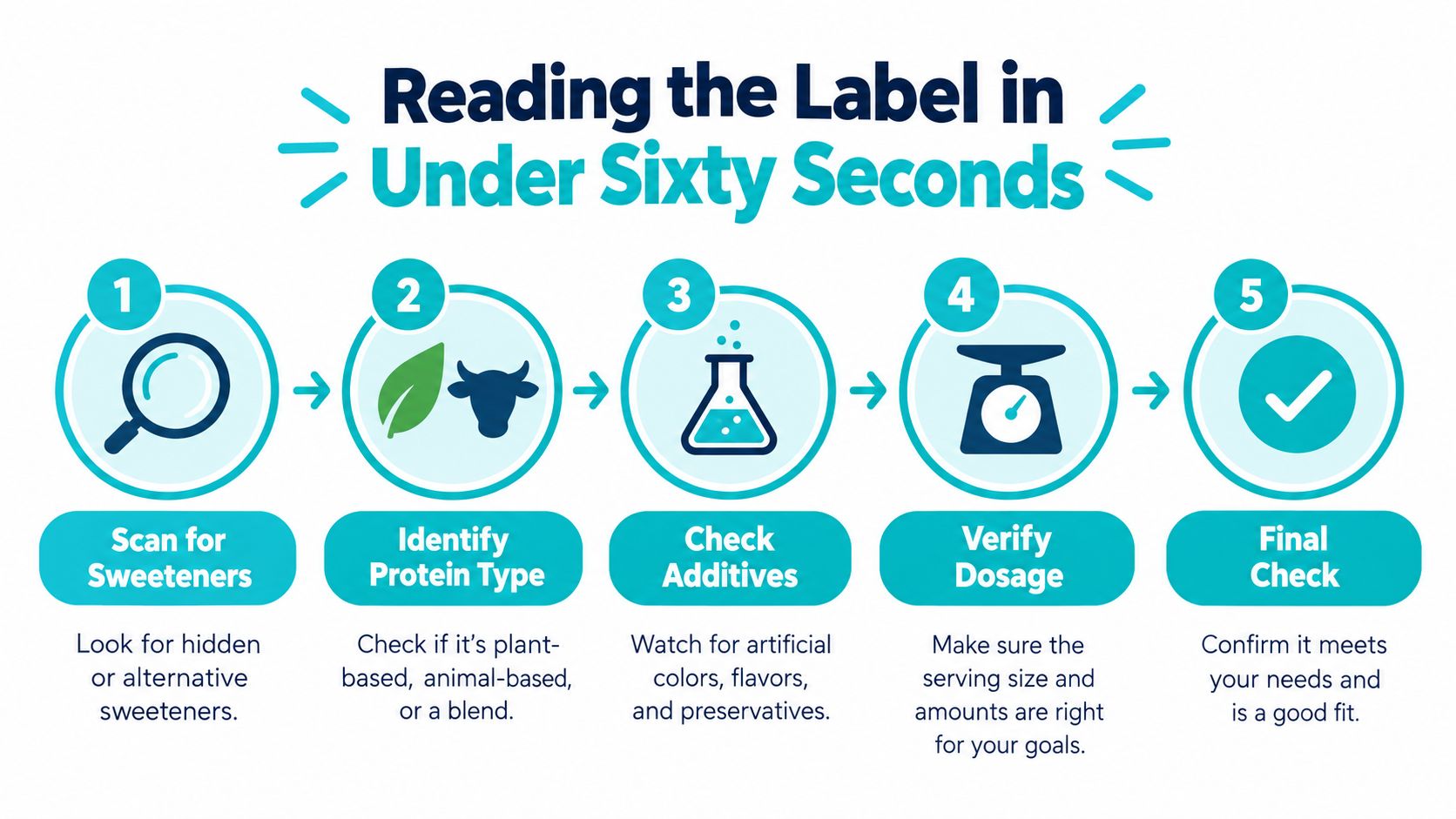
Use the five-step scan
Scan for the six artificial sweeteners. Look for sucralose, acesulfame K, aspartame, saccharin, neotame, and advantame. Check generic names and familiar brand names where provided.
Confirm the protein source. Ingredients appear in descending order by weight. You should see a named protein source rather than an opaque “proprietary protein blend.” If the product hides the source, you can't properly compare it.
Check verification. Look for a relevant third-party seal such as NSF Certified for Sport, Informed Sport, USP, or ConsumerLab. Then verify the lot number on the certifier's own website. A logo printed on a tub is not the same as a verified listing.
Do the serving math. Compare cost per 20 grams of usable protein, not cost per scoop. Scoop sizes and protein amounts differ, so a cheaper tub may not deliver cheaper protein.
Finish with allergens and warnings. Check dairy, soy, egg, and other allergen statements. If you train in shared facilities or cook with the powder at high heat, read cross-contamination and use guidance closely.
Red flags that deserve a rejection
“Natural flavors” can be legitimate, but the phrase doesn't give you the source or full detail you need. “Proprietary blend” can make it impossible to assess how much protein or digestive support you're buying. “Digestive enzyme blend” may sound helpful while hiding a mix of ingredients and dosages.
A short label isn't automatically superior, but a long label demands a reason. Gums, carriers, multiple sweeteners, and flavor systems can make a powder harder to evaluate and harder to tolerate. If the product claims clean nutrition while refusing to disclose the formula clearly, leave it on the shelf.
Matching Protein Powders to Real Fitness Goals
Your training goal should determine the protein format first. Sweetener preference comes second, but it still decides whether you'll use the product consistently.
| Fitness Goal | Best Protein Type | Sweetener System | Min Protein %/Serving | Skip If |
|---|---|---|---|---|
| Post-workout recovery | Whey isolate | Unsweetened, monk fruit, or stevia | Compare protein grams with scoop weight | Dairy causes symptoms or the formula uses undisclosed blends |
| Budget muscle gain | Whey concentrate | Transparent natural sweetener or unsweetened | Compare usable protein, not scoop size | Extra lactose, fat, or carbohydrate doesn't fit your plan |
| Vegan lifting | Pea-rice blend or soy | Monk fruit, stevia, or unsweetened | Demand a clearly named blend | Texture, gums, or source balance don't suit you |
| Fat loss | Egg white protein or lean isolate | Unsweetened or low-calorie natural sweetener | Favor a high protein-to-scoop ratio | Added carriers and sweetened fillers dilute the formula |
| Baking | Unsweetened whey, plant, or egg protein | No sweetener | Choose based on the recipe, not a dessert flavor | Sweetener flavor clashes with cocoa, fruit, or savory ingredients |
| Digestive sensitivity | Unflavored isolate or a simple plant blend | Unsweetened first | Prioritize tolerated protein over marketing claims | Sugar alcohols, heavy gums, or known allergens trigger symptoms |
Fat loss and diabetes management
For fat loss, use a powder that gives you a high proportion of protein without forcing extra sweetness or fillers into every serving. Egg white protein and whey isolate are practical options when tolerated. For diabetes management, don't stop at “sugar-free.” Check for maltodextrin, crystalline fructose, sugar alcohols, and the full carbohydrate line, then choose an unsweetened, stevia, or monk fruit option that fits your personal medical plan.
A 2025 study found that 74.1% of parents viewed artificial sweeteners as harmful, while 45.7% considered protein drinks harmful, showing that concern extends beyond one ingredient (PMC study). That's another reason to evaluate the whole formula rather than labeling one sweetener as the only problem.
Recovery, baking, and gut comfort
Whey isolate is the cleanest default for a dairy-tolerant post-workout shake. Casein suits a long gap between meals or a nighttime routine, while an unflavored powder works best in baking because you control the cocoa, cinnamon, fruit, and total sweetness.
Plant blends can support vegan lifters, but expect more texture variation. If digestion is your limiting factor, start with an unflavored formula and avoid sugar alcohols and unnecessary gums. For guidance on how the shake fits into the wider training day, review athletic nutrition fuel timing and recovery.
The Three Question Decision Rule
Don't compare tubs by flavor names or influencer rankings. Ask three questions in order.
First, is the protein right for your goal and gut?
A whey isolate may suit recovery and lower lactose exposure. A pea-rice blend or soy may suit vegan training. Egg white can fit a lean, low-carbohydrate approach, while unflavored protein is the most flexible for cooking.
Second, is the sweetener system transparent?
“Without artificial sweetener” can still mean stevia, monk fruit, sugar alcohols, or a broader flavor system. Decide whether you want natural sweetness or no sweetness at all. If you can't identify what creates the taste, you haven't finished reading the label.
Third, does the testing match the claim?
Look for independent verification and confirm the lot information with the certifier. NSF Certified for Sport and Informed Sport are especially relevant screens for athletes who need tighter product controls. A missing seal doesn't prove a product is unsafe, but it removes a useful layer of confidence.
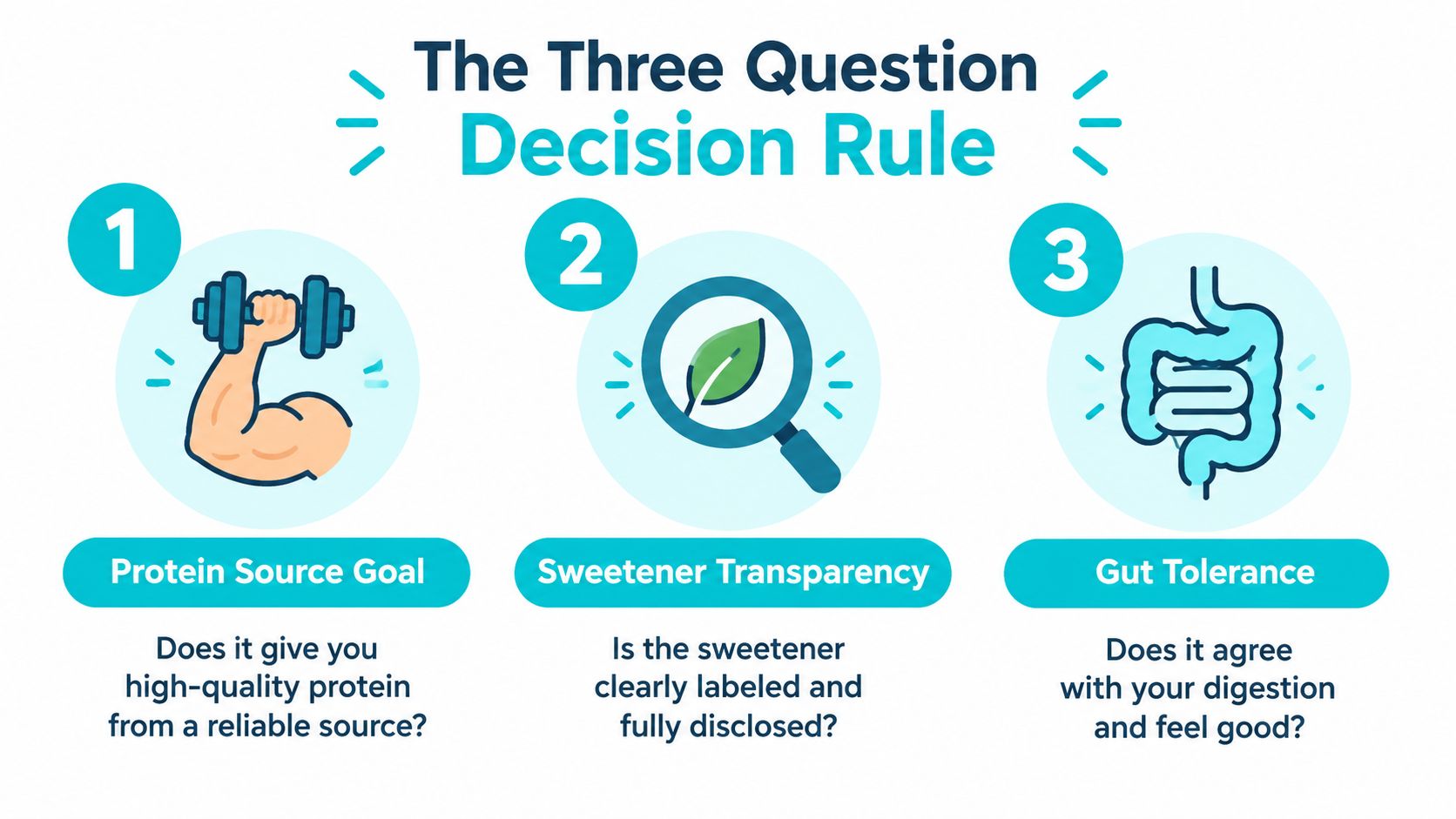
Buy only when all three answers are clear. Walk away if one fails.
Natural language can still conceal weak disclosure. A proprietary flavor blend may hide carriers. “Natural flavors” may leave the source unclear. A missing third-party listing matters more for athletes subject to tested-sport requirements.
If two powders tie, choose the one with the shorter, clearer ingredient panel and the more useful format for your actual routine. The best powder is the one you can tolerate, verify, and use without forcing yourself through an unpleasant shake.
Summary
A protein powder without artificial sweetener still needs to pass three checks: protein source quality, sweetener transparency, and third-party testing. Scan for the six FDA-recognized artificial sweeteners, including sucralose, acesulfame K, aspartame, saccharin, neotame, and advantame. Match the protein to the goal: whey isolate for post-workout use, whey concentrate for budget-led muscle gain, plant blends for vegan lifters, egg white for lean formulas, and unsweetened powder for baking or maximum control. “Sugar-free” alone isn't enough.
Frequently Asked Questions
Do monk fruit and stevia count as artificial sweeteners?
No. Monk fruit and stevia are plant-derived sweeteners, unlike the six artificial sweeteners screened in this guide. They can still affect taste and may create an aftertaste, especially in poorly formulated products. They also deserve label and testing scrutiny because “natural” doesn't guarantee complete product quality or contaminant control.
Why can an unsweetened powder still taste sweet?
An unsweetened powder contains no added sweetener, but the protein source and other ingredients can influence taste. Cocoa, fruit, or flavor ingredients may also create a perception of sweetness. If you want complete control, choose an unflavored formula and add cinnamon, cocoa, or fruit yourself.
How do I verify a third-party testing claim?
Look for a recognized seal such as NSF Certified for Sport, Informed Sport, USP, or ConsumerLab. Then search the certifier's own website and confirm that the product and lot number match. Don't treat a logo on the packaging as proof by itself.
Can plant protein match whey for muscle building?
A well-formulated plant blend can support vegan lifting, particularly when it combines sources such as pea and rice. Soy protein quality can match whey on the PDCAAS measure. Plant formulas vary, so check the named sources, texture ingredients, and overall protein amount rather than assuming every plant powder performs identically.
What's the safest pick for diabetes management?
Start with an unsweetened, stevia, or monk fruit formula and inspect the full carbohydrate and ingredient lines. Don't rely on “sugar-free,” because that claim doesn't specify what replaced sugar. Check for maltodextrin, crystalline fructose, and sugar alcohols, then align the choice with your medical guidance.
How can “natural flavors” hide a sweetener?
“Natural flavors” doesn't identify every detail of the flavor system or explain whether the product is sweetened. If the label claims a sweet taste but doesn't clearly list stevia, monk fruit, sugar, or another declared sweetener, treat the formula as unclear. Choose a product with direct ingredient disclosure instead.
ThriveXDNA offers fitness tools that can help you pair label decisions with an actual training routine, including AI workouts, form-clip review, meal planning, and ingredient lookup. Visit ThriveXDNA to build a more consistent system for choosing food, supplements, and workouts.
Related guides
- more on How Fitness Supports a Better Life Insurance Quote Online
- more on Health Insurance Plans with Dental: Compare 2026 Options
- Stop Wasting Money on Trainers: The Top 5 AI Workout Plan Generators
- a closer look at How Much Protein Do You Actually Need?
- 1800 Calorie High Protein Diet Plan Made Simple
- a closer look at High-Protein Meal Prep for Weight Loss That Keeps
- High Protein Meal Prep for Muscle Gain: The Under-Eating Mistake
- High Protein Snacks for When You’re Doing Everything Right
- a closer look at High Protein Breakfast: The Real Fix for Your 2 PM
- details: Post Workout Meal Guide: What to Eat After Training (and
- 8 Low Calorie Smoothie Recipes for Fitness Goals
- What Is Muscle Recovery and How to Optimize It
- the Thrive X Fitness training app