
You've had a busy day, you're hungry after training, and dinner has turned into a guessing game. You want fat loss without living on tiny portions, but generic meal plans often hand everyone the same protein target, usually without explaining whether it fits their body size or goal. A practical 1800 calorie high protein diet plan starts differently: set protein according to your body weight and objective, then use the remaining calories for carbohydrates, fats, and foods you'll keep eating.
The framework below is designed for real schedules. It includes a complete sample day, convenience and budget swaps, meal-level protein targets, and a preparation system that can survive a rushed morning or an evening when cooking is the last thing you want to do.
Table of Contents
- Why 1800 Calories With High Protein Works for Fat Loss
- How to Set Your Protein and Macro Targets at 1800 Calories
- Full Sample Day on an 1800 Calorie High Protein Plan
- Smart Swaps Timing and Portion Fixes That Keep Protein High
- Beginner Grocery List and Simple Prep System for the Week
- Summary
- Frequently Asked Questions
Why 1800 Calories With High Protein Works for Fat Loss
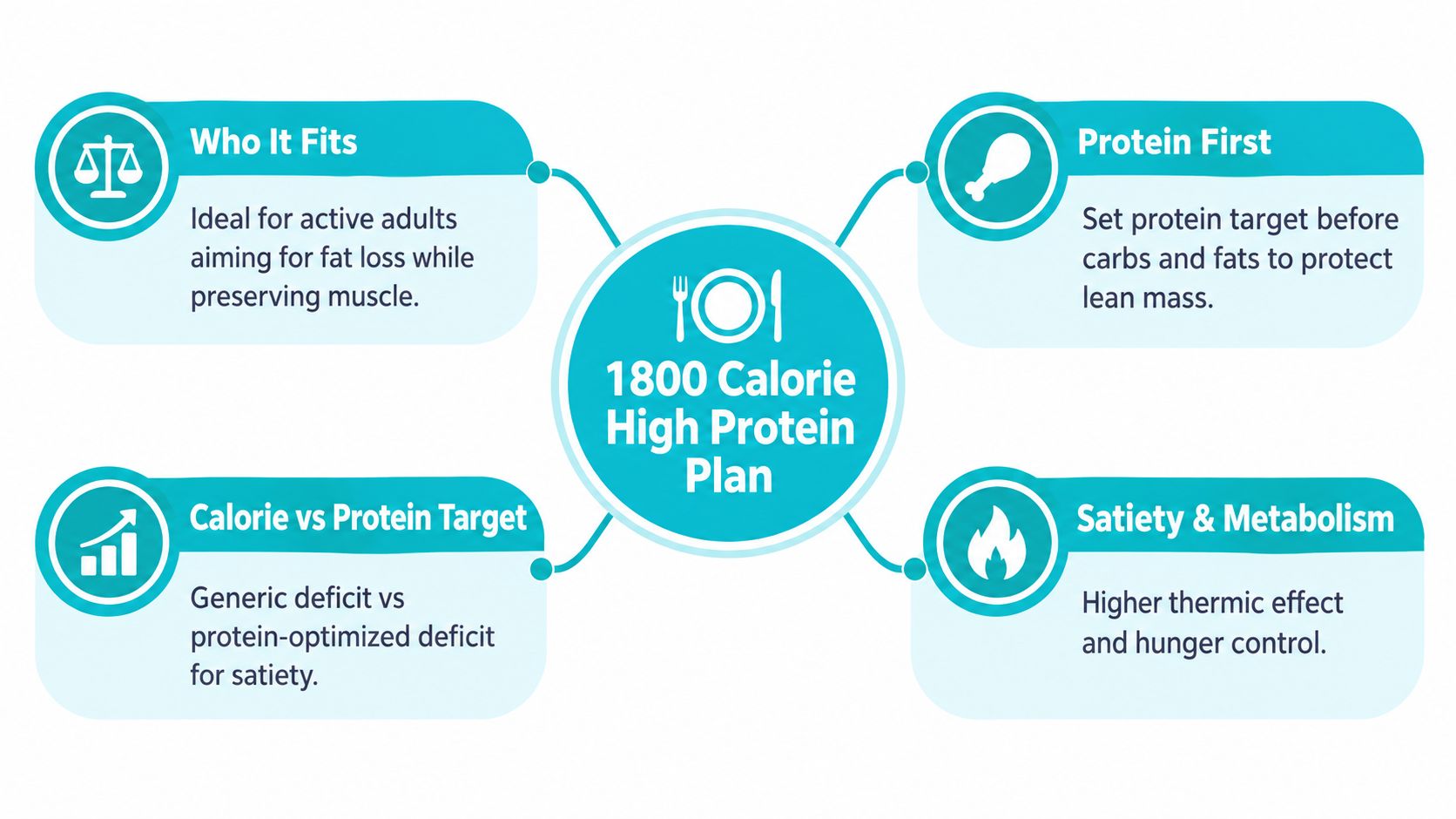
An 1,800-calorie target can create a controlled deficit for many active beginners and intermediate trainees, but it isn't automatically a deficit for every person. Your maintenance intake depends on body size, activity, training, and other individual factors. Treat 1,800 calories as a planning number to test against your energy, performance, hunger, and body-weight trend, not as a universal prescription.
The protein-first approach matters because calorie control alone doesn't tell you how satisfying or muscle-supportive those calories will be. Research commonly defines a high-protein diet as about 20% to 35% of calories from protein, with many trials using 1.2 to 1.9 g/kg/day. On an 1,800-calorie plan, that broad range equals roughly 90 to 158 grams of protein per day. A 2020 review of randomized trials found that higher-protein diets produced greater weight loss than lower-protein diets, including an additional 0.67 kg of weight loss, more fat-mass loss, and better fat-free-mass preservation.
The calorie target is only half the plan
A standard 1,800-calorie menu can spend too many calories on oils, large snack portions, or low-protein foods. You may technically hit the calorie target and still feel hungry shortly afterward. A protein-prioritized version gives each meal a clear anchor, such as chicken, fish, eggs, Greek yogurt, cottage cheese, tofu, lean beef, or a measured protein shake.
Protein also has a higher thermic effect than carbohydrates and fat, meaning the body uses more energy processing it. That doesn't make protein a shortcut, and the research effect remains modest. The practical benefit is that a protein-rich meal often gives you a better hunger-to-calorie trade-off while you're eating less energy overall.
Coaching rule: Set the protein target before choosing snacks, sauces, and cooking fats. Those extras are easier to fit after the anchor is secure than to correct at the end of the day.
Who should use this framework
This approach fits active adults seeking fat loss, people returning to resistance training, and busy beginners who need a repeatable structure. It can also support maintenance or muscle-gain work when the calorie target and total intake are adjusted to match the goal. Someone with a larger body size or high training load may need more than a fixed 150-gram target, while a smaller or less active adult may find that target unnecessarily demanding.
The evidence supports treating protein as part of a broader strategy. Calories still determine whether body weight tends to move down, while protein distribution, food quality, training, and compliance influence how manageable the process feels and how well lean tissue is supported. For a simple overview of energy balance and healthy weight loss habits, the CDC guidance on losing weight is a useful reference.
How to Set Your Protein and Macro Targets at 1800 Calories
Start with body weight, then choose the lower or higher end of the protein range based on your goal and training. A practical evidence-based range is 1.2 to 1.6 g/kg/day, while a protein-first 1,800-calorie structure commonly places 25% to 30% of calories toward protein. That equals approximately 113 to 135 grams per day at 1,800 calories. Evidence reviews on protein and weight management also support distributing protein across meals rather than concentrating nearly all of it at dinner.
Use this decision process:
- For fat loss, begin around 1.2 to 1.6 g/kg/day, selecting the higher end if you're resistance training or frequently hungry.
- For maintenance, stay within the same range, then give more flexibility to carbohydrates and fats if training performance or food preference requires it.
- For muscle gain, protein can remain in this range, but 1,800 calories may not provide enough total energy for every person. The calorie target needs to match the goal rather than forcing a surplus into a fixed cut plan.
- For smaller or less active adults, a moderate protein target may be more comfortable. An NHS-hosted 1,800-calorie plan uses a minimum of 60 to 75 grams per day and notes that some adults may use up to 120 grams, depending on individual goals. The NHS meal-plan document illustrates why one target shouldn't be applied to everyone.
Use body weight instead of copying a fixed target
| Body Weight | 1.2 g/kg Target | 1.6 g/kg Target | % of 1800 kcal |
|---|---|---|---|
| 60 kg | 72 g | 96 g | 16% to 21% |
| 70 kg | 84 g | 112 g | 19% to 25% |
| 80 kg | 96 g | 128 g | 21% to 28% |
| 90 kg | 108 g | 144 g | 24% to 32% |
| 100 kg | 120 g | 160 g | 27% to 36% |
The table shows why 150 grams can be too aggressive for one person and too low for another. It also shows a useful tension in the plan: a body-weight calculation may land below or above the calorie percentage range. Choose the target that fits your body size, training, appetite, and ability to comply. More protein isn't automatically better, and a neutral nutrition review describes 2.0 g/kg/day as safe for healthy adults over the long term, with an estimated tolerable upper level of 3.5 g/kg/day for well-adapted subjects.
Divide the target across the day
Aim for 25 to 40 grams per meal across three or four main protein feedings. This is easier to execute than trying to rescue a low-protein day with a huge evening meal. If you use a powder for convenience, compare serving size, protein content, ingredients, and tolerance before buying. A useful starting point is to find your protein powder that fits your dietary preferences and makes your target easier to reach without displacing whole-food meals.
Once protein is set, use carbohydrates around training and choose enough dietary fat to make meals satisfying. Guidance on healthy eating patterns from the Dietary Guidelines for Americans can help you balance protein, carbohydrates, and fats without overcomplicating meals. Don't let calorie-dense oils, nuts, creamy sauces, or grazing snacks consume the calories you intended for protein and carbohydrates.
Full Sample Day on an 1800 Calorie High Protein Plan
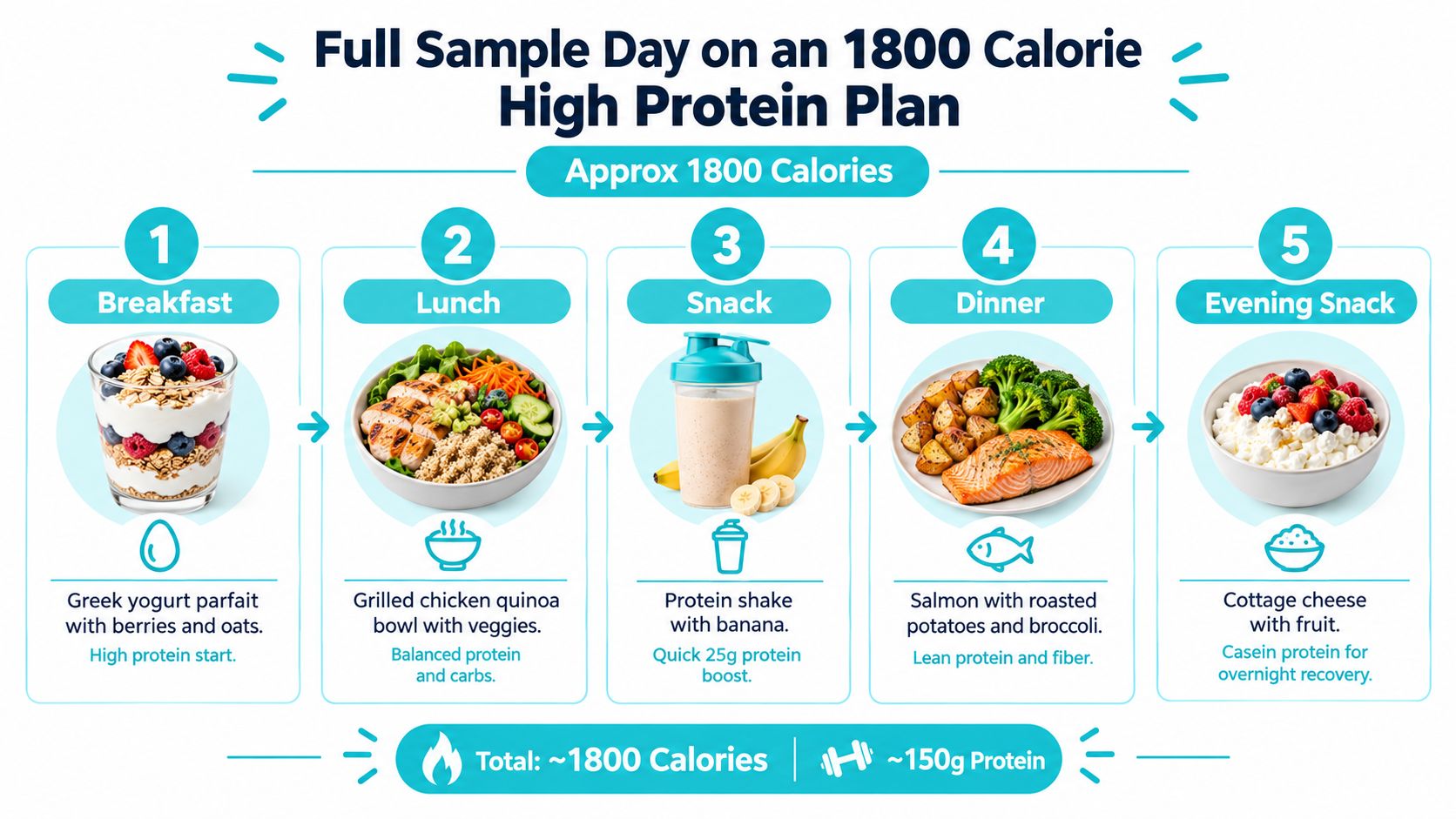
The following day is a practical template, not a requirement to eat these exact foods. Portions and nutrition labels vary, so use your own product labels when tracking. The structure aims for approximately 1,800 calories and 150 grams of protein, similar to a published 1,800-calorie example that uses roughly 150 grams of protein across multiple eating occasions. That sample plan lists a macro structure near 1,800 calories, 150 grams of protein, 170 grams of carbohydrates, and 60 grams of fat.
Breakfast
Build a Greek yogurt parfait with 250 grams of nonfat Greek yogurt, berries, oats, and a measured spoonful of nut butter. A typical combination can provide roughly 400 calories and 30 to 35 grams of protein, depending on the yogurt and toppings you choose. If you want label details for plain nonfat Greek yogurt, the USDA FoodData Central database is a practical place to verify calories and protein for the exact product type you buy.
Eat this meal early if mornings are when you tend to under-eat protein and over-snack later. If you train in the morning, keep some oats or fruit in the bowl for carbohydrates. If you train later, the same breakfast works as a steady start without using a large share of the day's calories.
Lunch
Make a grilled chicken quinoa bowl with 120 to 150 grams of cooked chicken, a measured portion of quinoa, mixed vegetables, and a light dressing. This lands around 500 calories and 40 grams of protein when portions are controlled.
The common mistake is treating quinoa, avocado, olive oil, and dressing as “free” because they're nutritious. They can all fit, but measure the calorie-dense additions and let chicken remain the anchor. On a training day, place lunch a few hours before your session if that timing feels comfortable.
Snack
Use a protein shake with one serving of protein powder and a banana, aiming for approximately 200 to 250 calories and at least 25 grams of protein. This is the meal to keep simple when work, commuting, or childcare makes a cooked snack unrealistic.
A shake is a tool, not a nutritional upgrade by itself. If you're comparing products, a practical Lean Body protein shake review can help you assess the formula, serving information, and whether the product suits your routine.
Dinner
Serve salmon with roasted potatoes and broccoli. Use a portion of salmon that supplies roughly 30 to 35 grams of protein, add potatoes for carbohydrates, and keep the roasting oil measured. The full plate can provide approximately 500 to 550 calories, depending on the salmon portion and cooking fat.
Put this meal after training when you prefer a larger post-workout dinner. Sports nutrition guidance from the International Society of Sports Nutrition position stand supports using protein and carbohydrates around training to support recovery and performance. On a rest day, reduce the potato portion slightly and retain the protein portion if you need to lower calories while preserving the day's protein anchor.
Evening snack
Finish with cottage cheese and fruit, targeting approximately 200 calories and 25 grams of protein. If dairy doesn't suit you, use a tofu-based option or another protein food that you already tolerate.
The day's total should be treated as a working estimate, not a promise of laboratory precision. If calories run high, remove some added fat or starch first. If protein runs low, increase the lean protein portion or use a measured shake rather than adding random snacks.
Smart Swaps Timing and Portion Fixes That Keep Protein High
Most plans fail in predictable places. A person underestimates the oil used in cooking, chooses a large handful of nuts as a snack, or assumes a small serving of a protein food will carry the meal. The fix isn't to ban those foods. It's to compare the trade-off before the calories disappear.
Protein swaps
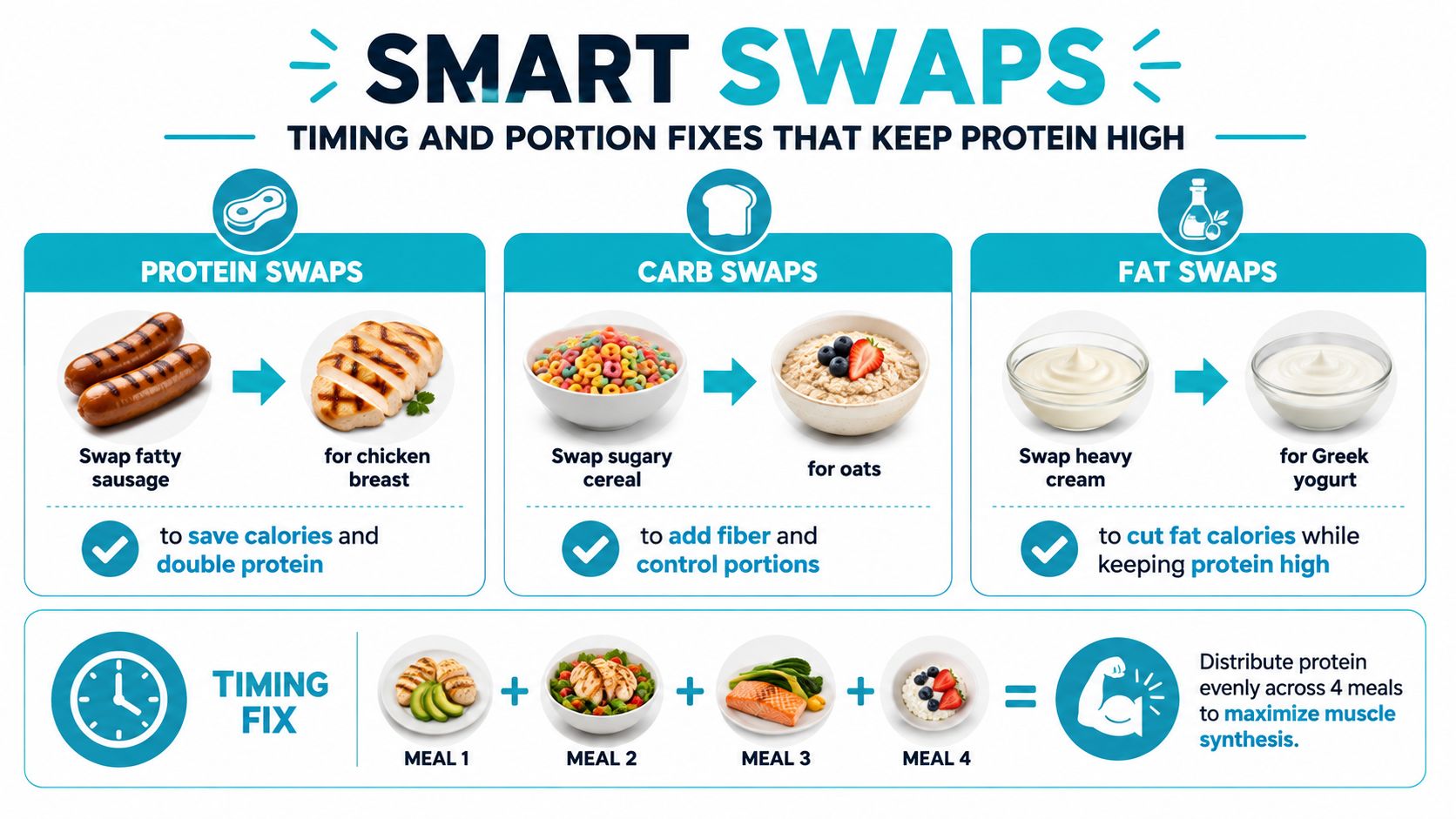
| If you usually choose | Try instead | Why it helps |
|---|---|---|
| Fatty sausage | Chicken breast or turkey | More protein density with fewer calories |
| Takeout burger | Lean beef patty with a measured bun | Keeps the meal familiar and easier to portion |
| Large cheese snack | Greek yogurt or cottage cheese | Makes the protein contribution clearer |
| Cooked chicken every day | Rotisserie chicken or canned fish | Reduces preparation friction |
Rotisserie chicken is useful when you remove the skin and portion the meat before eating. Canned tuna, salmon, or chicken can become a no-cook lunch with microwave rice and bagged salad. Frozen high-protein meals can also work as a backup, but check the label because “high protein” is a product description, not a guarantee that the meal fits your target.
Carbohydrate and fat swaps
Replace sugary cereal with oats when you want a more deliberate breakfast portion. Swap creamy dressings for Greek yogurt-based sauces, and use measured olive oil rather than pouring directly from the bottle. These changes protect calories without forcing you to remove carbohydrates or fats entirely.
For budget control, buy eggs, dried lentils, canned fish, plain yogurt, frozen vegetables, rice, potatoes, and bulk chicken when prices suit you. For convenience, use pre-cooked grains, frozen vegetables, shelf-stable tuna, and ready-to-eat yogurt. The USDA guide to healthy eating on a budget is useful if you want practical ways to stretch protein and produce spending. The best choice is the one you'll use before it spoils.
Timing and tracking
Spread protein across three to four meals, with breakfast included if evening hunger is a problem. Keep a protein snack available before hunger becomes urgent. On training days, place more of your carbohydrate portion before or after the workout if that improves performance and recovery. On rest days, keep protein steady and adjust starch or added fat when needed.
Use the Thrive X Fitness app's photo and barcode nutrition logging to catch recurring errors, especially cooking oils, sauces, drinks, and snack portions. Take a photo of assembled meals when weighing every ingredient feels excessive, then use barcode entries for packaged foods. Tracking should reveal patterns, not turn every meal into a test.
The minimum viable standard: Have one reliable breakfast, one no-cook protein option, and one freezer backup. You don't need perfect variety to keep the plan moving.
For more low-effort evening options, browse easy protein dinners and select meals that can be portioned around your target rather than choosing recipes only because they sound healthy.
Beginner Grocery List and Simple Prep System for the Week
A weekly grocery list should support the plan you'll follow on a tired day, not the ideal version of you who has unlimited time. Buy enough protein anchors for repeated meals, then add flexible produce and carbohydrates that can move between bowls, plates, and snacks.
The shopping list
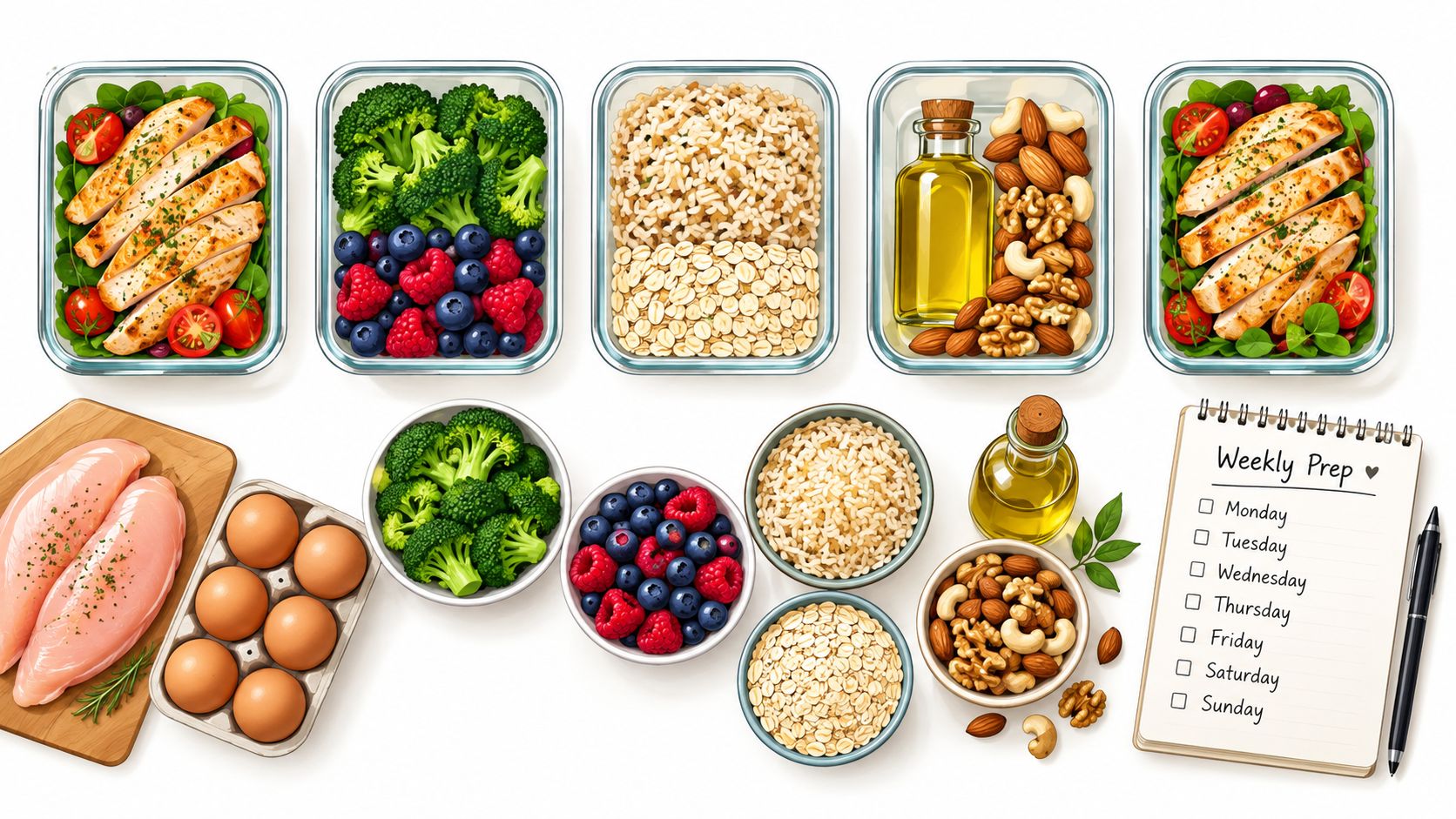
Protein foods: chicken breast or rotisserie chicken, salmon or canned fish, lean beef, eggs, Greek yogurt, cottage cheese, tofu, and protein powder if useful.
Carbohydrates: oats, quinoa, rice, potatoes, bananas, berries, and whole-grain wraps or bread. Choose fresh, frozen, or shelf-stable forms based on your schedule and budget.
Produce: frozen broccoli, mixed vegetables, salad greens, tomatoes, onions, peppers, and fruit that travels well. Frozen vegetables reduce waste and require almost no preparation.
Flavor and fats: salsa, mustard, low-calorie sauces, measured olive oil, herbs, spices, and a modest amount of nuts or avocado. These ingredients make repeated meals tolerable without turning every plate into a high-calorie snack board.
A low-friction preparation flow
Cook two main proteins, such as chicken and lean beef, rather than preparing seven different recipes. Prepare one carbohydrate base, wash or portion produce, and assemble two grab-and-go snacks. Keep cottage cheese, Greek yogurt, canned fish, or a shake available for the meal that gets disrupted.
Store cooked food in shallow containers and label portions with the date. Freeze extra servings if you won't eat them soon. The USDA food safety basics are a useful reference for safe storage, refrigeration, and reheating. The goal is not a restaurant-style meal-prep display. It's reducing the number of decisions between hunger and a protein-containing meal.
Use the app's barcode entries for packaged foods and photo logging for assembled bowls. Review the day before dinner. If protein is behind target, you can add yogurt, cottage cheese, chicken, or a shake deliberately instead of discovering the gap at bedtime.
Preparation beats motivation. A backup meal in the freezer and a protein snack in your bag can protect the plan when cooking doesn't happen.
Summary
An effective 1800 calorie high protein diet plan starts with body weight and goal rather than a fixed 150-gram prescription. A practical protein range is 1.2 to 1.6 g/kg/day, distributed across three or four meals with roughly 25 to 40 grams per meal. The sample day uses Greek yogurt, chicken, a shake, salmon, and cottage cheese as anchors. Smart swaps, measured calorie-dense foods, convenience backups, and simple weekly preparation make the structure easier to maintain.
Frequently Asked Questions
Do I need exactly 150 grams of protein at 1,800 calories?
No. Protein needs vary with body weight, training, appetite, and goal. A practical range is 1.2 to 1.6 g/kg/day, while some smaller or less active adults may use a more moderate target. A fixed 150-gram goal can be unnecessarily demanding for one person and insufficient for another, so calculate from body weight before choosing your daily number.
How should I distribute protein across the day?
Use three or four protein feedings, aiming for roughly 25 to 40 grams per meal. Include breakfast if you tend to become hungry later, then build lunch, dinner, and an optional snack around clear protein anchors. This approach is easier to follow than eating very little protein early and trying to consume most of the day's target in one evening meal.
Should my meals change on training and rest days?
Keep your protein anchor consistent, then adjust carbohydrates or added fats according to training demands and total calories. On training days, place more carbohydrate around the workout if it supports performance. On rest days, you can reduce a starch or calorie-dense addition while retaining the main protein portion. The goal is to support activity without abandoning the overall calorie structure.
Can convenience foods fit an 1,800-calorie high-protein plan?
Yes. Rotisserie chicken, canned fish, Greek yogurt, cottage cheese, frozen vegetables, microwave grains, protein shakes, and suitable frozen meals can reduce preparation demands. Check labels and portion calorie-dense sauces, oils, and snacks. Keep one no-cook option and one freezer backup available so a busy day doesn't turn into unplanned grazing.
What should I do if I'm under my protein target at night?
Choose a measured protein food rather than adding a random snack. Greek yogurt, cottage cheese, a shake, canned fish, or leftover chicken can close the gap with a clear portion. If this happens often, move some protein to breakfast or lunch and prepare a snack earlier. General NIH nutrition guidance also supports building consistent eating patterns instead of repeatedly trying to catch up late in the day. Don't compensate by making every evening meal excessively large.
Thrive X Fitness can help you organize meal plans, use photo and barcode nutrition tracking, and keep your workouts and nutrition habits in one place. Visit ThriveXDNA to explore the tools and build an 1,800-calorie routine that fits your actual week.
Related guides
- a closer look at How Much Protein Do You Actually Need?
- details: High-Protein Meal Prep for Weight Loss That Keeps You Full
- High Protein Meal Prep for Muscle Gain: The Under-Eating Mistake
- High Protein Snacks for When You’re Doing Everything Right
- a closer look at High Protein Breakfast: The Real Fix for Your 2 PM
- Protein Powder Without Artificial Sweetener: A Buyer’s Guide
- a closer look at How to Track Macros for Weight Loss: A Practical
- more on How to Lose Belly Fat: What Actually Works
- Weight Loss Plateau? The Hidden Calories Hiding in Your
- 8 Low Calorie Smoothie Recipes for Fitness Goals
- Best AI Nutrition Apps for Weight Loss
- details: Best MacroFactor Alternatives 2026 (Free and Adaptive)
- the Thrive X Fitness training app