
You train four or five days a week, eat what you’d call healthy, and the mirror still looks the same as it did five months ago. If you’ve ever searched for a high protein meal prep plan at 11pm wondering what you’re doing wrong, you’re already halfway to the real answer: most people who think they eat enough protein are running a daily deficit without knowing it, not because they eat badly, but because “healthy” and “high protein” are not the same diet.
This usually isn’t a training problem you fix with one more accessory lift or an extra set of curls. It’s a math problem first, and a logistics problem second. Most lifters have never actually run the numbers on how much protein their bodyweight requires, and even fewer have built a repeatable system to hit that number on a Tuesday when work runs late and the gym bag is still in the car.
In our own keyword research this year, “how to build muscle” gets searched roughly 64,046 times a month, while “how much protein do I need to build muscle” pulls only 9,169. That gap is telling. People go looking for a new program long before they check whether their plate can even support one.
Key Takeaways
- Most exercising adults need 1.4 to 2.0 grams of protein per kilogram of bodyweight a day to build or maintain muscle, per the International Society of Sports Nutrition’s position stand on protein and exercise.
- “How to build muscle” gets searched about 64,046 times a month in our own keyword research, but “how much protein do I need to build muscle” pulls only 9,169, a sign most people fix their training before they ever check their protein math.
- A 180-pound lifter at the low end of that range (1.4 g/kg) needs about 114 grams of protein a day; at the high end (2.0 g/kg) that’s roughly 164 grams, a gap most “eating clean” diets never close.
- Searches for “high protein meal prep” run around 72,070 a month, the biggest number in this whole cluster, which tells you people already suspect prep is the fix, they just don’t have a repeatable system for it.
- The Bison and Mushroom Breakfast Skillet, one of the ThriveXDNA Breakfast Pack recipes, delivers 55 grams of protein in a single 520-calorie meal that takes 15 minutes to prep and 25 to cook.
- Training volume and protein timing dominate the conversation online, but plain under-eating relative to bodyweight is the more common problem, and the easier one to fix.
How Much Protein You Actually Need to Build Muscle
Most people who train consistently need somewhere between 1.4 and 2.0 grams of protein per kilogram of bodyweight a day to build muscle. That’s the range laid out in the International Society of Sports Nutrition’s position stand on protein and exercise, and it holds for most exercising adults, not just competitive bodybuilders. For a 180-pound person (about 82 kg), that works out to roughly 114 to 164 grams of protein a day. Most “healthy eaters” land closer to 80 to 100 grams without ever weighing anything.
The same research notes that intakes above 2.0 g/kg don’t add extra muscle for most people, and that even higher ranges, 2.3 to 3.1 g/kg, only really matter during a calorie deficit, when the body is trying to hold onto lean mass while losing fat. So more isn’t automatically better once you’re past roughly 2.0 g/kg. The bigger issue for almost everyone reading this isn’t a ceiling problem, it’s a floor problem: not clearing the minimum on most days.
That gap between “how to build muscle” (64,046 searches a month in our own research) and “how much protein do I need to build muscle” (9,169) is the whole article in one comparison. Roughly seven people go looking for a new workout for every one who stops to check whether their diet can actually support the muscle they’re trying to build. Training gets the attention. Protein math gets skipped.
Eating Healthy Doesn’t Mean Eating Enough
“Healthy” as most people use it describes calorie quality, not protein quantity, and that mismatch is exactly why a clean-eating diet can still leave you 40 or 50 grams short every day. A salad with grilled chicken, a smoothie with fruit and a scoop of almond butter, a bowl of oatmeal with berries: all reasonable choices, none of them anywhere close to protein-dense on their own.
A few habits quietly drain protein out of an otherwise solid diet. Breakfast is the biggest offender: oats, toast, fruit, coffee, maybe an egg if you’re lucky, and you’ve burned through a third of your day on 15 to 20 grams of protein when you needed closer to 40. Snacking on nuts, hummus, or granola bars feels virtuous and adds fat and carbs instead of the amino acids your muscles actually need to recover. And portion sizes for meat, fish, and eggs have shrunk across a lot of “diet-friendly” recipes, because cutting protein is an easy way to cut calories on paper.
None of that is a character flaw. It’s just what happens when nobody tells you that “eat healthy” and “eat enough protein” are two different instructions that occasionally point in the same direction and often don’t.

High Protein Meal Prep That Actually Hits Your Number
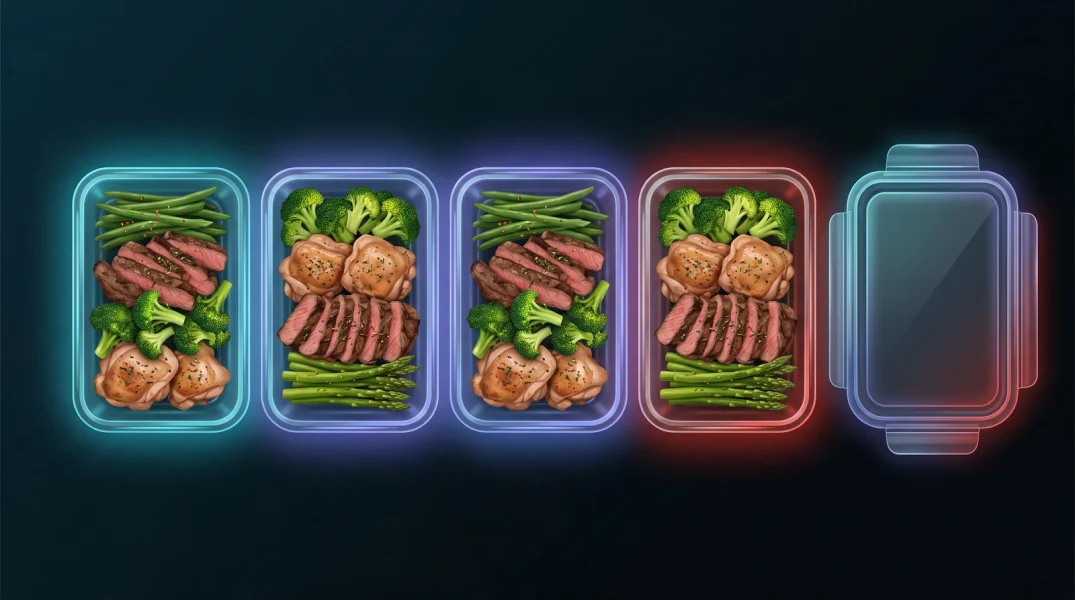
A high protein meal prep system that works has three parts: three or four protein anchors you rotate through, two batch-cooking sessions a week instead of one, and pre-portioned containers that match your daily gram target, not a guess. Skip any one of those three and the plan quietly falls apart by Thursday.
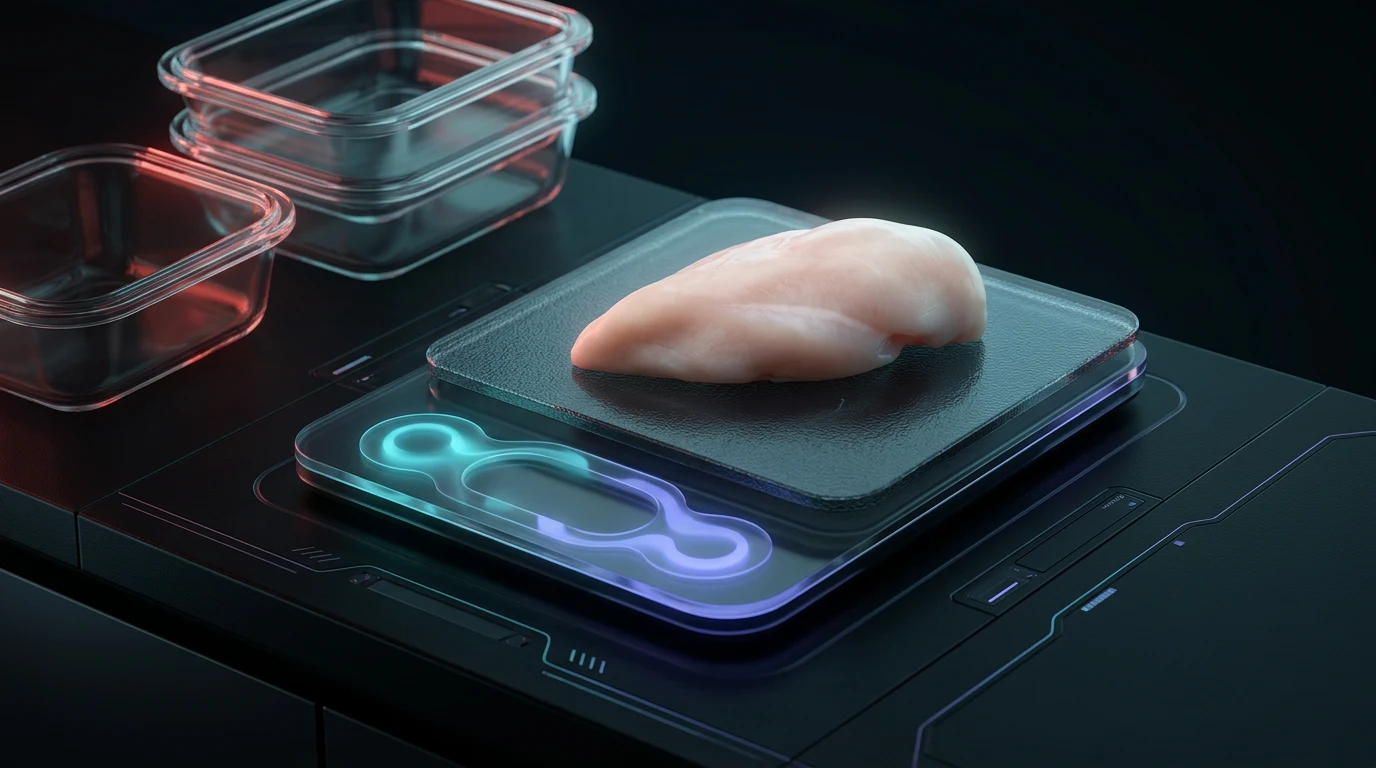
Start with protein anchors: pick three or four sources you don’t mind eating on repeat (ground beef, chicken thighs, eggs, and a fatty fish like salmon covers most people well) and build meals around them instead of designing a new recipe every night. Cook in two sessions rather than one marathon Sunday, because a single seven-day batch almost always gets abandoned by day four. Then portion by weight or by container, not by eyeballing, since “a chicken breast” can be 4 ounces or 10 depending on the bird.
Searches for “high protein meal prep” run around 72,070 a month in our own keyword research, by far the largest number in this entire topic cluster. People aren’t confused about whether prep matters. What’s missing is a system, not motivation.
If building that system from scratch isn’t where you want to spend your Sunday, the ThriveXDNA recipe packs do the anchor-and-portion work for you. The Lunch and Dinner packs are the most relevant here: 35 recipes each, $5.99 a pack, all animal-based, with no seed oil, wheat, or corn syrup, built specifically to make hitting a protein target boring and repeatable instead of a research project every week. And if you’d rather have your daily protein number calculated for you instead of estimating it, the ThriveX App builds a personalized plan around your actual stats rather than a generic chart.
What a High-Protein Day Actually Looks Like
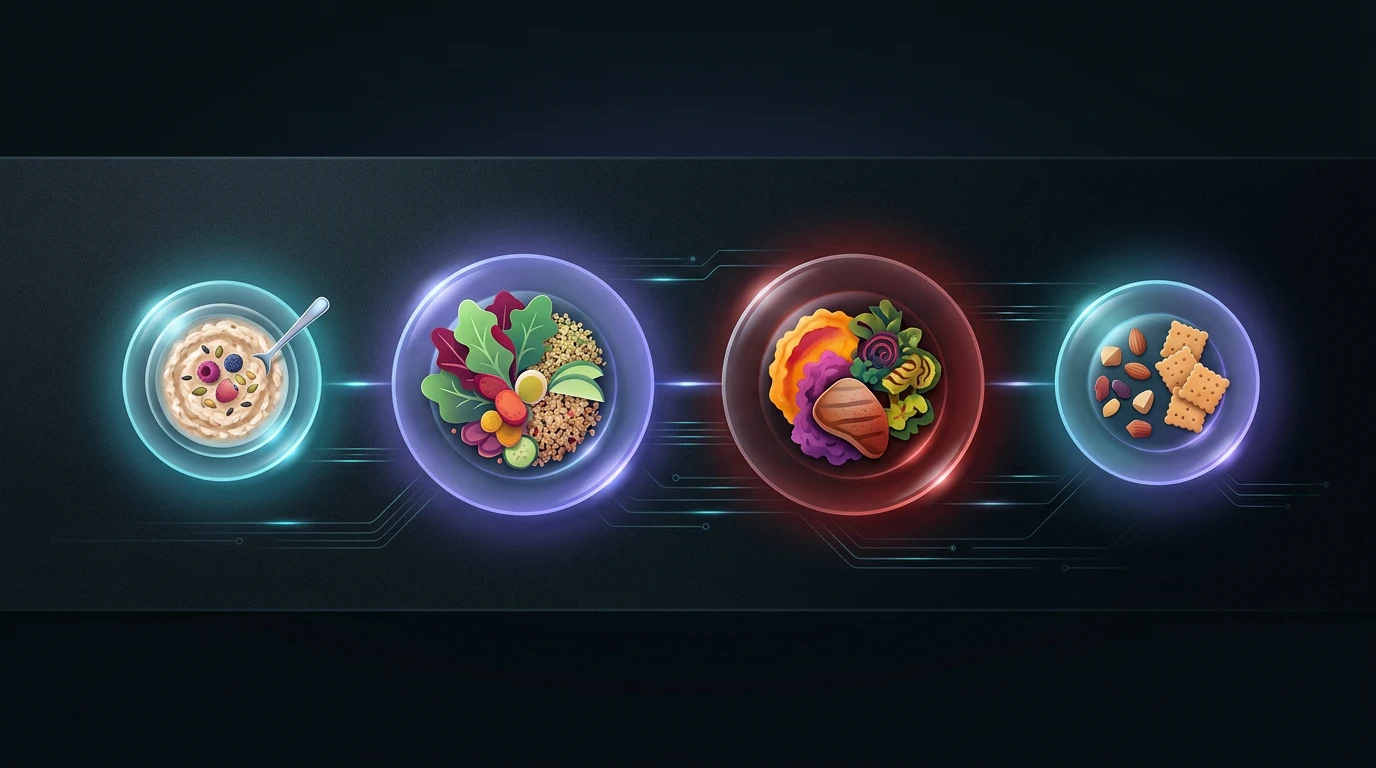
Hitting 150 to 180 grams of protein a day is easier to picture than to explain in the abstract, so here’s what it looks like across four eating windows rather than three, since three meals almost always leaves too much protein stacked at dinner.
Breakfast can carry more weight than most people give it. The Bison and Mushroom Breakfast Skillet, one of the ThriveXDNA Breakfast Pack recipes, is a good example of what that looks like done right: 55 grams of protein, 30 grams of fat, and 10 grams of carbs in a 520-calorie meal, ready in 15 minutes of prep and 25 minutes of cook time. That single dish covers roughly a third of a 180-pound lifter’s daily protein target before 9am.
From there, a mid-morning snack (Greek yogurt or cottage cheese, 20 to 25 grams), a lunch built around a protein anchor like chicken thighs or ground beef (35 to 40 grams), and a dinner with a fattier cut of meat or fish (40 to 45 grams) closes out the day comfortably inside that 114 to 164 gram range without a single protein shake required. Shakes are a fine backup for a busy day, not a replacement for real food doing most of the work.
Training Hard Isn’t Usually the Bottleneck
If you’re already training consistently, your program is probably not the reason progress has stalled. Most people who show up four or five days a week have decent programming; what they’re missing is the nutrition and recovery to let that training actually turn into muscle.
It’s worth checking whether your training style even matches how your body responds to volume and recovery in the first place, since not everyone builds muscle the same way on the same program; our DNA Workout Blueprint breaks down how to match workout style to your own genetic response instead of copying someone else’s split. It’s also worth asking whether you’re chasing personal records at the expense of the recovery that actually builds tissue; we cover that trade-off directly in Longevity Training vs Peak Performance: Why Chasing PRs Is Sabotaging . And if you’re not sure whether your actual output matches what you think you’re doing, a wearable can close that gap fast; see our breakdown of the best wearable tech for AI fitness tracking for devices that track more than just steps.
Fix the plate first. For most people who’ve plateaued despite consistent training, protein is the cheaper, faster fix, and it’s the one almost nobody checks before overhauling their entire program.
Related guides
- more on How Much Protein Do You Actually Need?
- more on High-Protein Meal Prep for Weight Loss That Keeps You Full
- High Protein Snacks for When You’re Doing Everything Right and Still H
- more on High Protein Breakfast: The Real Fix for Your 2 PM Crash
- a closer look at Post Workout Meal Guide: What to Eat After Training
- Muscle Soreness Recovery: What Actually Speeds Healing After a Hard Wo
- Bloating After Eating: Why Normal Meals Leave You Uncomfortable
Sources
- meta-analysis on protein supplementation and muscle gain
- research on protein and aging muscle
- kidney condition
- eating and diet guidance for gas
Summary
If you train consistently and eat what you’d call healthy but aren’t seeing changes, run the math before you change the program. Most people need 1.4 to 2.0 grams of protein per kilogram of bodyweight a day, and most “clean” diets fall well short of that without anyone noticing, because portion sizes shrink and breakfast quietly skips protein entirely.
The fix isn’t complicated. It’s three or four protein anchors, two batch-cooking sessions a week, and containers portioned to your actual number instead of a guess. Build that system once and you stop relying on willpower to hit your protein target every single day.
Frequently Asked Questions
How much protein do I need to build muscle each day?
Most exercising adults need 1.4 to 2.0 grams of protein per kilogram of bodyweight a day, per the International Society of Sports Nutrition’s position stand. For a 180-pound person, that’s roughly 114 to 164 grams. Going higher, up to 2.3 to 3.1 g/kg, mainly matters during a calorie deficit, not while you’re eating to build.
Can I build muscle without meal prepping every week?
You can, but it’s harder to sustain. People who cook every meal from scratch each day tend to underestimate portions and skip protein-heavy meals when they’re busy. A simple two-session prep routine removes that daily decision and makes hitting your gram target the default instead of something you have to remember to do.
Is it possible to eat too much protein?
For most healthy adults, intakes up to roughly 2.0 to 2.5 g/kg per day show no downside for kidney or bone health in the research reviewed by the ISSN. Past that point you’re mostly just spending money and stomach space on protein that isn’t doing anything extra for muscle growth, since the body can only use so much for repair and synthesis at a time.
What’s the easiest way to add protein without adding more meals?
Upgrade the meals you’re already eating instead of adding new ones. Swap a lower-protein breakfast for something like the Bison and Mushroom Breakfast Skillet (55 grams in one dish), add a second egg or extra ounce of meat to lunch, and keep a protein-dense snack like Greek yogurt or cottage cheese around for the gaps. Small upgrades to existing meals add up faster than trying to squeeze in a sixth meal.
Do I need protein powder, or can whole food cover it?
Whole food can cover your entire target for most people who plan their meals around a protein anchor at each sitting. Protein powder is a convenience tool for the days your prep falls apart, not a requirement. If you’re consistently short by 20 or 30 grams, a shake is an easy patch, but it shouldn’t be doing the job your meal prep is supposed to do.