

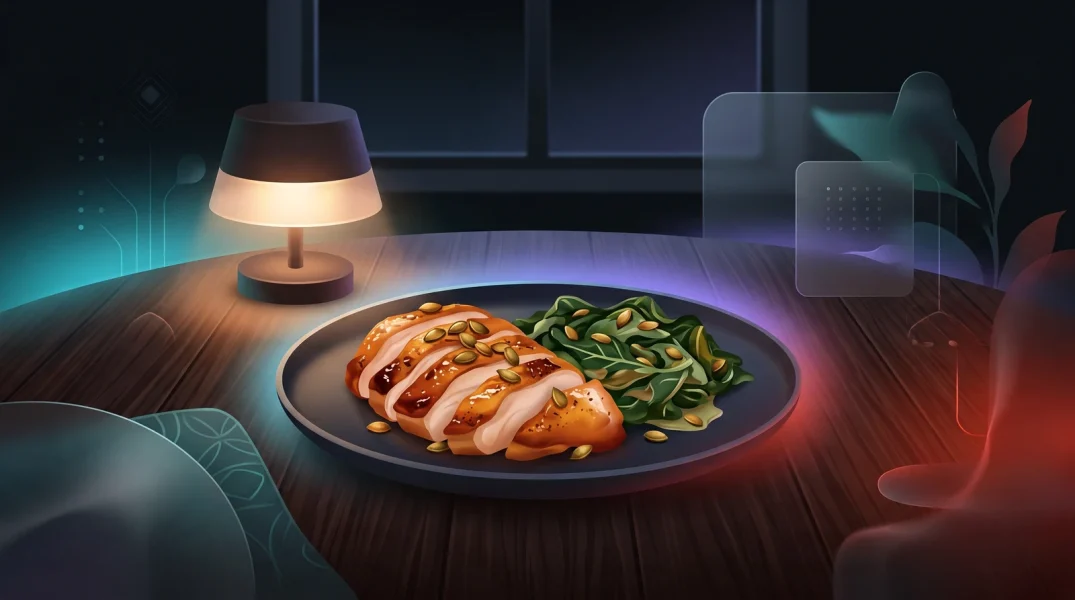
You’re wiped out by nine o’clock, but somehow at eleven you’re staring at the ceiling, stomach doing something between rumbling and aching from whatever you ate three hours earlier. You’ve done the blackout curtains, the cool room, maybe even a sleep app that tracks every toss and turn. Nobody mentioned what was on your plate at six or seven.
That’s the gap in most sleep advice. Sleep hygiene guides cover screens, mattresses, and wind-down routines, but the last real meal of the day is doing at least as much work, for better or worse. Foods that help you sleep aren’t a myth, and neither is the opposite: a heavy, processed, alcohol-heavy dinner eaten too late, or a dinner so light your blood sugar crashes at 2 a.m., can undo every other habit you’ve built.
This tracks with what people are actually typing into Google. In our own keyword research this July, “how to sleep better” pulled an estimated 110,700 searches a month and “what to eat before sleep” pulled about 6,673. That’s a real, sizable gap between what people know about sleep hygiene and what they know about their last meal of the day.
Key Takeaways
- Research reviewed by the National Institutes of Health links diets high in added sugar and refined carbs to higher rates of insomnia, and diets higher in fiber, fruit, and vegetables to lower rates.
- “How to sleep better” draws roughly 110,700 searches a month, and “what to eat before sleep” draws about 6,673, based on our July 2026 keyword research, so this isn’t a fringe question.
- Tryptophan and magnesium support the biochemical chain that leads to melatonin, but they work as part of a consistent eating pattern, not as a single bedtime fix.
- Finishing dinner two to three hours before bed gives digestion enough runway that your body isn’t still processing a full meal when you lie down.
- Alcohol can help you fall asleep faster and still wreck the second half of the night, fragmenting deep sleep even when it feels relaxing going down.
- Eating too little at dinner is its own trap: a nighttime blood sugar dip is a common, underrated cause of waking up around 2 or 3 a.m. and staying up.
Why Dinner Has More Say Over Your Sleep Than You Think
Your last meal sets the metabolic and hormonal stage for the next eight hours. What’s in it, how much of it, and how close to bedtime you eat it all shift blood sugar, core body temperature, and the hormone cascade that leads to melatonin release. A plate that’s perfectly fine at noon can work against you at 9 p.m.
A big, heavy, or fried dinner raises core body temperature and keeps digestion active right when your body is supposed to be cooling down, which is one of the physical signals that tells your brain it’s time to sleep. Processed food loaded with refined carbs and added sugar spikes blood sugar fast, then drops it, and that drop can pull you out of deep sleep hours later without you ever knowing why you woke up. It’s not that any single dinner ruins one night. It’s that a pattern of late, heavy, processed eating stacks up the way poor sleep hygiene does, quietly, over weeks.
People search for solutions to this constantly. “Better sleep” alone pulls an estimated 33,834 searches a month in our research, on top of the 110,700 for “how to sleep better.” That volume tells you two things: a lot of people know something is wrong, and most of them are looking at the wrong lever first, screens and supplements, before they get to what’s on the dinner table.
Foods That Help You Sleep: Tryptophan, Magnesium, and Meal Timing
Foods that help you sleep work through two real, well-studied pathways: tryptophan, an amino acid your body converts into serotonin and then melatonin, and magnesium, a mineral that helps calm nervous system activity. Neither one is a switch you flip with a single meal. They work best as part of an eating pattern you keep up night after night, not a fix you reach for once when you’re already wired.
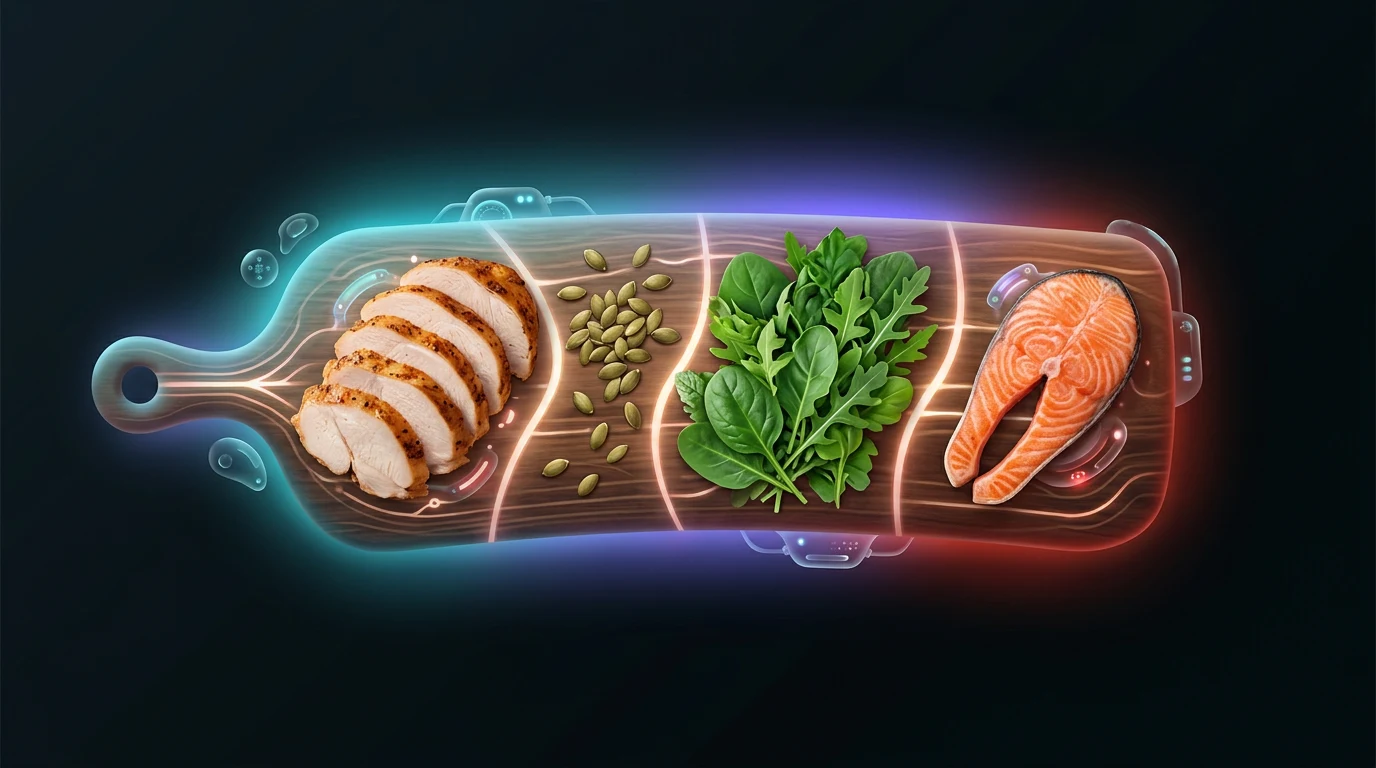
Tryptophan shows up in turkey, eggs, dairy, and most animal proteins. Magnesium is concentrated in leafy greens, pumpkin seeds, and fatty fish like salmon. A dinner built around one of these, rather than around refined grains and sugar, gives your body the raw material for the melatonin pathway instead of fighting it with a blood sugar spike. This lines up with a 2020 review hosted on PubMed Central, the NIH’s research repository, which found that higher-glycemic diets and diets higher in added sugar and refined grains were linked to more insomnia, while higher fiber and fruit intake were linked to a lower incidence of insomnia.
Timing matters as much as content. Aim to finish dinner two to three hours before bed. That window gives your stomach time to move most of the meal along before you lie down, so digestion isn’t competing with sleep for blood flow and attention. Eat right at bedtime and even a “good” sleep food can keep you tossing, not because the food was wrong, but because the timing was.
The Three Dinner Habits Quietly Wrecking Your Sleep
Three dinner patterns cause most of the sleep problems that don’t get traced back to food: heavy processed meals, alcohol, and eating too late or too little. Fix any one of them and you’ll likely notice a difference within a week or two, since these are habits your body adjusts to fast in both directions.
Heavy, processed food is the most common culprit. Fried food, refined carbs, and anything loaded with added sugar or seed oils forces your digestive system to work harder and longer, right when your body should be settling down. It also tends to come with the blood sugar spike-and-crash pattern that pulls people out of deep sleep in the early morning hours.
Alcohol is the sneakiest one, because it feels like it’s helping. A drink or two with dinner can genuinely make you fall asleep faster. What it also does is suppress REM sleep and fragment the back half of the night, so you wake up more often, even if you don’t remember doing it. If you’re exhausted at bedtime but waking up at 3 a.m. wired, alcohol at dinner is one of the first things worth cutting for a week to test.
Eating too late or too little gets less attention, but it causes real problems. A dinner eaten right before bed keeps your core temperature and digestion active during the window your body needs to cool down. Going the other direction, skipping dinner or eating too little, sets you up for a blood sugar dip overnight that can wake you up hungry, anxious, or both, usually somewhere around 2 or 3 a.m.
What an Actual Sleep-Friendly Dinner Looks Like
A sleep-friendly dinner is built around real protein and vegetables, finished two to three hours before bed, without relying on alcohol to wind down. It’s not complicated, but it does take having recipes on hand that don’t default to the seed oils, wheat, and corn syrup hiding in most quick dinner options, which is exactly the gap a lot of people hit on a Tuesday night when takeout is easier than thinking it through.
If you want that groundwork already laid out, the Dinner and Snacks recipe packs in the ThriveXDNA recipe packs are built for exactly this: 35 animal-based recipes each, no seed oil, no wheat, no corn syrup, at $5.99 a pack. The Snacks pack matters here too, since a lot of “eating too late” is really a snack at 10 p.m. because dinner didn’t hold you, and having a better snack option on hand beats defaulting to whatever’s in the pantry. If you want a plan built around your own schedule instead of piecing it together yourself, the ThriveX App can put together a personalized plan that accounts for when you actually eat, not just what.
Genetics, Training Load, and Why One Fix Doesn’t Work for Everyone
Dinner is one lever, not the only one. If you’re naturally wired as a night owl, the timing advice above still applies, it just shifts later relative to your actual bedtime instead of the clock on the wall. We’ve written a full breakdown of sleep hygiene habits built around chronotype rather than fighting it, in Genetic Night Owl? 10 Sleep Hygiene Habits That Protect Your Health In, which is worth reading alongside this if the exhaustion you’re describing is more about your internal clock than your dinner plate.
If you train regularly, dinner and sleep matter even more, because that’s when most real recovery happens. A dinner that spikes blood sugar and fragments your sleep is also quietly sabotaging whatever training block you’re in, which we cover in more depth in Recovery-First Fitness: How the “Readiness” Metric Stops You From Trai. And if you’re chasing performance numbers while running on broken sleep, it’s worth reading Longevity Training vs Peak Performance before you push harder instead of sleeping better.
Related guides
- more on Best AI Sleep Apps for Shift Workers in
- more on Is the Eight Sleep Pod Worth It in 2026?
- a closer look at Post Workout Meal Guide: What to Eat After Training
- more on How to Track Macros for Weight Loss: A Practical Guide
- Muscle Soreness Recovery: What Actually Speeds Healing After a Hard Wo
Sources
- additional detail from ACSM progression models for resistance training
- Ahmetov et al., Adv Genet
- National Institute on Aging on how sleep changes with age
- MedlinePlus overview of healthy sleep practices
Summary
The exhaustion you feel at bedtime and the trouble you have actually staying asleep aren’t contradictory, they’re often caused by the same dinner. Foods that help you sleep, tryptophan and magnesium sources built around real protein and vegetables, do real work, but only as part of a pattern: finished two to three hours before bed, without alcohol doing the relaxing for you, and not so light that you wake up hungry at 3 a.m. None of this requires giving anything up entirely. It just means paying attention to the meal that’s been getting a pass while you fixed everything else about your bedroom.
Frequently Asked Questions
What should I eat for dinner to sleep better?
Focus on real protein (like turkey, eggs, or fish) and magnesium-rich vegetables, and finish eating two to three hours before bed. Skip the heavy, fried, or sugar-loaded version of dinner, since that’s what tends to spike blood sugar and disrupt sleep later in the night.
Is it bad to eat right before bed?
Eating a large meal right before bed can keep your digestion and core body temperature active during the window your body needs to cool down and wind down, which can make it harder to fall asleep. A small, light snack close to bedtime is usually fine, it’s the full heavy meal right before lying down that causes problems.
What foods should I avoid before bed?
Fried food, refined carbs, anything high in added sugar, and alcohol are the biggest offenders. They either spike and then crash your blood sugar overnight or actively fragment sleep, even when they make you feel drowsy going in.
Does alcohol at dinner really hurt sleep quality?
Yes. Alcohol can help you fall asleep faster, but it suppresses REM sleep and fragments the second half of the night, which is why people who drink with dinner often wake up more even if they don’t remember it happening.
How long before bed should I stop eating?
Two to three hours is a reasonable target for most people. That gives your body time to move most of a meal through digestion before you lie down, so it isn’t competing with sleep for your body’s attention and resources.