
Last reviewed: June 2026
Around one in three American adults get fewer than seven hours of sleep on a typical night, according to CDC surveillance data. Most of those people have already cycled through the standard fixes: blackout curtains, a firm bedtime, phones charging outside the bedroom. When none of those moves the needle, the next step is usually downloading a sleep app, which is a reasonable impulse. The problem is picking one without knowing what type of problem it is supposed to solve. That mismatch explains why so many people try two or three sleep tools and still wake up feeling wrecked.
The four tools covered here take genuinely different approaches to sleep, which means they are not interchangeable. Oura Ring collects biometric data from your finger overnight and builds a picture of your sleep stages, heart rate variability, and recovery quality over time. Sleep Cycle uses your phone microphone or accelerometer to detect light sleep windows and time your alarm. Eight Sleep regulates the temperature of your mattress throughout the night based on where you are in your sleep cycle. Calm provides structured audio content to reduce mental arousal before you fall asleep. You can explore this category alongside a wider range of AI health applications in AI health and wellness tools directory. Knowing what each tool actually does makes it possible to pick the one that fits the specific reason your sleep is poor.
Key takeaways
- The most important distinction in sleep tools is tracking versus active intervention. A tracker tells you what went wrong; an intervention tool tries to prevent it. Using one of each gives you both a diagnosis and a way to respond.
- Oura Ring hardware costs roughly $349 to $499 depending on the model and finish, plus $5.99 per month for the membership that unlocks full data access. It is the most biometric-rich option in the wearable tracking category.
- Eight Sleep Pod hardware starts above $2,000 for a full-sized bed, plus an ongoing membership for algorithmic temperature adjustments. It is the only tool here that physically changes your sleep environment rather than just monitoring it.
- Sleep Cycle and Calm together cost under $100 per year combined and require no additional hardware. They are the lowest-friction starting point if you want both basic stage tracking and behavioral wind-down support before committing to a more expensive system.
The Tracking vs. Intervention Framework
Sleep tools divide into two functional categories, and most roundups treat them as interchangeable. Trackers observe what happens during sleep and surface patterns over days or weeks. They answer diagnostic questions: how long did you spend in deep sleep last night? Was your resting heart rate elevated between 2 and 4 am? Did your REM time drop on nights when you drank alcohol? The output is information, not change. A well-designed tracker tells you precisely what is happening but does not fix anything on its own.
Intervention tools try to change what happens either before bed or during the night itself. Calm operates at the pre-sleep stage, giving your brain structured content to wind down from the cognitive activation that delays sleep onset. Eight Sleep operates during the night, adjusting mattress temperature across roughly 90-minute sleep cycles to align with the natural body temperature curve that supports deeper sleep stages. The value of each category depends entirely on which problem you have.
If you do not know why your sleep is poor, start with a tracker. Spending money on an intervention before you have a diagnosis is like buying a specific supplement without knowing what you are deficient in. Collect 3 to 4 weeks of baseline data, look at which nights scored lowest and what they had in common, and then choose an intervention tool based on the actual pattern. That sequence prevents spending $70 per year on a meditation app when your real problem is a consistently elevated heart rate at 3 am that needs medical attention, not guided breathing.
Oura Ring: Biometric Data From a Wearable That Fits on One Finger
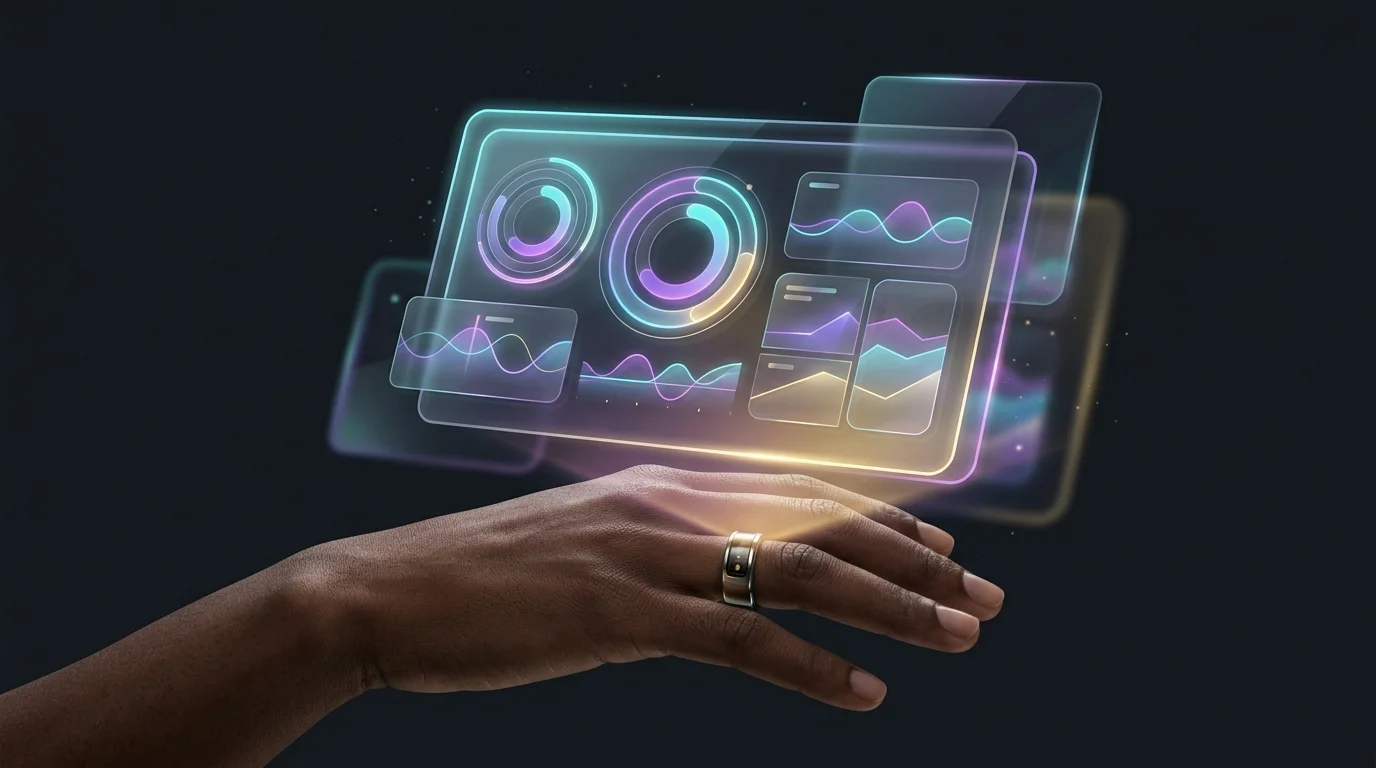
The Oura Ring sits on your finger and measures four signals overnight: heart rate, heart rate variability in milliseconds, skin temperature deviation from your personal baseline, and movement. Its algorithm uses those inputs to estimate how long you spent in each stage: light sleep, deep sleep, and REM. The companion app turns that into a morning readiness score that reflects recovery quality relative to your recent baseline, factoring in last night’s sleep, your seven-day HRV trend, and how much temperature deviation you showed overnight. See the National Institutes of Health for official guidance.
The hardware costs between roughly $349 and $499 depending on the model and finish you select. After purchase, a $5.99 per month Oura membership unlocks full stage history, trend graphs, and the longer-range views that make the data actionable over time. The free tier gives you the basics but limits how far back you can look. For the ring to earn its cost, you need to wear it consistently. If you skip charging every few days, data gaps appear and trend analysis becomes unreliable.
The accuracy trade-off is worth understanding. The ring reads peripheral biometrics from your finger rather than direct brain activity, so sleep stage estimates are probabilistic rather than definitive. Independent comparisons against clinical polysomnography studies suggest consumer wearables, including Oura, perform reasonably well on detecting REM and deep sleep across a full night but show more variance on shorter individual stage segments. For tracking personal lifestyle patterns over weeks, that level of precision is sufficient. For diagnosing a clinical disorder like sleep apnea, a physician-ordered evaluation is still the right tool. The ring also integrates with Apple Health and Google Fit, so the data feeds into whatever health tracking system you already use.
Sleep Cycle: Stage-Aware Alarms Without Extra Hardware
Sleep Cycle addresses a narrower problem than Oura Ring but requires no additional device. You place your phone near the bed, and the app uses the microphone or the phone accelerometer to detect movement and sound patterns associated with different sleep stages. From that, it estimates when you are in light sleep and triggers your alarm within a 30-minute window before your target wake time. The reasoning is that waking from light sleep feels meaningfully easier than being pulled out of deep sleep mid-cycle, and most people who have experienced both know exactly what that difference feels like.
Phone-based tracking is less precise than a dedicated wearable. Accuracy varies depending on where you place the phone, whether a partner shares the bed, and how firm your mattress is. For most people asking whether they woke up groggy because of alarm timing or sleep stage, it provides useful directional signal even if it is not precise. That distinction matters more if you plan to act on detailed stage data; it matters less if the smart alarm function is the primary reason you downloaded it.
The free tier covers the core alarm function. A paid subscription, roughly $40 per year in most markets, adds extended sleep history, trend analysis, and audio recordings of overnight sounds, useful if you suspect snoring or sleep talking. If your only goal is smarter wake timing and you are not ready to invest in a wearable, Sleep Cycle is a reasonable starting point with almost no barrier to entry.
Eight Sleep: Temperature as a Physical Sleep Lever
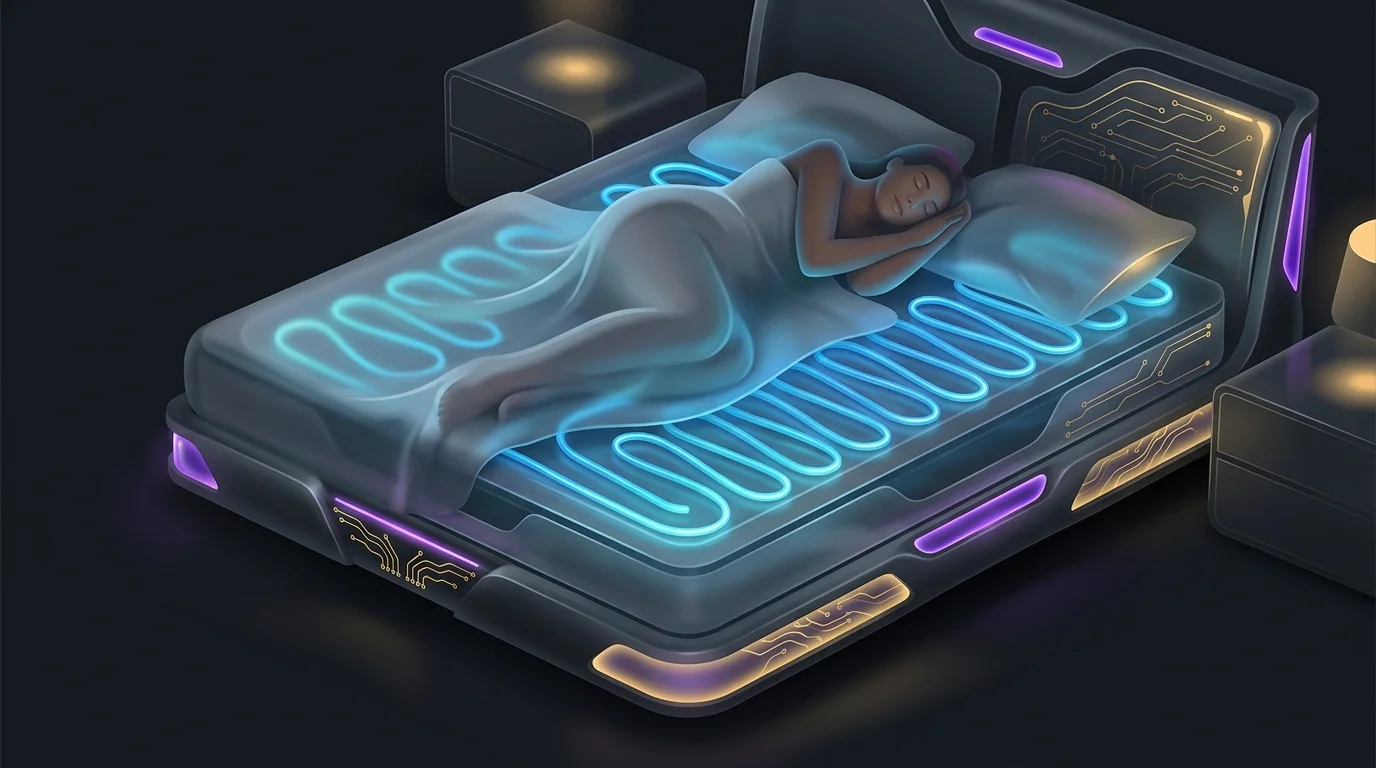
Core body temperature drops about 1 to 2 degrees Fahrenheit during the transition into deep sleep, then rises as you move toward lighter sleep and eventual waking. That pattern is not incidental; it is part of how sleep stages are regulated. Eight Sleep’s Pod cover fits over your existing mattress and circulates water at temperatures the system adjusts automatically based on your sleep stage data, attempting to support the natural temperature curve rather than letting ambient room conditions work against it.
The hardware cost is the most significant barrier. The Pod 4 Pro starts above $2,000 for a queen-sized bed, and an active membership is required to access the algorithmic temperature adjustments that make the product distinctive. Without the membership, you can set manual temperature preferences, but the automated stage-based adjustments require the subscription. The combined ongoing cost runs roughly $17 to $24 per month depending on plan, on top of the one-time hardware purchase. That positions it as a deliberate long-term investment rather than a low-risk trial.
Temperature sensitivity during sleep is real and well-documented. If you consistently wake up overheated, notice your sleep degrades in warm weather, or share a bed with someone who runs at a meaningfully different temperature, Eight Sleep addresses a physical variable that no app can replicate. If your problems trace to racing thoughts at bedtime or an erratic schedule, this hardware will not fix those. The product also has a documented integration with Oura Ring for users who want biometric data informing the temperature algorithm, which is worth knowing if you plan to own both.
Calm: Addressing the Problem Before Your Head Hits the Pillow
Calm does not track anything. It does not adjust any hardware. Its function is changing your mental state in the 20 to 30 minutes before you fall asleep. The app offers guided meditations, breathing exercises, and narrated sleep stories read at a pace designed to slow thought rather than follow a plot. The underlying premise is that a significant share of sleep-onset problems come from elevated cognitive arousal: a mind still processing the day, rehearsing tomorrow, or replaying a stressful conversation when it should be winding down.
A Calm subscription runs approximately $70 per year with a free trial before payment is required. The library includes structured breathing patterns such as the 4-7-8 technique, guided meditations for specific situations like pre-sleep anxiety or early morning waking, and sleep stories voiced by well-known narrators. The sleep story format, long-form narration calibrated to reduce attention rather than entertain, is a structure Calm developed specifically for this use case and one that has been widely adopted across competitors since.
The limitation is honest: Calm requires you to use it consistently before bed, and it works on the pre-sleep problem only. It will not tell you that your REM time dropped this week or that your deep sleep average is below the range typical for your age. If you want to know what is happening during the night, you need a tracker alongside it. But if you find yourself lying awake for 30 to 60 minutes most nights because your mind will not slow down, a behavioral app is the most direct tool for that specific problem and costs less than almost any hardware alternative.

A Decision Framework: Match the Tool to the Problem
Four questions narrow the field quickly. First: do you know what is actually wrong with your sleep, or are you guessing? If you are guessing, a diagnostic tracker comes before anything else. Collect 3 to 4 weeks of baseline data with Sleep Cycle or Oura Ring, identify which nights scored worst and what those nights had in common, and make a second decision based on what you find.
Second: is your problem at sleep onset or during the night? Sleep onset problems, lying awake for extended periods before falling asleep, are behavioral and cognitive. Calm addresses those directly. Problems during the night, fragmented sleep, frequent waking, or consistently low deep sleep percentages, respond better to environmental changes like temperature control or to biometric tracking that can identify a physiological cause worth addressing with a doctor.
Third: what is your budget ceiling? Sleep Cycle costs under $5 per month. Oura Ring is a one-time hardware purchase in the $349 to $499 range, then $5.99 per month. Calm is around $70 per year. Eight Sleep starts above $2,000 in hardware plus $17 to $24 per month. None require the others to function. Fourth: do you share a bed? Eight Sleep offers dual-zone temperature control for two people at different temperature preferences. Sleep Cycle is affected by a partner’s movement in ways an on-body wearable is not, which is worth knowing before you rely on its stage estimates.
- Do not know what is wrong: start with a tracker (Sleep Cycle free or Oura Ring), collect 3 to 4 weeks of data, then decide.
- Problem at sleep onset (lying awake): Calm is the most direct tool at roughly $70 per year, no hardware needed.
- Problem during the night (fragmented sleep, early waking): look at Eight Sleep if temperature is a confirmed factor, or Oura Ring to identify the underlying cause.
- Budget under $100 per year: Sleep Cycle plus Calm covers both tracking and behavioral intervention without any hardware.
- Sharing a bed with different temperature preferences: Eight Sleep dual-zone is the only tool here that directly addresses that dynamic.
Pairing Strategies for Three Budget Levels
Under $100 per year: Sleep Cycle handles basic stage tracking and smart wake timing. Calm handles the pre-sleep behavioral routine. Between the two, you get a data layer and an intervention layer for roughly the cost of a standard streaming subscription per month. This is the right starting configuration if you have never used any sleep tool before or are genuinely unsure which type of tool you need.
Mid-range, roughly $400 to $500 upfront plus $12 to $18 per month combined: Oura Ring provides meaningfully more precise biometric data than a phone-based app, and the daily readiness score gives you an actionable summary rather than just raw numbers. Pairing it with Calm for behavioral wind-down covers both the overnight physiology and the pre-sleep mental state. This combination makes sense if you want real physiological data but are not ready to outfit your mattress with new hardware.
High-range, $2,500 or more upfront plus roughly $25 to $30 per month ongoing: Oura Ring combined with Eight Sleep is the most complete pairing available outside clinical equipment. The two products have a documented integration, so biometric data from the ring can inform the Pod’s temperature adjustments. This setup makes sense if temperature sensitivity is a confirmed factor in your poor sleep and you want a closed-loop system. One rule applies at every budget level: introduce one tool at a time and use it for at least 30 days before adding a second. Stacking multiple new variables at once makes it impossible to know which change drove any improvement.
- Under $100 per year: Sleep Cycle plus Calm, no hardware required.
- Mid-range ($400 to $500 upfront plus roughly $12 to $18 per month): Oura Ring plus Calm.
- High-range ($2,500 or more upfront plus roughly $25 to $30 per month): Oura Ring plus Eight Sleep with native integration.
- Any budget: use one tool for 30 days before adding a second.
How these tools compare
| Tool | Type | Hardware Required | Approximate Cost | Best For |
|---|---|---|---|---|
| Oura Ring | Biometric tracker | Yes (finger ring) | $349 to $499 hardware plus $5.99/month | Detailed physiological data tracked across weeks |
| Sleep Cycle | Stage tracker and smart alarm | No | Free to roughly $40/year | Low-cost stage tracking and smart wake timing |
| Eight Sleep Pod | Active environmental intervention | Yes (mattress cover) | $2,000 or more hardware plus $17 to $24/month | Automated temperature regulation during sleep |
| Calm | Behavioral intervention | No | Roughly $70/year | Pre-sleep mental wind-down and routine building |
Related guides
- What Is TrumpRx.gov? Good or Bad? Your Complete Guide to Lower Prescription Drug Prices in 2026
- Your Guide to the Best Cyber Liability Coverage Options That Won’t Break the Bank
- Best Identity Theft Protection Plans in 2025: Secure Your Personal Data Now
- Is the Eight Sleep Pod Worth It in 2026?
- Best AI Sleep Apps for Shift Workers in
- Foods That Help You Sleep: What to Eat (and Skip) at Dinner
- Is the Oura Ring Worth It in 2026?
- Best Oura Ring Alternatives 2026 Tested and Ranked
- Best Calm Alternatives 2026 for Sleep and Stress
- Best AI Health Apps for Women in
- Best Wearable Tech for AI Fitness Tracking in 2026: 9 Devices That Act
- Best AI Wellness Apps for Busy Professionals
Summary
Based on your favorite tools right now, start with Sleep Cycle and Calm together: under $100 a year, no hardware, and enough to tell whether tracking or intervention is what you actually need. If the app data shows a real problem with sleep stages or overnight vitals, Oura Ring adds the deeper biometric picture for its hardware cost plus the monthly membership. Reserve Eight Sleep, at over $2,000 for a full-sized bed plus membership, for after you know temperature regulation is your specific issue, since it is the only option that changes your sleep environment directly rather than just measuring or preparing you for it.
Frequently asked questions
Do I need a wearable to get useful sleep data?
Not necessarily. Sleep Cycle’s phone-based tracking is less precise than an on-body wearable but still provides usable information about sleep timing and stage distribution for most people. A wearable becomes worth the hardware cost when you need consistent accuracy across weeks, or when you want physiological metrics like heart rate variability and skin temperature that a phone microphone cannot capture. For a first look at your sleep patterns without any hardware investment, the phone-based approach is a reasonable starting point.
Is Eight Sleep worth the high upfront cost?
It depends on whether temperature is actually driving your poor sleep. If you consistently overheat at night, wake up sweating, or notice a clear seasonal pattern to your sleep quality, the Pod’s active temperature control addresses a real physical variable. If your sleep problems come from anxiety, an inconsistent schedule, or behavioral habits around bedtime, spending more than $2,000 on a mattress cover will not fix those causes. Confirm the problem first with a tracker, then evaluate whether a physical environmental intervention matches the pattern you find.
Can Calm actually improve sleep quality, or does it just help you relax?
Both things can be true at once. Relaxation before bed is not trivial; cognitive arousal at bedtime measurably delays sleep onset, and structured audio content that redirects attention can shorten the time it takes to fall asleep. What Calm cannot do is change what happens after you are asleep. If your problem is fragmented sleep, early waking, or consistently low deep sleep percentages, you need a different tool for those specific patterns alongside or instead of a behavioral app.
How accurate is Oura Ring’s sleep stage detection?
More accurate than phone-based tracking, but not equivalent to a clinical sleep study. The ring uses peripheral heart rate, heart rate variability, temperature, and movement to estimate stage distribution. Independent comparisons against clinical polysomnography studies put consumer wearables, including Oura, within a reasonable range for detecting REM and deep sleep across a full night, with more variance on shorter individual stage segments. For tracking personal patterns over time, the ring is sufficiently accurate. For diagnosing a clinical disorder like sleep apnea, a physician-ordered evaluation is still the appropriate tool.
Should I start with a tracking app or an intervention app?
Start with a tracker. The purpose of tracking is to tell you what the problem actually is. Buying an intervention tool before you have that data is a guess. Spend 3 to 4 weeks collecting baseline data with Sleep Cycle or Oura Ring, identify what your worst nights have in common, and then select an intervention tool based on the actual pattern rather than an assumption about what you need.
Do any of these tools work without a paid subscription?
Sleep Cycle’s core smart alarm function works on the free tier, though extended history and trend analysis require a paid plan. Oura Ring offers limited data access without a membership, but full sleep stage breakdowns and trend graphs require the $5.99 per month plan. Eight Sleep requires an active membership for the algorithmic temperature adjustments that make it distinctive. Calm requires a subscription after the free trial for most of its content library. The subscription tier is where the useful functionality lives for all four tools, and the free or trial versions are best understood as a way to evaluate the interface before committing.