

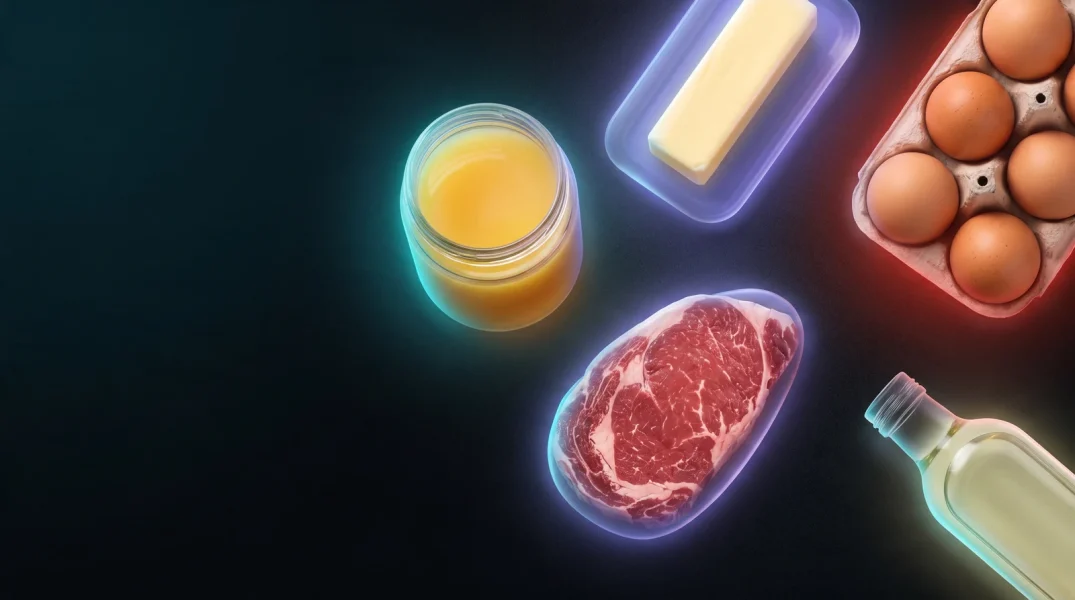
You cut seed oils. Now every “oil-free” recipe you find online wants you to also cut the meat.
We went looking for recipes that were both: seed-oil-free and animal-based. Instead of guessing, we pulled the actual YouTube search-volume data and ran a direct search for existing cookbooks. What we found changed how we built our own recipe packs.
This reflects our own research, real search-volume data via vidIQ and a direct search of what’s actually published, not a lab test or medical claim.
Key Takeaways
- “Seed oil free recipes” gets an estimated 5,378 searches a month on YouTube alone. That’s real, existing demand, not a niche curiosity.
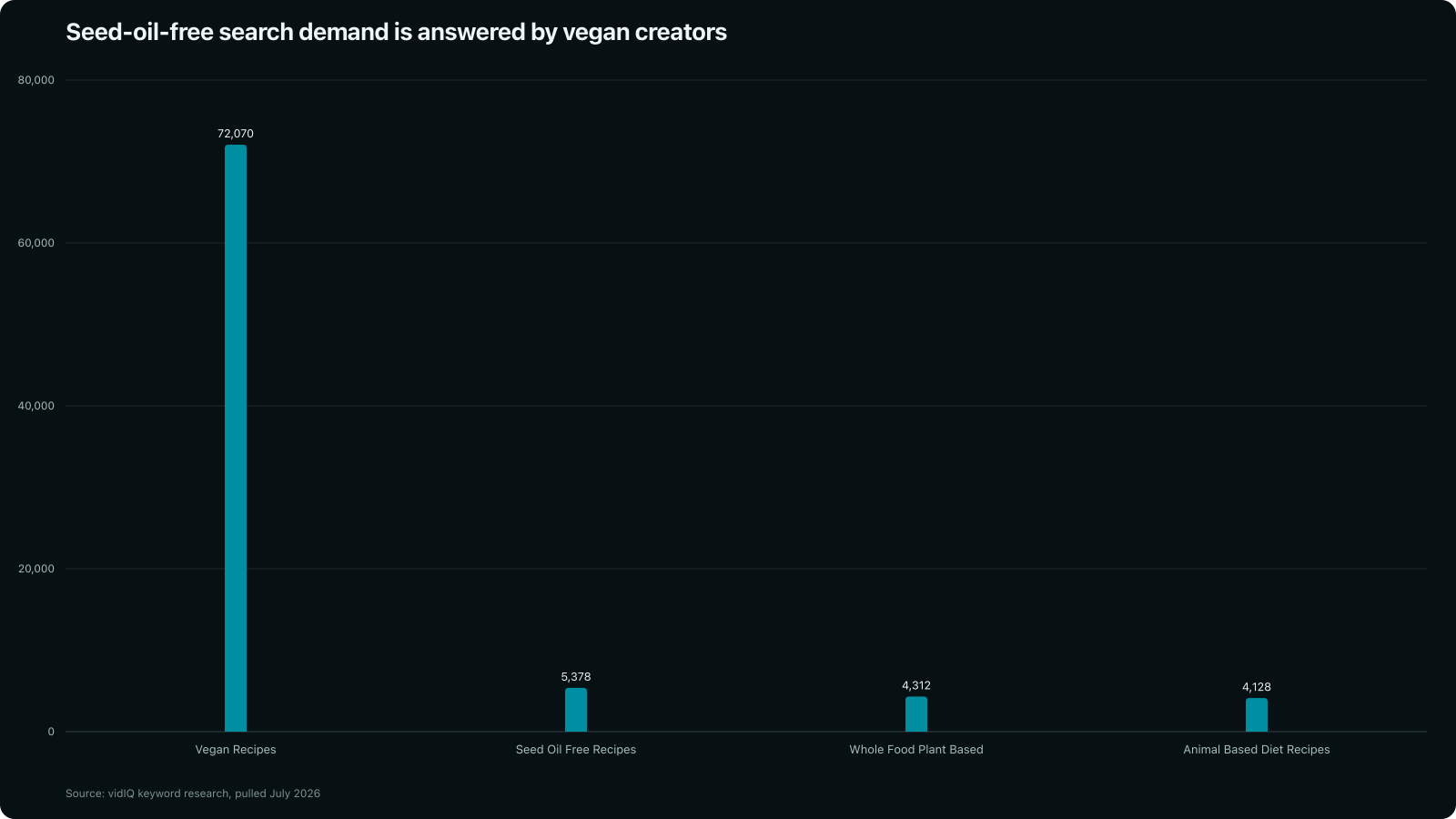
- When we expanded that search to related terms, the top two were “vegan recipes” (72,070/mo) and “whole food plant based” (4,312/mo). Not a single animal-based or carnivore term showed up.
- We searched directly for an animal-based, seed-oil-free cookbook. We found several seed-oil-free vegan cookbooks. We found none that were animal-based.
- Seed oils stopped being a fringe topic in 2026. HHS is phasing 14 seed oils out of school lunch programs, and the 2025-2030 Dietary Guidelines for Americans now recommend olive oil, butter, or beef tallow, with no mention of seed oils at all.
- The health science itself is still genuinely contested. The American Heart Association maintains seed oils are safe, while newer biomarker research shows mixed results. We’re pointing at a content gap here, not settling a medical debate.
- We built 4 recipe packs (140 recipes total) that are animal-based, seed-oil-free, wheat-free, and corn-syrup-free at the same time.
What “seed oil free” actually means
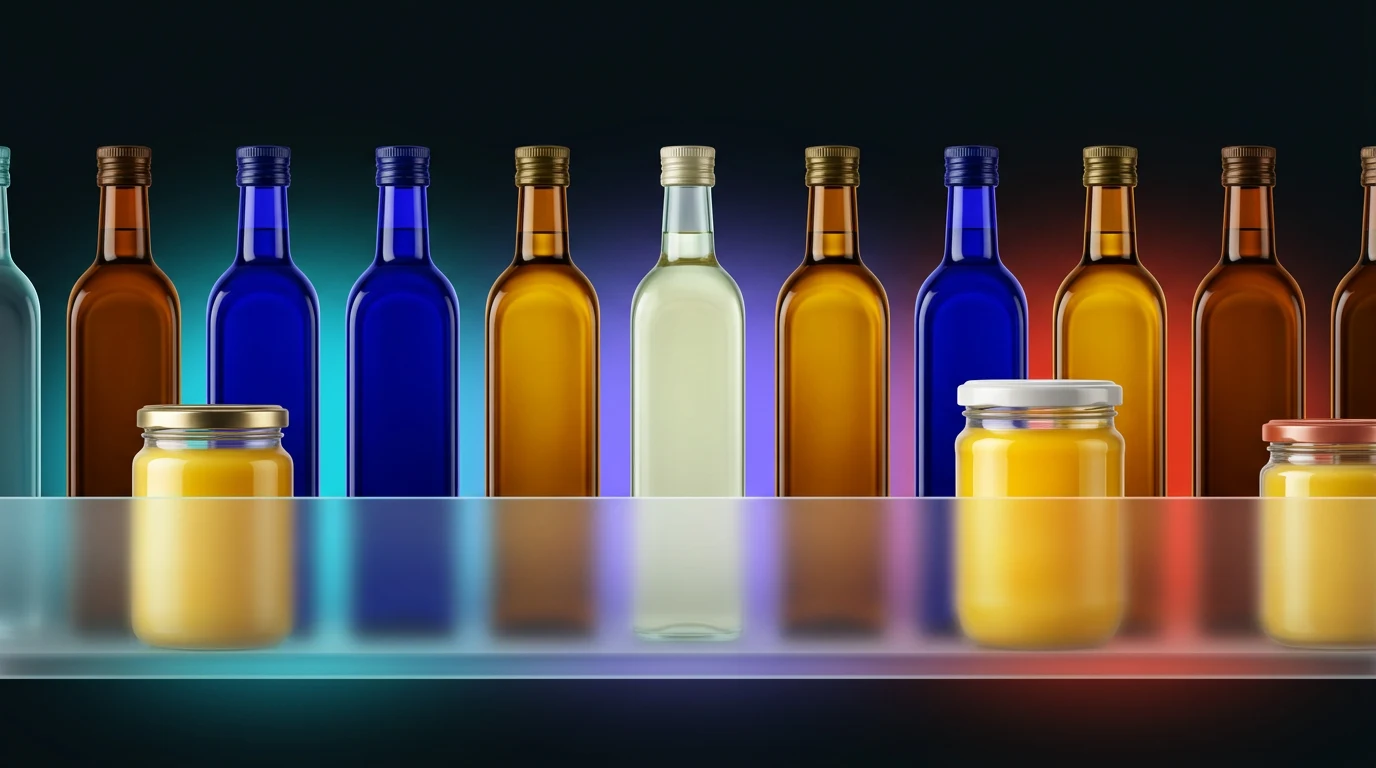
“Seed oils” are industrially extracted oils from seeds rather than fruit or nuts: canola, soybean, corn, sunflower, safflower, generic “vegetable,” cottonseed, grapeseed, rice bran, and peanut oil. They’re high in omega-6 linoleic acid, cheap to produce at scale, and shelf-stable, which is why they ended up in nearly every packaged and fast food. “Seed oil free” means cooking with something else instead: olive oil, avocado oil, butter, ghee, tallow, or lard.
Why this stopped being a fringe idea in 2026
The seed-oil conversation moved from wellness-influencer territory into federal policy this year. HHS Secretary Robert F. Kennedy Jr. announced plans to phase 14 seed oils out of school lunch programs, and the newly released 2025-2030 Dietary Guidelines for Americans instruct people to prioritize oils with essential fatty acids, “such as olive oil. Other options can include butter or beef tallow.” Seed oils aren’t listed as a recommended option at all. Restaurant chains have moved with it. Steak ‘n Shake, Popeyes, Outback, and Buffalo Wild Wings have all publicly switched away from seed oils toward beef tallow.
The science is still genuinely contested
We’re not going to pretend this is settled. The American Heart Association’s position remains that seed oils are safe and can be part of a heart-healthy diet. Meanwhile, newer biomarker research on linoleic acid, the dominant fat in seed oils, has found associations with lower inflammation and cardiovascular risk in some cohorts. That complicates the simple “seed oils cause inflammation” story you’ll see repeated online. The honest version: there’s a real, unresolved scientific disagreement here. What’s not in dispute is that the cultural and policy conversation around avoiding seed oils is real, current, and growing.
We ran the actual search data instead of guessing
“Seed oil free recipes” pulls an estimated 5,378 searches a month on YouTube by itself. But keyword tools don’t just give you a number. They show you what else people search alongside a term, which is a decent proxy for who’s actually answering that demand right now. For “seed oil free recipes,” the two dominant related searches were “vegan recipes” and “whole food plant based.” Nothing animal-based or carnivore-adjacent showed up in the expansion at all.
We searched for an animal-based, seed-oil-free cookbook. We couldn’t find one.
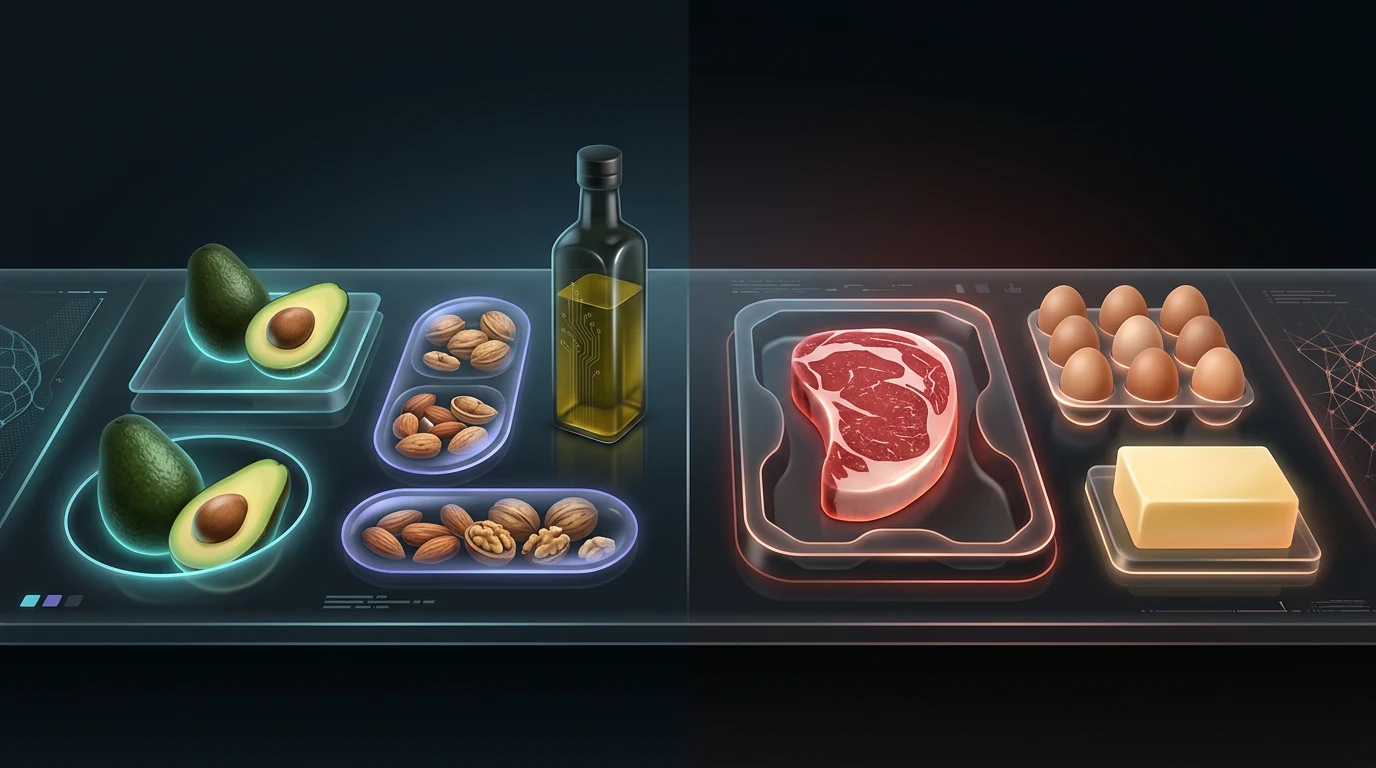
We searched directly for existing seed-oil-free cookbooks and ebooks. Every result we found was vegan or plant-based: The Plant-Based Cookbook (Ashley Madden), Vegan Oil Free Cookbook (Keisha Wright), Deliciously Plant-Based (Dr. Julie Jack), Dreena Burton’s Oil-Free Vegan Recipes, and a free ebook from Karissa’s Vegan Kitchen. Searching specifically for the animal-based plus seed-oil-free combination turned up nothing published. This is an inference from the absence of a search result, not an exhaustive audit of every marketplace, but it’s a consistent enough pattern to take seriously.
Seed-Oil-Free Vegan vs. Seed-Oil-Free Animal-Based
Both approaches genuinely cut seed oils. They just get there from opposite directions, and right now, only one of them has much content behind it.
| Criterion | Seed-Oil-Free Vegan | Seed-Oil-Free Animal-Based |
|---|---|---|
| Primary protein | Legumes, tofu, seitan, nuts | Beef, lamb, poultry, fish, organ meats |
| Typical fat swap | Olive oil, avocado oil, coconut oil | Tallow, ghee, butter, lard |
| Dairy, eggs, honey | Excluded | Typically included |
| Published cookbook content | Several existing titles (see above) | Effectively unserved as of this search |
What we built instead
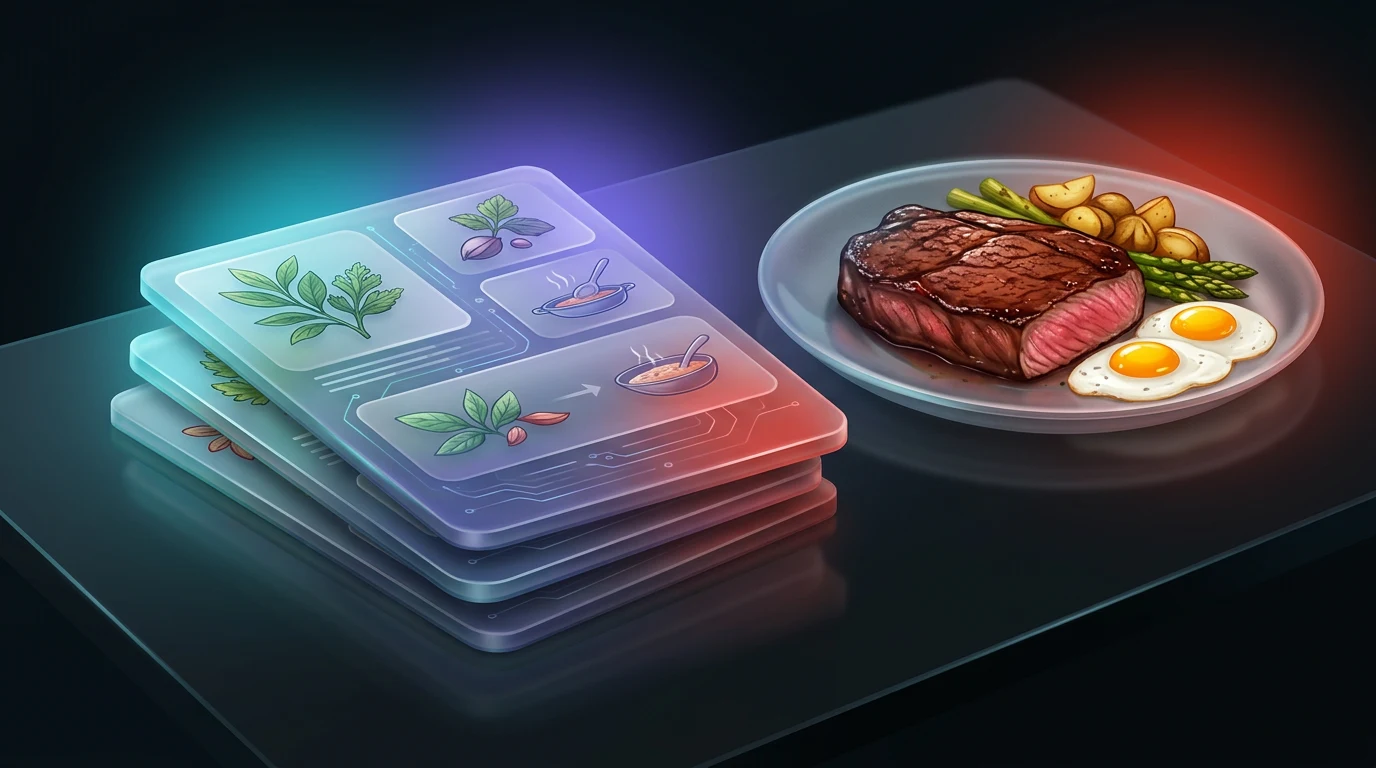
We turned this into four recipe packs: Breakfast, Lunch, Dinner, and Snacks, 35 recipes each, 140 total. All animal-based, seed-oil-free, wheat-free, and corn-syrup-free at once. Each is $5.99 as an instant PDF download, with a bundle of all four available at a discount. You can find them on the ThriveXDNA store.
Food is one input. What you do with training and recovery matters just as much. We’ve written about why chasing PRs can sabotage long-term progress, how a readiness metric stops you from training blind, and how to choose a workout style based on your own genetics instead of a generic template. Same logic as the food: more inputs isn’t automatically better.
Related guides
- Anti Inflammatory Breakfast for Joint Pain: What Seed Oils Have to Do
- a closer look at Best Free AI Fitness Apps in 2026 (No Paywall)
Summary
There’s real, growing demand for seed-oil-free cooking, and right now it’s being answered almost entirely by plant-based creators. Not because animal-based cooking can’t do it too, but because nobody’s been building for that specific search yet. Whether or not seed oils turn out to be the health villain some people claim, cutting them doesn’t require going vegan. We built 140 recipes that prove it.
Frequently Asked Questions
Is olive oil considered a seed oil?
No. Olive oil is pressed from a fruit, not extracted from a seed, and it’s compatible with a seed-oil-free diet. The 2025-2030 Dietary Guidelines for Americans specifically name it as a recommended fat.
What can I cook with instead of seed oils?
For high-heat cooking: beef tallow, ghee, or lard. For lower-heat cooking or finishing: butter, olive oil, or avocado oil. All of these are the fats used across our recipe packs.
Are seed oils actually unhealthy?
It’s genuinely disputed. The American Heart Association maintains they’re safe, while some newer biomarker studies on linoleic acid have found associations with lower inflammation, not higher. We’re not making a medical claim either way. Our recipes avoid seed oils because that’s the framing we chose, not because we’re asserting a settled health verdict.
What’s the difference between “animal-based” and “carnivore”?
“Animal-based” (a term popularized by Paul Saladino) is more permissive than strict carnivore. It still centers meat but allows fruit, honey, and select plant foods. Carnivore excludes plant foods entirely. Our recipe packs follow the animal-based framing.
Where can I find seed-oil-free recipes that actually include meat?
Our 4 recipe packs (Breakfast, Lunch, Dinner, Snacks, 140 recipes total) on the ThriveXDNA store are built exactly for this: animal-based, seed-oil-free, wheat-free, and corn-syrup-free.