

Last reviewed: June 2026
Shift workers face a sleep problem that most health apps are not built to solve. When your schedule rotates between nights, days, and weekends, any tool calibrated for a standard 10 PM to 6 AM window will misread your data and give advice built for a different body clock. A genuine ai sleep app for shift workers needs to log sleep at any hour, recognize inconsistent timing as a pattern rather than an error, and surface recovery trends across weeks rather than individual nights.
This article looks at four tools that handle irregular sleep windows better than most: Oura Ring, Sleep Cycle, Eight Sleep, and Whoop. If you want to compare more AI health tools by category, you can browse the full AI health and wellness tools directory and filter by use case.
Key takeaways
- Oura Ring and Whoop track sleep at any time of day without requiring a fixed schedule.
- Sleep Cycle works for daytime sleepers but accuracy depends on ambient noise levels in your sleep environment.
- Eight Sleep automates mattress temperature to help shift workers fall asleep faster during off-peak hours.
- All four tools involve ongoing subscription or membership costs beyond any upfront hardware price.
- No app corrects long-term circadian disruption; behavioral and light exposure strategies remain necessary.
Why Standard Sleep Apps Fail Rotating Shift Workers
Most consumer sleep apps are built around a single assumption: you go to bed sometime after dark and wake before morning. Their algorithms flag daytime sleep as napping, their bedtime reminders send notifications at 10 PM regardless of your schedule, and their weekly summaries show low scores for nights when you worked and slept through the afternoon. For workers on 12-hour rotating shifts or overnight schedules, this creates a steady stream of misleading data.
The better ai sleep app for shift workers approaches sleep as a physiological event that can occur at any point in the 24-hour cycle. It measures sleep quality through heart rate variability, movement, or temperature rather than inferring quality from clock time. It also tolerates schedule variance from week to week without treating it as an anomaly.
Oura Ring: Continuous Tracking Across Any Sleep Window
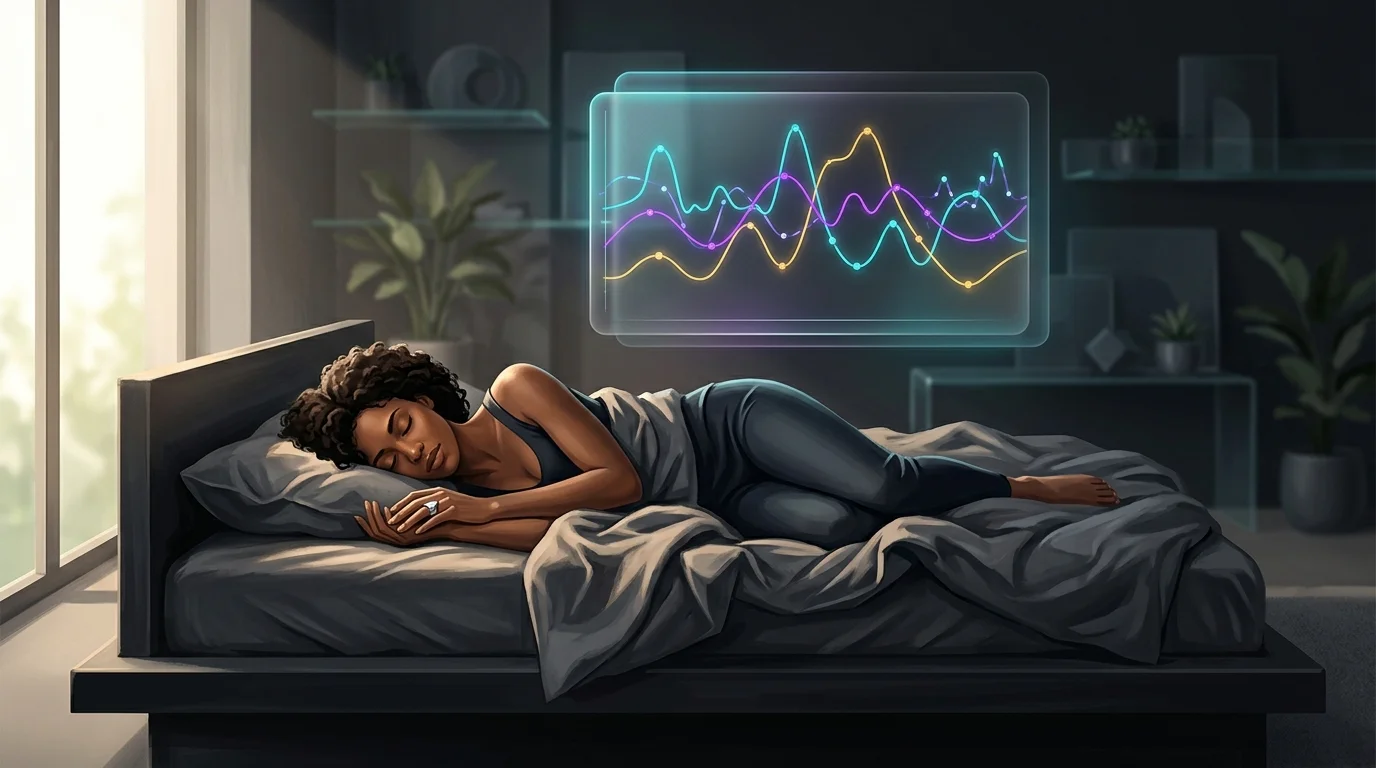
Oura Ring is a wearable ring that measures heart rate, HRV, skin temperature, and movement. Because it samples continuously, it logs sleep regardless of when it occurs. A nurse who sleeps from 8 AM to 3 PM after a night shift gets the same quality of data as someone who sleeps midnight to 7 AM. The readiness score factors in recent sleep history, activity, and physiological signals, so a run of poor daytime sleep shows up as reduced readiness across several days. See the National Institutes of Health for official guidance.
The ring requires a one-time hardware purchase and a monthly membership fee. There is no free tier once the trial period ends. For shift workers who prioritize long-term pattern data over real-time coaching, Oura Ring provides a detailed picture of how sleep debt accumulates and clears across irregular weeks.
Sleep Cycle: Smart Alarms for Workers With Daytime Rest
Sleep Cycle uses your phone microphone or accelerometer to detect movement and breathing patterns during sleep. Its main draw for shift workers is the smart alarm, which targets the lightest phase of sleep within a set window to reduce grogginess on waking. This is useful when you need to sleep from 6 AM to 1 PM before a second consecutive night shift.
The app includes a free tier with limited features and a premium subscription for full access to sleep data history, detailed stage breakdowns, and integrations. Daytime sleep accuracy can suffer in noisy environments since ambient sound interferes with microphone-based detection. Workers who sleep in quieter settings or use accelerometer mode tend to see more consistent readings.
Eight Sleep: Temperature Control to Support Off-Hour Sleep Onset
Eight Sleep is a smart mattress cover that heats and cools each side of the bed independently. The app learns sleep preferences over time and automates temperature changes to support each stage of sleep. For shift workers, the practical benefit is faster sleep onset. Falling asleep at 7 AM when it is bright and warm outside is harder than falling asleep at midnight, and cooling the mattress surface can help lower core body temperature and initiate sleep more quickly.
Eight Sleep carries a significant upfront hardware cost plus an ongoing Pod membership fee. It is the only tool in this group that requires a physical mattress modification. It is well suited to shift workers who sleep at home and who are comfortable with a higher initial investment.
Whoop: Recovery Metrics for Active Shift Workers
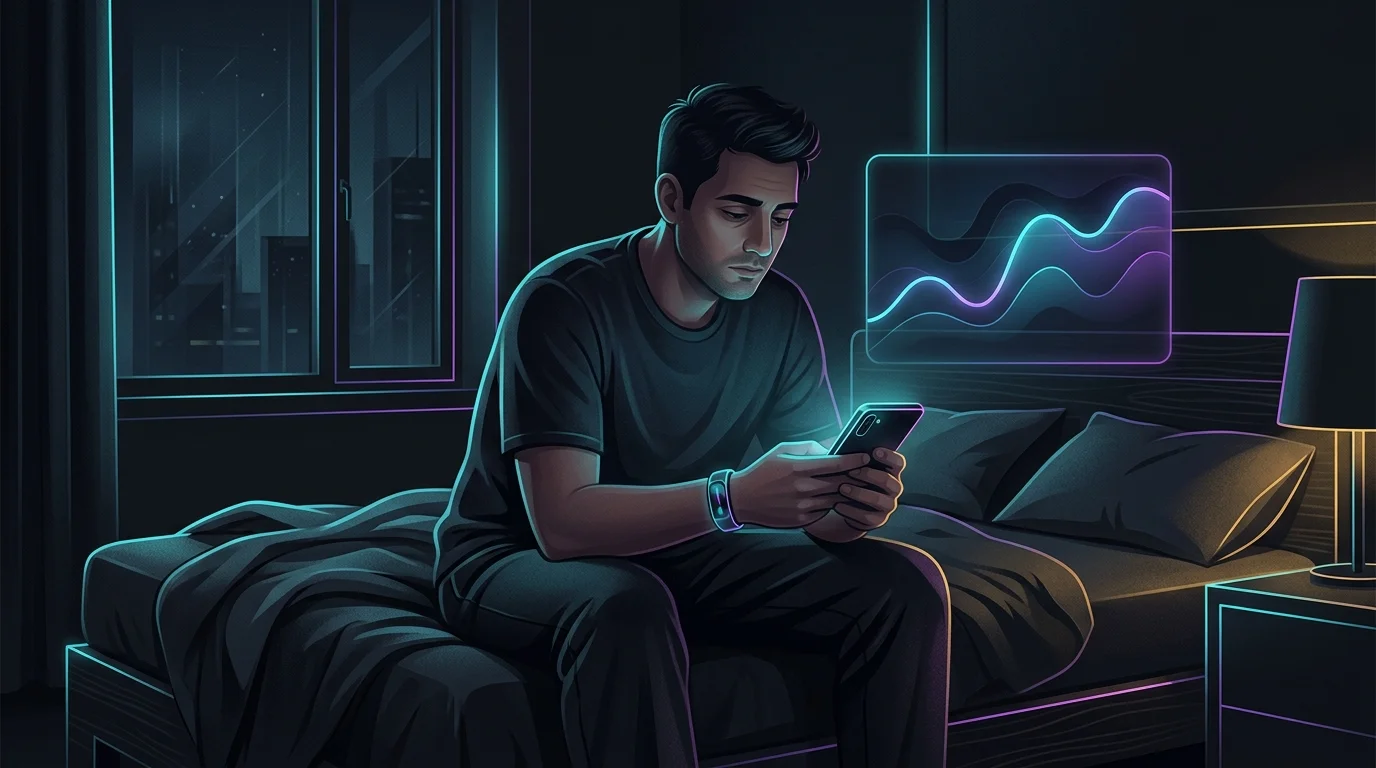
Whoop is a wrist-worn device with no screen that feeds data to its mobile app. Its model centers on the relationship between strain and recovery. For shift workers who also train or do physically demanding jobs, this framing is useful: it shows how a hard shift affects the body similarly to a workout, and how much sleep is needed to recover from it. The daily recovery score is derived from the longest sleep period in a 24-hour window, which means it handles irregular schedules without requiring manual adjustment each time your shift rotates.
Whoop operates on a subscription model with no free tier. The coaching prompts can feel repetitive over time, but the raw data on HRV and respiratory rate is among the more granular available in a consumer device. As an ai sleep app for shift workers who carry physical job demands alongside irregular hours, Whoop addresses both dimensions in one platform.
Limitations and Trade-offs to Consider
None of these tools fix the root cause of shift work sleep problems, which is misalignment between work timing and circadian biology. They can surface trends, but an app showing that your HRV is low after a week of night shifts cannot reverse that decline. Workers with chronic sleep disruption often need behavioral interventions, light therapy, or guidance from a sleep medicine provider alongside any tracking tool.
Data accuracy also varies by device type and individual physiology. Ring-worn sensors like Oura can be affected by skin temperature changes unrelated to sleep. Phone-based detection like Sleep Cycle is sensitive to environmental noise. Subscription costs across multiple tools add up, so picking one based on the primary gap in your routine is more practical than stacking several. Each platform collects detailed physiological data, and data retention and sharing policies differ, so reviewing the privacy terms before committing is worthwhile.
- No app eliminates circadian misalignment from shift work on its own.
- Accuracy varies by device type, environment, and individual physiology.
- Ongoing subscription costs apply to all four tools reviewed here.
- Privacy and data retention policies differ across platforms.
- A sleep medicine provider remains the right resource for clinical-level disruption.
How these tools compare
| Tool | Pricing Model | Suited For |
|---|---|---|
| Oura Ring | Hardware + subscription | Long-term sleep pattern tracking on any schedule |
| Sleep Cycle | Freemium | Smart wake timing for daytime or irregular sleepers |
| Eight Sleep | Hardware + subscription | Temperature-assisted sleep onset in off-peak hours |
| Whoop | Subscription | Strain and recovery tracking for active shift workers |
Sources
- NIA’s six healthy sleep habits for better rest
- clinical review of overtraining syndrome in athletes
- a good plan includes rest
- NIA’s hub on exercise and physical activity for healthy aging
Frequently asked questions
Can these apps automatically detect that I work rotating shifts?
None require you to label yourself as a shift worker. Oura Ring and Whoop track sleep whenever it occurs without penalizing irregular timing. Sleep Cycle and Eight Sleep work similarly but may benefit from manual schedule adjustments in their settings for more relevant coaching.
Is Oura Ring or Whoop a better ai sleep app for shift workers who rotate schedules weekly?
Both handle rotating schedules without needing manual updates each week. Oura Ring emphasizes sleep and readiness data more heavily, while Whoop integrates physical strain alongside sleep recovery. The better fit depends on whether sleep quality or overall physical recovery is your primary concern.
Does Sleep Cycle work if I sleep from 6 AM to 2 PM?
Yes. You can set any sleep window in the app and the smart alarm will target light sleep within your chosen range regardless of the time of day. Accuracy may be lower if your sleep environment is noisy during those hours.
What does Eight Sleep cost?
Eight Sleep hardware carries a significant upfront cost and a separate monthly Pod membership is required for the AI scheduling and temperature features. Pricing changes across product generations, so checking the Eight Sleep website directly for current figures is advisable before purchasing.
Can an ai sleep app for shift workers help with shift work sleep disorder?
Tracking apps can help identify patterns and quantify sleep debt, but shift work sleep disorder is a clinical condition. If symptoms include severe insomnia or excessive sleepiness that impairs daily functioning, a sleep medicine provider is the appropriate first step, with apps serving as a supplementary tracking tool.
Are there free options among these four tools?
Sleep Cycle has a free tier with basic tracking features. Oura Ring, Eight Sleep, and Whoop all require hardware purchases or paid subscriptions with no permanent free plan. Several offer trial periods before billing begins, which is worth using to assess fit before committing.
Related guides
- Best AI Apps for Home Workouts in 2026
- more on Is Whoop Worth It in 2026? An Honest Breakdown
- more on Is the Eight Sleep Pod Worth It in 2026?
- Foods That Help You Sleep: What to Eat (and Skip) at Dinner
- more on Whoop vs Oura 2026: Which Recovery Tracker Wins
- more on Best Oura Ring Alternatives 2026 Tested and Ranked
- more on Is the Oura Ring Worth It in 2026?
- more on 7 Best Whoop Alternatives 2026 (No Monthly Fee)
- Genetic Night Owl? 10 Sleep Hygiene Habits That Protect Your Health In
- Best AI Recovery Apps for Athletes in
- Best Calm Alternatives 2026 for Sleep and Stress