
Last reviewed: June 2026
When you apply for life or auto insurance online and receive a decision in minutes, an AI underwriting engine has already checked dozens of data sources in the background. This process, once handled by human analysts over several days, now runs in seconds.
Knowing how ai underwriting works helps you predict what will be checked and why your quoted premium landed where it did. You can compare more options in the AI insurance tools directory to see which carriers use algorithmic underwriting and which still rely on traditional review.
This article covers the data layers these engines pull, how they translate raw signals into a price, and what steps you can take to avoid a surprise instant decline.
Key takeaways
- AI underwriting pulls data from multiple third-party sources simultaneously, not just your application form.
- Prescription history, driving behavior, and credit-based insurance scores are common inputs depending on the policy type.
- An instant decline can stem from a data mismatch in a third-party record, not necessarily a real risk issue.
- Ethos and Root apply algorithmic underwriting directly to consumers; Akur8 is a B2B platform insurers use to build their own pricing models.
- Correcting errors in your prescription history report or motor vehicle record before applying can reduce decline risk.
What Data Layers Does AI Underwriting Pull?
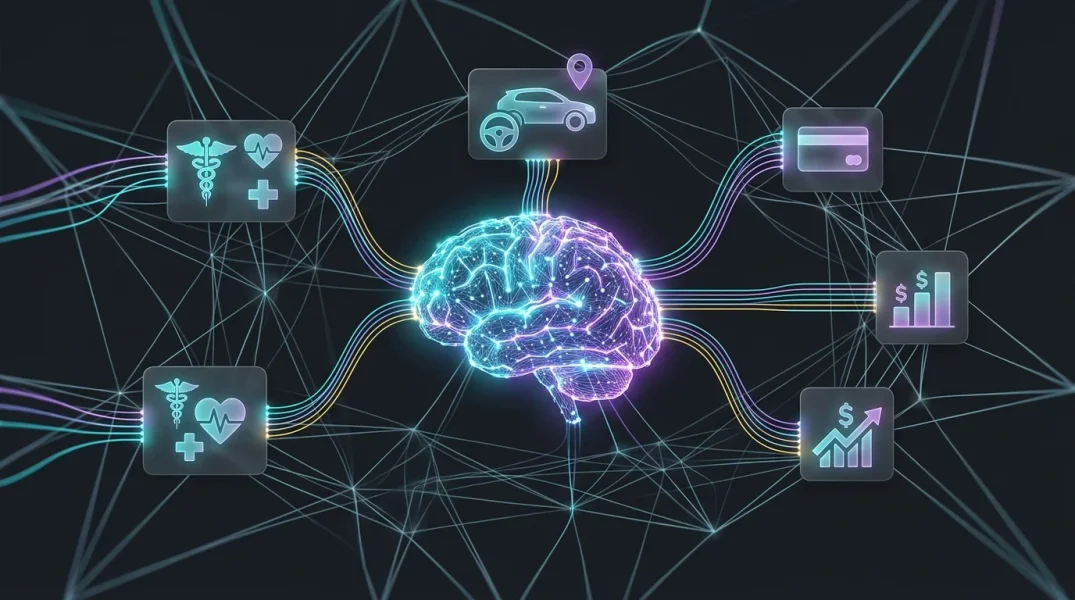
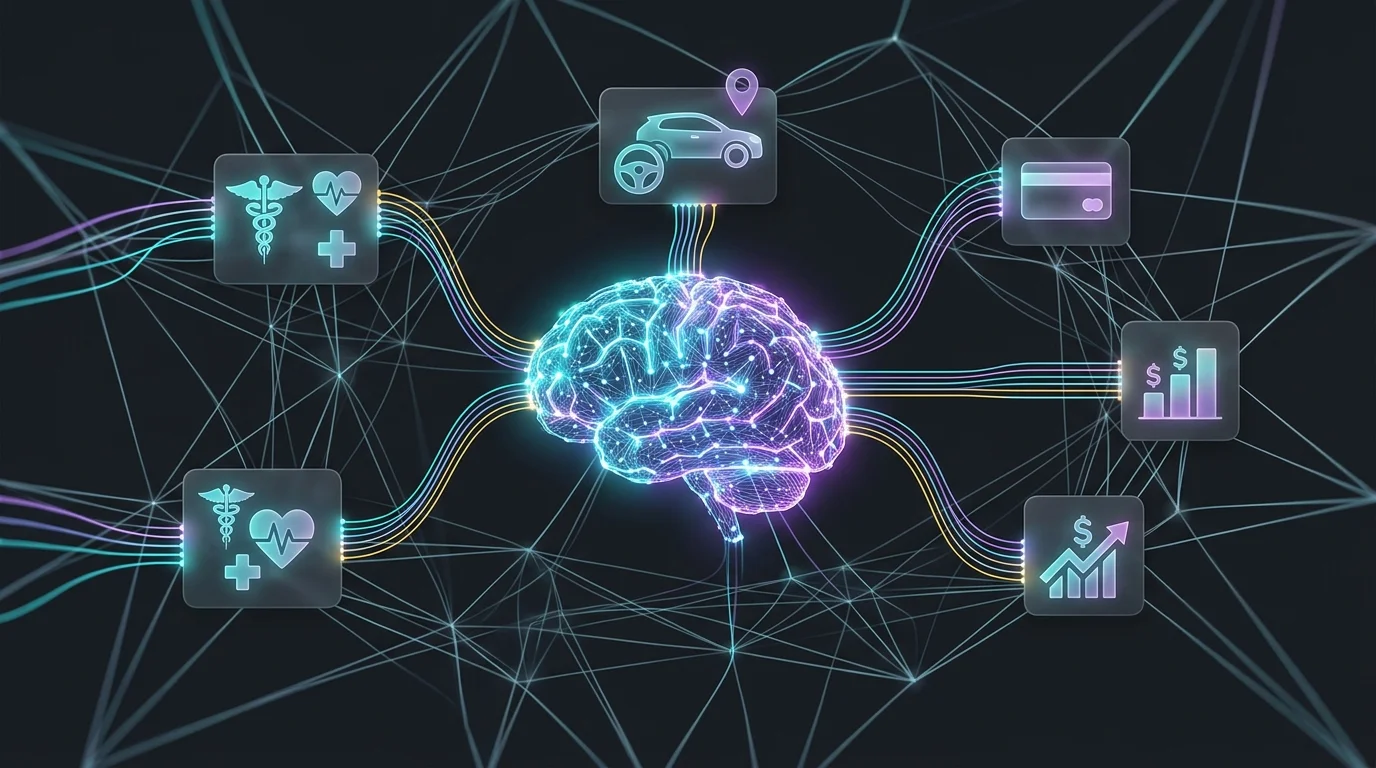
AI underwriting engines do not rely on your application alone. They query multiple data brokers and industry databases in parallel to build a risk profile within seconds. For life insurance, common sources include the MIB (Medical Information Bureau) consumer report, prescription drug history databases such as Milliman IntelliScript and ExamOne, and public records. For auto insurance, motor vehicle records, prior claims data from the C.L.U.E. report, and in some cases real-time telematics feeds are all inputs.
Credit-based insurance scores, which differ from standard credit scores, are used in most US states for auto and home insurance underwriting. These scores draw on payment history, outstanding balances, and credit utilization, and they feed directly into the pricing model. Understanding how ai underwriting works means recognizing that a single application triggers queries across several of these sources at once, and that a discrepancy between what you wrote on the form and what a database holds can immediately flag your file.
- MIB consumer report: flags prior medical inquiries made to other insurers
- Prescription history databases: reveal medications filled, which imply diagnoses
- Motor vehicle records: accidents, violations, and license suspensions
- C.L.U.E. report: prior auto and home insurance claims
- Credit-based insurance score: payment behavior as a proxy for risk

How the Pricing Model Converts Data into Your Premium
Once the data is assembled, the pricing engine runs it through a statistical model. Traditional actuarial tables used simple rating factors like age and gender. Modern AI models use techniques such as gradient boosted trees or generalized linear models extended with machine learning to find non-linear relationships between variables. This means two applicants with similar ages and health histories can receive meaningfully different quotes because the model has identified an interaction between a specific medication and a geographic claims pattern. See the National Association of Insurance Commissioners for official guidance.
Akur8 is a B2B pricing platform designed for insurance carriers that want to build or refine these kinds of models. It gives actuaries machine learning tools wrapped in an interface built for insurance workflows, letting teams iterate on rate plans faster than manual coding allows. Carriers using platforms like Akur8 can test new pricing signals and deploy updated models more frequently. This is a core part of how ai underwriting works at the carrier level, even when the consumer-facing interface looks like a simple quote form.
Root Insurance: Telematics as the Primary Underwriting Signal
Root Insurance built its auto underwriting model around driving behavior data collected through a smartphone app. During a test drive period, Root records signals such as hard braking events, sharp cornering, phone use while driving, and the time of day trips occur. The model then weights these behavioral signals heavily when setting the initial premium.
This is a direct example of how ai underwriting works in practice for auto insurance. Instead of relying primarily on historical proxies like credit score or zip code, Root uses direct behavioral measurement. Drivers who score well during the test period can receive lower rates than they would from traditional carriers. Drivers who score poorly may receive a high quote or no offer at all, which makes the data collection phase consequential in a way that a standard application form is not.
Ethos and No-Exam Life Insurance Underwriting
Ethos offers term life insurance with a fully digital application process that, for many applicants, does not require a medical exam. Instead, the underwriting model queries prescription history databases and MIB records to assess mortality risk. Applicants answer health questions on the form, and the engine cross-references those answers against third-party data in real time.
This approach makes the application fast and accessible, but it also means that a medication in your prescription history associated with a serious condition, even if prescribed for a different reason, can affect your outcome. How ai underwriting works in this context is that the model treats the prescription as a signal rather than a confirmed diagnosis, but the practical effect on your quote can be similar to if a diagnosis were confirmed.
What Triggers an Instant Decline and How to Avoid It
Instant declines often result from one of three situations: a data mismatch between your application and a third-party record, a flag in the MIB or prescription database tied to a serious condition, or a prior claim or MVR entry that pushes the risk score above the carrier’s automated cutoff. The algorithm does not weigh context; it pattern-matches against its training data and applies a rule.
You can reduce this risk before you apply. The MIB allows consumers to request their consumer file once per year at no charge. Milliman IntelliScript and ExamOne both have consumer disclosure processes. LexisNexis provides your C.L.U.E. auto report free annually. Reviewing these records in advance lets you identify and dispute errors before an underwriting engine sees them.
- Request your MIB consumer file before applying for life insurance
- Check your prescription history report via IntelliScript or ExamOne consumer requests
- Order your C.L.U.E. report for auto or home insurance
- Pull your motor vehicle record from your state DMV
- Dispute any errors with the data source directly, not with the insurer

Limitations and Trade-offs of AI Underwriting
Algorithmic underwriting is faster and more consistent than human review in many cases, but it carries real trade-offs. Models trained on historical claims data can encode historical biases. If certain zip codes, occupations, or demographic groups were charged higher rates in the past due to factors unrelated to actual risk, a model trained on that data may replicate the pattern. US regulators in several states have begun scrutinizing credit-based insurance scores and other algorithmic inputs for disparate impact.
Explainability is another limitation. When a model produces a rate or a decline, the applicant often receives only a generic reason code. Unlike a human underwriter who can explain their reasoning, a gradient boosted model with hundreds of variables offers little transparency about which factor mattered most. People with complex medical histories may actually fare better with a carrier that still uses manual underwriting review, because a human can weigh context that an algorithm cannot.
Finally, how ai underwriting works is not uniform across carriers. Two carriers using similar data sources can produce very different premiums for the same applicant because their models were trained on different historical books of business and calibrated to different risk tolerances. Shopping multiple quotes remains important with algorithmic underwriting, and in some respects more so than with traditional review.
How these tools compare
| Tool | Who It Serves | Pricing Access | Best For |
|---|---|---|---|
| Ethos | Consumers (life insurance) | Free to get a quote | No-exam life insurance applications |
| Root | Consumers (auto insurance) | Free to get a quote | Drivers who want rates based on driving behavior |
| Akur8 | Insurance carriers (B2B) | Enterprise, contact for pricing | Insurers building or refining algorithmic pricing models |
Sources
- plan comparison tools and coverage options
- What is Life Insurance
- CMS Part D methodology document
- general liability
Frequently asked questions
Can I see what data an AI underwriting engine used to set my rate?
You have a legal right under the Fair Credit Reporting Act to request the specific reasons for an adverse action if a consumer report was used. The insurer must disclose which report was checked, but the internal model weights or feature importance scores are not disclosed.
Does AI underwriting use my social media profiles?
Most US carriers do not use social media data in underwriting, in part because regulators have flagged disparate impact concerns. Telematics and prescription databases are the more common behavioral signals.
If I get an instant decline, can I appeal?
Yes. Request the specific reason for the adverse action, correct any data errors at the source such as MIB or IntelliScript, and then apply again or apply with a carrier that uses manual review for borderline cases.
How does Akur8 differ from Root or Ethos?
Akur8 is a software platform sold to insurance companies to help them build pricing models. Root and Ethos are consumer-facing insurers. You cannot buy insurance directly from Akur8.
Will a no-exam life insurance policy cost more than a traditional policy?
It depends on your health profile. Applicants in good health with clean prescription histories often find no-exam rates competitive. Applicants with chronic conditions may find traditional fully-underwritten policies cheaper or more accessible.
Is it worth shopping multiple carriers when AI underwriting is involved?
Yes. Because each carrier trains its model on its own historical data and applies its own risk tolerances, the same applicant can receive meaningfully different quotes from different algorithmic underwriters.
Related guides
- Can AI Insurance Apps Replace Your Agent in 2026?
- Lemonade vs Root: Which AI Insurance App Wins in 2026
- Ethos Alternatives: AI No-Exam Life Apps for
- Is Ethos Life Insurance Worth It? AI Review
- more on Ethos vs Ladder: AI No-Exam Life Insurance Compared
- more on Clearcover vs Root: AI Claims Speed Compared
- more on Is Root Insurance Worth It? AI Driving Test Tested
- Bestow vs Ethos: Fully Algorithmic Life Cover
- more on Root Alternatives: AI Telematics Insurance Apps
- Best AI Renters Insurance Apps for
- Best AI Life Insurance Apps With No Medical Exam