Fitbod vs Freeletics 2026: Gym AI vs Bodyweight
Last reviewed: June 2026
Choosing between Fitbod and Freeletics comes down to one practical question before anything else: where do you train? Fitbod is built around gym equipment and uses recovery data to plan your next session. Freeletics is built around bodyweight movement and delivers a coaching experience that works with zero gear.
If you are still exploring your options, you can compare more options in the AI health and wellness tools directory before committing to either app. But if your shortlist is already down to these two, the deciding factor is almost always your training environment and how much structure you want around equipment and recovery.
This article breaks down how each app works, where each falls short, and which type of person is likely to get more value from each.
Key takeaways
- Fitbod tracks estimated muscle fatigue and adjusts gym workouts to your available equipment and recovery state.
- Freeletics focuses on bodyweight training and delivers an AI coach that adapts to your fitness level and weekly schedule.
- Fitbod suits gym members or home gym owners; Freeletics suits travelers, people without equipment access, or those who prefer calisthenics.
- Both apps use subscription models with some free access available before committing.
- A direct fitbod vs freeletics comparison rarely shows overlap in ideal user: they are designed for different training contexts.
What Fitbod and Freeletics Are Actually Built to Do
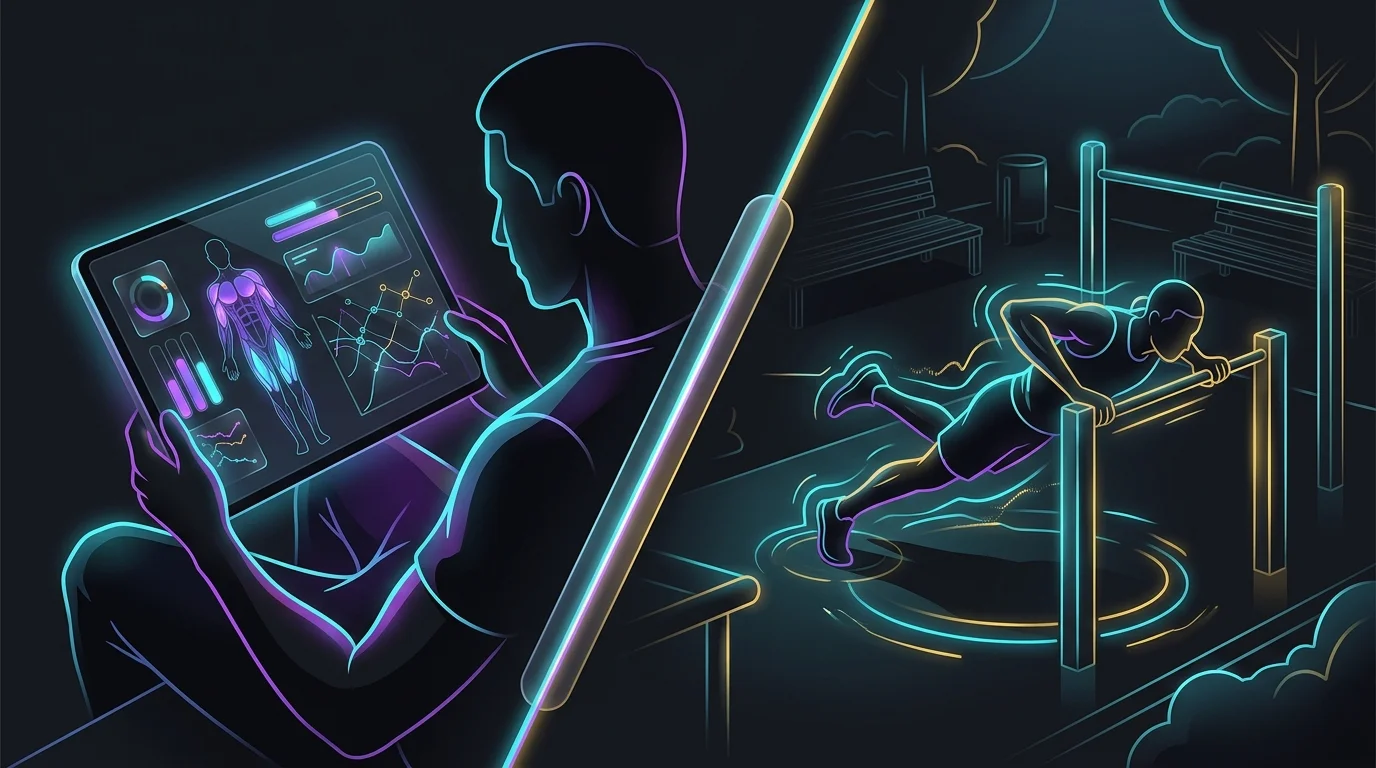
Fitbod is a workout planning app that builds sessions around a muscle group recovery model. Every exercise in its library is tagged to the muscles it targets. The app logs estimated muscle fatigue after each logged session and, when you start a new workout, generates a plan that prioritizes rested muscle groups and avoids overloading recently stressed ones. If you trained chest and triceps yesterday, Fitbod routes today’s session toward lower body or back work.
Freeletics started as a bodyweight-only training platform and has since added gym-based workout options, but its identity and primary library remain grounded in high-intensity calisthenics. The Freeletics Coach is an AI layer that asks about your goals, schedule, and current fitness level, then generates a weekly training plan. Most of those workouts require no equipment at all, which is the defining feature of the platform for most users.
How the AI Personalization Works in Each App
Fitbod’s AI relies on a mechanical load model. You specify what equipment you have available, log your sets and reps, and the app updates its fatigue estimates in real time. You can swap exercises mid-session, and the model recalculates. The more consistently you log, the more accurate the fatigue picture becomes. It is a data-in, recommendation-out loop that depends on your logging discipline. See the National Institutes of Health for official guidance.
Freeletics uses a preference-and-feedback loop instead. The Coach asks onboarding questions, generates a weekly plan, and then asks you to rate how each workout felt after completing it. Difficulty and volume shift over time based on that subjective feedback. This approach is less precise than tracking numerical load, but it lowers the barrier to entry since you do not need to record exact weights or sets to keep the system working.
Equipment Requirements and Training Environments
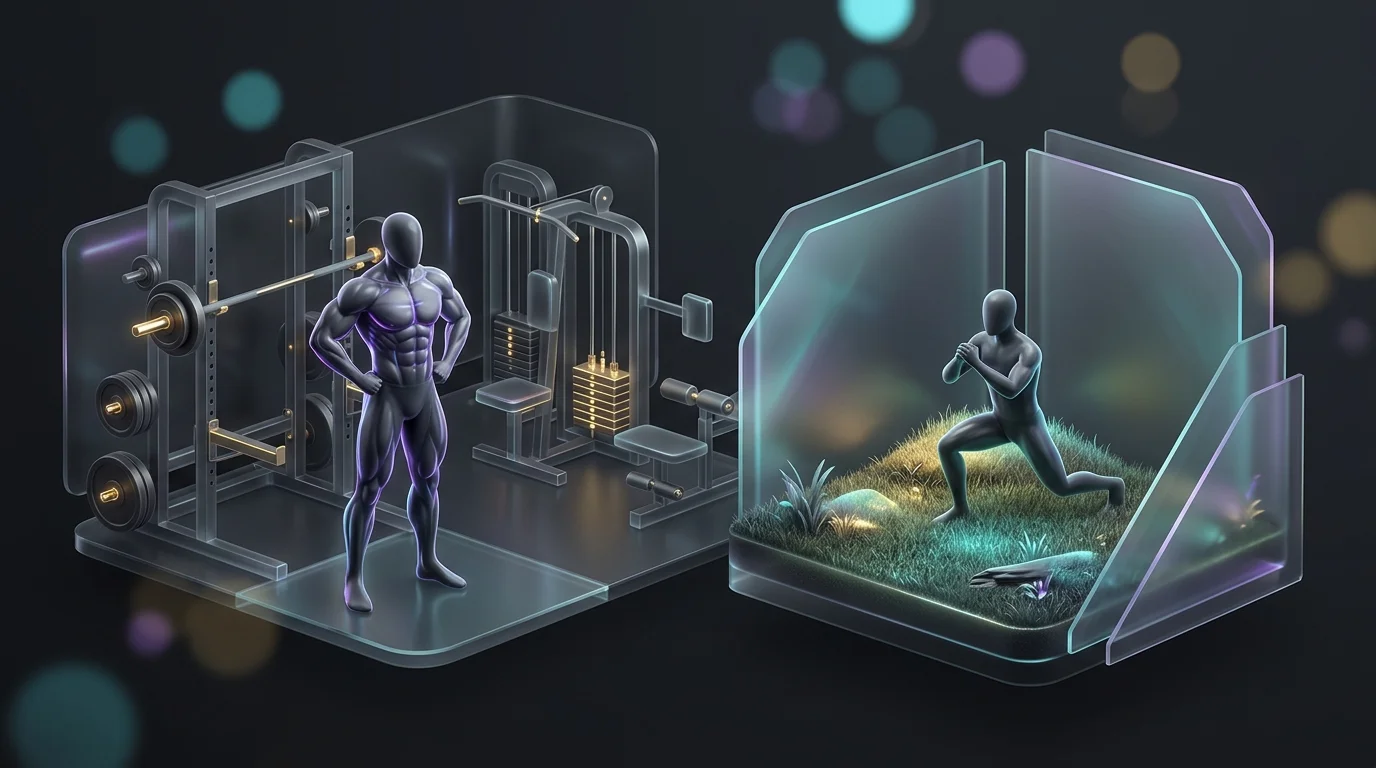
This is the clearest dividing line in any fitbod vs freeletics comparison. Fitbod is most useful when you have consistent access to gym equipment, whether that is a commercial gym, a home gym, or even a minimal setup with dumbbells and a bench. You list what gear you have, and Fitbod restricts its exercise selection to match. If you train at different locations, you update the equipment list and the programming adjusts.
Freeletics is useful precisely when you have none of that. The default workout library is built on movements like burpees, push-ups, pull-ups, jumping jacks, and sprints. Many workouts require only a flat surface. Some plans include optional equipment like a pull-up bar or jump rope, but the core programming runs without them. For anyone who travels frequently, trains outdoors, or simply does not have gym access, Freeletics removes the equipment barrier entirely.
- Fitbod: gym or home gym with equipment is required for most sessions
- Freeletics: outdoor, home, hotel room, or minimal-equipment environments supported
- Fitbod users can filter available equipment per session
- Freeletics includes some gym-based plans but bodyweight remains its primary strength
Limitations and Trade-offs
Fitbod’s effectiveness depends on accurate logging. If you skip recording a session or forget to enter weights, the fatigue model drifts. The app cannot measure actual muscle recovery; it estimates it from what you report. Users who train inconsistently or who frequently skip logging may find the recommendations less reliable over time. Fitbod also focuses almost entirely on resistance training and does not offer meaningful cardio, flexibility, or conditioning programming.
Freeletics has a different limitation. Its high-intensity, high-volume approach is not well suited for complete beginners or for people managing joint problems, older injuries, or conditions that require low-impact movement. The workouts often feature repetitive jumping movements and fast-paced circuits, which can be hard on knees and ankles. The feedback loop also depends on subjective self-reporting, which makes it less precise than a system that tracks numerical load and volume.
Neither app replaces professional coaching for people with complex needs. Both make assumptions during onboarding that may not hold for every user, and neither monitors form or provides real-time technique correction.
Pricing and What You Get Before Paying
Both Fitbod and Freeletics use subscription models. Fitbod offers a limited number of free workouts before requiring a paid subscription, with monthly and annual billing options available. Freeletics has a free tier that gives access to a set of standard workouts without the AI Coach, and a paid Coach subscription that unlocks personalized weekly planning. Specific prices vary by region and change over time, so checking each app’s current pricing page directly is the most reliable approach.
Annual plans on both platforms cost less per month than monthly plans, which is typical for subscription fitness apps. Neither app currently offers a one-time purchase option.
Which Situation Each App Suits
Fitbod fits gym regulars who want their weekly programming to account for recovery and progressive overload. If you train three to five times a week with access to weights and want an app that adjusts what you do based on what you already did, Fitbod’s model is directly useful. It also suits home gym users with a fixed equipment set who want structured programming around it.
Freeletics fits people who want a structured fitness routine without needing a gym. It is practical for travelers, people training outdoors, or anyone who prefers calisthenics and conditioning work over machine-based resistance training. The free tier also makes it reasonable as a low-commitment entry point before subscribing to the Coach.
The fitbod vs freeletics question is rarely a close call once you know your training environment. The person who gets the most from Fitbod has reliable gym access and values data-informed resistance programming. The person who gets the most from Freeletics trains anywhere, values convenience over equipment variety, and is comfortable with high-intensity bodyweight sessions.
How these tools compare
| App | Pricing Model | Equipment Needed | Best Context |
|---|---|---|---|
| Fitbod | Free trial then paid subscription | Yes – gym or home gym gear required | Gym users wanting recovery-aware programming |
| Freeletics | Freemium (free workouts + paid Coach) | No – most plans require no gear | Bodyweight training anywhere, no equipment needed |
Frequently asked questions
Can I use Fitbod if I only have dumbbells at home?
Yes. Fitbod lets you specify your available equipment, and it will build sessions using only what you have listed. A dumbbell-only setup is a supported configuration.
Does Freeletics work for complete beginners?
Freeletics can work for beginners, but the default workout intensity is high. The jump-heavy, fast-paced circuits may be difficult for someone with no fitness base. The Coach adjusts over time based on your feedback, but starting at a comfortable pace is advisable.
Is there a meaningful free version of either app?
Freeletics offers a free tier with access to a set of standard workouts, though the AI Coach requires a paid subscription. Fitbod offers a limited number of free workouts before requiring payment. Neither is fully free with all features unlocked.
Which app is more useful for fat loss?
Both can support fat loss as part of a broader routine that includes diet and consistency. Freeletics workouts tend to be higher intensity and conditioning-focused, which some users find more cardio-adjacent. Fitbod builds resistance training programs, which supports muscle development and long-term metabolic health. Neither app is a weight loss tool on its own.
Can I run both apps at the same time?
Technically yes, but using both simultaneously would likely result in conflicting programming volumes and potential overtraining. They are designed as standalone coaching systems. Choosing one and following it consistently is more practical than combining them.
Does Freeletics have gym-based workout options?
Freeletics has added gym and weighted workout plans in recent years. However, its core identity and primary library are built on bodyweight training. If structured gym programming is your main need, Fitbod is a more purpose-built option for that use case.
Related guides
- Galaxy Ring vs Oura 2026: No Subscription Showdown
- Garmin vs Whoop 2026: Watch or Recovery Band
- a closer look at 9 Best Fitbod Alternatives 2026 for Smarter Lifting
- Best AI Fitness Apps for Beginners in
- Dr. Muscle vs Fitbod 2026: AI Auto-Progression
- 5 Best AI Workout Plan Generators in 2026 (and Where They Quietly Fail
- Full-Body Home Workout With No Equipment (No Gym)
- more on 10 Best Apps for Personal Trainers in
- Best AI Fitness Apps for Apple Watch in
- Stop Wasting Money on Trainers: The Top 5 AI Workout Plan Generators D
- Top 5 Best AI Workout Plan Generators in 2026 That Actually Keep You C
- Best AI Recovery Apps for Athletes in