

Last reviewed: June 2026
Whoop built its reputation on recovery science, offering a screenless wearable that tracks strain, sleep, and heart rate variability around the clock. The device pairs with a subscription service that converts raw biometric data into a daily readiness score. As the wearable market has grown more competitive, many buyers in 2026 are asking whether that ongoing cost is actually justified.
If you are comparing fitness wearables more broadly, you can browse more options in the AI health and wellness tools directory. This article focuses on Whoop specifically and tries to answer whether is whoop worth it based on the type of user you are, not on marketing claims.
The core argument is simple: Whoop delivers genuine value to people who change their behavior based on the scores. For everyone else, the subscription model means paying indefinitely for data they may not be acting on.
Key takeaways
- Whoop uses a subscription model with no one-time device purchase, so costs accumulate over time
- The recovery score is most useful when it actively changes your training or sleep decisions
- Oura Ring and Garmin both offer ownership models without a required monthly fee for core features
- Whoop suits endurance athletes, coaches monitoring team load, and people in structured training programs
- Casual exercisers and general wellness users often find a one-time-purchase device covers their needs
What Whoop Tracks and How the Subscription Model Works
Whoop monitors heart rate continuously, including heart rate variability, respiratory rate, skin temperature, and blood oxygen. It combines those signals into three core scores: a strain score reflecting daily cardiovascular load, a recovery score reflecting readiness to perform, and a sleep coach that recommends a target sleep duration. There is no display on the band itself, so all feedback lives inside the companion app.
The subscription covers access to the app, historical data, and ongoing firmware updates. Without an active subscription, the hardware does not function as a health tracker. This is a meaningful distinction from devices where you own the hardware outright and get core features for free indefinitely.

Who Actually Gets Value From Whoop
The users who tend to report consistent value from Whoop are those with structured training programs, including endurance athletes, strength athletes running periodized blocks, and people in occupations with irregular sleep schedules. For these users, the recovery score functions as a daily decision-making tool: train hard, train easy, or rest. When the score influences real decisions, the subscription cost is easier to justify. See the National Institutes of Health for official guidance.
Coaches and team staff have used Whoop to monitor athlete readiness across a group, comparing trends over time rather than looking at single-day snapshots. People managing chronic fatigue, recovering from illness, or tracking how lifestyle factors like alcohol or late-night eating affect sleep also tend to find the longitudinal data useful.
- Endurance and strength athletes with periodized training plans
- Coaches tracking recovery trends across a team or training group
- People with shift work, travel schedules, or irregular sleep patterns
- Anyone actively managing recovery from injury or illness

Where Whoop Falls Short: Honest Trade-Offs
Whoop has no GPS and no display, which means it cannot replace a running watch or general smartwatch. Users who want turn-by-turn navigation, on-wrist notifications, or real-time pace data need a separate device. Wearing two devices daily is a friction point that drives some users away.
The subscription model is the most polarizing aspect of the product. Over a two or three year period, the cumulative subscription cost can exceed the one-time purchase price of competing hardware. If you stop using Whoop, you walk away with no resale device value and no access to your historical data without resubscribing.
There is also a data-utility problem. Whoop surfaces a lot of information, and some users experience what might be called score anxiety, where checking the recovery number adds stress rather than reducing it. The device is only as useful as your willingness to act on what it shows.
Whoop vs. Oura Ring vs. Garmin: Key Differences
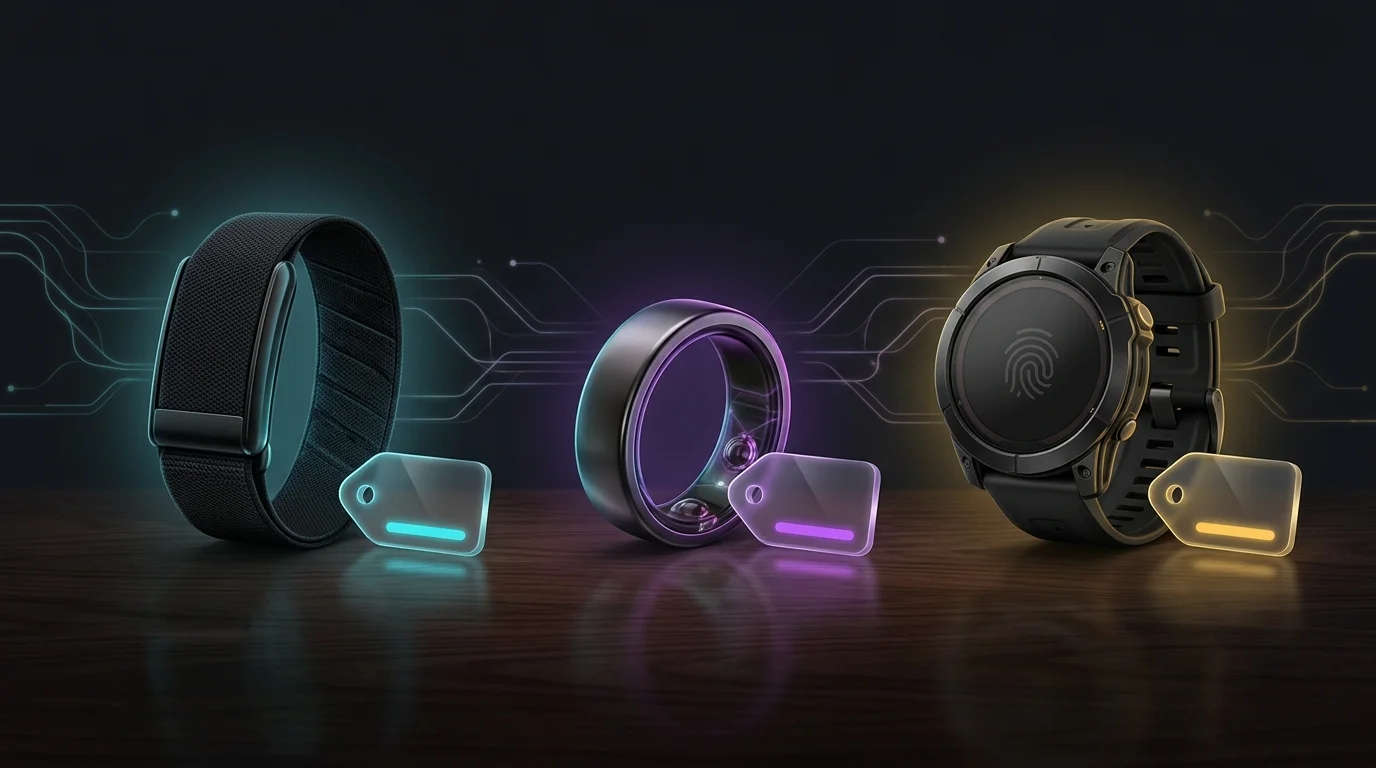
These three represent different philosophies in the wearable market. Whoop is subscription-first with no separate hardware purchase fee for the band itself, though the subscription is always required. Oura Ring requires an upfront hardware purchase followed by a monthly membership to access full data insights. Garmin devices are purchased outright, and the core health and fitness features work through Garmin Connect, which does not require a paid subscription for standard use.
Oura Ring emphasizes sleep and readiness in a ring form factor, which some users prefer for overnight wear. Garmin devices cover a wide range of form factors and add GPS and mapping features that Whoop and Oura do not. All three track sleep, HRV, and daily activity, but their pricing structures and feature sets reflect different priorities.
Is Whoop Worth It for Casual or General Fitness Users?
For someone who exercises two or three times a week without a structured program, is whoop worth it becomes a harder case to make. The recovery scores are most actionable when you have a training plan they can feed into. Without that structure, the scores can feel abstract, and the subscription represents an ongoing cost for data that does not change day-to-day decisions in a meaningful way.
A Garmin device purchased once, or a mid-range fitness tracker without a subscription, may cover heart rate, sleep, and step tracking adequately for general wellness goals. The differentiation Whoop offers, specifically detailed HRV trend analysis and strain modeling, matters more to users with specific athletic goals than to general health monitoring.

Final Verdict: Is Whoop Worth It Depends on One Variable
The single variable that determines whether is whoop worth it for any given user is behavioral change. If you look at your recovery score and adjust your training intensity, sleep schedule, or habits accordingly, Whoop pays for itself in improved outcomes over time. If you check the app the same way you check a weather report, out of mild curiosity and without acting on it, you are paying a subscription for information you are not using.
Endurance athletes, team sport coaches, and people in structured training blocks are the clearest candidates for a Whoop subscription. Casual exercisers, general wellness users, and anyone who wants GPS or on-wrist displays will find competing options such as Oura Ring for sleep focus or Garmin for sport tracking offer better value for their specific needs without the perpetual subscription.
- Worth it: endurance athletes and coaches using data to guide training load
- Worth it: people managing recovery from illness, injury, or chronic fatigue
- Likely not worth it: casual exercisers without a structured training program
- Likely not worth it: users who want GPS, on-wrist notifications, or a display
- Alternative to consider: Garmin for owned hardware with GPS; Oura Ring for sleep-centric tracking
How these tools compare
| Tool | Pricing Model | Ongoing Subscription | Best For |
|---|---|---|---|
| Whoop | Subscription (no separate hardware purchase fee) | Yes, always required | Recovery tracking for structured athletes |
| Oura Ring | Hardware purchase plus monthly membership | Yes, for full insights | Sleep and readiness in a ring form factor |
| Garmin | One-time hardware purchase | No (core features free) | GPS sport tracking with owned hardware |
Sources
- background reading: Physical Activity Guidelines for Americans
- additional detail from official U.S. physical activity guidelines
- further context: peer-reviewed review of mobile fitness applications
- Ahmetov et al., Adv Genet
Frequently asked questions
Does Whoop require a subscription to function?
Yes. Whoop operates entirely on a subscription model and the device does not track or display health data without an active membership. This differs from devices where core features work after a one-time hardware purchase.
How does Whoop compare to Oura Ring for sleep tracking?
Both track sleep stages, HRV, and readiness. Oura Ring requires an upfront hardware purchase plus a monthly membership, while Whoop bundles hardware access into the subscription. Oura’s ring form factor is preferred by some for overnight comfort. Both provide detailed sleep reporting, though their scoring methodologies differ.
Can I see Whoop data without the app?
No. Whoop has no display on the band, so all data is accessed exclusively through the smartphone app. A compatible phone and an active subscription are both required to view your metrics.
Is Whoop accurate for heart rate variability measurement?
Whoop uses optical heart rate sensing from the wrist, which can introduce variability compared to chest strap ECG methods. Wrist-based HRV readings are generally considered useful for tracking trends over time rather than as precise clinical measurements.
What happens to my data if I cancel my Whoop subscription?
Access to historical data typically requires an active subscription. Policies on data retention after cancellation should be confirmed directly on Whoop’s website, as terms can change. This lock-in is worth factoring in before committing to the platform.
Is Whoop worth it for weight loss or general health?
Whoop is not specifically designed for weight loss and does not emphasize calorie tracking the way general fitness devices do. For broad wellness goals without structured athletic training, a Garmin device or a standard fitness tracker may cover daily activity and sleep adequately without an ongoing subscription cost.
Related guides
- more on Is the Oura Ring Worth It in 2026?
- Is Levels CGM Worth It in 2026?
- a closer look at Whoop vs Oura 2026: Which Recovery Tracker Wins
- details: 7 Best Whoop Alternatives 2026 (No Monthly Fee)
- a closer look at Best AI Sleep Apps for Shift Workers in
- Do Smart Rings Need a Subscription in 2026?
- more on Best Oura Ring Alternatives 2026 Tested and Ranked
- Best AI Recovery Apps for Athletes in