

You're halfway through a training plan when a dental appointment, prescription, or unexpected doctor visit competes with your grocery budget. At the same time, your benefits portal presents two unfamiliar options, an HSA and an FSA, and both promise tax savings. The choice feels less like financial planning and more like guessing which button won't create a problem later.
A healthcare savings account can make health spending easier, but only when you understand its job. Is it a wallet for today's physical therapy and prescriptions, or a long-term vault for future medical costs? The right answer depends on your plan, your cash flow, your employer access, and how you use healthcare.
This guide starts with the basic mechanics, then compares HSAs and FSAs, explains the 2026 rules, and applies them to realistic family, fitness, and coaching situations. By the end, you'll have a practical way to decide whether to spend, save, or invest your account balance.
Table of Contents
- Introduction to Healthcare Savings Accounts Made Simple
- How Healthcare Savings Accounts Work
- HSA vs FSA Key Differences You Need to Understand
- Tax Benefits and 2026 Contribution Limits Explained
- Qualified Expenses and Real World Examples
- How to Choose the Right Account for Your Needs
- Putting Your Healthcare Savings Account to Work
- Frequently Asked Questions
- What is the difference between an HSA and an FSA?
- What expenses are HSA or FSA eligible?
- Can I use an HSA or FSA for dental and vision expenses?
- Can I use HSA or FSA funds for over-the-counter medicine?
- Does HSA money expire or roll over?
- Can I use an HSA to pay health insurance premiums?
- When should I choose an HSA over an FSA?
Introduction to Healthcare Savings Accounts Made Simple
A young parent opens a medical bill after taking a child to the doctor. The bill arrives alongside a prescription, a dental appointment already on the calendar, and a monthly fitness class that helps keep a recurring back problem manageable. None of these expenses feels dramatic alone. Together, they can disrupt a carefully planned budget.
That's where a healthcare savings account can help. Instead of paying every qualified healthcare cost from ordinary take-home pay, you may be able to use money placed in a tax-advantaged account. The account doesn't erase the bill, and it doesn't make an insurance plan automatically affordable. It gives you a separate way to prepare for eligible expenses.

The first distinction matters. An HSA, or Health Savings Account, generally belongs to the individual and must be paired with an eligible high-deductible health plan. An FSA, or Flexible Spending Account, is usually an employer-sponsored benefit that helps employees pay qualified expenses with pre-tax money. They can look similar at checkout, but their rules around eligibility, ownership, rollover, and job changes are different.
Fitness spending adds another layer of confusion. A doctor-prescribed treatment may qualify while a general wellness purchase may not. A coaching plan might support your health goals but still need careful eligibility verification before you use account funds. Treating every health-related purchase as automatically eligible is risky.
The useful mindset is simple: first identify the account, then confirm the expense, then choose whether to spend now or preserve the balance. That sequence turns an intimidating benefits decision into a repeatable habit, much like checking your form before adding weight to a lift. For a broader benefits overview, the U.S. Department of Labor guide to health plans and benefits can help clarify how employer-sponsored coverage and account options fit together.
How Healthcare Savings Accounts Work
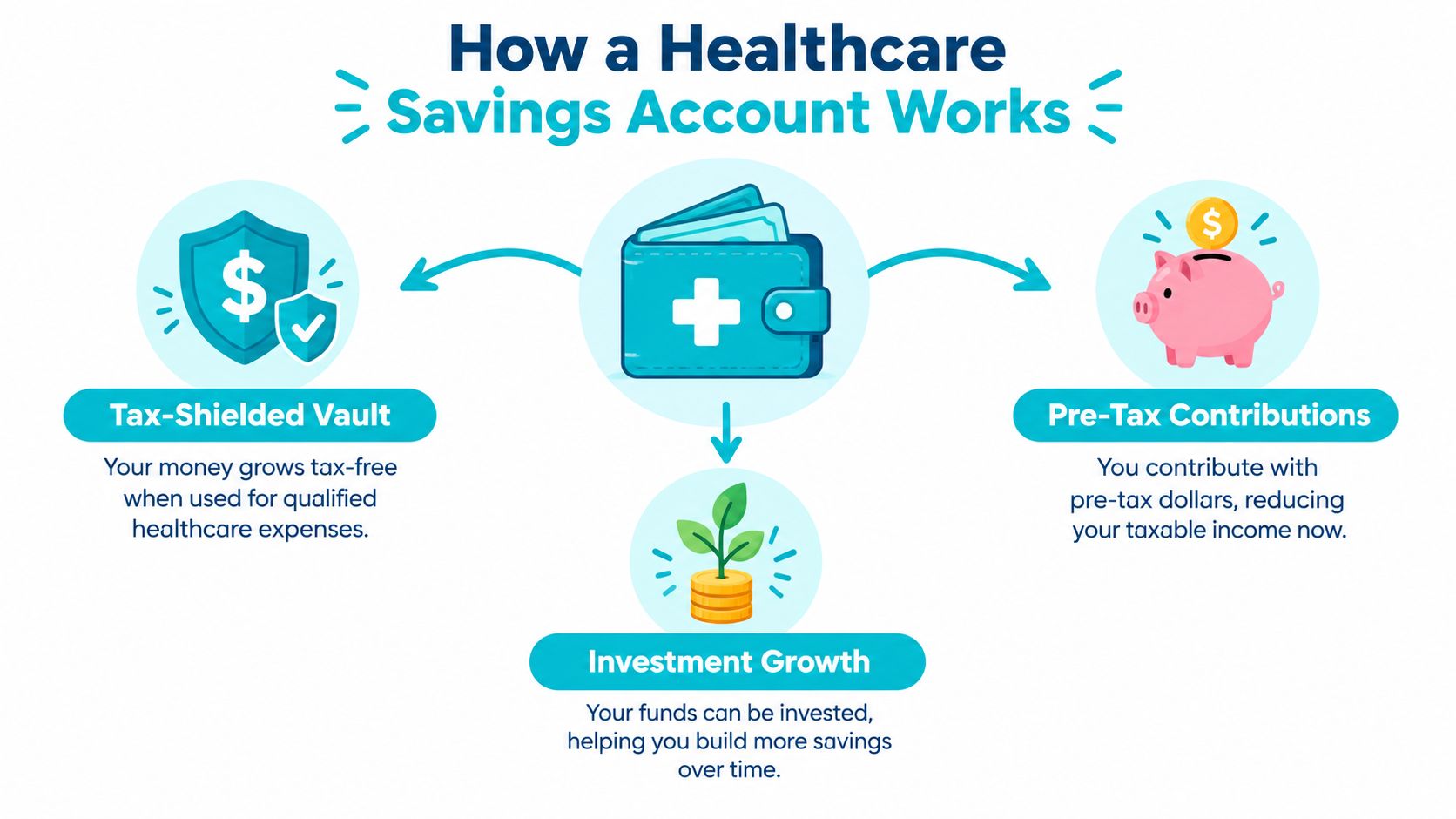
An HSA operates as a health wallet with a protected savings compartment. You or your employer can contribute money, then use it for qualified medical expenses. Unused funds generally remain available rather than disappearing at the end of a plan year. The account also stays with you when you change employers or health plans, subject to its rules and applicable tax law.
The money flow has three stages:
- Money goes in. Contributions can receive favorable tax treatment. An employer's payroll system may send part of your pay directly into the account.
- Money waits or grows. Keep funds available for near-term costs, such as prescriptions, therapy, or other eligible care. Some HSA providers offer investment options, although availability and terms vary.
- Money comes out. Qualified medical withdrawals can be tax-free. Non-qualified withdrawals can create taxes and, in some situations, an additional penalty. Keep records and verify each expense before paying.
The wallet and the vault
For someone managing regular prescriptions or planned therapy, an HSA serves as a dedicated healthcare wallet. Setting money aside can make an eligible bill easier to handle when it arrives. A ThriveXDNA user might apply the same check to training, nutrition, or coaching costs, confirming eligibility before using account funds.
Someone with enough ordinary cash to cover current qualified costs may use the HSA as a tax-shielded vault. The owner can leave eligible funds in place, preserve receipts, and keep the balance available for later healthcare needs. Investment growth adds another possibility, but investments can fluctuate, so money needed soon should remain accessible.
The attached health plan determines whether new HSA contributions are allowed. The IRS describes HSAs as tax-advantaged accounts connected to high-deductible health plans, and eligible individuals can use them for qualified medical expenses in IRS Publication 969. Readers who want a broader federal overview can also review the IRS Health Savings Accounts page, the Centers for Medicare & Medicaid Services overview of health coverage rights and protections, and the U.S. Office of Personnel Management FSAFEDS overview. A plan that fails the required design may prevent new contributions even when an account already exists.
An FSA works more like an employer-managed spending envelope. You typically elect an amount during benefits enrollment, use it for qualified expenses, and follow the employer's rules for deadlines, carryover, or forfeiture. It can suit predictable near-term costs, while its ownership and portability generally differ from an HSA.
HSA vs FSA Key Differences You Need to Understand
The clearest comparison starts with one question: who controls the account after life changes? An HSA is generally owned by the individual, while an FSA is connected to an employer's benefits plan. That difference matters if you switch jobs, become self-employed, or move between health plans.
| Feature | HSA | FSA |
|---|---|---|
| Eligibility | Requires an HSA-eligible high-deductible health plan and other eligibility conditions | Usually offered through an employer benefits plan |
| Ownership | Generally owned by the individual | Usually tied to the employer's plan |
| Rollover | Unused funds generally remain in the account | Rollover or grace-period treatment depends on the employer plan |
| Portability | Generally stays with you after a job change | Usually doesn't follow you in the same way |
| Investments | Some providers offer investment options | Usually designed for spending, not long-term investing |
| Best fit | Long-term saving or flexible qualified healthcare spending | Predictable near-term qualified expenses |
Eligibility changes the decision
An employee may have access to an FSA even when an HSA isn't available. A freelancer, by contrast, may value an HSA's individual ownership but must first confirm access to an eligible plan and satisfy the other IRS conditions. Employer contributions can also change the practical value of either option.
Some people focus only on the tax label and overlook timing. If you know you'll have recurring dental care, prescriptions, or planned treatment, an FSA may fit a near-term spending pattern. If you want a balance that can remain available through job changes and potentially support future healthcare, an HSA may offer more flexibility. If you want a plain-English comparison from a major healthcare publisher, this Health Savings Account vs. Flexible Spending Account overview from HealthCare.gov is a useful starting point for HSA basics, and the FSA Store learning center offers practical examples of how FSA rules are commonly applied.
Fitness purchases need the same caution. A product marketed for wellness isn't automatically eligible. Before buying equipment or services with an account card, verify the current rules and keep the supporting documentation. Readers comparing health-related purchases may find this guide to pre-tax savings for BionicGym useful for understanding how eligibility questions can arise around fitness devices.
Decision shortcut: Choose based on the account you're actually eligible to use, then match it to your expected spending pattern. A tax advantage doesn't compensate for selecting an account whose rules don't fit your plan.
Tax Benefits and 2026 Contribution Limits Explained
An HSA's main appeal is its triple tax advantage. Contributions can receive tax-favored treatment, investment growth can be tax-free, and withdrawals for qualified medical expenses can be tax-free, as explained by the IRS guidance on HSAs. In plain language, the same dollar can avoid taxation at entry, grow without tax on the way, and leave without tax when used for an eligible medical purpose.
That structure creates two possible strategies. Someone facing regular healthcare bills can use the HSA as a spending wallet. Someone with enough cash to cover current qualified expenses may preserve receipts and leave eligible funds invested or saved for later. The second strategy carries investment risk and requires patience, so it shouldn't replace a cash buffer for bills due soon.
The 2026 limits
For 2026, the HSA contribution ceiling is $4,400 for self-only coverage and $8,750 for family coverage, according to IRS Revenue Procedure 2025-19. Readers can also verify annual limit mechanics through the IRS newsroom update on inflation-adjusted HSA limits and the HealthCare.gov glossary entry for Health Savings Account basics. Those totals include contributions from both the employee and employer, so payroll elections should account for the complete amount rather than only the employee's portion.
HSA eligibility also depends on HDHP design. For 2026, the minimum deductible is $1,700 for self-only coverage and $3,400 for family coverage. The annual out-of-pocket maximum is $8,500 for self-only coverage and $17,000 for family coverage, using the same IRS guidance.
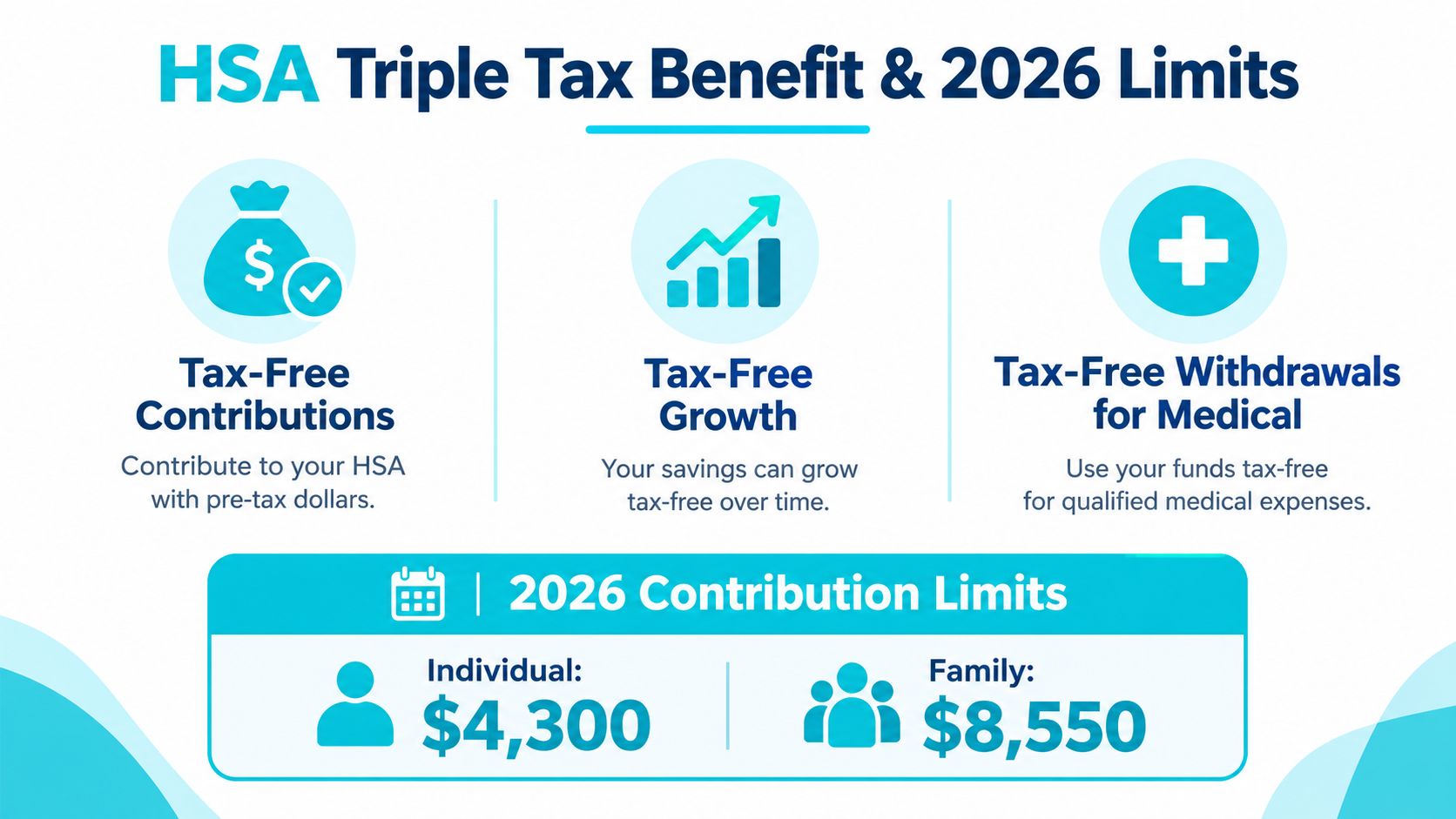
The 2026 figures increased from 2025. Self-only coverage rose from $4,300 to $4,400, and family coverage rose from $8,550 to $8,750. The deductible thresholds also moved upward, as summarized by Thomson Reuters on the 2026 HSA adjustments.
People age 55 and older who aren't enrolled in Medicare may make a $1,000 catch-up contribution. That lifts the 2026 maximum to $5,400 for self-only coverage and $9,750 for family coverage, according to HSA Bank's contribution guidance. You don't need to max out the account to benefit. A sustainable payroll amount that supports both current bills and future savings is often more useful than an aggressive election you can't maintain.
Qualified Expenses and Real World Examples
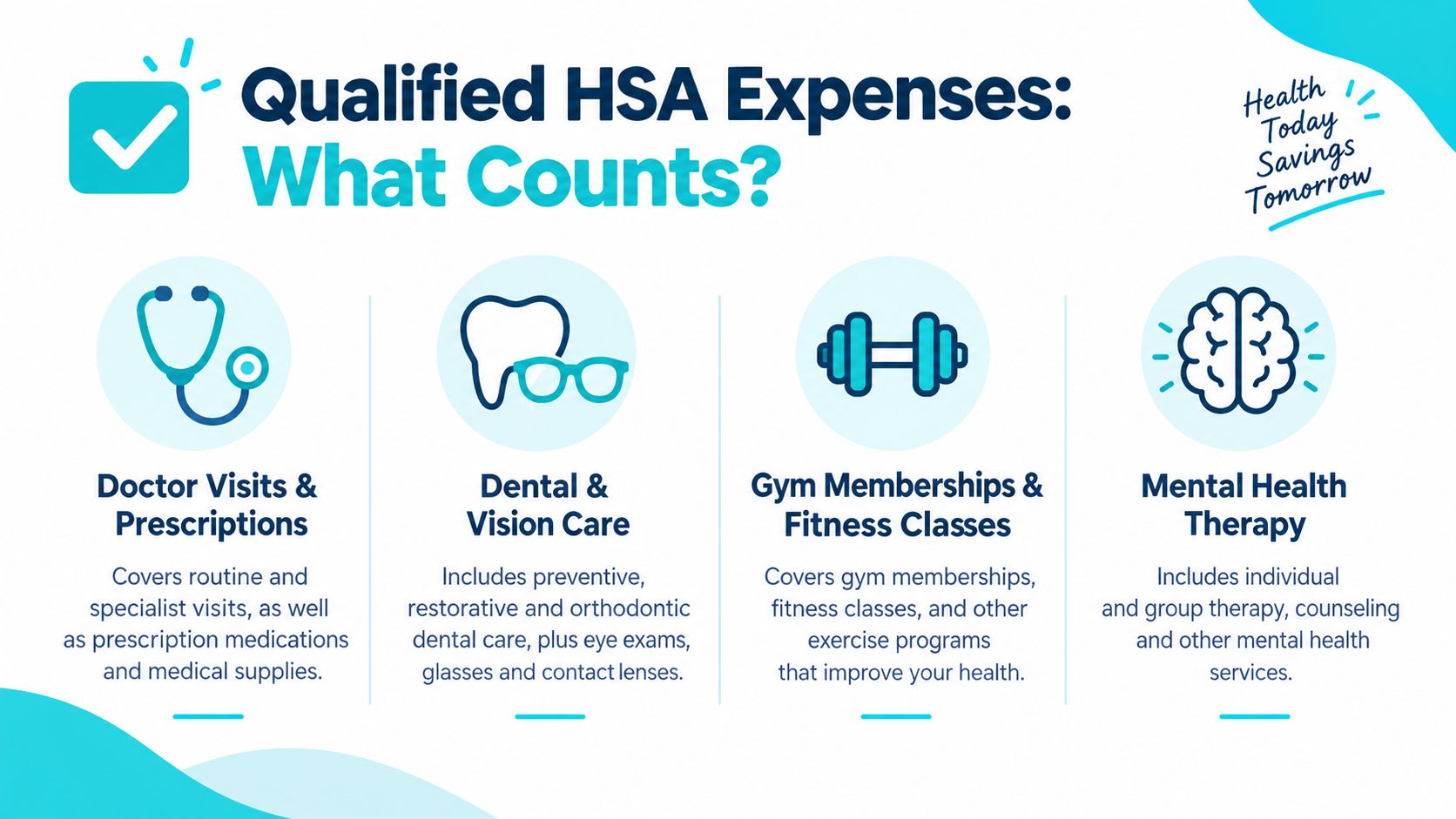
Qualified spending becomes easier to understand when you separate medical purpose from general wellness purpose. Doctor visits, prescriptions, dental care, vision care, and mental health therapy are common examples of healthcare expenses that may qualify under applicable rules. The exact treatment can depend on the service, documentation, and current IRS guidance.
A family might use the account for a child's prescription and an orthodontic bill. A runner might use it for medically necessary vision care or treatment connected to an injury. A person working with a licensed provider for a diagnosed condition may have a stronger eligibility basis than someone buying a general lifestyle product just because it feels healthy.
Fitness requires a closer look
Gym memberships, personal training, supplements, running shoes, fitness apps, and meal plans often sound health-related. That doesn't automatically make them qualified expenses. General fitness usually needs a specific medical connection and appropriate documentation before you should assume account funds can be used.
Someone shopping for running footwear can review practical guidance on HSA FSA eligible running shoes, then confirm eligibility with the account administrator and retain the receipt. The same approach applies to a training program, mobility service, or coaching expense connected to a medical condition. Readers who want more examples can also compare consumer guides from the FSA Store eligibility library and the Cigna HSA qualified expense overview.
Practical rule: If you couldn't explain the medical purpose, provider, date, and receipt to a tax professional, pause before using HSA or FSA funds.
Expenses that are purely recreational, cosmetic, or intended only for broad lifestyle improvement may not qualify. Don't rely on a merchant's checkout badge as your only evidence. Save itemized receipts, provider statements, prescriptions, and any letter of medical necessity when relevant. For additional examples of eligible and ineligible expenses, readers can review IRS Publication 502 on medical and dental expenses, the HSA Store eligibility list, and HealthEquity's list of common qualified medical expenses.
A useful routine is to create three folders: approved and documented, needs verification, and not eligible. That simple habit keeps a hard workout, family appointment, or busy travel schedule from turning into a recordkeeping problem.
Readers who want broader context can also review the Kaiser Family Foundation overview of employer health benefits, the Fidelity HSA explainer, the Mayo Clinic guide to health savings accounts, the Investopedia HSA overview, and the NerdWallet HSA guide.
How to Choose the Right Account for Your Needs
Start with the plan, not the product. Confirm whether your health coverage is an HSA-eligible HDHP and whether another coverage arrangement or enrollment status affects eligibility. Benefits teams typically validate the plan's deductible and out-of-pocket parameters before enabling payroll deferrals, but employees should still review their plan documents.
Your spending pattern comes next. Someone with frequent prescriptions, planned dental work, or regular therapy may need a wallet with accessible cash. Someone with stable cash reserves may prefer to preserve more HSA funds for future healthcare, provided the account offers suitable options and the person understands investment risk.
A practical decision matrix
| Your situation | Useful starting point |
|---|---|
| You have predictable qualified expenses | Prioritize accessible funds and conservative spending estimates |
| You want portable, long-term healthcare savings | Check HSA eligibility and account investment options |
| You're changing employers soon | Review ownership, transfer, and deadline rules before enrolling |
| You work independently | Verify individual plan eligibility and contribution handling |
| You support a family | Estimate shared medical, dental, vision, and prescription needs |
| You're paying for fitness or coaching | Confirm medical eligibility before using account funds |
Access also affects fairness. Employer access isn't evenly distributed, and people with stronger incomes may find it easier to contribute or leave money invested. That means an HSA can widen savings opportunities for some people while remaining difficult to use for workers who lack employer access or need every dollar for immediate care.
Recent policy changes add another verification step. Guidance expanded HSA eligibility for some Bronze and Catastrophic ACA plans, and it addressed compatibility involving direct primary care and telehealth. Don't assume a plan is eligible or ineligible based on its label alone. Check current plan documents and IRS guidance before making payroll elections.
For a Thrive X Fitness user, the wallet-versus-vault choice should follow actual behavior. If your budget needs help covering qualified care, preserve liquidity. If your healthcare bills are manageable and you're building a longer-term reserve, investigate whether your HSA provider supports investing. Training tools, nutrition products, and coaching costs still require separate eligibility checks.
Putting Your Healthcare Savings Account to Work
A healthcare savings account works best when you give it a job before money starts moving. Decide whether it will mainly cover near-term qualified expenses, support longer-term healthcare savings, or combine both roles with a clear cash reserve.
Use this activation checklist during enrollment:
- Verify the plan. Confirm HSA eligibility, deductible requirements, out-of-pocket limits, and any coverage conflicts.
- Set a realistic contribution. Include employer money in the annual total and choose a payroll amount your budget can sustain.
- Create a records system. Keep receipts, explanations of benefits, prescriptions, and medical-necessity documents together.
- Separate spending decisions. Mark each purchase as eligible, uncertain, or not eligible before using the account card.
- Review investment settings. If you're using the account as a long-term vault, understand available choices, fees, and market risk.
- Recheck after life changes. Marriage, a new job, Medicare enrollment, a plan change, or a new dependent can affect your decisions.
The fitness connection is practical. Training can expose you to recurring needs such as physical therapy, dental care, vision correction, or treatment for an injury. Nutrition and coaching may support your goals, but their account eligibility depends on the specific expense and medical purpose. Keep your health plan, financial plan, and training plan aligned instead of assuming every wellness purchase belongs in the same category.
Quick summary
If you qualify for an HSA, it can work as both a spending tool for current medical bills and a savings vehicle for future healthcare costs. If you only have access to an FSA, it can still be a useful way to pay predictable qualified expenses with pre-tax dollars. The best choice depends on your eligibility, your expected medical spending, and whether you need flexibility now or portability later. Before using either account for fitness, coaching, or wellness-related purchases, verify eligibility and keep documentation.
Frequently Asked Questions
What is the difference between an HSA and an FSA?
An HSA is generally individually owned, portable, and tied to an HSA-eligible high-deductible health plan. An FSA is usually employer-sponsored, may have stricter year-end rules, and is typically built for shorter-term spending. For a federal overview, review the HealthCare.gov HSA glossary and the FSAFEDS healthcare FSA overview.
What expenses are HSA or FSA eligible?
Common qualified expenses include doctor visits, prescriptions, copays, deductibles, dental care, vision care, therapy, and many medical supplies. The exact eligibility of a purchase depends on IRS rules and sometimes on documentation. See IRS Publication 502, the FSAFEDS eligible expense list, and HSA Bank's qualified medical expense guide.
Can I use an HSA or FSA for dental and vision expenses?
Often, yes. Dental treatment, orthodontics, eye exams, prescription glasses, contact lenses, and other medically related dental and vision expenses commonly qualify when they meet IRS rules. Always save your itemized receipt and confirm the expense if you are unsure.
Can I use HSA or FSA funds for over-the-counter medicine?
Current rules generally allow many over-the-counter medications and menstrual care products as eligible expenses. Since product eligibility can vary, it is smart to confirm with your plan administrator and keep the purchase record.
Does HSA money expire or roll over?
In general, HSA funds roll over and remain in your account. FSAs work differently, because carryover or grace-period treatment depends on the employer's plan design. The IRS explains HSA timing and reimbursement rules in IRS Publication 969.
Can I use an HSA to pay health insurance premiums?
Usually not for standard health insurance premiums, though there are limited exceptions under IRS rules. This is one of the easiest areas to get wrong, so check current guidance before paying any premium from your account.
When should I choose an HSA over an FSA?
Choose an HSA when you are eligible and want portability, rollover, and possible long-term savings or investing potential. Choose an FSA when it is the main pre-tax option available to you and you have predictable near-term healthcare expenses.
ThriveXDNA's fitness tools include AI workouts, form-clip review, photo and barcode nutrition tracking, meal plans, challenges, and coach-led programs. Those features can help you organize health habits, while your HSA or FSA remains a separate benefits account that requires eligibility and documentation checks.
ThriveXDNA can help you build a more consistent training and nutrition routine while you make deliberate decisions about qualified healthcare spending. Visit ThriveXDNA to explore the fitness app, coaching tools, and health-focused resources that can fit alongside your healthcare savings account plan.
Related guides
- more on HSA and FSA Accounts: Best Guide to Saving on Healthcare
- How to Find a High-Yield Savings Account (And Why Chasing the Top
- more on How to Find High-Yield Savings Accounts Without Hidden Fees
- more on What is The One Big Beautiful Bill? – Changes You Need
- a closer look at Health Insurance and Medicare Coordination Guide
- more on Life Insurance Dividend Options Explained: Maximize Your
- How Do Health Insurance Deductibles and Copays Work?
- more on Health Insurance Networks Explained: PPO, HMO, EPO, and POS
- details: Do AI Insurance Comparison Apps Really Save Money?
- more on Smart Savings: How to Choose the Right Automobile Insurance
- Budget Calculator Based on Income: Build Your Plan
- Understanding the Different Types of Health Insurance Plans: Which
- healthcare savings calculator
- insurance tools and calculators