10 Trainerize Alternatives for Fitness Coaches
The best trainerize alternatives are not the ones with the longest feature checklist. The better question is whether the platform fits your coaching model, because a solo coach, a hybrid gym, a performance team, and a marketplace creator all need different systems. Compare client volume, programming depth, nutrition and habit support, branding, scheduling, payments, reporting, marketplace revenue, migration effort, and the workflows you already use around finance, insurance, wellness, and documentation. Pricing also needs a total-cost lens, because client limits, add-ons, custom app arrangements, transaction or marketplace considerations, and implementation fees can change the monthly bill faster than the headline plan name suggests.
That's also why the broader ThriveXDNA ecosystem matters to some buyers. Thrive X Fitness sits alongside tools for fitness, finance, insurance, wellness, calculators, quote flows, and document resources, so coaches who want a wider client experience can think beyond workout delivery alone. For coaches comparing free options and lighter setups, the broader market context is useful too, and this roundup of best free tools for trainers helps frame the trade-offs before you commit.
Table of Contents
- 1. Thrive X Fitness
- 2. TrueCoach
- 3. Everfit
- 4. PT Distinction
- 5. My PT Hub
- 6. Exercise.com
- 7. Coach Catalyst
- 8. TeamBuildr
- 9. TrainHeroic
- 10. FitBudd
- Top 10 Trainerize Alternatives, Feature Comparison
- Choose the Platform That Fits Your Business Model
1. Thrive X Fitness
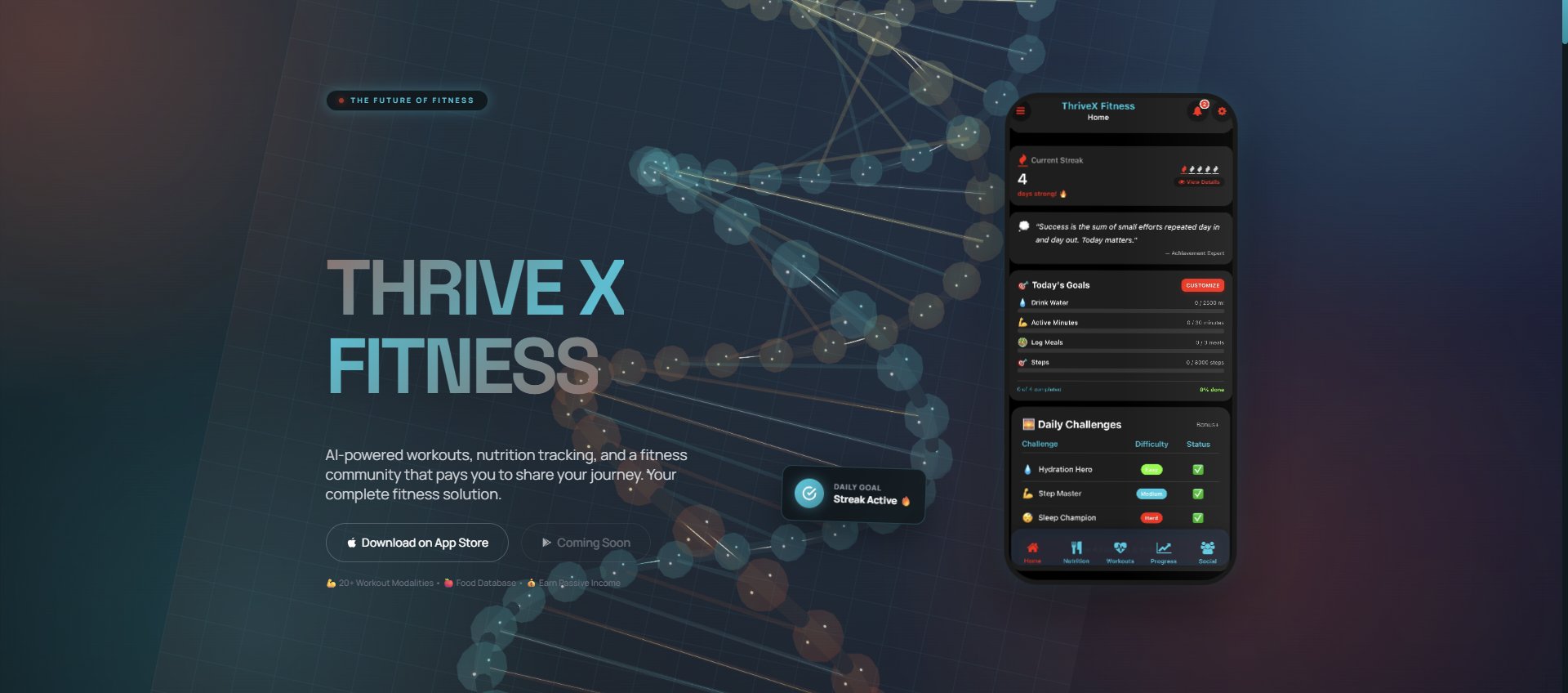
Thrive X Fitness stands out because it's built around AI-led coaching and monetization, not just workout delivery. The platform's positioning is unusually broad for a fitness app, since it combines automated programming, motion-aware form coaching, a 1,000+ exercise library, and a marketplace designed to support recurring payouts to coaches and members. For coaches who want to scale beyond a strict per-seat model, that changes the business question from “How many clients can I fit on this tier?” to “How do I monetize coaching, content, and community together?”
Why it fits an operating model, not just a feature list
The biggest fit signal is how Thrive X Fitness handles repeatable coaching work. Workout plans are auto-generated and localized into 17 languages, which makes it a stronger option for multilingual audiences than platforms that treat translation as an afterthought. The AI form coach also gives technique feedback, so the app can handle a slice of review work that would otherwise land back on the coach's plate.
Practical rule: choose Thrive X Fitness when your business depends on scale, repeatable coaching workflows, and member-facing AI guidance. If your model is mostly live correction on a call or in the gym, the app can support you, but it won't replace the human side of coaching.
Thrive X Fitness also sits inside the broader ThriveXDNA ecosystem, which adds finance, insurance, and wellness tools around the fitness experience. That's useful for coaches who want members to move from training into broader life admin, calculators, explainers, and document workflows without forcing that experience into a separate tool chain. The official site is Thrive X Fitness.
Where it falls short
The main limitation is obvious. AI coaching can't fully replace real-time observation for clients who need hands-on correction, rehab-sensitive programming, or high-touch accountability. The public page also doesn't spell out the parts buyers usually want to verify first, such as marketplace fees, device compatibility, third-party integrations, and offline access, so due diligence matters before you commit.
2. TrueCoach
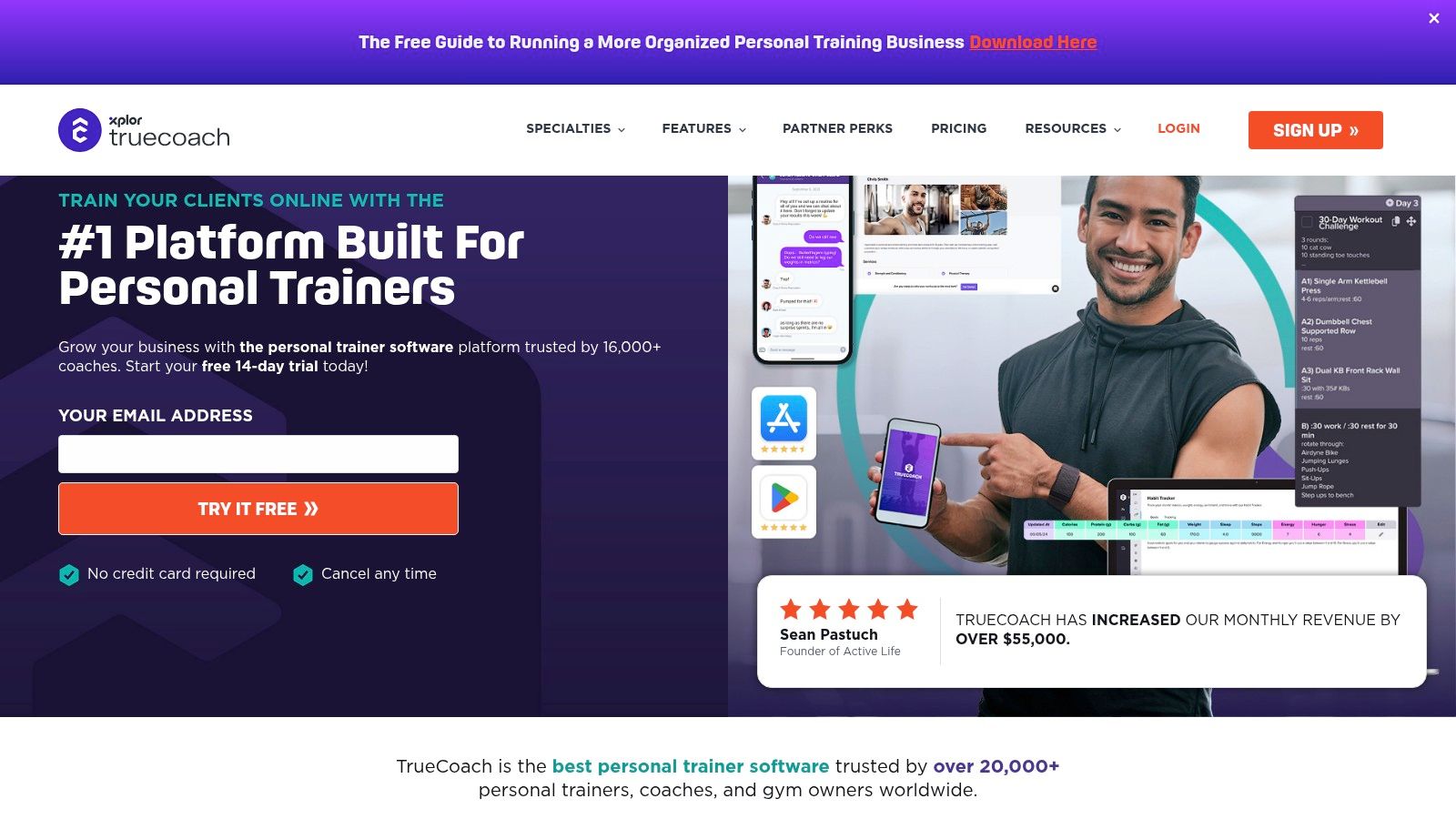
TrueCoach is the cleanest answer for coaches who want a 1:1 programming tool that gets out of the way. Its exercise library is built around 3,000+ exercise videos, and the workflow is centered on workout delivery, client logging, progress tracking, and messaging. The product feels designed for coaches who spend most of their time building programs, checking completion, and moving on to the next client.
Best for solo delivery and simple check-ins
That operating model matters. If your day is mostly writing programs, reviewing logs, and responding in-app, TrueCoach gives you a lightweight path without pushing you toward facility management or broad business operations. It also supports wearable connections with Apple, Garmin, and WHOOP, and it integrates with MyFitnessPal, which helps if you already rely on those tools for client-side data.
The trade-off is scope. TrueCoach is not built to run class scheduling, point-of-sale, or a full CRM. It's a coaching platform first, not a studio operating system. For solo coaches, that restraint is a benefit because it keeps the interface focused on the work clients feel.
Where buyers need to be careful
The switching question here is usually about pricing architecture, not capability. Independent platform summaries describe TrueCoach as a lower-friction, workout-first option with client-tier pricing, and that structure can be attractive early on but less comfortable as rosters grow. The direct website is TrueCoach.
Fit insight: if you're leaving Trainerize because you want a simpler client experience, TrueCoach is the closest “less software, more coaching” replacement in this group.
3. Everfit
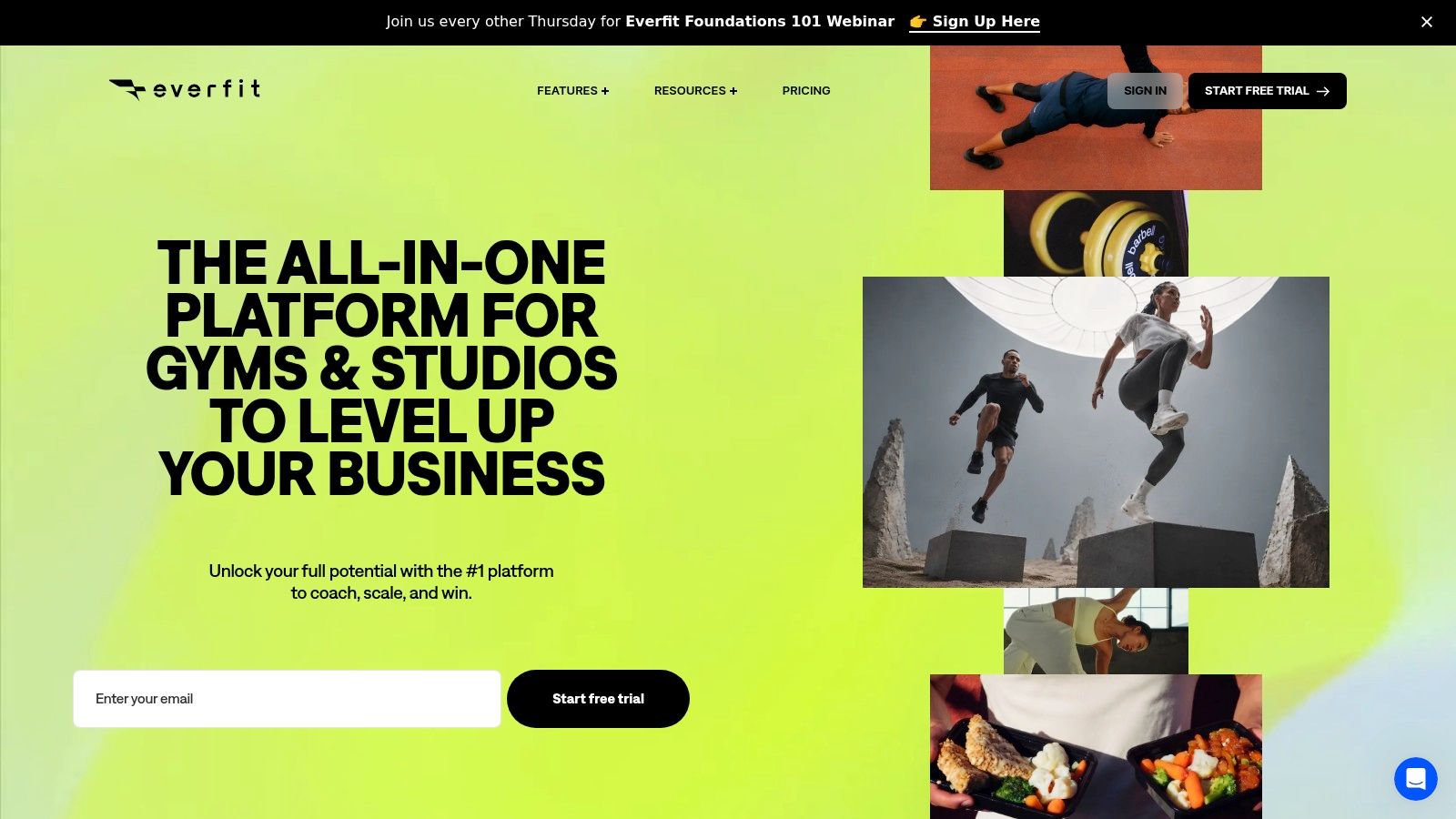
Everfit is the strongest pick for coaches who want automation without assembling five separate tools. It's built around workout delivery, habit tracking, communities, and granular workflows, so the platform suits coaches who need more than a message thread but don't want to move into a full studio stack. The entry structure is also easy to understand, because it includes a free client tier and client apps on both iOS and Android.
Automation is the real reason people pick it
Everfit's automation layer, called Autoflow, is the key differentiator. It handles scheduled messages and onboarding sequences, which reduces manual follow-up when clients join, miss check-ins, or need reminders. That makes it a practical choice for coaches who are adding more clients but don't want every touchpoint to depend on a live reminder.
The platform also includes forums, leaderboards, progress photos, and add-ons for Payments & Packages, On-Demand Collections, and Meal Plans/Recipes. That structure works well for coaches who want to start lean, then add modules as the business expands.
The hidden cost question
Everfit's biggest weakness is that the add-on model can make the overall cost creep upward. Independent summaries describe a free client tier, then paid upgrades for automation, nutrition, and payments, so buyers need to map expected client volume against the vendor's billing model before they migrate. The website is Everfit.
Important: Everfit is strongest when automation saves you time every week. If the platform only replaces a few manual messages, the add-on stack can make it feel less efficient than it first appears.
4. PT Distinction
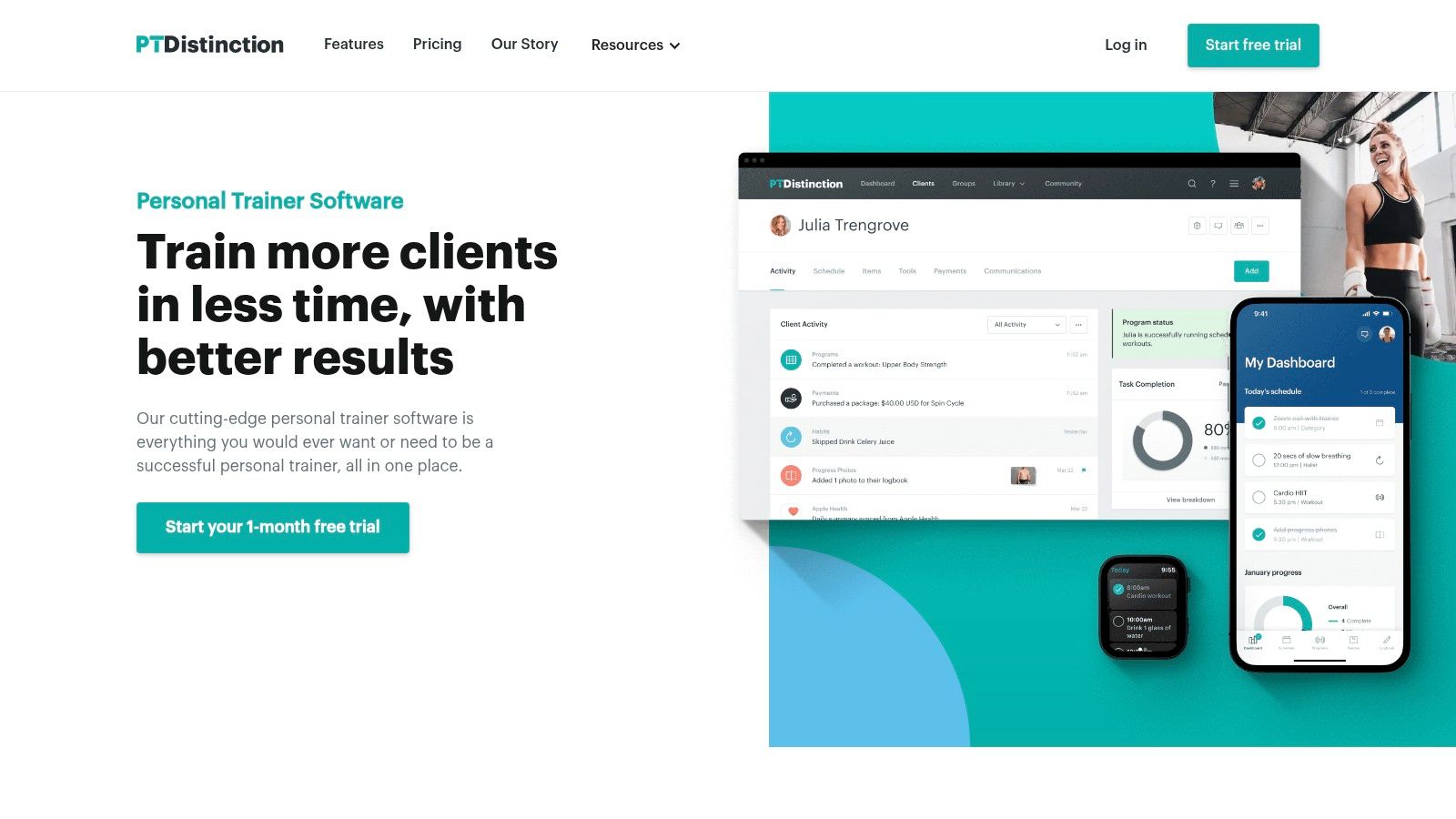
PT Distinction is the best fit for coaches who want training, nutrition, and habits under one roof. It's not trying to be a gym management system, and that's the point. The platform focuses on programs, assessments, automation, meal planning, and client communication, which makes it a strong middle ground for coaches who need more structure than a simple workout app provides.
The value is in balance
The platform includes an AI program builder and AI meal planner/assistant, plus automated workflows through scheduled email, SMS, and in-app messaging. That combination is useful for coaches who want to shape behavior across training and nutrition without managing separate tools for each layer. Group training, technique reviews, templates, and payment packages round out the core.
Because PT Distinction also offers iOS and Android apps, plus custom-branded apps on higher plans, it works for coaches who want a more polished client experience without moving into a full business platform. The official site is PT Distinction.
Where it's strong, and where it isn't
The main appeal is predictability. Public plan structure is clearer than many alternatives, and that helps coaches avoid guessing games as they scale. The downside is scope again. PT Distinction doesn't try to cover membership POS or door access, so it won't replace a studio operations system.
If your clients want one place for workouts, meals, and accountability, PT Distinction makes sense. If your business also runs front-desk operations, this is the wrong layer of software.
5. My PT Hub
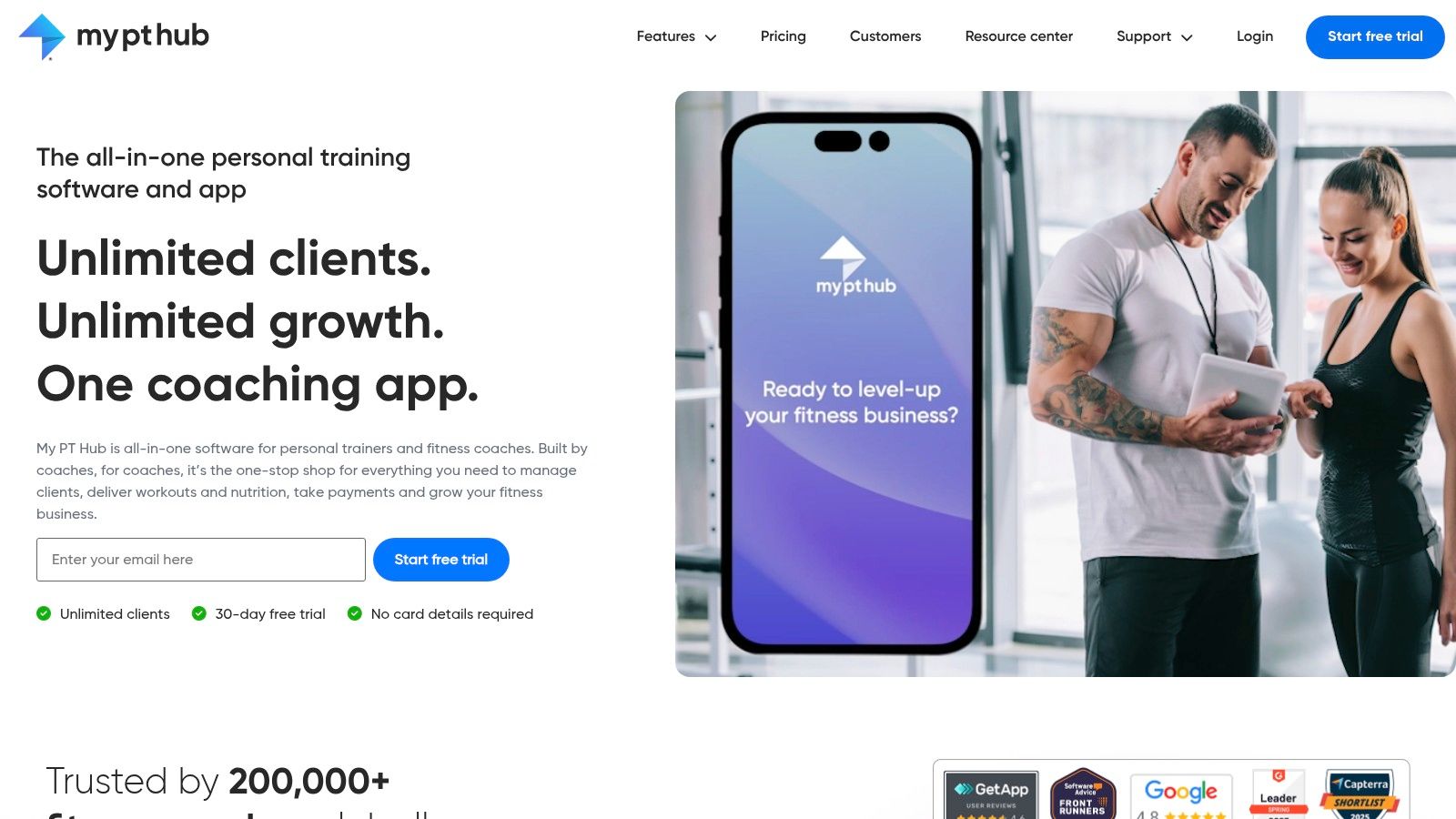
My PT Hub is a practical option for coaches who want a broad feature set with flat-fee thinking. It combines templates, nutrition plans, bookings, communities, and automated check-ins, and it's often chosen by coaches who would rather pay for a fuller package than assemble add-ons one by one. That makes it especially relevant for growing rosters.
A good fit for growth-minded solo coaches
The strongest signal here is the availability of an unlimited-clients plan on higher tiers. For coaches who expect roster growth, a flat monthly model is easier to budget than a per-client plan that gets more expensive with every new signup. My PT Hub also offers AI workout builder and AI check-ins as add-ons, which gives it some automation flexibility without forcing every buyer into the same configuration.
There's also a branded app option and an App Store or Google Play white-label listing as an add-on, plus Zapier if you need external automation. The official site is My PT Hub.
Why buyers should check the extras carefully
My PT Hub is a case where the base platform and the platform aren't always the same thing. Several key capabilities sit behind add-ons, so your monthly cost can rise as you bolt on branding, automation, or integrations. The site may also display pricing in EUR, which means international buyers should confirm local currency before purchase.
If you want a broad trainer toolkit and can live with modular pricing, it's a strong contender. If you need a simple quote, you'll want to add everything up first.
6. Exercise.com
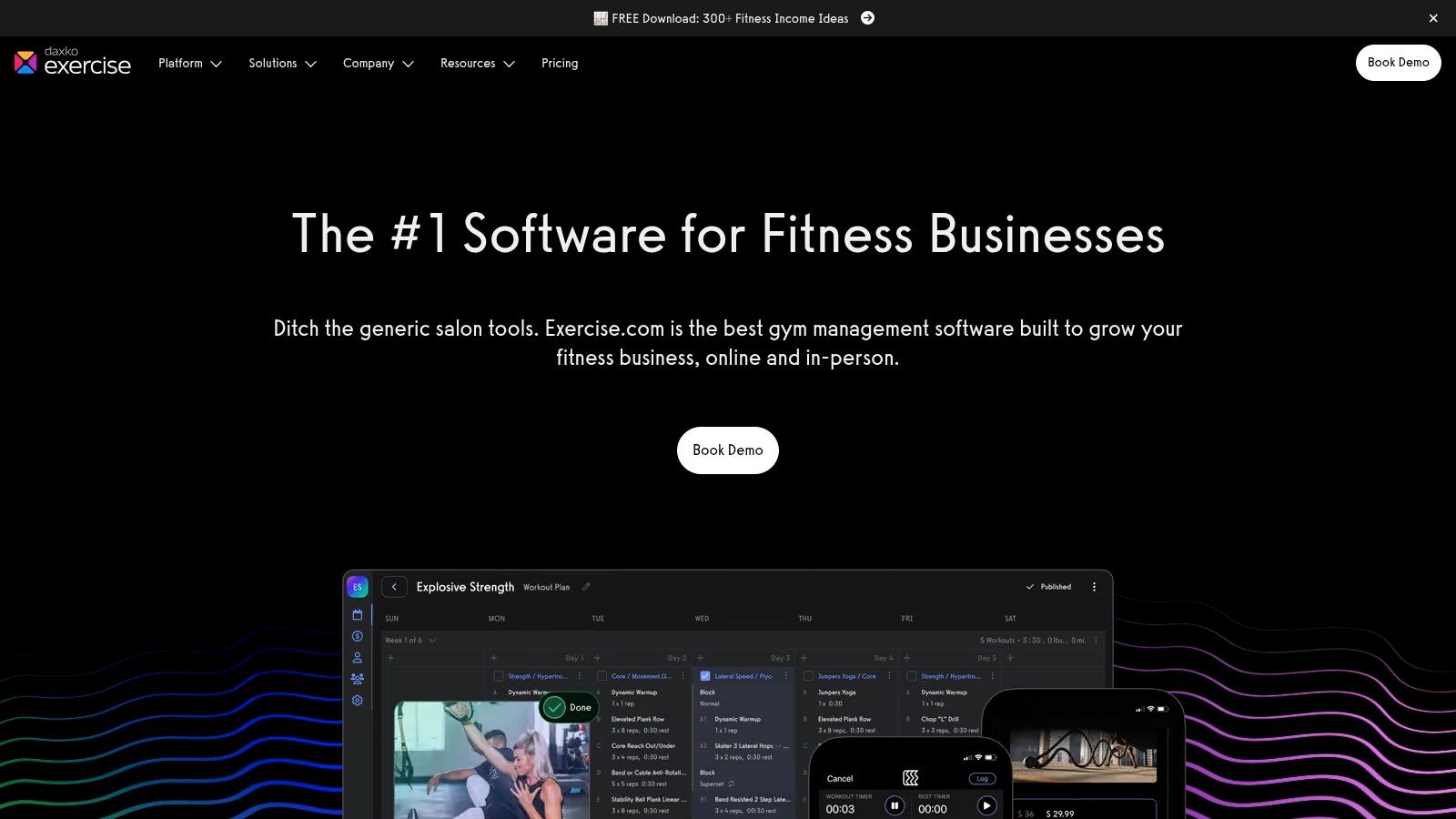
Exercise.com is the right answer when the business is bigger than coaching alone. It's an all-in-one platform for gyms, studios, and training companies, with custom-branded web, iOS, and Android apps, scheduling, payments, workout programming, marketing automations, and e-commerce. If Trainerize feels like a coaching app that you've outgrown, Exercise.com is one of the clearest next steps.
Built for facilities, not just trainers
The platform includes billing, recurring memberships, POS, e-sign waivers and contracts, scheduling for classes and appointments, and marketing automation. That mix matters because it lets one vendor handle the client journey from lead to booking to payment to program delivery. For facilities that want fewer disconnected systems, that's a major operational advantage.
The white-label side is also a big draw. Exercise.com is built for brand-forward businesses that want the app and website to feel like part of the company, not a third-party tool. The official site is Exercise.com.
Where the learning curve shows up
The trade-off is complexity. A wide feature set can slow implementation, and custom pricing means you need to book a demo before you know whether the economics make sense. That's not a flaw if you're running a facility, but solo coaches can often get more speed and less overhead from a narrower platform.
7. Coach Catalyst
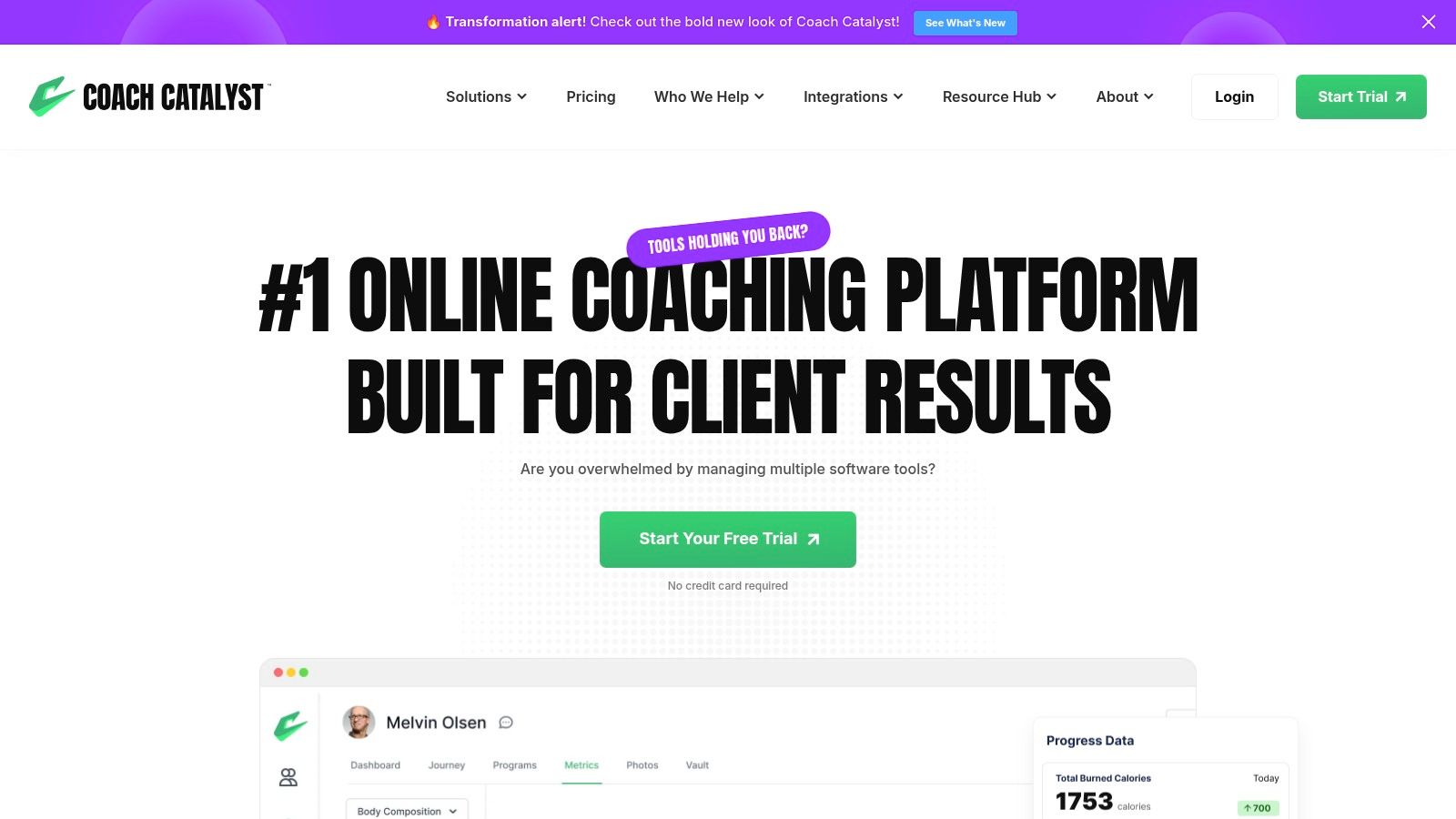
Coach Catalyst is built around engagement and behavior change, which makes it a strong fit for coaches who care more about consistency than deep strength-specific programming tools. The platform centers on programs, communities, messaging, CRM functions, and habit coaching, so it's useful when your business model depends on keeping clients active between sessions.
Good for adherence-first coaching
The platform's appeal is its engagement layer. Prebuilt, customizable programs pair with groups, messaging, check-ins, and content delivery, so coaches can structure touchpoints without rebuilding the workflow from scratch. That design makes sense for fitness, nutrition, and broader wellness coaching where the goal is sustained adherence, not just exercise prescription.
Coach Catalyst also offers a bundle with Growth Catalyst CRM and unlimited-client options, which is attractive if you want client management tied more closely to outreach and retention. The official site is Coach Catalyst.
Where it may feel light
If your coaching style is built around detailed periodization, Coach Catalyst may feel less specialized than a programming-first tool. It's strongest when the client relationship needs regular touchpoints and a simple operating rhythm, not when you need every training variable exposed on screen.
The platform works best when follow-up matters as much as the program itself.
8. TeamBuildr
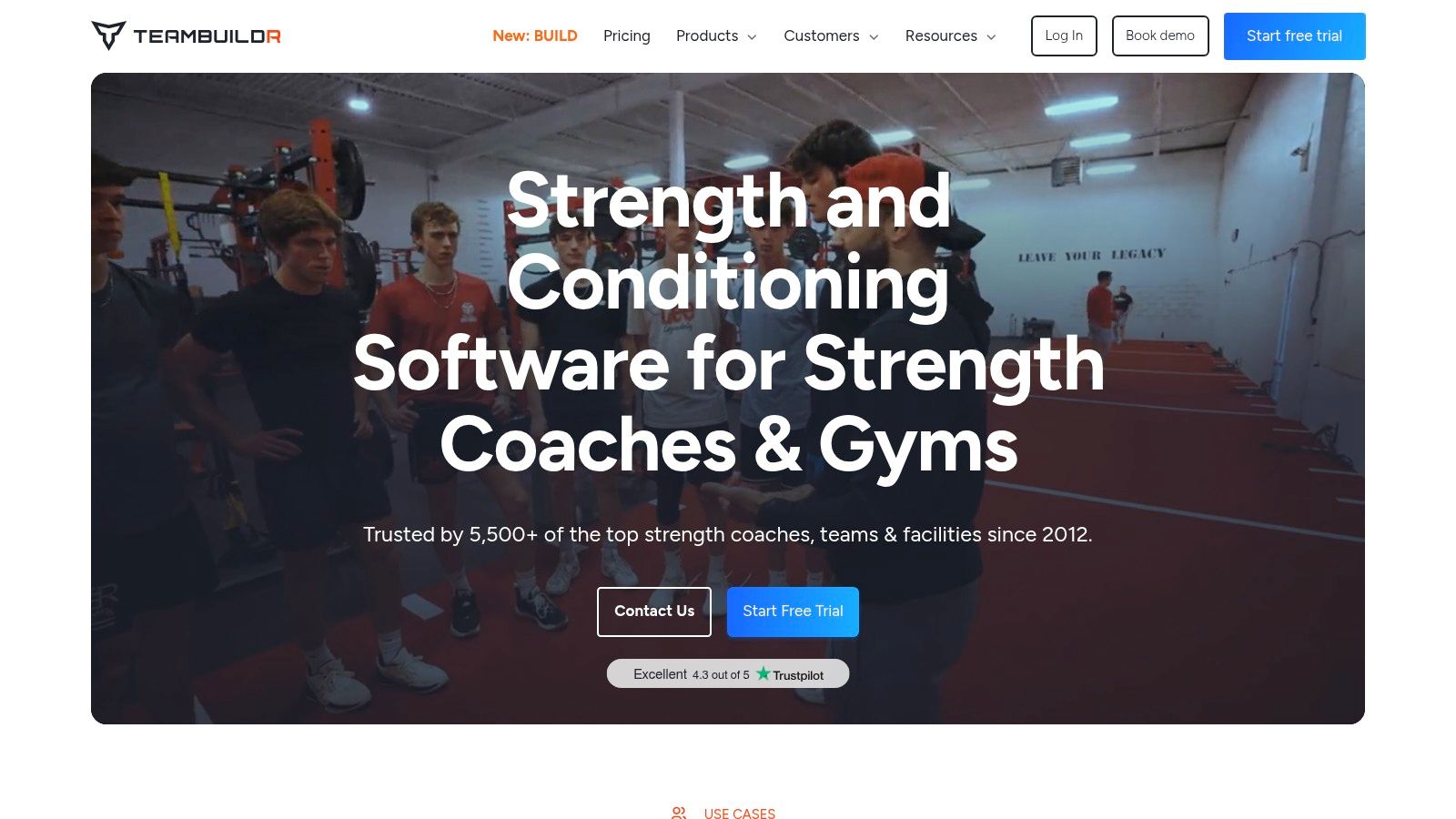
TeamBuildr belongs in a different lane from most personal training apps. It's a strength and conditioning platform made for schools, teams, and private facilities, with athlete monitoring, leaderboards, reporting, and programming at scale. If your audience is athletes rather than general fitness clients, this is one of the most relevant trainerize alternatives in the market.
Why team environments like it
The platform includes athlete apps with max and PR tracking, wellness questionnaires, leaderboards, and extensive reporting on progress and completion. That matters in environments where coaches need to compare readiness, track compliance, and manage large groups without losing visibility. TeamBuildr OS also adds scheduling and payments for membership or class use.
Custom branding, online payments, and document sharing help it stretch into broader facility workflows, but the core strength remains athlete-centric reporting. The official site is TeamBuildr.
What it's not designed to do
TeamBuildr is not trying to be a generalist personal training suite. Nutrition and habit features are lighter, and that's fine if you coach teams or S&C groups. It becomes a limitation only when your client work is more lifestyle-focused and less performance-driven.
9. TrainHeroic
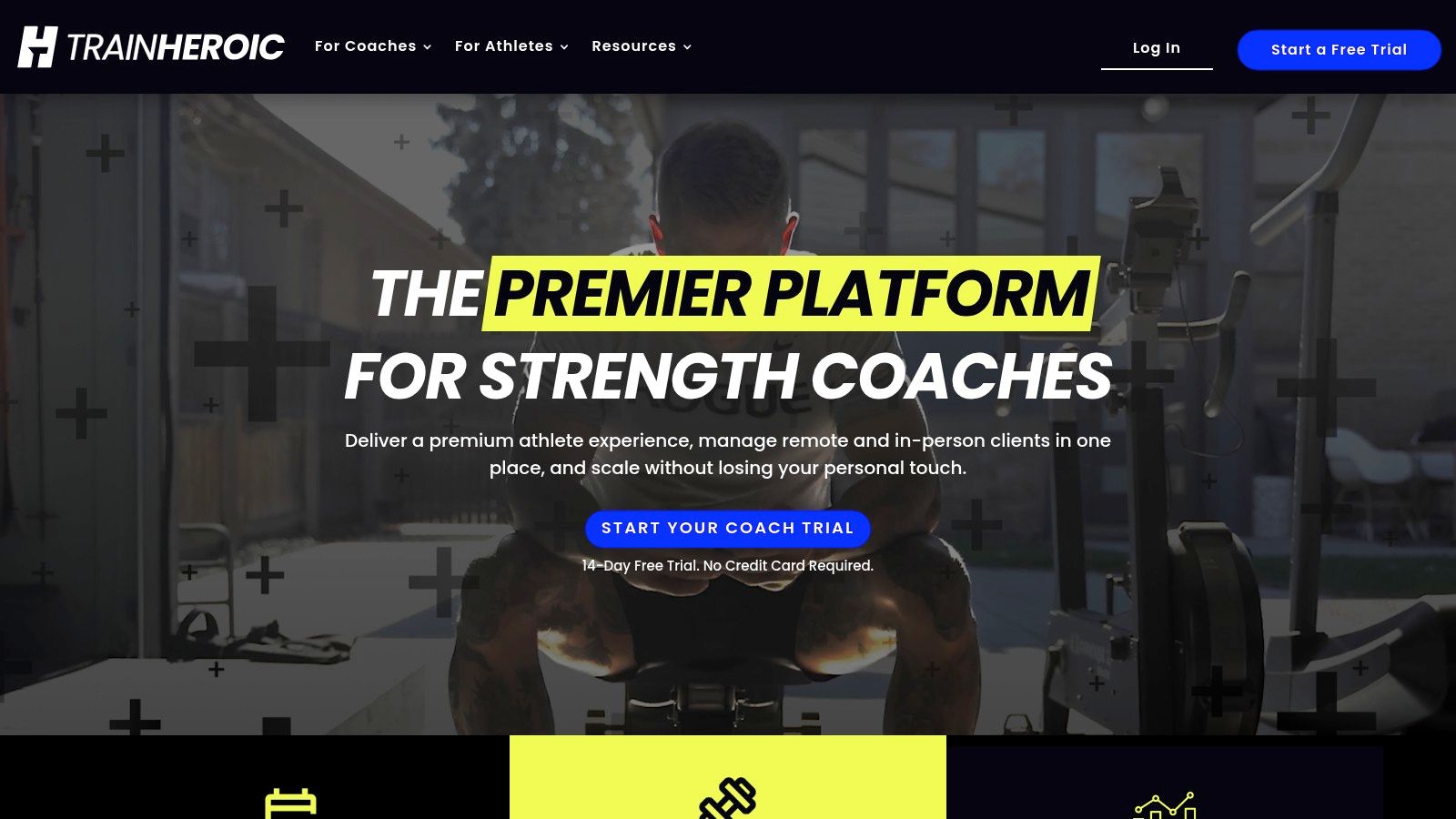
TrainHeroic is the platform for coaches who sell performance programming and want a built-in place to distribute it. It serves strength, weightlifting, CrossFit-style, and team-based coaches especially well, because the product is built around athlete apps, leaderboards, and a marketplace storefront.
Monetization is part of the product
The marketplace is the most important part of the operating model here. Coaches can sell programs and teams directly, which means the software is not only a delivery system but also a distribution channel. That helps creators who want templated or semi-custom programming to behave like a product, not just a service.
TrainHeroic also gives coached athletes a free app, and the coach account entry point is intentionally low-friction. For coaches who are already selling programs online, that's a useful way to reach new buyers without building every sales step on their own. The official site is TrainHeroic.
The trade-off
TrainHeroic focuses on training delivery and community, not full billing and scheduling CRM. The marketplace can also affect revenue economics, because marketplace sales share part of the earnings structure. That is acceptable for coaches who want built-in distribution, but it's not the right fit if you need every transaction to stay inside your own funnel.
10. FitBudd
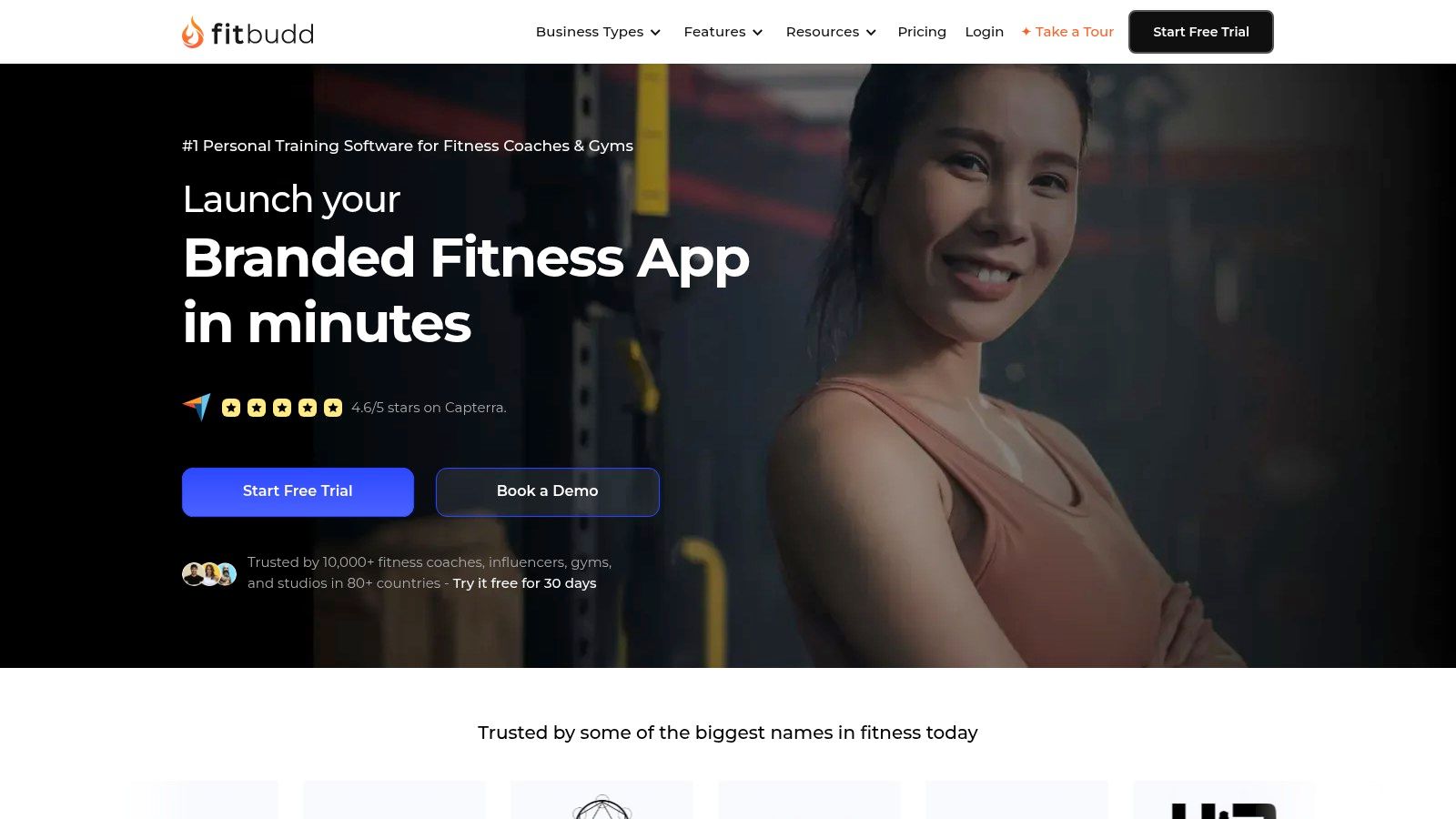
FitBudd is a strong pick for coaches who want a branded client experience without custom development. It gives you a client app and website, payments, habit tracking, content hosting, and optional appointments, so the platform works well for trainers who want to package services cleanly and move quickly.
Fast path to a polished client face
The big value here is speed. FitBudd lets coaches deliver a branded app and website, then layer in 1:1 chat, group messaging, workout building, exercise and recipe libraries, and meal tracking. That combination is enough for many online trainers who need a professional client portal but don't want to build one from scratch.
It also offers add-ons for appointments, team logins, on-demand video, Smart Flow automation, and in-app video calling on eligible plans. The official site is FitBudd.
What to verify before launch
The platform's modular setup means some functions are extra, so buyers should confirm which add-ons they need before signing up. White-label setup also requires Apple and Google developer fees plus the usual setup steps, so the branding promise is real, but it isn't zero-work.
For coaches who want a branded front end and a straightforward service stack, FitBudd is easy to understand. For coaches who need deep back-office operations, it's narrower than a full business platform.
Top 10 Trainerize Alternatives, Feature Comparison
| Product | ✨ Unique features | ★ UX / Quality | 💰 Pricing / Value | 👥 Best for | 🏆 Standout |
|---|---|---|---|---|---|
| Thrive X Fitness, The AI Fitness App That Pays You Back | ✨ AI form coach; 1,000+ exercises; marketplace payouts; 17 languages; integrated with ThriveXDNA tools | ★★★★☆ | 💰 Free utilities + marketplace revenue model (confirm fees) | 👥 Coaches scaling without per-seat fees; AI-driven members; creators | 🏆 Monetized marketplace + cross-domain ecosystem |
| TrueCoach | ✨ 3,000+ exercise videos; wearable sync; fast 1:1 workflows | ★★★★☆ | 💰 Tiered per-coach pricing (mid-range) | 👥 1:1 coaches prioritizing quick delivery & check-ins | 🏆 Lightweight, fast UX for coaching |
| Everfit | ✨ Autoflow automation; free client apps; leaderboards & forums | ★★★★ | 💰 Per-client tiers; always-free 5-client tier | 👥 Solo coaches → studios wanting automation & community | 🏆 Robust automation + free client apps |
| PT Distinction | ✨ AI program & meal planner; automation; white-label apps on higher tiers | ★★★★ | 💰 Tiered plans with clear client caps & overage pricing | 👥 Coaches needing integrated training + nutrition tools | 🏆 Broad all-in-one feature set |
| My PT Hub | ✨ Templates, bookings, nutrition; AI & Zapier as paid add-ons | ★★★☆ | 💰 Flat monthly with paid add-ons; premium unlimited clients | 👥 Coaches wanting many features for a flat fee | 🏆 Unlimited clients option on premium |
| Exercise.com | ✨ Custom-branded apps/web, POS, billing, marketing automations | ★★★★ | 💰 Custom pricing (demo/quote required) | 👥 Gyms/studios wanting single-vendor CMS+CRM+training | 🏆 Most comprehensive white-label business suite |
| Coach Catalyst | ✨ Prebuilt habit programs, engagement-first tools, CRM bundle | ★★★☆ | 💰 Usage/sliding pricing; optional CRM bundle (unlimited clients) | 👥 Coaches focused on adherence & behavior change | 🏆 Engagement-first client retention design |
| TeamBuildr | ✨ Athlete monitoring, PR tracking, leaderboards & reporting | ★★★★ | 💰 Predictable flat tiers by athlete count | 👥 Schools, teams & S&C coaches managing groups | 🏆 Robust reporting for team environments |
| TrainHeroic | ✨ Marketplace storefront; athlete analytics; free athlete app | ★★★★ | 💰 Low coach entry; marketplace revenue share (coaches keep ~70%) | 👥 Performance/strength coaches & community-based programs | 🏆 Built-in distribution via Marketplace |
| FitBudd | ✨ Branded client app & website; modular add-ons; in-app video | ★★★☆ | 💰 Per-client increments + add-ons; clear pricing steps | 👥 Coaches wanting a fast path to branded experience | 🏆 Quick white-label launch without custom dev |
Choose the Platform That Fits Your Business Model
The cleanest way to choose among trainerize alternatives is to match the tool to the operating model you already run, not the one you wish you had. If your business is mostly 1:1 programming, TrueCoach is the most direct fit. If automation saves you time every week, Everfit is the more natural choice. If you want integrated nutrition and habit support, PT Distinction is the better balance point. If you want a broader trainer toolkit with flatter pricing, My PT Hub deserves a close look.
For facilities and bigger businesses, the answer changes. Exercise.com is better when scheduling, memberships, waivers, POS, and branded web and app experiences all need to live together. Coach Catalyst fits engagement-first coaching where adherence matters more than advanced periodization. TeamBuildr fits team and athlete environments that need reporting at scale. TrainHeroic makes the most sense when programming itself is a sellable product. FitBudd is the quickest path to a branded client experience. And Thrive X Fitness is the most interesting option for coaches who want AI-led fitness, a marketplace model, and a wider ecosystem that connects fitness with finance, insurance, wellness, and document tools.
A careful migration matters more than you might expect. Export client and program data where the old platform allows it, map fields before import, audit integrations, test payment and communication flows, run a small pilot, preserve consent and privacy practices, and give clients a clear transition guide. If your business touches finance, insurance, or wellness workflows, connect those tools only through verified paths. ThriveXDNA can be a complementary destination for calculators, insurance utilities, explainers, document tools, and wellness resources, but not as an unsupported native integration with every coaching platform.
For readers comparing the wider creator economy alongside coaching software, this best platforms for content creators roundup is a useful next stop. The best platform is the one that matches your revenue model today and still makes sense when your client list, content library, and support workload grow.
ThriveXDNA brings fitness, finance, insurance, wellness, and personal growth into one place, which makes it relevant for coaches who want more than workout delivery. Visit ThriveXDNA to explore tools and resources that can sit alongside your coaching workflow and give clients a broader support experience.