Do You Need a CGM If You’re Not Diabetic in 2026?
Last reviewed: June 2026
Continuous glucose monitors were designed for people managing diabetes, but a growing number of health-focused consumers are strapping them on without a diagnosis. The appeal is straightforward: real-time blood sugar data sounds like a window into how food, sleep, and exercise affect the body at a granular level. The question for a healthy adult in 2026 is whether that window is worth the cost of the ticket.
Apps like Levels and Nutrisense have built subscription businesses around making CGMs accessible to non-diabetics, while devices like Lumen offer a different angle on metabolic tracking at a lower ongoing cost. You can compare more options in the AI health and wellness tools directory if you want a broader view of what the AI health tool market looks like right now.
This article tries to answer the core question honestly: does wearing a CGM when you are not diabetic change behavior enough to justify what you spend, and are there cheaper ways to get similar metabolic insight?
Key takeaways
- CGMs measure interstitial glucose continuously, but healthy adults have narrow glucose ranges and may see less actionable variation than people with metabolic dysfunction.
- Behavior change from CGM data is real for some users but tends to fade after a few months once novelty wears off.
- Levels and Nutrisense both require paid subscriptions and a sensor; the ongoing cost adds up quickly compared to one-time metabolic tools.
- Lumen uses breath CO2 measurement rather than glucose and costs less over a year for many users, though it measures a different metabolic signal.
- People with prediabetes, insulin resistance, or strong family history of metabolic disease have the clearest reason to try CGM not diabetic use cases.
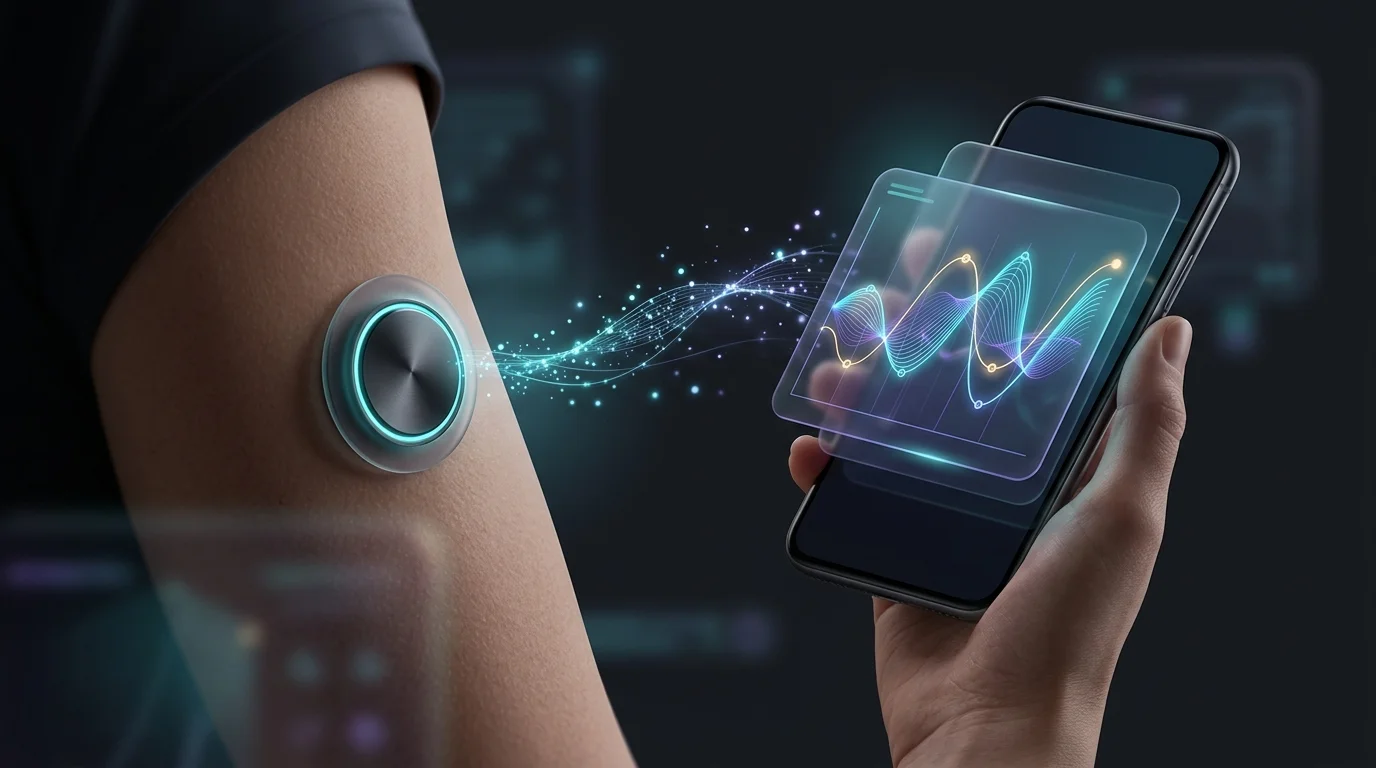
How a CGM Works Outside a Diabetes Context
A CGM is a small sensor, usually worn on the back of the upper arm, that reads glucose in interstitial fluid every few minutes and sends readings to a phone app. In people managing type 1 or type 2 diabetes, this continuous stream of data is clinically important because glucose can swing dramatically and dangerously. In a metabolically healthy adult, glucose stays within a much narrower band, and the swings that do occur after meals are typically brief and within normal ranges.
The platforms targeting non-diabetics, including Levels and Nutrisense, layer software and coaching on top of commodity CGM hardware to help users interpret what they see. The pitch is that even within normal ranges, patterns matter: which foods cause bigger spikes, how sleep affects fasting glucose, how stress and exercise interact with blood sugar. The counter-argument is that if you are already healthy, the signal-to-noise ratio is low.

What Levels and Nutrisense Actually Provide
Levels is a subscription service that ships you a CGM sensor and gives you access to its app, which scores meals and logs activity against your glucose response. The company has published some of its internal analysis suggesting that food responses vary widely between individuals eating the same meal, which is the core argument for personalized glucose tracking rather than generic nutrition advice. Levels has no free tier; it is a paid subscription plus the cost of sensors. See the National Institutes of Health for official guidance.
Nutrisense takes a similar approach but places more emphasis on access to registered dietitians who can review your glucose data and provide guidance. It is also a paid subscription. Both services use CGM hardware from established medical device manufacturers; they are selling the software layer, the data interpretation, and the coaching. Neither is a medical diagnostic tool, and both are explicit that they are for wellness use, not clinical care.
For a user who is genuinely uncertain about which foods are driving energy crashes or weight stalls, a one-month CGM trial through either platform can produce useful personal data. The question is whether you act on it and whether you need to repeat the cycle. Most of the behavior change from CGM not diabetic programs comes in the first one to three months.

Lumen: A Different Metabolic Signal at Lower Ongoing Cost
Lumen is a handheld breath analyzer that estimates whether your body is primarily burning fat or carbohydrates at a given moment by measuring CO2 concentration in your breath. This is a different metabolic signal than glucose; it reflects fuel utilization rather than blood sugar levels. It is not a CGM and does not measure glucose at all.
The practical difference matters for cost. Lumen requires an upfront device purchase and an optional app subscription, but sensors do not need to be replaced every week or two the way CGM sensors do. For someone interested in metabolic tracking over six to twelve months, Lumen can be significantly cheaper in total spend than a continuous CGM subscription.
The trade-off is that breath-based metabolic rate measurement is a less direct signal than blood glucose. Lumen is useful for understanding fat adaptation, ketosis proximity, and morning metabolic state, but it does not tell you how a specific meal spiked your blood sugar. Depending on what question you are actually trying to answer, one tool is more appropriate than the other.

Honest Limitations and Trade-offs of CGM Not Diabetic Use
The limitations of CGM not diabetic use deserve direct treatment. First, interstitial glucose lags behind blood glucose by roughly five to fifteen minutes, which means the data is an approximation even for a healthy user. Second, sensor accuracy can vary depending on placement, hydration, and arm movement, so a single spike on the graph may not represent a real physiological event.
Third, and most important for healthy users, is the question of what you do with the data. Studies on CGM use in non-diabetic populations suggest short-term dietary changes but limited evidence that those changes persist or that they produce clinically meaningful outcomes compared to following standard nutritional guidance. Anxiety about minor glucose fluctuations is a documented side effect for some users who track continuously.
Finally, cost is not trivial. Running a CGM not diabetic program for a full year through Levels or Nutrisense costs more than most fitness app subscriptions, gym memberships, or one-time dietary consultations. If budget is a constraint, the return on that spend is uncertain for someone without metabolic risk factors.
Who Has the Clearest Reason to Try a CGM Without Diabetes
Some non-diabetic users have a stronger case for CGM tracking than the average healthy adult. People who have been told they have prediabetes or insulin resistance are the obvious group; their glucose patterns are more likely to show meaningful variation and more likely to respond to dietary changes in measurable ways. A CGM used in coordination with a physician or dietitian in this context is closer to a clinical tool than a wellness gadget.
Athletes optimizing performance around glycogen management, people trying to understand reactive hypoglycemia symptoms, and individuals with strong family history of type 2 diabetes also have plausible reasons to gather personal glucose data. The weaker case is made by a metabolically healthy person in their twenties who is already eating well, exercising regularly, and sleeping enough. For that person, the incremental information gain is likely low.
Cheaper Metabolic Alternatives Worth Considering
Before committing to a CGM subscription, a few lower-cost alternatives can answer similar questions. A standard fasting glucose blood draw and HbA1c test through a primary care visit or a service like Lab Corp walk-in gives you a baseline metabolic snapshot for a fraction of the cost of a single CGM sensor. If those numbers are normal, you have reasonable evidence that continuous tracking may not add much.
A food and energy diary using a free app like Cronometer or MyFitnessPal can surface patterns in how meals affect your energy and mood without any wearable hardware. Lumen, as discussed, sits in between: it provides continuous metabolic feedback at a lower annual cost than CGM subscriptions for many users. Starting with the cheapest tool that can answer your actual question is a reasonable framework before upgrading to a CGM.
How these tools compare
| Tool | Type | Pricing Model | Best For |
|---|---|---|---|
| Levels | CGM + app + meal scoring | Paid subscription (sensor replacement ongoing) | Non-diabetics wanting glucose data with automated food scoring |
| Nutrisense | CGM + app + dietitian access | Paid subscription (sensor replacement ongoing) | Users who want professional dietitian review of their glucose data |
| Lumen | Breath-based metabolic analyzer | Paid (device purchase + optional subscription) | Users tracking fat vs carb burn over time at lower ongoing cost |
Frequently asked questions
Is it safe to wear a CGM if I am not diabetic?
CGM sensors are generally low-risk for healthy adults; they are FDA-cleared medical devices. The main concerns are skin irritation at the sensor site and the psychological effect of over-monitoring minor fluctuations in normal ranges. Consult a physician if you have any skin conditions or are on medications that affect glucose.
Will a CGM help me lose weight if I am not diabetic?
Some users report dietary changes after seeing their glucose responses to specific foods, which may support weight management. However, there is no strong published evidence that CGM use in non-diabetic adults produces better long-term weight outcomes than standard dietary guidance. It is a data tool, not a weight loss program.
How long should I wear a CGM to get useful data?
Most platforms suggest a minimum of two to four weeks to capture enough meal and lifestyle variation to identify patterns. Many non-diabetic users find that one to two months gives them the information they want without needing to continue indefinitely.
What is the difference between Levels and Nutrisense for non-diabetics?
Both use CGM sensors and provide glucose tracking apps with a paid subscription. Nutrisense places more emphasis on access to registered dietitians for personalized review. Levels focuses more on its automated scoring and educational content. Neither is a medical diagnostic service.
Is Lumen a CGM?
No. Lumen measures CO2 in your breath to estimate whether you are burning fat or carbohydrates. It does not measure blood glucose and is not a continuous glucose monitor. It answers different metabolic questions and at a different price point.
Should I ask my doctor before using a CGM without a diabetes diagnosis?
It is a reasonable step, particularly if you have any history of hypoglycemia, are on medications, or want to use the data to make significant dietary changes. A physician can also order standard lab tests that may answer your baseline metabolic questions without a CGM subscription.