Wysa vs Woebot 2026: AI CBT Chatbots Compared
Last reviewed: June 2026
Search for a CBT chatbot on your phone today and you will likely land on reviews comparing Wysa and Woebot side by side. The problem is that one of those apps has been unavailable to individual consumers for years. Woebot, which earned its reputation as a conversational mental health tool with a real clinical research base, exited the consumer market and now operates entirely through employer, university, and health plan contracts. If your workplace or insurer has no arrangement with Woebot Health, the app is not accessible to you regardless of how compelling any review makes it sound. You can browse Wysa and other AI health and wellness tools in AI health and wellness tools directory, but this comparison starts with that access reality before any feature is mentioned.
That is not a minor caveat to add at the bottom of an article. It reframes everything. For most people reading this, the comparison is functionally settled before you reach the feature breakdown. Wysa is consumer-available, has a genuine free tier, and has published clinical research on its outcomes. Woebot has strong clinical validation and deeper enterprise integration, but you cannot download it as a private individual in 2026. This article covers what each app does, how their CBT delivery actually works, who can realistically access each one, and how to make the decision if you happen to have access to both.
Key takeaways
- Woebot is not available for individual download in 2026. Access requires your employer, university, or health insurer to have an active contract with Woebot Health.
- Wysa has a functioning free tier covering core CBT exercises, mood tracking, and AI chat. A paid subscription unlocks a larger program library and, in select regions, text-based human coaching.
- Both apps deliver CBT techniques through conversational AI, but Woebot has built ERP (exposure and response prevention) modules for OCD-related concerns within its enterprise deployments, which is a more specialized clinical approach than most wellness apps offer.
- For any individual user making a personal choice today, Wysa is the only realistic option in this comparison because Woebot is structurally inaccessible to the general public.
- Neither app is designed for clinical-level depression, active suicidal ideation, PTSD, or severe anxiety disorders. Both include crisis referral prompts, but self-guided CBT chatbots are tools for mild-to-moderate distress and everyday mental fitness, not clinical treatment.
Why the Access Question Comes Before Every Other Comparison
[Add image: Wysa vs Woebot 2026: AI CBT Chatbots Compared – overview graphic – replace before publishing]
The biggest practical difference between Wysa and Woebot has nothing to do with interface design, AI quality, or which app’s CBT framework is more thorough. It is whether you can open the app at all. Woebot made a deliberate decision to exit the consumer market and concentrate entirely on institutional deployment. The company, now operating as Woebot Health, sells its product to employers who want a mental health benefit, to health systems integrating digital support into clinical care pathways, and to university counseling centers extending their reach beyond appointment slots. An individual who reads a review, searches the app store, and tries to create a personal account will either find the process blocked or be redirected to an employer enrollment page.
This is not a recent technical issue or a temporary pause. It reflects a considered business decision that institutional contracts are more financially predictable than consumer subscriptions in the digital mental health space, where user retention is notoriously difficult and the cost of clinical compliance is high. Other companies in this sector have made similar moves. The consequence is a real mismatch between Woebot’s continued name recognition in media coverage and its actual availability to the people searching for it.
For the purpose of this comparison, the access split means the question you are actually answering depends on who you are. If you are an individual looking for a self-serve CBT app, the practical decision is already made. If you are an HR manager, a university counseling director, or a benefits administrator evaluating tools for a population, both products deserve genuine consideration and the comparison becomes substantially more open.
What Wysa Delivers and What You Actually Pay For
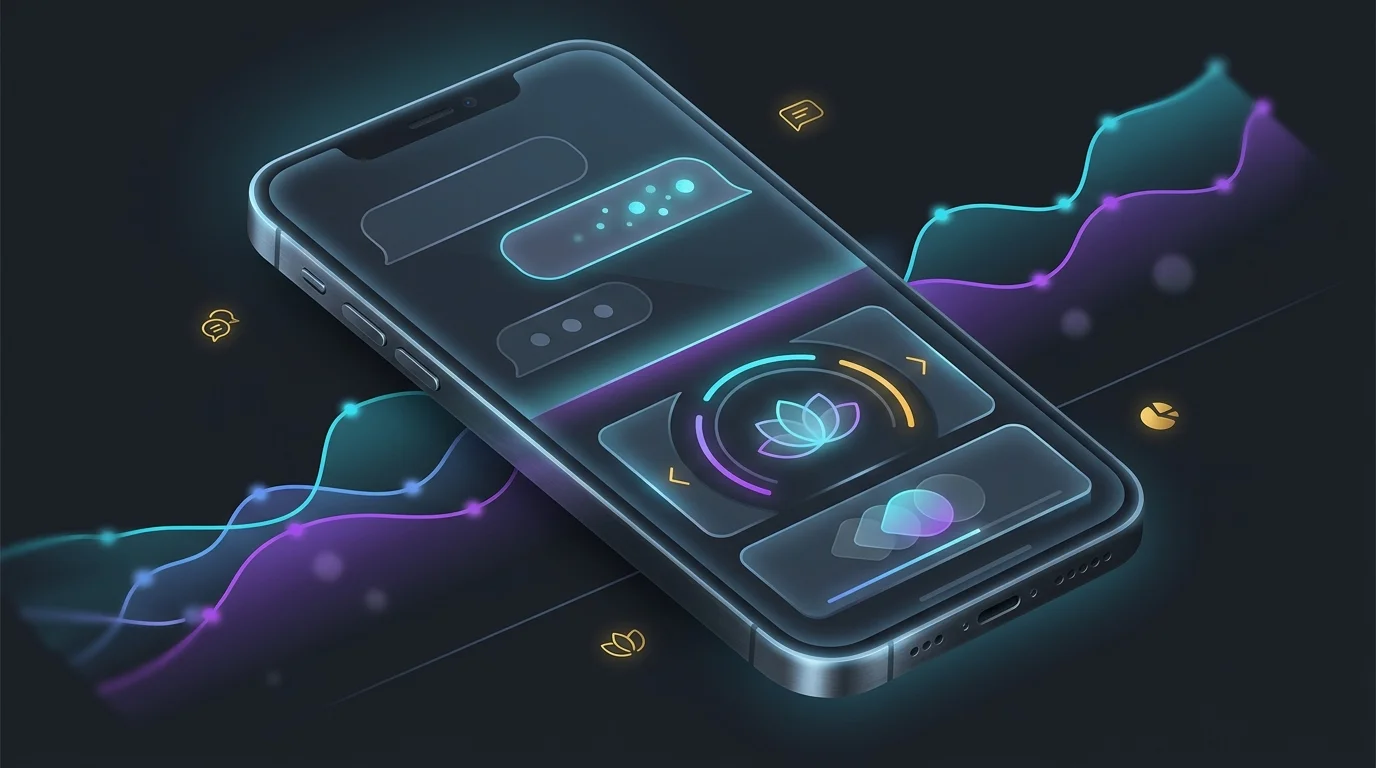
Wysa is a direct-download app on iOS and Android built around three overlapping functions: an AI chat interface for open-ended emotional support, a library of structured CBT and mindfulness exercises, and a mood-tracking system that surfaces patterns over time. The chat side of Wysa does not simulate a licensed therapist. It responds to what you share with empathy-oriented prompts, then guides you toward a structured exercise when the situation calls for one. The exercises draw from CBT (cognitive restructuring, thought records, behavioral activation), dialectical behavior therapy skills like distress tolerance, and basic mindfulness and breathing techniques. You do not need to know the clinical names to use the app. It presents them as short guided interactions rather than labeled therapeutic modules. See the National Institutes of Health for official guidance.
The free tier is real and functional, not a stripped-down preview designed to push you toward payment. Core chat, basic mood tracking, and a rotating set of exercises are available without subscribing. The paid plan unlocks a larger library of structured programs and, in select markets, access to a human coach via text. That coaching component is asynchronous, meaning you send a message and a trained support person responds within hours, not in real time. It is a middle layer between self-guided chatbot use and actual clinical care, not a substitute for either.
One thing worth understanding about Wysa’s design philosophy is that the app was built from the start with cross-cultural deployment in mind. The AI persona is intentionally neutral rather than culturally specific, and Wysa has partnerships with NHS trusts in the United Kingdom, health plans in the United States, and employers across South Asia. That global footprint has shaped how the app handles language, tone, and the range of mental health topics it will engage with. If you are evaluating it for a diverse workforce or a multilingual population, that design intent is more than a marketing claim.

What Woebot Is Now and Who It Actually Serves
Woebot was developed by a team with roots in clinical psychology research at Stanford University. The founding premise was that CBT principles could be delivered at scale through a conversational AI, reaching people who could not access or afford traditional therapy. Early versions of the app were consumer-facing, and Woebot published peer-reviewed research in journals like JMIR Mental Health showing measurable reductions in depression and anxiety symptoms among college students who used the app over a two-week period compared to a control group. That research foundation is still cited and is part of why Woebot retains credibility in clinical settings even after it stopped being a consumer product.
The shift to a purely enterprise model does not erase that evidence base. For organizations that have negotiated access to Woebot through a contract, they are getting a product shaped by clinical validation rather than one designed primarily around engagement metrics. Woebot Health has positioned its product within clinical workflows, meaning it can function as a between-session support tool for people already working with a therapist, or as a first-contact resource within an employee assistance program. What Woebot offers institutionally that differentiates it from most wellness apps is depth in specific clinical areas. The app has built out ERP modules designed for OCD-related anxiety, which is a meaningfully more specialized therapeutic approach than the generalist CBT framing most consumer wellness apps use.
The honest limitation of the enterprise model for anyone trying to evaluate it from the outside is opacity. Woebot Health does not publish consumer pricing because there is none. Feature access depends on what your employer or health plan has negotiated, and the version of the app your employees see may differ from what is described in public documentation. If you are evaluating Woebot for your organization, you need a direct conversation with their sales team, not a third-party review.

How Both Apps Actually Deliver CBT Techniques
CBT works by helping you notice the connection between thoughts, feelings, and behaviors, then test whether your automatic interpretation of a situation holds up under examination. Both Wysa and Woebot translate this into a conversational format, asking you to describe what happened, what you felt, and what you told yourself, then walking you through an exercise that gently challenges distorted thinking. The core techniques both apps deliver include thought records (identifying an automatic thought and evaluating the evidence for and against it), behavioral activation (choosing low-effort activities that tend to improve mood when you feel stuck), and mood monitoring to spot patterns across days and weeks. These are standard tools in any CBT workbook. The apps make them interactive and available at any hour without a waiting list.
Where the two apps diverge in their CBT delivery is in tone and clinical scope. Woebot historically used a warmer, more casual voice with light humor worked into the exercises, making the interactions feel less clinical. Wysa is more tonally neutral and modular, designed to shift registers depending on what you bring to a given session rather than defaulting to a consistent breezy persona. Neither approach is objectively better. It depends on what conversational style you find easier to engage with during moments of genuine stress, which is not always what feels appealing when you are browsing apps on a calm afternoon.
At the edges of each tool’s scope, both apps have built-in detection for crisis indicators and will surface crisis resources, including national hotline numbers, if the conversation suggests serious risk. This is an important safeguard, but it is not clinical triage. The prompts are a safety net pointing you toward human support, not an assessment of whether you need it.

The Enterprise Angle: What to Do If Your Employer Offers One of These
If you are evaluating this comparison as a benefits manager or a university counseling director, the calculus is different from an individual consumer’s. Both Wysa and Woebot have enterprise products, but their positioning and depth differ in ways that matter for institutional decisions. Woebot Health is the company’s entire business. The enterprise product was designed from the inside out for integration into clinical and EAP workflows, and it has more published clinical validation per feature than most competitors in the space. If your organization is already working with a behavioral health vendor or managing a formal employee assistance program, Woebot may slot into that structure more naturally. The evidence base also matters for procurement decisions within health systems, where clinical validation carries real weight.
Wysa for Work exists alongside the consumer product and is a legitimate enterprise offering, but it sits inside a company that also runs a direct-to-consumer business. That can mean faster feature iteration on the consumer side, but potentially less enterprise-level customization than Woebot Health offers. For a small to mid-sized employer buying a mental health benefit rather than managing a clinical program, Wysa for Work may be easier to deploy precisely because many employees have already encountered the consumer version and the onboarding friction is lower.
In either case, the right questions to ask any vendor before signing are: What does your outcome measurement methodology look like for our specific use case? What does the employee experience look like step by step from first download to first completed session? And what happens when an employee discloses serious distress? The answers to those questions reveal more than any feature list does.
[Add image: Wysa vs Woebot 2026: AI CBT Chatbots Compared – comparison or process graphic – replace before publishing]
What Neither App Is Built to Handle
The marketing framing around AI mental health tools often implies a level of clinical coverage that neither Wysa nor Woebot actually claims in their own documentation. Both apps are explicitly designed for the mild-to-moderate end of the mental wellness spectrum. That means everyday stress, low-grade anxiety, mild low mood, sleep disruption tied to stress, and general coping skill development. It does not include clinical depression that is persistent and interfering with daily functioning, panic disorder, PTSD, bipolar disorder, psychosis, or active suicidal ideation.
This matters because some people turn to these apps specifically because therapy feels inaccessible, either too expensive or with a waiting list that stretches weeks out. Those are real barriers. Apps like Wysa genuinely fill a gap for people dealing with mild distress who want structured support between therapy appointments, or who are not yet sure whether they need therapy at all. But the same access barriers that make chatbots appealing are often present for people with more severe symptoms who need more intensive support. If you are in that category, a self-guided CBT app is likely to be insufficient as a primary intervention. The better use of these tools is as one layer in a broader approach that includes professional support when symptoms escalate.
- Appropriate use cases: everyday stress, mild anxiety, low mood, sleep disruption tied to stress, coping skill building
- Outside the scope of both apps: clinical depression, PTSD, panic disorder, bipolar disorder, psychosis, active suicidal ideation
- Both apps include crisis resource prompts but do not provide clinical assessment, diagnosis, or treatment planning
- Neither app should function as your only support if symptoms are persistent, worsening, or interfering with daily functioning
How to Make the Decision
Start with access. If you cannot get Woebot through your employer, university, or health plan, this comparison is over for you. Download Wysa and evaluate the free tier before committing to a paid plan. The free version is substantial enough to give you a real read on whether the app’s approach suits how you actually want to use it.
If you do have access to Woebot through an institution, the next filter is your primary concern. For generalized anxiety, stress management, low mood, or everyday mental fitness, both apps cover similar CBT ground and the choice largely comes down to which conversational style feels right for you. For OCD or OCD-adjacent anxiety patterns, Woebot’s ERP-grounded modules are more clinically specific to that presentation. Wysa does not have a dedicated ERP framework in its current consumer product.
If you are comparing Wysa against other consumer AI wellness apps rather than Woebot specifically, the filters that matter most are evidence base, crisis protocol quality, and whether the app is FDA-listed as a digital health tool. Wysa meets all three. Not every app in this category does. And if you already work with a therapist, consider mentioning either app to them before you start. A therapist can tell you whether a self-guided CBT tool is likely to complement your current treatment or create any confusion about the techniques you are practicing.
The Bottom Line
For most people reading a Wysa vs Woebot comparison in 2026, the decision is already made by one structural fact: Woebot requires institutional access. If you are an individual looking for a downloadable CBT app today, Wysa is the product you can actually use, and its free tier is substantial enough to evaluate seriously before paying for anything.
For organizations evaluating both, the comparison is genuinely open. Woebot Health has deeper clinical validation and tighter enterprise integration. Wysa for Work benefits from a consumer product that employees may already recognize and trust. Both use CBT as their foundation. Both include crisis referral protocols. Neither one is therapy, and neither one is designed to replace it. The right choice for your organization depends on what your population needs and what your existing behavioral health infrastructure looks like, not on which app has the better press coverage.
How these tools compare
| Criterion | Wysa | Woebot |
|---|---|---|
| Who can access it | Any individual via direct download on iOS and Android | Enterprise only: requires employer, university, or health plan contract |
| Free tier | Yes, includes AI chat, mood tracking, and core CBT exercises | No free tier for individual consumers |
| Paid consumer subscription | Yes, monthly plan with expanded library and coaching in select regions | Not available to individual consumers |
| Core therapeutic techniques | CBT, DBT elements, mindfulness and breathing | CBT plus ERP modules for OCD-related concerns (enterprise deployments) |
| Human coaching option | Yes, text-based in select markets as a paid add-on | Through enterprise deployment only |
| Enterprise product | Yes (Wysa for Work) | Yes (Woebot Health, the company’s primary and only business model) |
| Crisis referral support | Yes, built-in detection and resource prompts | Yes, built-in detection and resource prompts |
| Published clinical research | Yes, peer-reviewed studies on anxiety and depression outcomes | Yes, peer-reviewed studies including JMIR Mental Health RCT data |
Related guides
- What Is TrumpRx.gov? Good or Bad? Your Complete Guide to Lower Prescription Drug Prices in 2026
- Your Guide to the Best Cyber Liability Coverage Options That Won’t Break the Bank
- Best Identity Theft Protection Plans in 2025: Secure Your Personal Data Now
- Do AI Mental Health Apps Actually Work in 2026?
- Best AI Apps for Anxiety in 2026 (Tested)
- 10 Best Apps for Personal Trainers in
- Do AI Insurance Comparison Apps Really Save Money?
- Can AI Do My Taxes in 2026? What These Tools Actually Do
- Jerry App Alternatives: AI Car Insurance Apps
- What Is the Best AI Insurance App in 2026?
Summary
Voebot’s enterprise-only access means Wysa is the practical starting point if you are choosing an AI CBT chatbot on your own today, not through an employer, school, or insurer plan. Both apps apply CBT techniques through conversational AI, and Wysa’s free tier gives you mood tracking, core exercises, and chat before you consider its paid tier for more programs or coaching. If your workplace or school does offer Woebot, its OCD-focused ERP modules are worth asking about. Either way, treat these as support for everyday stress, not treatment for severe or clinical conditions, and use the built-in crisis prompts if you need more than a chatbot can give.
Frequently asked questions
Can I still download Woebot as a regular consumer in 2026?
For most people, no. Woebot shifted to a business-to-business model, and access now requires your employer, university, or health insurer to have a contract with Woebot Health. You may find the app listed in app stores, but creating a personal standalone account is either unavailable or redirected to an employer enrollment page. Check with your HR department or health plan benefits portal to find out whether Woebot is included in your coverage before you spend time researching its features.
Is Wysa actually free to use, or is the free tier too limited to be useful?
Wysa’s free tier is functional enough to evaluate seriously. It covers the AI chat interface, basic mood tracking, and a set of core CBT and mindfulness exercises. The paid subscription adds a larger structured program library and, in select regions, access to a text-based human coach. The free version is not a trial that cuts off after a week. You can use the core features indefinitely without paying, which makes it reasonable to try before deciding whether the paid tier is worth it for your situation.
Are Wysa and Woebot actual therapy?
No. Both apps deliver evidence-based CBT techniques in a self-guided format designed for mild to moderate distress. They are mental wellness tools, not substitutes for clinical diagnosis or treatment. If your symptoms are persistent, interfering with daily functioning, or involve serious risk, a licensed therapist or psychiatrist is the appropriate resource. Both apps include crisis referral prompts and will point you toward emergency support if you indicate serious distress, but they do not provide clinical assessment or treatment planning.
Which app is better for anxiety?
For a consumer making a personal choice, Wysa covers anxiety-related CBT tools including cognitive restructuring, breathing exercises, and behavioral activation. For someone with OCD or OCD-adjacent anxiety patterns who has institutional access to Woebot, that app’s ERP modules are more clinically specific to that presentation. For general stress and anxiety management, both apps offer comparable CBT-based tools and the real difference comes down to which conversational tone you find easier to engage with consistently over time.
What is ERP and why does it matter in this comparison?
ERP stands for exposure and response prevention, a specialized technique primarily used in treating OCD and OCD-adjacent anxiety. It involves gradually confronting feared triggers without performing a compulsive response, with the goal of reducing the power those triggers hold over time. Woebot Health has built ERP-informed modules into its enterprise product, which makes it more clinically specific for that use case than most general-purpose wellness apps. Wysa uses a broader CBT framework without a dedicated ERP track, which is appropriate for the generalist wellness audience it serves.
Does Wysa connect you with a real human therapist?
Wysa offers human coaching, not licensed therapy, in select markets as part of its paid tier. The coaching is text-based and asynchronous, meaning you write a message and a trained coach responds within hours rather than in real time. The coaches are support professionals, not licensed therapists. If you need licensed therapy, platforms like BetterHelp or Talkspace connect users directly with licensed providers. Wysa’s human coaching occupies a middle ground above purely self-guided use but below actual clinical care.