How to Buy Government Bonds: Top Picks for 2026
Last reviewed: June 2026
You want a low-risk place for $5,000 that will earn a predictable return. You see headlines about Treasury yields hovering around 4 percent and wonder how to lock in that rate.
The right bond can protect your savings from market swings and add a steady stream of income. A few hundred dollars of interest each year can make a real difference in a retirement plan.
This guide shows you step-by-step how to purchase Treasury bonds, municipal bonds, and savings bonds. It explains the different types, where to buy them, and how to avoid common mistakes.
This article provides educational information only and does not constitute financial or legal advice.
Key Takeaways
- Decide which bond type matches your tax situation and cash-flow needs
- Open a TreasuryDirect account for direct purchases of U.S. Treasury securities.
- Use a brokerage account to buy municipal bonds or Treasury securities on the secondary market.
- Check the bond’s maturity, yield, and credit rating before you commit.
- Keep records of your purchases for tax reporting and future sales.
- Review your bond holdings annually and adjust if rates or goals change.
Understanding Government Bond Types
For a vetted, regularly updated list of tools that can help, explore our AI finance tools directory.
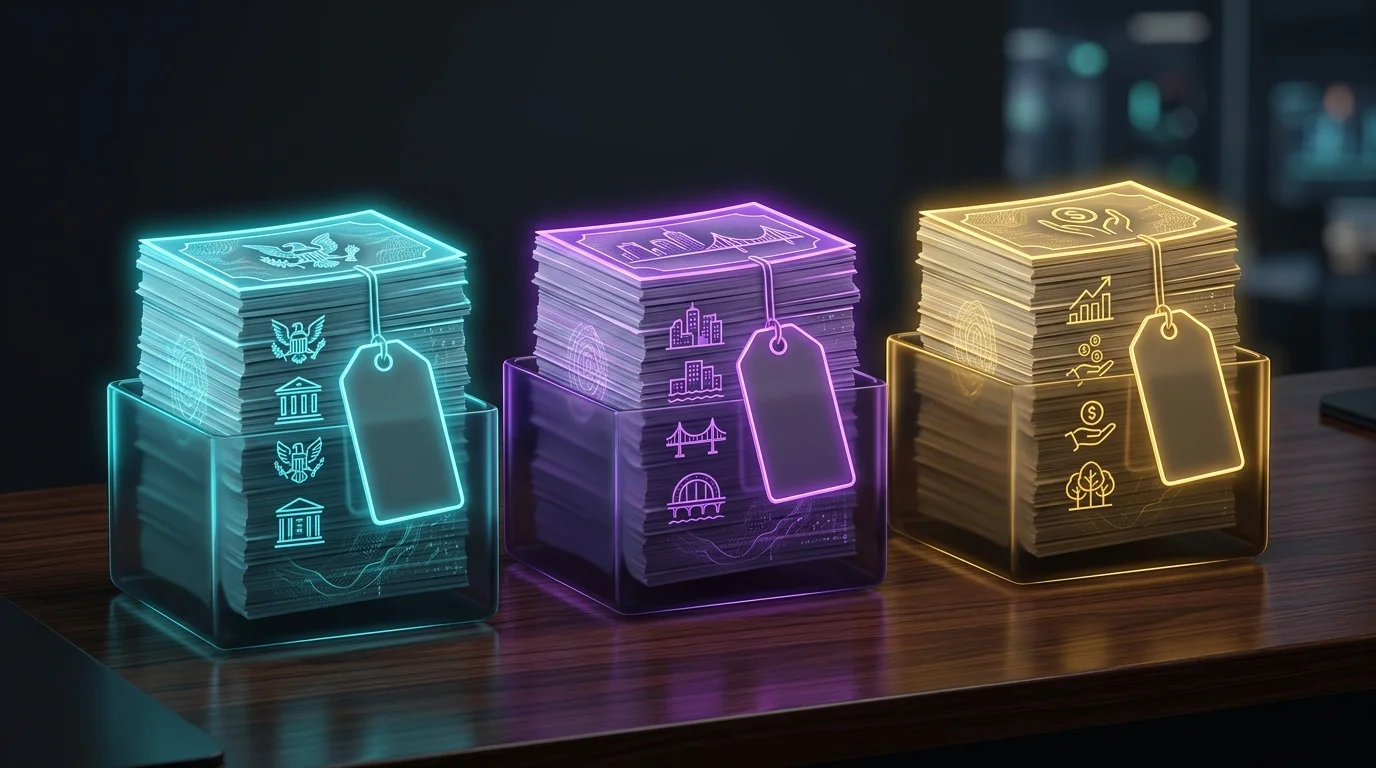
Government bonds come in three main families. Each family has its own rules, tax treatment, and buying process.
Treasury securities
Treasury securities are issued by the U.S. Department of the Treasury. They include Treasury bills (short-term, 4 to 52 weeks), Treasury notes (2 to 10 years), and Treasury bonds (20 to 30 years). Interest on these securities is exempt from state and local taxes but fully taxable at the federal level.
Municipal bonds
Municipal bonds are issued by states, cities, and other local entities. They fund projects such as schools, roads, and water systems. Interest on most municipal bonds is exempt from federal tax and may be exempt from state tax if you buy bonds issued in your home state.
Savings bonds
Savings bonds, like Series I and Series EE, are sold directly to individuals. Series I bonds combine a fixed rate with an inflation-adjusted rate, protecting purchasing power. Series EE bonds double in value after 20 years if held to maturity.

Setting Up the Right Account
You need an account before you can place any order. Choose the platform that fits the bond type you plan to buy.
TreasuryDirect for direct purchases
TreasuryDirect is the official portal for buying Treasury securities and savings bonds. The enrollment process requires a Social Security number, a U.S. address, and a checking account for fund transfers.
- Visit treasurydirect.gov and click “Open an Account.”
- Fill out personal information and create a password.
- Verify your identity through the online steps.
- Link your bank account to fund purchases.
Brokerage accounts for secondary-market bonds
Most discount brokerages let you trade Treasuries, municipal bonds, and corporate bonds on the secondary market. Opening a brokerage account typically takes a few days and may require a minimum deposit of $500 to $1,000.
- Choose a reputable broker that offers bond trading tools.
- Complete the online application and fund the account.
- Locate the bond trading section and search by CUSIP, issuer, or maturity.
Bank or credit-union accounts
Some banks and credit unions sell savings bonds in person. If you prefer face-to-face service, ask a teller for a bond purchase form.

Buying Treasury Securities Directly
Direct purchases avoid broker commissions and give you access to the newest issues.
Selecting the right issue
Treasury auctions occur on set dates. Bills are auctioned weekly, notes monthly, and bonds quarterly. Check the auction calendar on TreasuryDirect for upcoming dates.
Placing a non-competitive bid
A non-competitive bid guarantees you receive the full amount you request at the auction’s winning yield. You cannot specify a price; you accept the market rate.
- Log in to TreasuryDirect and choose “Buy Direct.”
- Select the security type (bill, note, bond, or I-bond).
- Enter the purchase amount (minimum $100, in $100 increments).
- Review the estimated yield and confirm the transaction.
Holding and redeeming
Treasury securities are held in electronic form in your TreasuryDirect account. You can hold them to maturity or sell them in the secondary market through your broker. Savings bonds can be redeemed after 12 months; cashing them before five years incurs a small penalty.

Buying Municipal Bonds Through a Broker
Municipal bonds require more research because they vary by issuer and credit quality.
Finding tax-advantaged bonds
Use the broker’s bond screener to filter for “municipal,” “state-tax-free,” and your desired maturity range. Set the credit rating filter to “AA” or higher to avoid higher-risk issues.
Evaluating yield and price
Municipal bonds trade at a price expressed as a percentage of face value. A price of 98 means you pay $980 for a $1,000 bond, which raises the effective yield above the quoted coupon.
- Note the bond’s coupon rate and maturity date.
- Calculate the current yield: coupon ÷ price.
- Compare that yield to Treasury yields of similar duration to gauge relative value.
Placing the order
When you’ve identified a bond, enter the CUSIP and the number of bonds you want to buy. Most brokers charge a small commission, often $5 to $10 per trade.
Holding municipal bonds
Municipal bonds are held in street name by the broker. You will receive semi-annual interest statements for tax reporting.
Buying Savings Bonds for Inflation Protection
Series I bonds are popular for protecting savings against rising prices.
Understanding the rate formula
I-bond interest consists of a fixed rate (set at issuance) plus an inflation rate that updates every six months. The combined rate can be as high as 9 percent when inflation spikes.
Purchasing limits
You can buy up to $10,000 of electronic I-bonds per calendar year through TreasuryDirect. An additional $5,000 in paper I-bonds can be purchased with a federal tax refund.
Steps to buy
- Log in to TreasuryDirect and select “Buy Direct.”
- Choose “Series I Savings Bond.”
- Enter the amount (minimum $25, in $25 increments).
- Confirm the purchase; the bond is added to your account instantly.
Managing Your Bond Portfolio
A bond portfolio needs periodic review to stay aligned with goals.
Rebalancing for rate changes
When Treasury yields rise, older bonds with lower coupons lose market value. If you need cash soon, consider selling higher-priced, lower-yield bonds and buying new issues at higher rates.
Tax considerations
Interest from Treasury securities is taxable at the federal level only. Municipal bond interest may be exempt from federal tax and possibly state tax. Keep the 1099-INT forms your broker sends each year for accurate filing.
Record-keeping
Download transaction statements from TreasuryDirect and your broker each quarter. Store them in a secure folder for future reference and tax purposes.
Common Pitfalls and How to Avoid Them
Many first-time buyers make mistakes that reduce returns.
Ignoring the yield-to-maturity
A bond’s quoted coupon may look attractive, but the yield-to-maturity reflects the true return after accounting for price discounts or premiums. Always compare YTM across options.
Overpaying for low-rating municipal bonds
Higher yields often compensate for higher credit risk. Check the issuer’s credit rating from Moody’s, S&P, or Fitch before buying.
Forgetting the early-withdrawal penalty on I-bonds
Redeeming an I-bond before five years loses three months of interest. Plan to hold I-bonds for at least five years to avoid the penalty.
Not diversifying across maturities
Holding only long-term bonds can lock you into low rates if the market shifts. Mix short-term Treasury bills with medium-term notes to keep liquidity.
Steps to Complete Your First Purchase
Follow this checklist to ensure a smooth transaction.
- Define your investment amount and time horizon.
- Open a TreasuryDirect account and/or a brokerage account.
- Choose the bond type that matches your tax and income needs.
- Use the appropriate platform to place a non-competitive bid or broker order.
- Verify the purchase confirmation and record the CUSIP and settlement date.
- Set a reminder to review the bond’s performance annually.
By following these steps, you can add a reliable, low-risk asset to your portfolio without paying unnecessary fees.
Frequently Asked Questions
Can I buy Treasury bonds with a $1,000 budget?
Yes. TreasuryDirect accepts purchases as low as $100 for bills, notes, and bonds. You can buy a $1,000 bill or note and hold it to maturity or sell it later.
Are municipal bonds always tax-free?
Most municipal bonds are exempt from federal tax, but not all are exempt from state tax. If the bond is issued by a state other than yours, you may owe state tax on the interest.
How often does the I-bond inflation rate update?
The inflation component updates every six months on May 1 and November 1. The new rate applies to all existing I-bonds for the next six-month period.
What happens if I need cash before a bond matures?
You can sell Treasury securities in the secondary market through a broker. Municipal bonds can also be sold, though market prices may be lower than face value.
Do I need a financial advisor to buy government bonds?
You do not need an advisor to purchase Treasury securities directly. If you are buying complex municipal bonds or need tax planning, a licensed professional can help.
How are bond interest payments reported on my taxes?
Your broker sends a 1099-INT form showing total interest earned. TreasuryDirect provides an annual statement for Treasury and savings bond interest. Report the amounts on your federal tax return; apply any state exemptions as appropriate.
Related Reading: What Is TrumpRx.gov? Good or Bad? Your Complete Guide to Lower Prescription Drug Prices in 2026 | Your Guide to the Best Cyber Liability Coverage Options That Won’t Break the Bank | Best Identity Theft Protection Plans in 2025: Secure Your Personal Data Now