Best Gut Microbiome Test: Evidence-Based Buyer Guide
Most advice about the best gut microbiome test starts from the wrong premise. It treats a glossy report, a long feature list, or a personalized diet plan as proof that the test is useful. The evidence says something narrower and more important, consumer microbiome tests can describe what's in a stool sample, but they still can't reliably guide diagnosis or treatment in most routine settings.
That matters because the market is expanding faster than clinical validation. A 2024 international consensus statement in The Lancet Gastroenterology & Hepatology said there is “no consolidated and direct evidence” that microbiome-based diagnostics improve management of gastrointestinal or extraintestinal disorders, and it highlighted the lack of proven clinical utility despite commercial momentum (consensus statement). So the question isn't which brand looks smartest, it's whether the test can produce consistent, interpretable data that matches the use case.
| Evaluation criterion | What matters most | What current evidence supports |
|---|---|---|
| Clinical utility | Can it change diagnosis or treatment? | Evidence remains weak for routine clinical use (Lancet consensus) |
| Analytical validity | Do labs agree on the same sample? | Inter-company agreement is still poor (Nature analysis) |
| Method choice | Is it broad profiling or deeper sequencing? | Shotgun metagenomics gives greater resolution than 16S (method comparison) |
| Actionability | Are recommendations evidence-based? | Precise diet prescriptions from one stool sample aren’t supported (consumer guidance) |
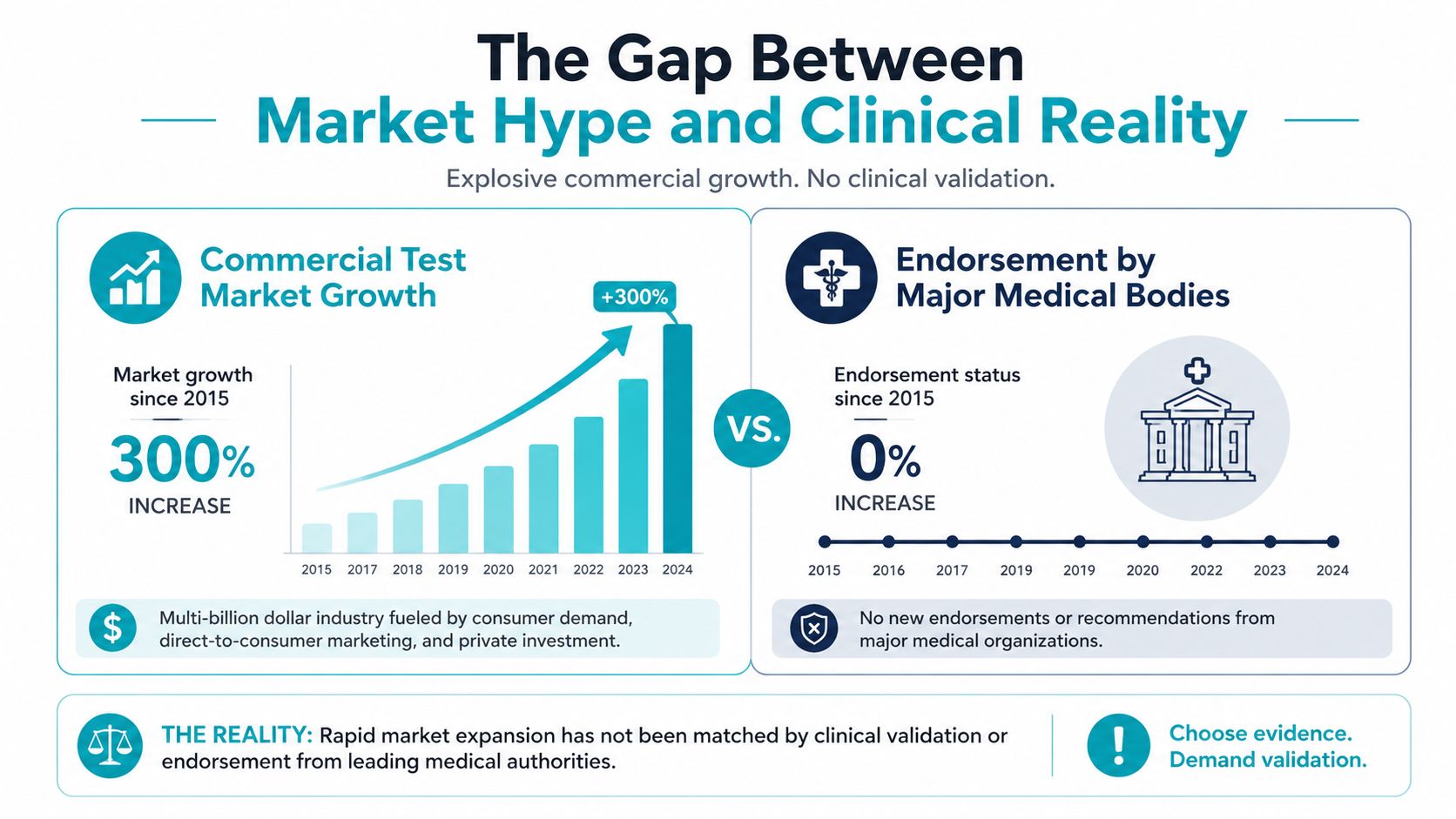
Table of Contents
- The Gap Between Market Hype and Clinical Reality
- Sequencing Methods and Performance Trade-Offs
- Evaluating Tests Using Reproducibility Data
- Matching Test Capabilities to Real Use Cases
- Interpreting Reports Without Overestimating Utility
- Practical Selection Checklist for Informed Buyers
- Key Takeaways
- Summary
- Frequently Asked Questions About Microbiome Testing
The Gap Between Market Hype and Clinical Reality
The market can look convincing before validation catches up. One summary projected the home gut microbiome testing market at about USD 1.2 billion in 2024, rising to USD 3.5 billion by 2033, with a 12.5% CAGR from 2026 to 2033. Another estimated the broader microbiome analysis market at USD 1.27 billion in 2024 and USD 2.26 billion by 2030, with a 10.47% CAGR from 2025 to 2030 (market estimates). Those projections show commercial demand, not clinical usefulness.
Why consumer demand got ahead of validation
The 2024 consensus statement in The Lancet Gastroenterology & Hepatology is the anchor point. It concluded that evidence for routine clinical microbiome testing remains weak and that there is no consolidated and direct evidence of better management for gastrointestinal or extraintestinal disorders (Lancet consensus). It also noted that direct-to-consumer testing spread before standardized regulation caught up, which helps explain why marketing language often sounds more mature than the evidence.
That gap changes how buyers should interpret results. If the goal is a wellness snapshot, many products can provide compositional profiling. If the goal is a diagnostic answer, the Lancet consensus later confirmed that consumer stool tests are still not ready for routine decisions in conditions such as IBS or IBD.
Practical rule: treat current microbiome reports as descriptive data, not disease labels.
The best buyers start with a different question. Instead of asking which test promises the most, ask what evidence shows that the test can answer the specific question at hand. That is the clearest way to separate descriptive profiling from clinically actionable diagnostics, and it is the most useful lens for judging the best gut microbiome test.
Sequencing Methods and Performance Trade-Offs
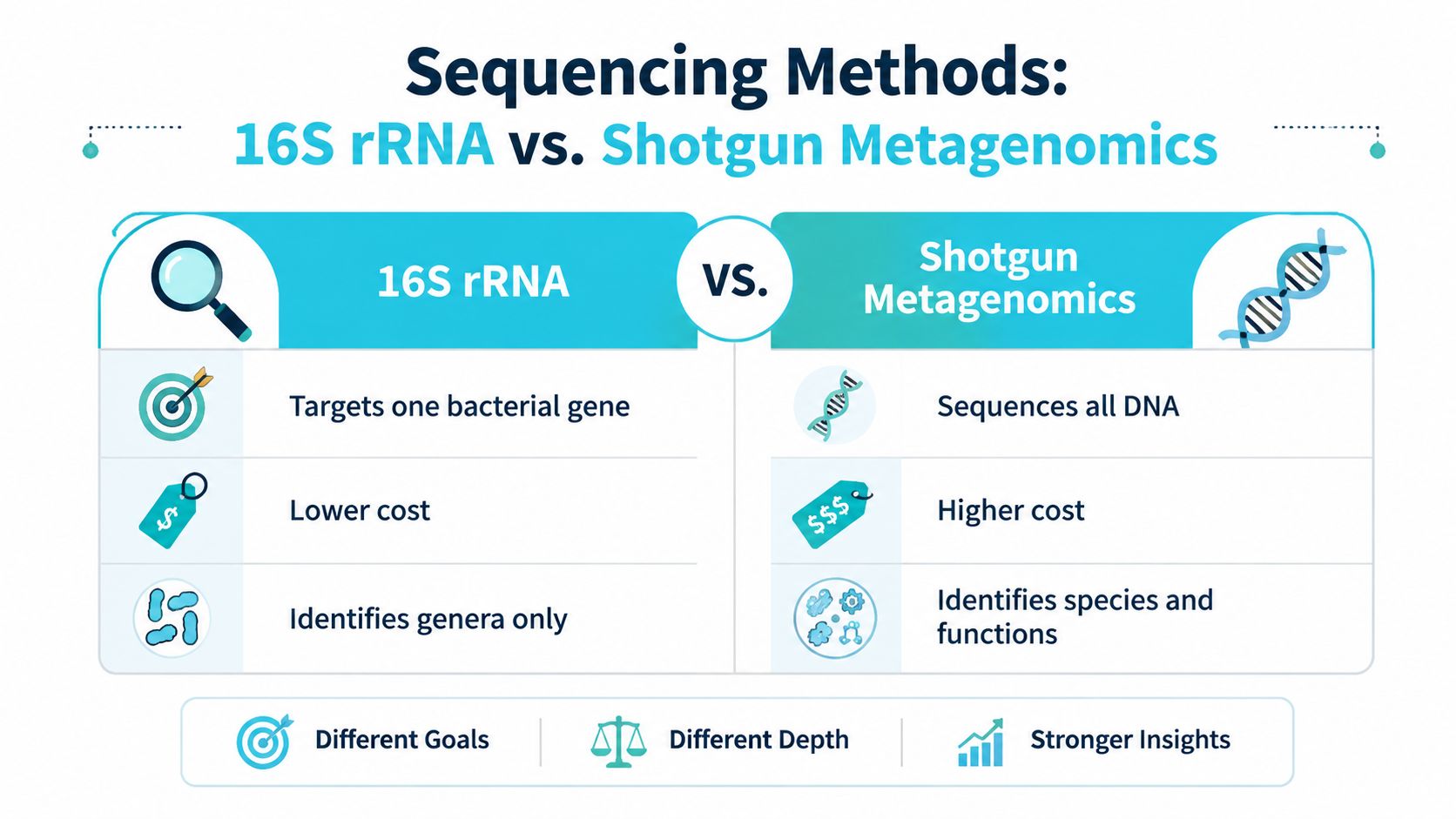
Vendor language often hides the choice behind words like “advanced” or “deep.” The method matters because different sequencing approaches answer different questions, and they do not do it equally well. 16S rRNA profiling is narrower and usually cheaper. Shotgun metagenomics is broader, more detailed, and harder to analyze well.
What 16S can and can't tell you
16S rRNA profiling targets a single bacterial gene. That lower-cost design usually resolves microbes only to the genus level or higher, which limits specificity when strain-level differences or functional interpretation matter (method comparison). In practice, it fits broad community snapshots better than fine-grained interpretation.
Shotgun metagenomics sequences more DNA in the sample, so it can identify more species and genes and produce more accurate functional profiling. That makes it the stronger choice if you want microbial function, not just composition.
Why broader isn't automatically better
Broader sequencing adds complexity. Shotgun data require more bioinformatic handling, and database choices shape what gets called and how confidently it is reported. Buyers should pay less attention to “most advanced” and more attention to whether the company explains its pipeline clearly.
If you want a plain-language primer on how microbial DNA is read, bacterial DNA from BacteriaFAQ.com is a useful external explainer. The technical difference between sequencing one marker and sequencing available DNA drives the quality conversation.
Bottom line: shotgun metagenomics is the better tool for depth, but depth only helps if the lab is transparent about methods and limits, as the Lancet consensus stated.
That is why the best gut microbiome test for a wellness buyer may still be less suitable than a simpler method for someone with one targeted question. Capability has to match intent.
Evaluating Tests Using Reproducibility Data
A glossy report is not the same as a reproducible result. The stronger question is whether two vendors can analyze the same specimen and arrive at broadly similar conclusions. Independent cross-platform analysis of seven commercial services found substantial disagreement when the same standardized human fecal reference material was sent to different providers, which is a poor fit for diagnosis-grade use (Nature analysis).
| Reproducibility Challenges in Commercial Testing | ||
|---|---|---|
| Issue Identified | Impact on Results | Consumer Takeaway |
| Different sequencing methods | Results shift by platform | Cross-brand comparisons are shaky |
| Different reference databases | Microbes may be labeled differently | A “better” report may just use a different library |
| Different reporting frameworks | Same data can look more or less alarming | Read the methodology, not just the headline score |
What reproducibility means for buyers
Reproducibility is the feature many shoppers overlook, yet it belongs near the top of any evaluation. If two tests disagree on the same sample, the problem is usually the platform, not the person providing the stool. Claims about personalized insight deserve caution unless the vendor is explicit about quality control, sample handling, and reference standards.
A vendor should explain its internal consistency checks, sequencing workflow, and normalization approach. If those details are vague, the report may still be interesting, but it is a weak basis for clinical decisions.
How to read platform consistency
Cross-platform inconsistency also affects longitudinal tracking. If you retest with a different service, a change in output may reflect the lab rather than the microbiome. That is why the best gut microbiome test for trend tracking is often the one with the most conservative claims and the most consistent internal process.
Do this instead: compare your results only within the same platform, using the same sample workflow, and even then, treat small shifts as descriptive rather than definitive.
The most useful consumer stance is skepticism with evidence. Strong reproducibility does not make a test medically actionable, but poor reproducibility is enough to rule out overconfident marketing.
Matching Test Capabilities to Real Use Cases
The right test depends on what you're trying to learn, and many people are trying to learn more than one thing at once. A test that makes sense for curiosity or personal wellness can be the wrong tool for symptom evaluation. That distinction matters because a large consensus statement from 69 experts said evidence is still insufficient to broadly recommend routine microbiome testing in clinical practice and discourages patient-requested testing without a clinical indication (consensus statement summary).
Wellness curiosity versus clinical investigation
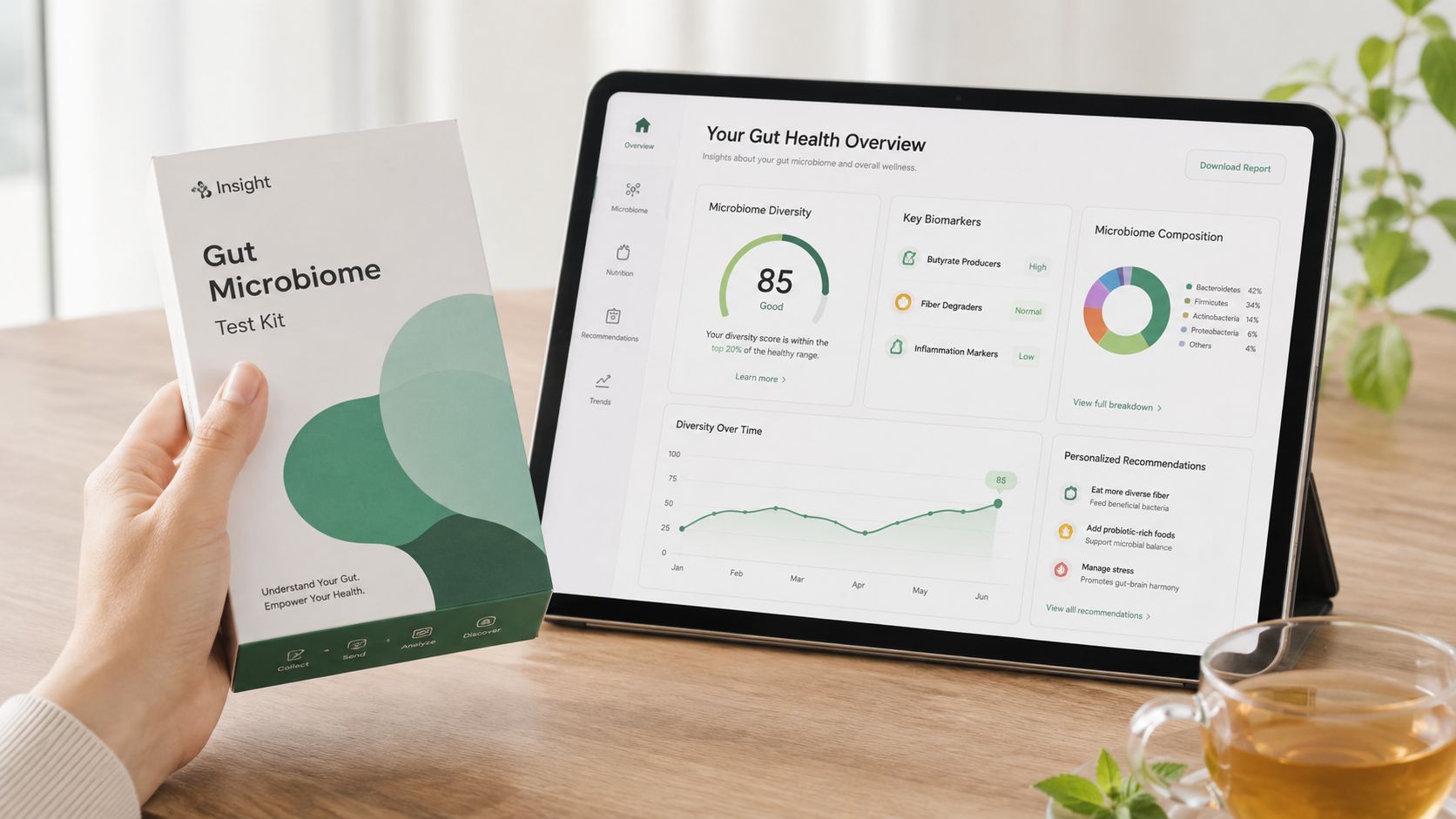
If you want a broad snapshot of your gut community, a consumer test can be informative as a descriptive profile. If you want to work up IBS, IBD, SIBO, or unexplained symptoms, the evidence base does not support treating a stool microbiome report as a stand-alone diagnostic tool (Lancet consensus; expert consensus summary).
That's where many buyers get misled. A polished action plan can feel medical, but unless the underlying signal is reproducible and clinically validated, it's still a descriptive layer built on top of uncertain inference.
Where the test is least likely to help
The science is especially thin when people want a single stool test to justify a personalized diet or supplement protocol. Recent guidance points to a consumer education gap here, because many buyers expect a nutrition plan, yet the evidence still doesn't support precise individualized diet prescriptions from one stool sample (consumer guidance).
For readers who are also looking at broader lifestyle ideas, gut microbiome balance strategies can be a useful starting point for general habits, but those strategies are not a substitute for clinical evaluation when symptoms are persistent.
Simple rule: use microbiome testing for profiling and hypothesis generation, not for self-diagnosing gut disease.
The most defensible use case is a supervised one, where a clinician interprets the data alongside symptoms, history, and standard workup. That's a very different claim from “best gut microbiome test” marketing.
Interpreting Reports Without Overestimating Utility
A microbiome report can be informative and still be read too confidently. The safest approach is to treat it as a snapshot of microbial composition, not a diagnosis or a prediction of future disease. Many consumer reports are designed to sound more certain than the evidence supports, especially when they rely on scorecards, rankings, or “optimal” ranges without clear clinical validation.
Read the report as data, not diagnosis
Start with taxonomy. Check whether the report identifies genus, species, or strain, because that level of detail changes how much weight any recommendation deserves. Then look for the method section. Shotgun metagenomics and 16S profiling do not offer the same resolution or functional depth, as method comparisons have shown.
Next, ask what each score means. A “diversity” number or composite health index can help you compare your sample against the company's internal framework, but it does not automatically translate into disease risk or treatment response. If the report moves quickly from microbial patterns to a personalized meal plan, the interpretation has gone beyond what the evidence can support.
Red flags in consumer reports
Watch for three things.
- Overconfident causation language: if the report implies a microbe caused a symptom, that is a red flag unless the evidence is direct and clinically established.
- Universal diet prescriptions: one stool sample cannot support precise individualized diet advice on its own, consistent with the Lancet consensus finding.
- Hidden uncertainty: if the company does not explain how much of the call is descriptive versus inferential, it is asking you to trust the conclusion more than the method.
Practical interpretation: if a finding changes your behavior, make sure the behavior is low-risk and broadly healthy, not a costly supplement stack built on a preliminary readout.
The most useful reports are the ones that state their limits plainly. A consumer test can still help organize a discussion with a clinician, but the report itself is not a diagnosis. That distinction keeps a descriptive snapshot from being mistaken for a treatment plan.
Practical Selection Checklist for Informed Buyers
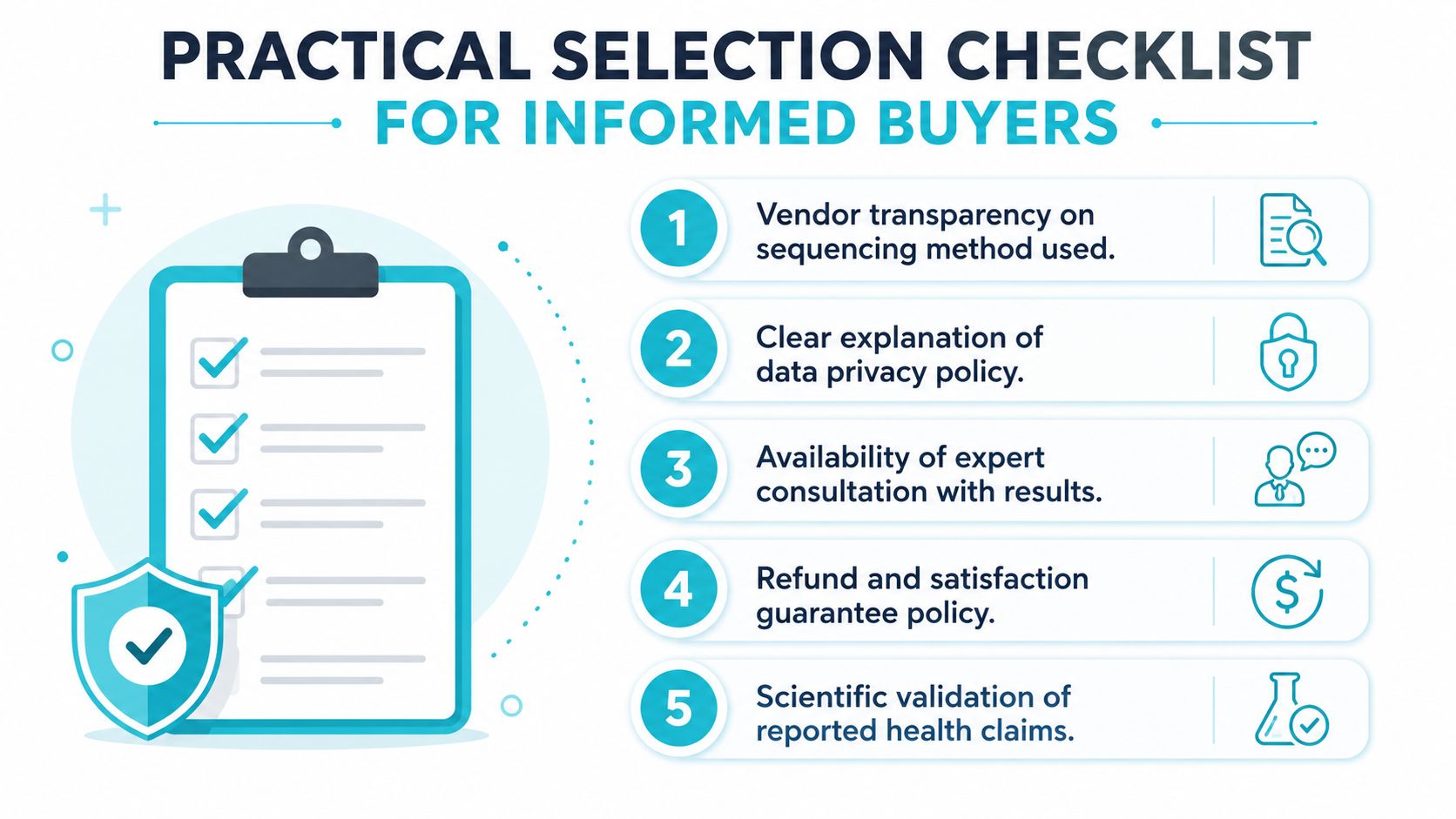
A better purchase decision starts with what the vendor can prove, not what the homepage promises. Prioritize transparency, analytical method, and limits on interpretation. A company that explains its workflow clearly but softens those details in marketing copy is already telling you something.
What to verify before buying
- Sequencing method: confirm whether the test uses 16S rRNA or shotgun metagenomics. The methods do not offer the same resolution or functional detail.
- Cross-platform reproducibility: ask whether the company has compared its results with standardized reference material or with another platform. If it cannot describe reproducibility, treat trend claims cautiously.
- Data privacy policy: read how the company stores, shares, and uses sample-linked data. This is often more relevant than product-page claims.
- Expert interpretation: check who reviews the report and whether interpretation is tied to a clinician or only to an automated dashboard.
- Refund terms: vague satisfaction policies often appear alongside aggressive marketing.
- Scientific claim language: if a vendor implies diagnosis-grade utility, compare that claim with current consensus evidence before buying.
How to weigh the checklist
Not every buyer needs the same level of scrutiny. A curiosity-driven buyer can focus on clarity and privacy. A person using the test in a supervised medical setting should put more weight on reproducibility, method disclosure, and explicit limits than on report design.
The strongest choice is often the most conservative one. A test that states less but supports its claims more cleanly is usually preferable to one that offers a polished, highly personalized narrative without showing how the result holds up across platforms. That is especially true when comparing the best gut microbiome test options across brands, because “personalized” often means descriptive reporting rather than clinically actionable evidence.
Buy the method, not the marketing.
If a company will not explain how it moves from stool DNA to a recommendation, assume the recommendation is weaker than it sounds. Even a useful consumer test should be treated as a descriptive snapshot first, with clinical meaning left to a clinician when symptoms or treatment decisions are involved.
Key Takeaways
If you only remember a few points, remember these:
- The best gut microbiome test is not the one with the longest report, it is the one with the clearest method and the most restrained claims.
- Shotgun metagenomics usually offers deeper resolution than 16S rRNA, but more detail does not guarantee clinical usefulness.
- Current evidence does not support using consumer microbiome tests as stand-alone tools to diagnose IBS, IBD, SIBO, or other gut disorders.
- Results can vary across companies because sequencing methods, databases, and reporting frameworks differ.
- For most buyers, microbiome testing is best used for descriptive profiling and question generation, not diagnosis or treatment planning.
- If you have persistent or serious symptoms, a doctor-led evaluation is more appropriate than self-testing.
In short: buy for transparency and curiosity, not for diagnostic certainty.
Summary
If you want the short version, focus on these points before you buy:
- Consumer gut microbiome tests are best treated as descriptive wellness tools, not stand-alone diagnostic tests.
- Current evidence does not support using these reports alone to diagnose IBS, IBD, SIBO, or most other gut conditions.
- Shotgun metagenomics usually provides deeper detail than 16S rRNA, but better resolution does not automatically create clinical usefulness.
- Results can vary across companies because methods, databases, and reporting frameworks are not standardized.
- The strongest test is usually the one with the clearest method, strongest transparency, and most cautious claims.
- If you have ongoing or serious symptoms, a doctor-led evaluation is more useful than self-testing.
Frequently Asked Questions About Microbiome Testing
Should I retest over time, and can I compare results across companies?
Retesting can be useful if you stay on the same platform and keep the sample workflow consistent. That gives you a chance to look for broad movement over time, but even then small shifts should be interpreted cautiously. Commercial microbiome tests often vary because labs use different sequencing methods, reference databases, and reporting rules, so a change may reflect the assay rather than the gut ecosystem itself.
Comparing brands is even less reliable. Independent cross-brand analysis confirmed that the same reference material can produce materially different outputs across services, which makes vendor-to-vendor trend lines hard to trust. If you want longitudinal data, keep the platform fixed and treat the report as a relative snapshot, not an absolute readout.
Can a microbiome test diagnose IBS, IBD, or SIBO?
Not by itself. Current consensus literature says routine clinical microbiome testing still has weak evidence and no consolidated direct proof that it improves management for common gastrointestinal or extraintestinal disorders (Lancet consensus).
Persistent symptoms need clinical workup. A gastroenterologist can decide which standard tests, if any, fit the picture better than a consumer stool report.
When should I involve a doctor instead of self-testing?
As soon as symptoms are ongoing, severe, or changing. Unexplained weight loss, bleeding, persistent diarrhea, and significant pain point to a diagnostic evaluation, not a wellness snapshot.
Consumer microbiome tests can still be useful for curiosity or broad tracking. They should not delay medical care when the question is clinical rather than exploratory.
What should I expect from the report itself?
Expect a descriptive profile, often with taxonomic categories, diversity summaries, and vendor-specific interpretation layers. Do not expect a definitive prescription from one stool sample, because current guidance does not support precise individualized diet advice from a single test.
The report is most useful when it sharpens your questions. It is less useful when it presents a confident answer that the method cannot really support.
So what is the best gut microbiome test right now?
For most buyers, the strongest option is the one that is most transparent about method, most cautious about claims, and clearest about reproducibility limits. If your goal is diagnosis, none of the current direct-to-consumer tests should be treated as a stand-alone answer.
If your goal is a structured wellness snapshot, choose the platform that explains its sequencing, privacy, and interpretation process most clearly. The better test is usually the one that shows its limits instead of hiding them.


