How to Invest in Blockchain Technology: Top Picks for 2026
Last reviewed: June 2026
You see a startup promising to token-ize data and wonder if you should put money in. You have $5,000 saved for a side project and want a clear path.
Investing without a plan can cost you years of earnings. A mis-step may erase your savings or tie up capital for years.
This post shows you step by step how to evaluate, purchase, and manage blockchain-related assets. It covers direct crypto purchases, developer-focused funds, token-sale participation, and building a small portfolio that matches a tech-savvy risk profile.
This article provides educational information only and does not constitute financial or legal advice.
Key Takeaways
- Define a clear risk budget before buying any blockchain asset
- Use regulated exchanges that verify identity and follow AML rules.
- Consider developer-oriented funds that own a mix of tokens and equity.
- Participate in vetted token sales only after reading the whitepaper and legal terms.
- Store private keys in hardware wallets, not on cloud services.
- Review your holdings quarterly and rebalance based on project milestones.

Understand Your Risk Profile
For a vetted, regularly updated list of tools that can help, explore our AI finance tools directory.
Your risk tolerance determines which blockchain investments make sense. If you can lose the entire amount without affecting daily living, you belong in high-volatility tokens. If you need stable growth, look at funds that hold a diversified basket of assets.
Start by writing down the maximum amount you could lose in a year. For a developer with a steady job, $2,000 to $3,000 of a $10,000 portfolio is a common range. Anything above that should be treated as speculative.
Assess your time horizon. A 3-year horizon allows you to ride market cycles. A 12-month horizon requires more liquid assets and less exposure to early-stage tokens.
Choose the Right Platform
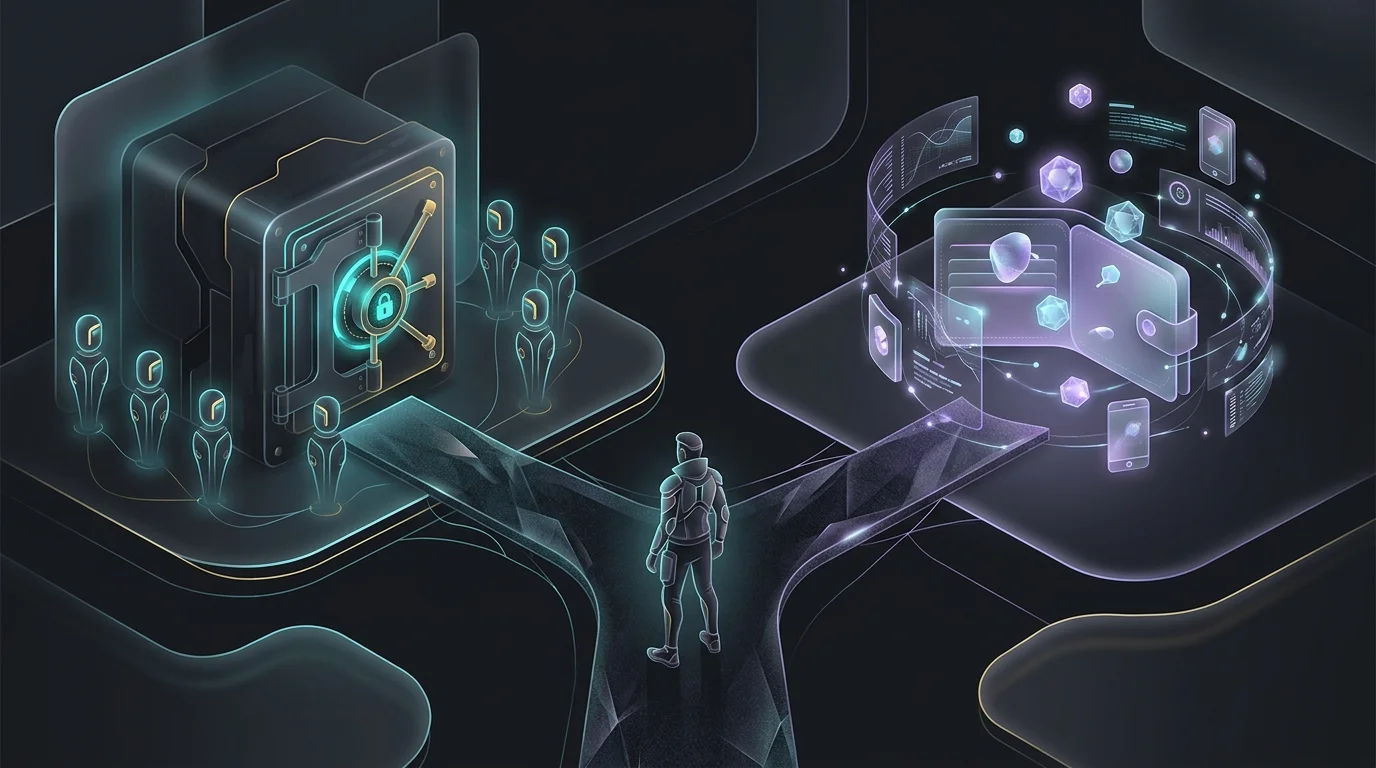
Not all exchanges are equal. Regulated platforms such as Coinbase, Kraken, and Gemini require KYC verification and are audited by state financial regulators. They offer insurance on custodial holdings up to $250,000 per user.
If you prefer non-custodial control, look at decentralized exchanges (DEXes) like Uniswap or SushiSwap. These require you to manage your own wallet and private keys. The trade-off is higher risk of loss due to user error.
Create an account on a regulated exchange first. Verify your identity with a driver’s license and a utility bill. Link a bank account to fund purchases with ACH transfers, which typically cost $0 to $1 per transaction.
Directly Buy Established Tokens
Most developers start with the major blockchains: Ethereum (ETH), Bitcoin (BTC), and Solana (SOL). These have the deepest liquidity and the most developer tools.
- Deposit $1,000 into your exchange account.
- Place a market order for 0.05 ETH (about $1,000 at current rates).
- Transfer the ETH to a hardware wallet such as Ledger Nano S Plus.
Holding the token in a hardware wallet protects it from exchange hacks. The wallet’s recovery seed should be written on paper and stored in a fire-proof safe.

Invest Through Developer-Focused Funds
Several asset managers now offer funds that target blockchain projects with strong developer ecosystems. Examples include the Blockchain Innovation Fund and the Crypto Developer Index. These funds hold a mix of tokens, equity in blockchain startups, and sometimes venture-stage tokens that are not yet listed.
To invest, open a brokerage account with a firm that offers these funds, such as Fidelity or Charles Schwab. Minimum investment is often $2,500. The fund’s prospectus will list the allocation percentages, fees (usually 1.5 % to 2 % annually), and the redemption schedule.
Participate in Token Sales and ICOs
Early-stage projects raise capital through token sales. Participation can yield large upside if the project succeeds, but the failure rate is high.
Follow these steps:
- Join reputable launch platforms like CoinList or Republic. They vet projects for compliance and security.
- Read the whitepaper in full. Look for clear token utility, a road map, and a team with verifiable credentials.
- Verify the legal structure. Some projects issue securities; others issue utility tokens. Consult a licensed attorney if unsure.
- Allocate no more than 5 % of your total blockchain budget to any single token sale.
When the sale opens, purchase the tokens with a stablecoin (USDC or USDT) to avoid price slippage. Transfer the tokens immediately to your hardware wallet.
Build a Small Portfolio of Layer-2 and Infrastructure Tokens
Beyond the big names, layer-2 solutions and infrastructure providers often grow faster. Tokens such as Polygon (MATIC), Arbitrum (ARB), and Filecoin (FIL) support scaling, storage, and smart-contract execution.
Allocate a portion of your budget (e.g., $500) to a basket of these tokens. Use a dollar-cost averaging (DCA) approach: buy a fixed dollar amount each week for four weeks. This smooths out price volatility.
Secure Your Holdings
Security is the most critical step. Follow these practices:
- Keep the hardware wallet firmware up to date.
- Enable a PIN on the device and set a passphrase for the recovery seed.
- Do not store private keys in cloud storage or email.
- Use a separate device for signing transactions, never a phone that also runs social media apps.
If you lose access to the wallet, the recovery seed is the only way to restore funds. Test the recovery process with a small amount before moving large balances.
Monitor and Rebalance Quarterly
Blockchain markets shift quickly. Set a calendar reminder every three months. Review each holding against the following criteria:
- Project activity: commits on GitHub, developer count, testnet launches.
- Market performance: price change relative to the overall crypto index.
- Regulatory news: any new guidance that could affect token classification.
If a token’s development stalls or its price drops more than 50 % without clear cause, consider selling and reallocating to a more active project or a stable fund.
Tax Implications
In the United States, the IRS treats crypto as property. Each sale, trade, or use of a token triggers a taxable event. Keep detailed records of purchase dates, amounts, and fair market value at the time of each transaction.
Use tax software that supports crypto, such as CoinTracker or Koinly. They can import exchange statements via API and generate a Form 8949 ready for filing. If you hold tokens for more than one year, you may qualify for long-term capital gains rates, which are lower than short-term rates.
Track your crypto taxes with CoinTracker.
(This is an affiliate link — see our affiliate disclosure.)
Stay Informed Without Getting Overwhelmed
The blockchain space produces daily headlines. To avoid analysis paralysis, limit your sources to three reliable outlets: a major finance newspaper, a developer-focused blog, and a regulatory update service.
Subscribe to a weekly newsletter that summarizes key events. Allocate 30 minutes each Sunday to read it, then decide if any new information warrants a portfolio change.
Related guides
- Best Blockchain Investment Funds
- How to Invest in Artificial Intelligence
- How to Invest in Tokenized Assets
- more on Best Metaverse Investment Opportunities
- Best Web3 Investment Opportunities
- How to Assess Investment Risk Tolerance: Your Guide to Making Informed
- How to Invest in the Metaverse
Frequently Asked Questions
Can I invest in blockchain without buying crypto?
Yes. You can buy shares of publicly traded companies that develop blockchain infrastructure, such as Nvidia or AMD, or invest in ETFs like Amplify Transformational Data Sharing ETF (BLOK). These vehicles provide exposure without handling private keys.
How much should a beginner allocate to blockchain?
A common guideline is 5 % to 10 % of your total investment portfolio. If you have $50,000 saved for retirement, $2,500 to $5,000 could go into blockchain assets. Adjust the percentage based on your risk comfort.
Are hardware wallets safe from all hacks?
Hardware wallets protect private keys from online attacks, but they are not immune to physical theft or user error. Keep the recovery seed offline and consider using a multi-signature setup for large balances.
What is the difference between a utility token and a security token?
Utility tokens grant access to a product or service within a blockchain ecosystem. Security tokens represent ownership or profit-sharing rights and are subject to securities regulations. The classification affects how you can buy, sell, and report them.
Should I use a decentralized exchange for my purchases?
Use a DEX only if you need a token not listed on regulated exchanges. DEX trades are irreversible and you must verify contract addresses carefully. For most major tokens, a regulated exchange offers better safety and support.
How often should I rebalance my blockchain portfolio?
Quarterly rebalancing works for most investors. If a token’s price moves dramatically or the project releases a major update, you may rebalance sooner. The goal is to keep your risk exposure aligned with your original plan.
Related Reading: What Is TrumpRx.gov? Good or Bad? Your Complete Guide to Lower Prescri | Your Guide to the Best Cyber Liability Coverage Options That Won’t Bre | Best Identity Theft Protection Plans in 2025: Secure Your Personal Dat