
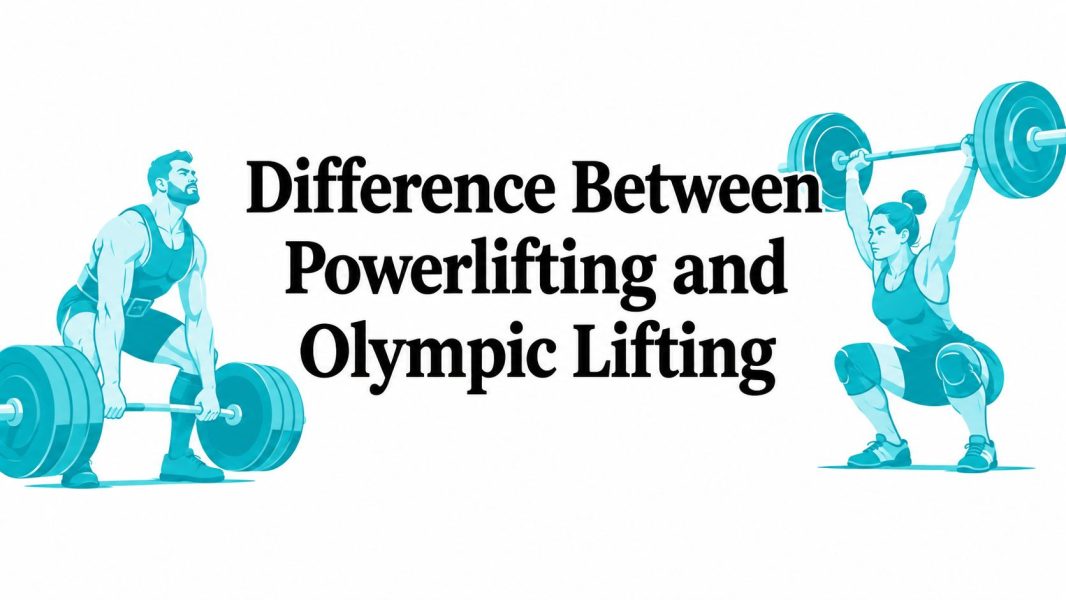
You're standing near the platform, watching one lifter grind a heavy squat while another pulls a bar from the floor and catches it overhead in a flash. Both are using barbells, both look serious, and both get called “strong,” but they're training for very different outcomes. The difference between powerlifting and Olympic lifting isn't just the lifts themselves, it's the kind of strength, speed, coordination, and long-term adaptation each sport asks from the body.
| Criteria | Powerlifting | Olympic Lifting |
|---|---|---|
| Competition lifts | Squat, bench press, deadlift | Snatch, clean and jerk |
| What gets tested | Maximal strength across three lifts | Explosive power and technical efficiency across two lifts |
| Scoring | Best valid attempt on each lift counts toward a three-lift total | Best snatch and best clean and jerk are added together for the total |
| Bar speed and feel | Slower, more grinding effort | Faster, more explosive movement |
| Technical feel | More straightforward to learn | More technically demanding and timing-dependent |
A lot of confusion starts because both sports use a barbell and both reward strong athletes. The difference shows up when you ask what kind of force the sport wants, how the meet is judged, and what kind of athlete tends to enjoy the work. Powerlifting is built around maximal force in three stable lifts, while Olympic lifting is built around speed, precision, and explosive power in two highly coordinated lifts.
Table of Contents
- Introduction to Two Strength Sports
- What Each Sport Is Trying to Achieve
- Competition Lifts and How They Are Judged
- Technique Speed and Physical Demands Compared
- Training Styles Injury Patterns and Who Each Sport Fits Best
- Summary
- Frequently Asked Questions
Introduction to Two Strength Sports
A beginner often sees these two sports in the same gym and assumes they are close cousins. One lifter is bracing for a squat, another is pulling a bar into an overhead catch, and both are handling serious weight. That resemblance hides a real split in purpose, training style, and the kind of athlete each sport tends to suit.
Powerlifting has a more recent organized federation history, with the International Powerlifting Federation founded in November 1972 and its first official World Championship held in 1973. Olympic weightlifting has a much older institutional footprint, with the International Weightlifting Federation founded in 1920 and listing 193 affiliated national federations as of January 2026. Those dates point to two different sport systems, not just two ways of lifting a barbell. The rules, the events, and the training all grow from that difference.
Practical rule: if the barbell is judged by how much weight you can move in a few big strength lifts, you are looking at powerlifting. If it is judged by how fast and cleanly you can move it overhead, you are looking at Olympic lifting.
The choice affects more than meet day. It changes what sessions feel like, how fatigue builds, how much technique you need to preserve, and which injury patterns you may need to manage over time. It also changes what progress looks like. In powerlifting, progress often means a bigger total across three lifts. In Olympic lifting, progress means sharper positions, cleaner execution, and a stronger two-lift total.
Force-velocity demands help make the split clearer. Powerlifting asks for high force with slower bar speed, like pushing a car out of mud with steady pressure. Olympic lifting asks for force produced quickly, more like snapping a rubber band, where timing and speed matter as much as strength.
That difference also affects who stays with the sport. Some athletes prefer the steadier feel and simpler movement paths of powerlifting. Others enjoy the rhythm, speed, and technical challenge of Olympic lifting. If you want a stronger base and straightforward strength work, powerlifting fits well. If you want explosive output and precise movement under load, Olympic lifting is the better match.
What Each Sport Is Trying to Achieve
A beginner can train hard in both sports and still miss the point if the goal is unclear. Powerlifting and Olympic lifting both use barbells, but they test different kinds of strength. Powerlifting measures how much force you can express across the squat, bench press, and deadlift. Olympic lifting measures how well you can produce force quickly in the snatch and clean and jerk. That difference changes coaching, programming, and the kind of athlete each sport tends to keep.
Powerlifting aims at maximal force
Powerlifting ranks lifters by the best valid attempt in each of the three lifts. The total rewards control, bracing, and the ability to move heavy weight through predictable patterns. A strong powerlifter is usually trying to add load while keeping the same movement clean and repeatable.
The sport's records reflect that focus. Ray Williams' 2019 raw squat world record of 2,436 pounds, as recorded in the federation database, shows how far a single expression of force can go. Powerlifting is built around that idea, lift the most weight you can under the rules, then build the total over time.
Olympic lifting aims at explosive precision
Olympic lifting uses two lifts, and each lift gets three attempts. The final ranking comes from the sum of the best snatch and the best clean and jerk. That makes the sport feel faster and less forgiving. A lifter has to generate force, then place the bar in the right position before the lift breaks down.
The sport also has direct Olympic history. It appeared in the inaugural 1896 Games, returned permanently in 1920, and has remained part of the Summer Games since then. That history helps explain why Olympic lifting is treated as both a strength sport and a technical event. The bar has to move fast, but the lift only counts if the positions are precise.
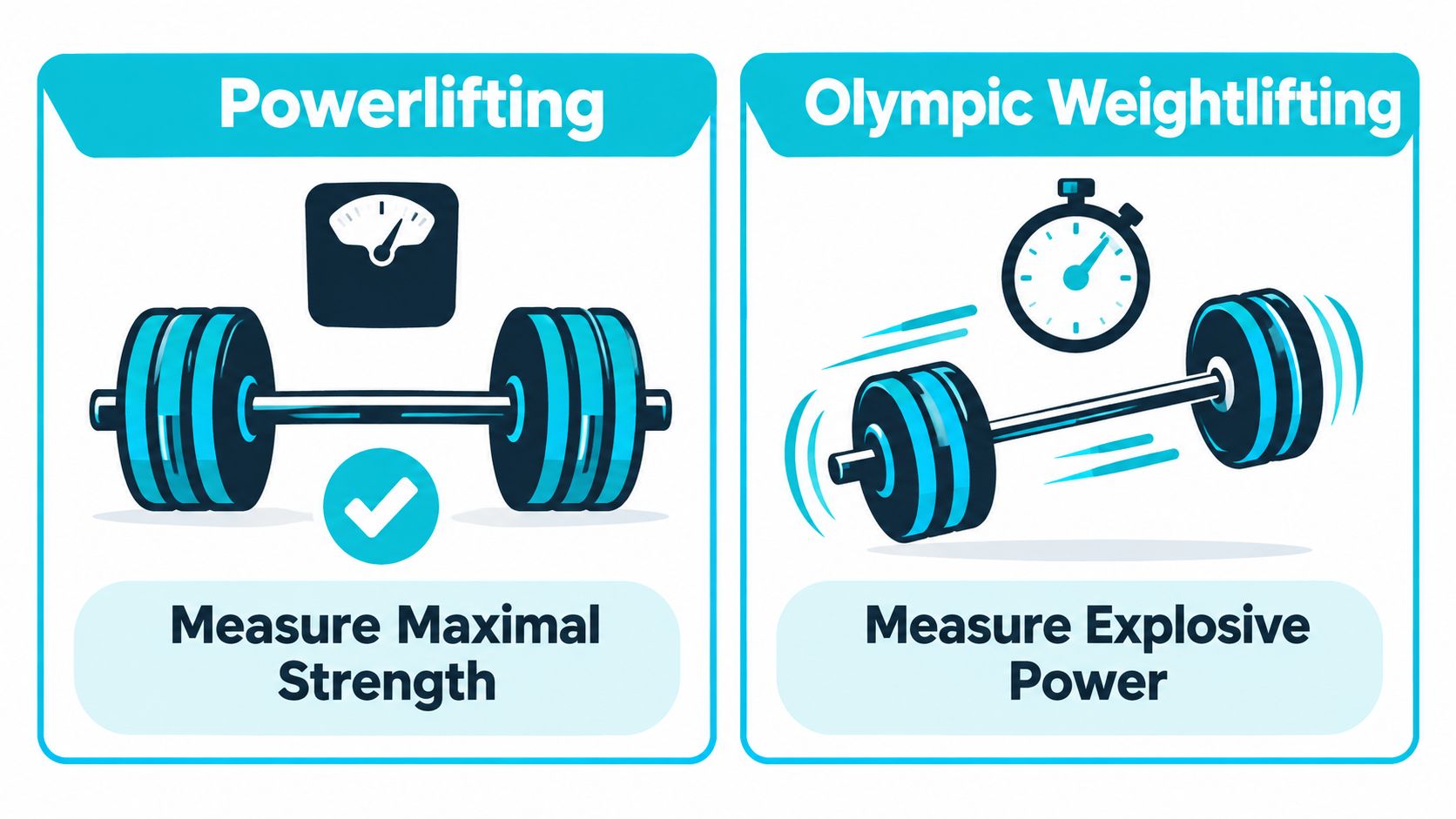
The scoring question is different in each sport. Powerlifting asks how much you can lift in three separate tests. Olympic lifting asks how much you can snatch and clean and jerk, then add those best attempts together. Two athletes can both be strong, yet one may fit the slower force demands of powerlifting while the other fits the speed and timing demands of Olympic lifting.
Competition Lifts and How They Are Judged
Meet day shows the split between the two sports right away. The barbell may look the same, but the scorecard changes everything. Powerlifting tests three lifts and adds up a three-lift total. Olympic lifting uses two lifts and adds up a two-lift total.
The lift list and attempt structure
Powerlifting competition uses the squat, bench press, and deadlift. In the IPF rule set, each lifter gets three attempts on each lift, and the best valid attempt on each lift counts toward the total. Olympic weightlifting uses the snatch and clean and jerk, also with three attempts in each lift, and the final ranking comes from the sum of the athlete's best snatch and best clean and jerk. That is the scoring split in plain terms.
A practical equipment note helps here too. If you are setting up a home or gym bench station and want a bench-specific barbell reference, choose a barbell for weight bench is a useful starting point for the bench press side of the sport. The gear matters because the lift setup changes how the bar should feel, even before the first attempt.
| Criteria | Powerlifting | Olympic Lifting |
|---|---|---|
| Competition lifts | Squat, bench press, deadlift | Snatch, clean and jerk |
| Attempts per lift | Three | Three |
| How ranking works | Best valid attempt on each lift creates a three-lift total | Best snatch plus best clean and jerk creates the total |
| Bodyweight categories | Divided by bodyweight classes, with published classes for men and women in the rule set | Also divided by bodyweight classes, with weight class structures tied to federations and record standards |
| Record history | Records are tracked within federation standards | Records have been repeatedly reset when weight classes changed |
How bodyweight and records fit in
Powerlifting meets are divided by bodyweight categories. One published rule set recognizes men's classes from 52.0 kg up to 140.0+ kg and women's classes from 44.0 kg up to 90.0+ kg in the IPF Technical Rules PDF. That structure lets athletes compete against others in similar bodyweight groups instead of only chasing one absolute standard.
Olympic weightlifting has another wrinkle. Its record history has been disrupted by class redesigns, with class restructures in 1993, 1998, 2018, 2025, and 2026 nullifying earlier marks, as shown in the IWF weight category history page. That creates a different record environment from powerlifting, where records are tracked more continuously within federation standards. It also makes simple side-by-side record comparisons misleading if the class changes are ignored.
The judging difference is straightforward. Powerlifting rewards the heaviest valid total across three slower tests, while Olympic lifting rewards the best combined performance across two faster tests.
That difference shapes training goals well before meet day. A powerlifter usually spends more time making one or two lifts more efficient under heavy load. An Olympic lifter spends more time making the snatch and clean and jerk repeatable under speed, fatigue, and technical pressure. The scoring system pushes each sport toward a different kind of athlete.
Technique Speed and Physical Demands Compared
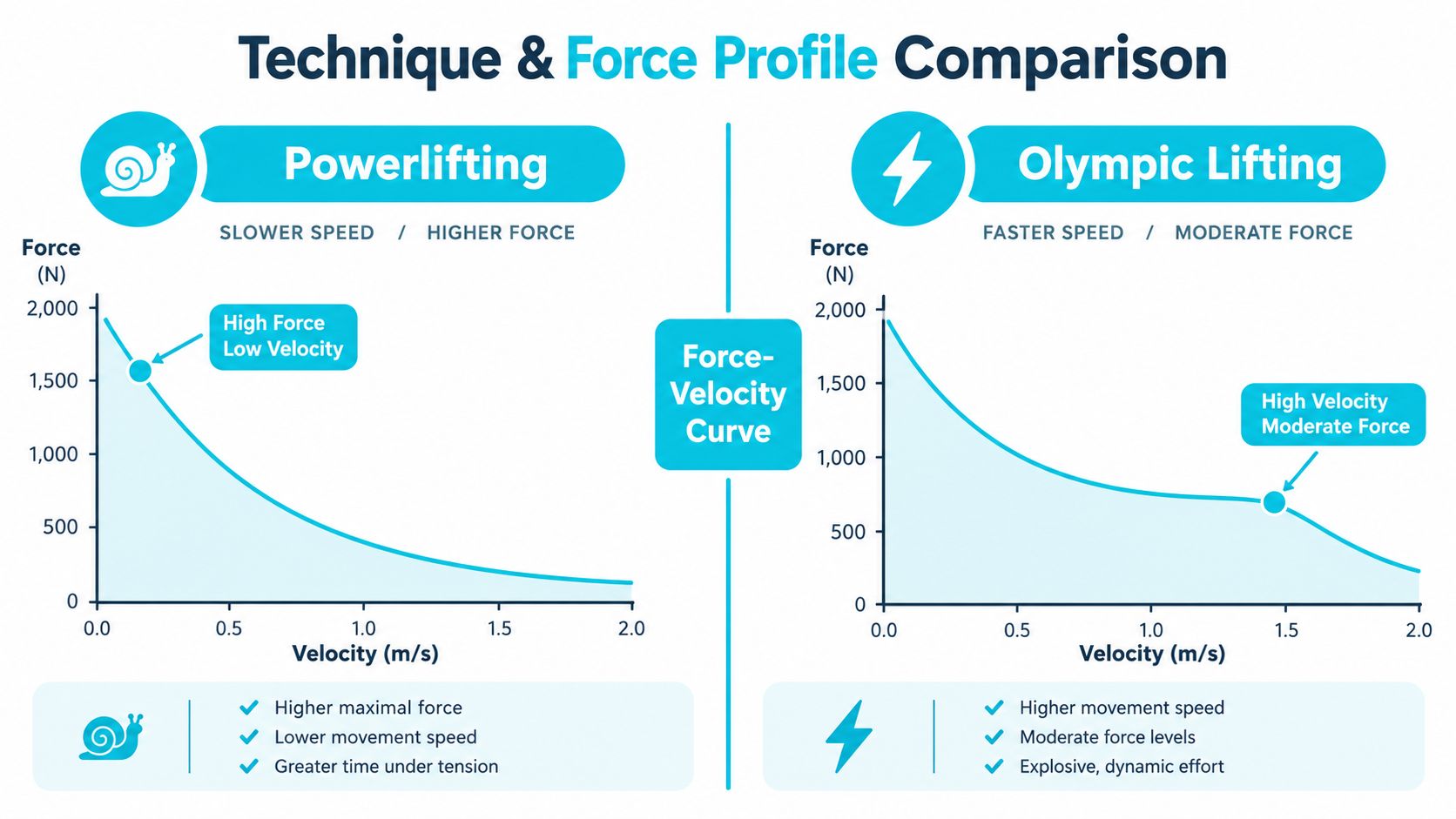
A beginner watching these sports side by side can spot the difference quickly. One bar moves like a heavy grind, the other snaps into place and demands a fast catch. That difference starts with the force-velocity spectrum. Powerlifting sits on the high-force, low-speed end. Olympic lifting sits closer to the high-force, high-speed end. The feel in the hands, hips, and back changes with that shift.
A biomechanical comparison cited barbell velocities of roughly 0.1 to 0.5 m/s for a deadlift versus about 1.5 to 2.0 m/s for the snatch, with concentric time under tension also much shorter in Olympic lifts, less than 1.5 seconds, than in powerlifting pulls, 3.0 to 8.0 seconds, in the A comparison chart showing the force-velocity curve differences between powerlifting and olympic weightlifting training techniques. Those numbers explain why powerlifting often feels like a long push against resistance, while Olympic lifting demands fast repositioning of force.
That difference changes programming. Powerlifting supports absolute-strength benchmarks because the lifter has more time to apply force into the bar. Olympic lifting trains explosive output and movement speed because the bar must move quickly and the athlete must get under it with precise timing. In other words, one sport asks how much force you can produce, the other asks how fast you can make that force count.
Mobility and timing change the technical demand
Powerlifting usually asks for enough mobility to squat to depth, bench with solid position, and deadlift from an efficient setup. Olympic lifting asks for more overhead and front-rack organization. The snatch and clean and jerk require the body to move under the bar quickly, then stabilize it overhead or in the rack position while fatigue rises.
That is why coaching cues diverge so much. In powerlifting, coaches often focus on bracing, body position, bar path, and tension. In Olympic lifting, the emphasis shifts to timing, position, rhythm, and receiving mechanics. Both sports are technical, but they reward different kinds of technical skill.
A useful way to tell them apart is simple. If the bar slows into a hard grind, you are seeing powerlifting-style demand. If the lift falls apart because the pull, turnover, or catch arrives late, you are seeing Olympic lifting-style demand.
The practical takeaway is that neither sport is just “heavy lifting.” One tests how much force you can express through slower, steadier patterns. The other tests how quickly and cleanly you can express force in a coordinated sequence. That is why athletes often feel these lifts differently in the hips, back, shoulders, and joints.
Training Styles Injury Patterns and Who Each Sport Fits Best
The sport you choose should fit your body, your schedule, and how much technical work you want to repeat each week. The better question is not which sport is “better,” but which one you can keep doing without fighting your own setup. Injury history, recovery, learning style, and the training group around you all affect that answer.
Different athletes thrive in different systems
Powerlifting often suits people who want clear progress and a simpler movement pattern to practice. Olympic lifting often suits people who enjoy technical drills, fast feedback, and coaching-led problem solving. That split matters because many lifters stay with the sport that matches how they like to learn, not the one that looks most impressive online.
The force-velocity demands also shape the experience. Powerlifting rewards steady force through slower lifts, while Olympic lifting asks for force that shows up fast and cleanly under a bar. That difference changes how sessions feel, which muscles get stressed, and how often technique has to be revisited.
Injury patterns are not identical either. A 2024 systematic review found both sports have relatively low injury incidence, but the common trouble spots differed. Olympic-style weightlifting showed 2.4 to 3.3 injuries per 1,000 training hours with more knee and hand or finger injuries, while powerlifting showed 1.0 to 4.4 injuries per 1,000 hours with more lower-back and pelvis, shoulder, and elbow or upper-arm issues. The same review also noted high pelvic floor dysfunction prevalence in female lifters in both sports, about 50% versus 9.3% in males. That matters for long-term training decisions, especially for lifters returning after childbirth. BMJ Open Sport & Exercise Medicine review
Participation trends point to a broader audience
The athlete base is widening too. Recent market data from Australia suggests 222,000 Australians aged 15+ participated in weightlifting at least once in 2025, including 100,000 women and 119,000 men. In powerlifting, women's share of competition entries rose from 17.3% in 2005 to 36% in 2025, with 40.2% in partial 2026 data. Those figures do not tell you which sport to pick, but they do show both sports reaching a wider mix of lifters. Australian participation and powerlifting entry data
Who each sport tends to suit
A beginner who wants a simple structure often finds powerlifting easier to follow because the main lifts are easier to repeat and track. Someone who likes coaching and technique work often feels more at home in Olympic lifting because small position changes can make a big difference.
Busy adults who want steady strength progress often prefer powerlifting because sessions tend to feel more predictable. Lifters who care more about explosiveness, timing, and speed usually fit Olympic lifting better, especially if those qualities matter in another sport or in daily movement.
Joint history can also steer the choice. A lifter with a cranky shoulder may tolerate one sport better than the other. A lifter with a sensitive low back may react differently to heavy deadlifts than to the repeated overhead and catch positions in Olympic lifting.
ThriveXDNA's fitness app can support either path with AI workouts, form-clip review, and nutrition tracking tools that help keep training consistent. For someone choosing between the two sports, that kind of feedback can make technique work and adherence easier to manage without changing the sport itself.
Summary
Pick powerlifting if you want lower-velocity, high-force lifting with a simpler competition structure, and pick Olympic lifting if you want fast, timing-heavy work that asks more of your positions under load. The better fit also depends on your injury history and on whether you prefer steady, repeatable training or frequent technique refinement, which helps more with long-term adherence. ThriveXDNA's fitness app can support either path with AI workouts, form-clip review, and nutrition tracking tools that help keep training consistent without changing the sport itself.
Frequently Asked Questions
Is Olympic lifting harder than powerlifting?
They're hard in different ways. Olympic lifting has the steeper technical learning curve because the snatch and clean and jerk demand timing, speed, and precise positions. Powerlifting is less complex to learn at the start, but it still requires serious strength, bracing, and efficient execution to compete well. The question is whether you mean harder to learn or harder to express maximum effort.
Which sport builds more absolute strength?
Powerlifting is the better match for absolute strength. It focuses on maximizing force in the squat, bench press, and deadlift, and its scoring rewards the heaviest valid total across those three lifts. Olympic lifting builds strength too, but it emphasizes fast force production and technical precision more than grinding maximal efforts.
Which sport is better for explosiveness?
Olympic lifting is the more direct choice for explosiveness. The snatch and clean and jerk demand high bar speed, short pull times, and rapid movement under the bar. Powerlifting sits more on the low-speed, high-force end of the spectrum, so it's better suited to absolute strength than explosive output.
How are competitions scored in each sport?
Powerlifting gives each lifter three attempts on the squat, bench press, and deadlift, and the best valid attempt on each lift adds up to the total. Olympic lifting also gives three attempts in each lift, but only the best snatch and best clean and jerk count, and those two numbers are added together for the final score.
Which sport is easier for beginners?
Powerlifting is usually easier for beginners because the lift pattern is more straightforward and the competitive structure is simpler to understand. Olympic lifting can be learned, but it usually takes more technical practice and more coaching attention to get the positions and timing right.
How should I choose if I care about injury history?
Look at the patterns, not just the total injury rate. The review cited earlier found more lower-back, shoulder, and elbow issues in powerlifting, while Olympic lifting showed more knee and hand or finger injuries. That doesn't make one sport safe and the other unsafe, but it does help you and your coach think about fit, sustainability, and what needs the most attention in training.
If you want training support that matches your lifting style, ThriveXDNA gives you AI workouts, form-clip review, and nutrition tools that help you stay consistent while you build strength or power. Visit ThriveXDNA to see how its fitness tools can support your next phase, whether you're learning the squat, bench, and deadlift or refining the snatch and clean and jerk.