


Last reviewed: June 2026
Insurance fraud drains roughly $40 billion a year from US property and casualty carriers, according to FBI estimates, and that figure does not count the cycle-time cost of sending a field adjuster to a tow yard 3 to 5 days after a collision when the car could have been photographed from a phone in minutes. Tractable attacked that second problem and did it well, building computer-vision models that turn damage photos into repair estimates fast. If you are researching tractable alternatives, you have probably already figured out that photo estimating is only one piece of the claims workflow, and that Tractable’s strength in that lane does not extend to fraud triage, liability decisioning, or workers compensation case management.
This guide covers the tools that actually address those adjacent problems: CCC Intelligent Solutions, Shift Technology, EvolutionIQ (now part of Guidewire), Snapsheet, and Mitchell Enlyte. Each one occupies a distinct position, and choosing between them is less about finding the ‘best’ AI claims platform and more about diagnosing which workflow is actually broken in your organization. You can browse additional AI insurance tools with use-case filters in AI insurance tools directory. The comparison below is structured around job-to-be-done rather than vendor marketing categories, because that framing tends to produce better procurement decisions.
Key takeaways
- Tractable’s computer-vision photo estimating for auto and property damage finds its closest structural rival in CCC Intelligent Solutions, which brings deeper repair-shop network integration but sells a broader platform rather than a point solution.
- Shift Technology operates in fraud detection and claims-decision support, not damage estimation; it is more accurately a complement to photo-AI tools than a substitute for Tractable.
- EvolutionIQ was acquired by Guidewire in 2023 for approximately $73 million and now targets workers compensation and long-term disability claims through Guidewire ClaimCenter, a segment Tractable does not address.
- Snapsheet positions itself as a full intake-to-payment virtual claims workflow, which makes it a different type of alternative: it reduces adjuster involvement across the whole claim, not just the estimating step.
- None of these vendors publish a rate card; all operate on enterprise contracts, and implementation timelines typically run 3 to 12 months from signed agreement to production.
What Tractable Does and Where the Boundary Falls
Tractable applies deep-learning models to damage photos submitted after auto accidents or weather events and returns severity classifications, repair cost estimates, and total-loss recommendations without requiring a physical inspection. The company has been refining this capability since roughly 2014, and its 2020 Series D round valued it at around $1 billion, which reflected both market interest in AI-assisted claims and the difficulty of building training datasets large enough to make computer-vision estimating reliable across vehicle types and damage patterns.
The boundary of what Tractable does is worth stating precisely before you evaluate alternatives. Its models are trained on images of physical damage, so they have nothing to offer at first notice of loss when no photos yet exist, nothing to say about whether a claim looks fraudulent based on policyholder history, and no module for the injury trajectory of a worker who filed a repetitive-stress claim 8 months ago. Carriers sometimes assume that a strong estimating AI generalizes across the claims lifecycle. It does not, and recognizing that limitation is the clearest way to identify which tractable alternative actually matches your situation.
CCC Intelligent Solutions: Repair Network Depth as a Differentiator
CCC Intelligent Solutions, which trades publicly under the ticker CCCS after going public via SPAC in 2021, is the closest structural competitor to Tractable in auto physical damage estimating and total-loss valuation. CCC has been embedded in the collision repair supply chain for decades, connecting carriers, body shops, parts suppliers, and OEM data sources in a way that a newer AI entrant cannot replicate quickly. When you file a personal auto claim with many large US carriers today, the estimate is already running through CCC’s infrastructure whether or not the carrier mentions it. See the National Association of Insurance Commissioners for official guidance.
CCC added AI-assisted photo estimating to its platform, which means carriers already using CCC for total-loss decisions can expand into image-based assessment without adding a new vendor relationship. That integration advantage is real, but the trade-off is equally real: CCC sells a broad workflow platform, not a point solution. If you only need computer-vision estimating and your existing claims system handles everything else adequately, CCC’s licensing model may be broader and more expensive than your use case requires. Tractable’s appeal to some procurement teams has been exactly its narrowness, the ability to drop an AI estimating layer into an existing stack without touching the rest of the workflow.
Where CCC’s network data earns its keep is in estimate calibration. OEM parts pricing, regional labor rates, and body shop cycle-time histories let CCC’s estimates reflect what repairs actually cost in a specific market rather than a national average. For carriers writing high-volume personal auto in markets where CCC has deep body shop penetration, that calibration can reduce supplement rates, the back-and-forth between shops and carriers over initial estimates that are too low, which is one of the most persistent friction points in the auto claims workflow.
Shift Technology: A Different Problem Entirely
Shift Technology is not a replacement for Tractable in the way that CCC is. It does not analyze damage photos, does not produce repair estimates, and does not compete for the same budget line. Shift applies machine learning to structured claims data, policyholder history, claim timing patterns, third-party relationships, and payment flows, to flag suspicious claims at intake and surface subrogation recovery opportunities that adjusters would otherwise miss. The company covers auto, property, and health lines and has built its models across a network of insurer clients in North America and Europe.
For a carrier whose financial leakage is coming from staged accidents, inflated invoices, or soft-tissue fraud rather than from slow estimating, Shift is a more logical starting point than any photo-AI tool. Shift’s products sit at the triage and decision layer of the claims process. You would use Shift to determine which claims qualify for fast-track straight-through processing and which ones need manual scrutiny, then use a tool like CCC or Tractable to generate the actual repair estimate on the files that clear fraud review. The two capabilities are adjacent, not competing.
Shift raised over $320 million in total funding before reaching profitability. That scale reflects what fraud AI actually costs to deploy correctly: models trained on pooled industry data need to be calibrated to each carrier’s own claims history and specific lines of business, then monitored continuously because fraud patterns shift as bad actors adapt. Expect 6 to 12 months from contract to meaningful production quality, and build that timeline into your evaluation budget before comparing it against a vendor’s headline numbers.
EvolutionIQ and Guidewire: Long-Duration Claims Are a Different Game
Workers compensation and long-term disability claims behave nothing like an auto damage case. An injured worker’s recovery trajectory depends on diagnosis, treatment adherence, employer cooperation, attorney involvement, and jurisdiction-specific rules, and predicting which open files will become multi-year, high-cost cases requires a model trained on injury outcomes rather than repair photos. EvolutionIQ was purpose-built for this problem and was acquired by Guidewire in 2023 for approximately $73 million. The technology now lives inside Guidewire ClaimCenter as an integrated intelligence layer.
The Guidewire integration changes how you should think about EvolutionIQ in a procurement context. If your claims management system is already Guidewire ClaimCenter, accessing EvolutionIQ’s prioritization logic is a platform expansion with a relatively defined integration path. If you are on a different claims system, the evaluation question becomes whether the value of long-duration claim intelligence justifies either a Guidewire migration or a standalone integration project. That is a materially different cost threshold, and it is worth surfacing early in any demo cycle rather than at the contract stage.
EvolutionIQ’s core function is surfacing which open files are most likely to extend, balloon in cost, or miss return-to-work targets early enough for intervention to matter. Case managers at carriers and third-party administrators typically carry 80 to 150 open files at once. Without algorithmic prioritization, high-risk cases receive the same attention cadence as routine ones until the trajectory is already set. The system also suggests next-best actions within a file, which is particularly useful for adjusters with less than 3 years of experience in long-duration claims, where pattern recognition across complex medical and legal variables takes years to develop organically.
Snapsheet: Virtual Claims as a Workflow Strategy
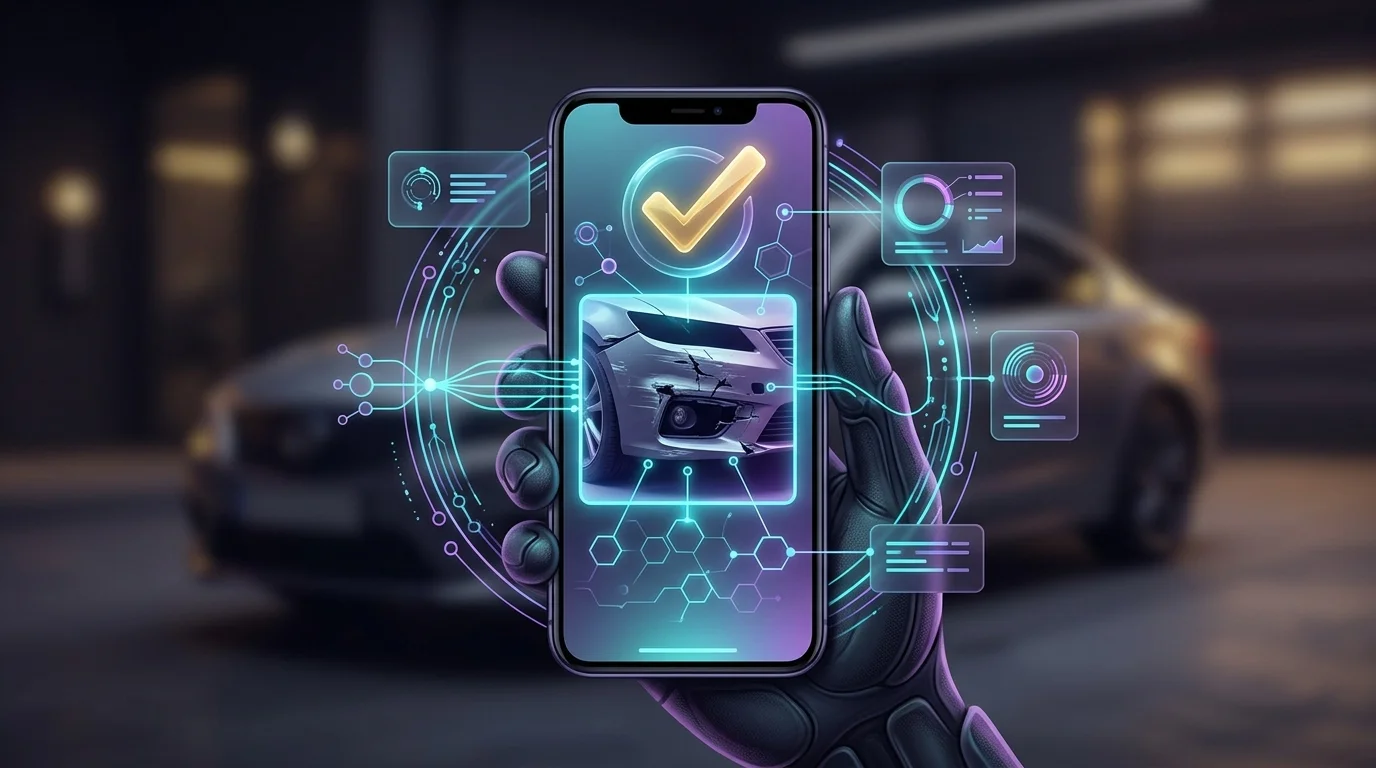
Snapsheet operates at a different level of abstraction than the other tools in this comparison. Where Tractable and CCC focus on damage quantification and Shift focuses on fraud scoring, Snapsheet is designed around the full intake-to-settlement workflow for carriers that want to minimize or eliminate field adjuster involvement across high-volume simple claims. Policyholders submit photos and claim information through a branded mobile experience; Snapsheet routes the claim through virtual appraisal, estimate review, and payment disbursement without requiring anyone to physically visit the vehicle.
The use case where Snapsheet earns its keep is the segment of claims below a certain severity threshold, often set at $5,000 to $8,000 depending on the carrier’s risk tolerance, where a physical inspection adds cycle time without materially improving estimate accuracy. For a personal auto carrier with a large volume of minor collision claims in urban markets, reducing field adjuster involvement on that segment can cut cost-per-claim on those files by a meaningful amount while also improving the policyholder experience through faster resolution.
The framing to carry into any Snapsheet evaluation: it is a claims workflow platform that includes photo assessment as a component, not a computer-vision AI company that also has a workflow layer. That distinction matters when you compare it to Tractable in a procurement conversation. Tractable’s value is in the accuracy and speed of the AI estimate. Snapsheet’s value is in eliminating the adjuster review steps that often eat back the cycle-time savings from a faster estimate. If your bottleneck is the estimating step itself, Tractable or CCC is the right comparison. If your bottleneck is the total end-to-end claims process on simple files, Snapsheet addresses a broader problem.
Mitchell Enlyte: Estimating and Managed Care in One Platform
Mitchell, Genex, and Coventry merged under the Enlyte brand in 2021, creating a platform that covers auto physical damage estimating on one side and workers compensation managed care, including medical bill review, pharmacy benefit management, and care coordination, on the other. For an insurer or third-party administrator that handles both auto property claims and bodily injury or workers comp cases, Enlyte’s combined footprint reduces the number of vendor integrations your claims system needs to maintain.
Mitchell’s WorkCenter and RepairCenter tools have been used by auto carriers for damage estimating for years and are integrated with many of the same body shop networks as CCC. The estimating capability competes in the same lane as Tractable’s core function, but similar to CCC, it tends to come as part of a broader platform rather than as a standalone AI layer. Carriers that are already managing workers comp or bodily injury claims alongside auto physical damage may find the Enlyte combination more economical than buying separate best-of-breed tools for each workflow and maintaining integration work between them.
The managed care side of Enlyte adds a capability that none of the other tractable alternatives in this article cover: medical bill review and pharmacy cost containment on bodily injury and workers comp claims. If your loss ratio pressure is coming from medical spend on liability claims rather than from repair estimate accuracy, that capability may be more directly relevant to your financial situation than any photo-AI tool. That is a useful signal for prioritizing which vendor conversation to have first.

A Lane-by-Lane Decision Framework
The practical test when evaluating tractable alternatives is not which AI is most technically advanced but which workflow is actually generating loss ratio pressure or operational cost. Four distinct problems map to four distinct categories of tool. If your adjusters are waiting too long for damage estimates on auto or property claims, the photo-estimating lane covers Tractable, CCC Intelligent Solutions, and Mitchell Enlyte’s auto side. If your fraud leakage is the financial driver, Shift Technology is the more logical evaluation start. If your workers comp or disability reserves are unpredictable and case managers are reacting rather than intervening, EvolutionIQ within Guidewire addresses that problem. If you want to reduce field adjuster involvement across the full workflow on high-volume simple claims, Snapsheet’s virtual model targets that specific cost structure.
Your existing technology stack is the second filter. CCC and Mitchell Enlyte are easiest to adopt if you already have touchpoints with their body shop networks or managed care infrastructure. EvolutionIQ now favors or requires a Guidewire ClaimCenter relationship. Tractable and Snapsheet are more integration-neutral, which is part of their appeal to carriers that want to add AI capability without committing to a platform migration. None of these are fast to deploy; expect 3 to 9 months from contract to production regardless of vendor choice, and plan your implementation resourcing accordingly.
Claim volume is the third filter, and it is underweighted in most evaluations. Fraud AI from Shift requires enough claims history to calibrate models that outperform generic benchmarks. Carriers writing fewer than 50,000 annual claims in a given line may find that the quality they receive reflects the vendor’s pooled network data more than their own book’s characteristics. Photo estimating tools scale down more gracefully and can add value at lower volumes. Workers comp and disability AI depends on open-case volume more than written-premium volume; a carrier with 500 open long-duration files is a plausible EvolutionIQ candidate, while one with 50 open files probably cannot justify the implementation cost against the expected benefit.

What No Vendor Will Tell You in the First Demo
Every vendor in this category leads with accuracy and speed. What they do not lead with is the operational overhead of keeping AI claims tools performing after go-live. Fraud models drift as bad actors adapt their behavior patterns, photo estimating models need retraining when repair costs shift because of parts inflation or labor market changes, and injury-trajectory models need recalibration when return-to-work norms shift in specific jurisdictions. Ask each vendor directly how they handle model refresh cycles, who bears responsibility for performance monitoring, and what the typical contract term looks like relative to the implementation timeline. If the contract runs 3 years and implementation takes 12 months, you are buying 2 years of actual production value, not 3.
Pricing transparency is also worth pressing on during evaluation. None of the vendors covered here publish a rate card. Pricing is custom, enterprise, and variable based on claim volume, lines of business, and the scope of integration work. Budget estimates from peer carriers at industry conferences or through broker networks often give you a more realistic anchor than anything a vendor will share in a first conversation. Request references specifically from carriers of similar size and book composition to yours, because the economics look meaningfully different at 200,000 claims per year versus 2 million.
One more honest note on the timeline: AI claims tools take longer to show measurable financial impact than most procurement timelines anticipate. Photo estimating tools can show cycle-time improvement in 60 to 90 days of production. Fraud AI typically requires 6 to 18 months before the combination of model accuracy and adjuster adoption generates auditable loss ratio impact. Long-duration claim prioritization tools need a full claim cohort to mature before outcome data confirms whether early intervention actually shifted the trajectory. Build those timelines into your business case before you present it internally, or you will be defending the investment before it has had time to prove itself.
Related guides
- What Is TrumpRx.gov? Good or Bad? Your Complete Guide to Lower Prescription Drug Prices in 2026
- Your Guide to the Best Cyber Liability Coverage Options That Won’t Break the Bank
- Best Identity Theft Protection Plans in 2025: Secure Your Personal Data Now
- Best AI Claims Automation Software for
- How Does Lemonade AI Claims Work? Inside the Bot
- Best AI Pet Insurance Apps for
- What Is the Best AI Insurance App in 2026?
Sources
Summary
Tractable’s photo-AI estimating sits in a wider field of alternatives, and the right fit depends on what you actually need automated. If your gap is damage estimating with repair-shop reach, CCC’s network depth stands out; if it’s fraud detection, Shift complements rather than replaces Tractable; long-duration claims like workers comp point to EvolutionIQ inside Guidewire ClaimCenter; and if you want the full intake-to-payment workflow off adjusters’ plates, Snapsheet fits that broader scope. Every one of these runs on custom enterprise contracts, so plan on requesting pricing directly and budgeting 3 to 12 months from signed agreement to production before you commit.
Frequently asked questions
Is Tractable still a competitive photo estimating tool in 2026?
Tractable remains a credible option for carriers that want a standalone AI layer for auto damage photo estimating. Its main competition in that specific lane is CCC Intelligent Solutions, which offers comparable AI photo assessment with deeper repair shop network integration. Whether Tractable or CCC is the better fit depends on whether you need a narrow point solution or a broader estimating platform. Carriers already using CCC for total-loss valuations often find it more practical to expand within that relationship than to add Tractable as a separate system.
Can photo-estimating AI fully replace a human adjuster?
Not across all claim types. Photo AI tools reduce adjuster involvement on straightforward auto damage cases below a severity threshold that most carriers set somewhere between $5,000 and $10,000. Above that threshold, or whenever liability is disputed or the damage pattern is unusual, human review remains standard practice. Fraud detection tools like Shift reduce the proportion of claims requiring full manual investigation but still depend on human adjusters to act on flagged files. The more accurate framing is that these tools redirect adjuster time from routine cases to complex ones rather than eliminating adjuster roles.
What is the difference between Shift Technology and Tractable?
Tractable analyzes photos of physical damage to produce repair cost estimates. Shift Technology analyzes structured claims data to detect fraud patterns and support coverage decisions. They address different problems at different points in the claims lifecycle and are typically used together rather than in place of each other. A carrier might use Shift at intake to triage suspicious claims and flag files for investigation, then use Tractable or CCC to generate the repair estimate on the claims that clear fraud review.
Does EvolutionIQ work for carriers not on Guidewire?
Since Guidewire acquired EvolutionIQ in 2023, the primary integration path runs through Guidewire ClaimCenter. Carriers on other claims management platforms would need to evaluate whether a standalone API integration is available and what the support model looks like outside of the ClaimCenter ecosystem. That question is best raised directly with Guidewire early in any evaluation, because the answer may affect whether the economics of the project make sense without a broader Guidewire relationship.
How do I decide between Snapsheet and Tractable for auto claims?
The decision depends on where your bottleneck actually sits. If the problem is the estimate itself taking too long or requiring a field visit, Tractable (or CCC) addresses that step specifically. If the problem is the end-to-end process on simple claims, including intake, routing, review, and payment, taking too long even after you have a fast estimate, Snapsheet targets the full workflow. Many carriers find that deploying a fast estimating tool reveals a new bottleneck downstream in adjuster review steps. If you anticipate that pattern, evaluating Snapsheet’s workflow model alongside a pure photo-AI tool is worth the extra time.
How long does implementation typically take for these AI claims tools?
Across Tractable, CCC, Shift, EvolutionIQ, Snapsheet, and Mitchell Enlyte, implementation timelines generally run 3 to 12 months from signed contract to live production. Fraud AI tends toward the longer end because models require calibration on your own claims history. Photo estimating tools are typically faster, especially when plugging into an existing claims intake system rather than building new policyholder-facing mobile interfaces. Long-duration claims AI sits in the middle; the integration is often manageable within 6 months, but meaningful outcome data takes a full claim cohort to accumulate.