
You've booked a gym session, downloaded a workout app, and promised yourself that this time you'll stay consistent. Then work runs late, your form feels uncertain, and the plan disappears by the second week. At that point, the question isn't fitness coach vs personal trainer. It's which kind of support solves the problem that keeps stopping you.
A personal trainer usually helps you execute exercise safely, improve technique, and follow an individualized program. A fitness coach may work across exercise, accountability, nutrition, recovery, stress, and habit formation. The roles overlap, but the delivery model matters just as much as the title. You might need hands-on supervision, broader behavior support, or a blend of live sessions and app-based guidance.
Table of Contents
- Who You're Actually Looking For
- Defining the Two Roles
- Credentials, Scope, and Market Reality
- When Each Role Wins
- How Thrive X Fitness Supports Each Role
- Fitness Coach vs Personal Trainer Decision Checklist
- Next Steps for Clients and Coaches
- Summary
- Frequently Asked Questions
Who You're Actually Looking For
Consider a client who knows that strength training would help, but has never learned how to use gym equipment. Their main obstacle is technical. They need someone nearby to adjust posture, demonstrate a movement, choose an appropriate progression, and intervene when fatigue affects form. A personal trainer is usually the stronger first choice because the service centers on supervised exercise delivery.
Now consider a different client. They understand the basics, but their routine collapses whenever travel, family demands, poor sleep, or stress disrupts the week. They don't necessarily need another workout demonstration. They need planning, check-ins, accountability, and practical support that connects exercise with everyday behavior. A fitness coach may be better suited to that job.
The distinction becomes clearer when you name the actual friction:
- You're unsure what to do: Prioritize a personal trainer who can assess your starting point and teach movement.
- You're unsure how to stay consistent: Look for a fitness coach who works on routines, accountability, and sustainable habits.
- You want nutrition and lifestyle support: Confirm that the professional is trained and operating within an appropriate scope.
- You need both: Choose a hybrid service that combines live exercise guidance with remote programming and follow-up.
A client returning after a long break might begin with in-person training to rebuild confidence, then shift some support online once technique is reliable. Another client may already use mobile exercise apps and wearable technology, making remote review and structured check-ins more useful than frequent face-to-face sessions. The right answer depends less on which title sounds more impressive and more on where your plan breaks down.
Practical rule: Hire for the problem you can't solve alone, not for the label printed on a business card.
Defining the Two Roles
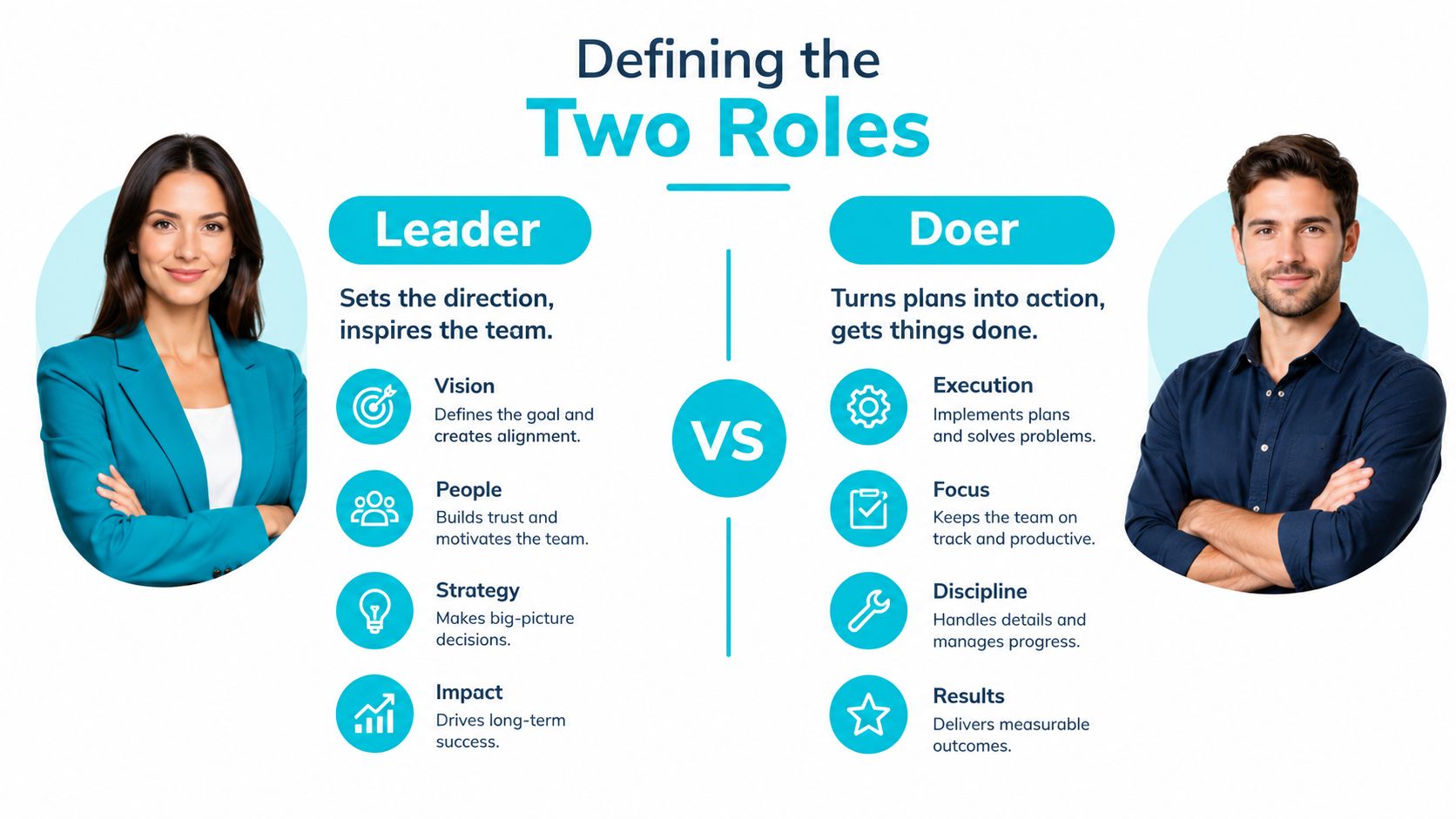
A personal trainer is generally responsible for individualized exercise programming and supervised delivery. The role can include assessing a client, teaching technique, selecting exercises, managing intensity, tracking progress, and modifying sessions. The ACSM Certified Personal Trainer exam outline describes the role as planning and implementing exercise programs for healthy individuals or people with medical clearance, while supporting motivation and adherence across strength, endurance, flexibility, and cardiorespiratory fitness.
A fitness coach takes a wider view of the client's behavior around training. Coaching can include habit formation, accountability, nutrition guidance within scope, recovery, sleep, stress, and lifestyle planning. A training resource comparing fitness coaching and personal training distinguishes exercise science and workout design from broader support for behavior change and sustainable routines. For readers comparing support models, the Mayo Clinic's physical fitness guidance offers a useful overview of how exercise, consistency, and routine fit together. If you want a general primer on weekly activity targets, the Physical Activity Guidelines for Americans provide another useful benchmark.
| Factor | Personal trainer | Fitness coach |
|---|---|---|
| Primary job | Exercise prescription, technique, and progression | Consistency, behavior change, and broader wellness support |
| Typical delivery | In-person, small group, or virtual sessions | In-person, virtual, app-supported, or blended |
| Client need | “Show me how to train safely and effectively” | “Help me make this routine last” |
| Common tools | Movement assessment, workout plan, live form correction | Check-ins, habit tracking, nutrition support, remote accountability |
| Scope boundary | Exercise programming and referral when appropriate | Lifestyle support without replacing qualified medical care |
The credentialing baseline also differs by service context. U.S. personal trainers are commonly expected to hold a high school diploma, CPR/AED certification, and an NCCA-accredited credential, according to the U.S. Bureau of Labor Statistics overview of fitness trainers. Readers who want to verify recognized accreditation can also review the Institute for Credentialing Excellence and NCCA overview. A broader coaching title doesn't automatically tell you what training the professional has, so clients should ask directly about certifications, experience, insurance, and scope.
Credentials, Scope, and Market Reality
Credentials matter because they connect professional claims to operational safeguards. Many commercial gyms, employers, and insurers prefer or require an NCCA-accredited certification for personal trainers. NASM's certification FAQ notes that most U.S. states don't legally require a license to train clients, while certification, hiring requirements, and liability coverage still shape whether a professional can work in a particular setting.
That difference is important for both clients and new coaches. A title may describe a service model, but it doesn't replace proof of competence. The ACE personal trainer certification information states that most fitness trainers hold certification in the area they teach and commonly need CPR, first aid, and AED certification. Those qualifications support emergency readiness and demonstrate that the trainer has met a recognized education standard.
Scope is more than a marketing distinction
A trainer can design and supervise exercise, but shouldn't diagnose an injury or replace a medical professional. The NSCA scope-of-practice guidance describes personal trainers as professionals who assess, motivate, educate, and train clients, while referring clients to other health professionals when appropriate.
Fitness coaches may discuss nutrition habits, sleep, stress, and recovery, but the exact boundary depends on education, jurisdiction, and the service being offered. A coach can help a client plan practical routines without presenting medical nutrition therapy or diagnosis as part of a general coaching package. For nutrition boundaries, the Academy of Nutrition and Dietetics is a helpful reference point when clients need support beyond general habit guidance.
The market context explains why these standards matter. One 2026 personal fitness trainer market report estimated a global market of $47.11 billion in 2025, projected to reach $60.08 billion by 2030, with about 5% CAGR, and identified North America as the largest region in 2025. A separate U.S. analysis in the same source placed the sector at $12.1 billion in 2026, with 326,000 businesses. Those figures describe a large, fragmented, service-heavy field where credentials help employers, insurers, and clients separate a real operating standard from a vague promise.
The role is also broadening. NASM's State of the Personal Trainer report, summarized by SafeAthlete's history of personal training, reported that adding a Certified Wellness Coach credential could raise hourly rates by 45%. That doesn't mean every coach will receive the same outcome. It does show why professionals increasingly add behavior and wellness capabilities beyond exercise instruction.
When Each Role Wins
Start with the client's immediate risk. If you're new to resistance training, uncertain about equipment, recovering from time away, or pursuing a technical strength goal, hands-on personal training usually earns its place. The trainer can see movement in real time, adjust the exercise, and explain why the modification matters. That feedback is difficult to reproduce through a generic video library.
A personal trainer also makes sense when the client needs external structure inside the session. Someone who arrives without a plan may benefit from a scheduled appointment, a prepared workout, and direct supervision. The value isn't only the exercise selection. It's the combination of preparation, observation, and immediate correction.
Where hybrid coaching becomes practical
Hybrid support becomes more attractive when the client can perform movements safely but struggles between appointments. A coach can assign sessions through an app, review progress, collect check-in information, and address routine barriers without requiring every interaction to happen on a gym floor. That model can fit busy adults who need flexibility or clients whose budget can't support frequent one-to-one sessions. For a broader public health view on staying active, the World Health Organization physical activity guidance reinforces why sustainable routines matter as much as workout intensity.
The shift is visible in the wider industry. Reporting on hybrid delivery describes blending in-person training with virtual coaching as increasingly normal, while ACSM's 2025 fitness trends ranked wearable technology #1 and mobile exercise apps #2. The useful question is no longer whether technology replaces a professional. It's how live coaching, remote review, app guidance, and self-directed training should work together.
Match the service to the client
Older adults, beginners, and clients managing movement limitations may need more direct observation at the start. Clients already comfortable with exercise may gain more from planning and accountability. People who repeatedly stop after a few weeks often need a coaching relationship that addresses schedules, recovery, motivation, and environmental triggers rather than another isolated workout.
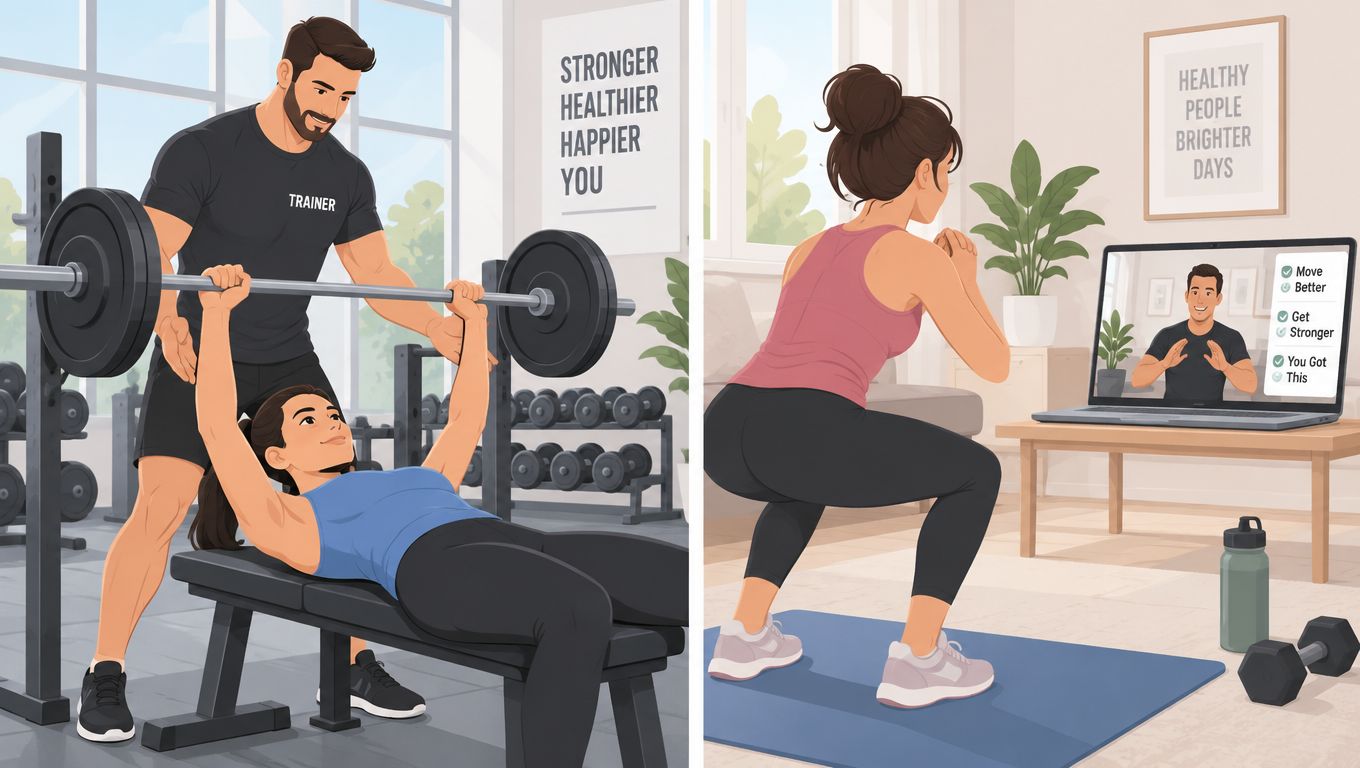
A useful service can change as the client changes. Begin with supervised sessions, add remote programming, and reduce live contact only when the client has enough skill and confidence. Or start with app-assisted coaching when the main need is consistency, then add hands-on assessment if technique or progression becomes a barrier.
How Thrive X Fitness Supports Each Role
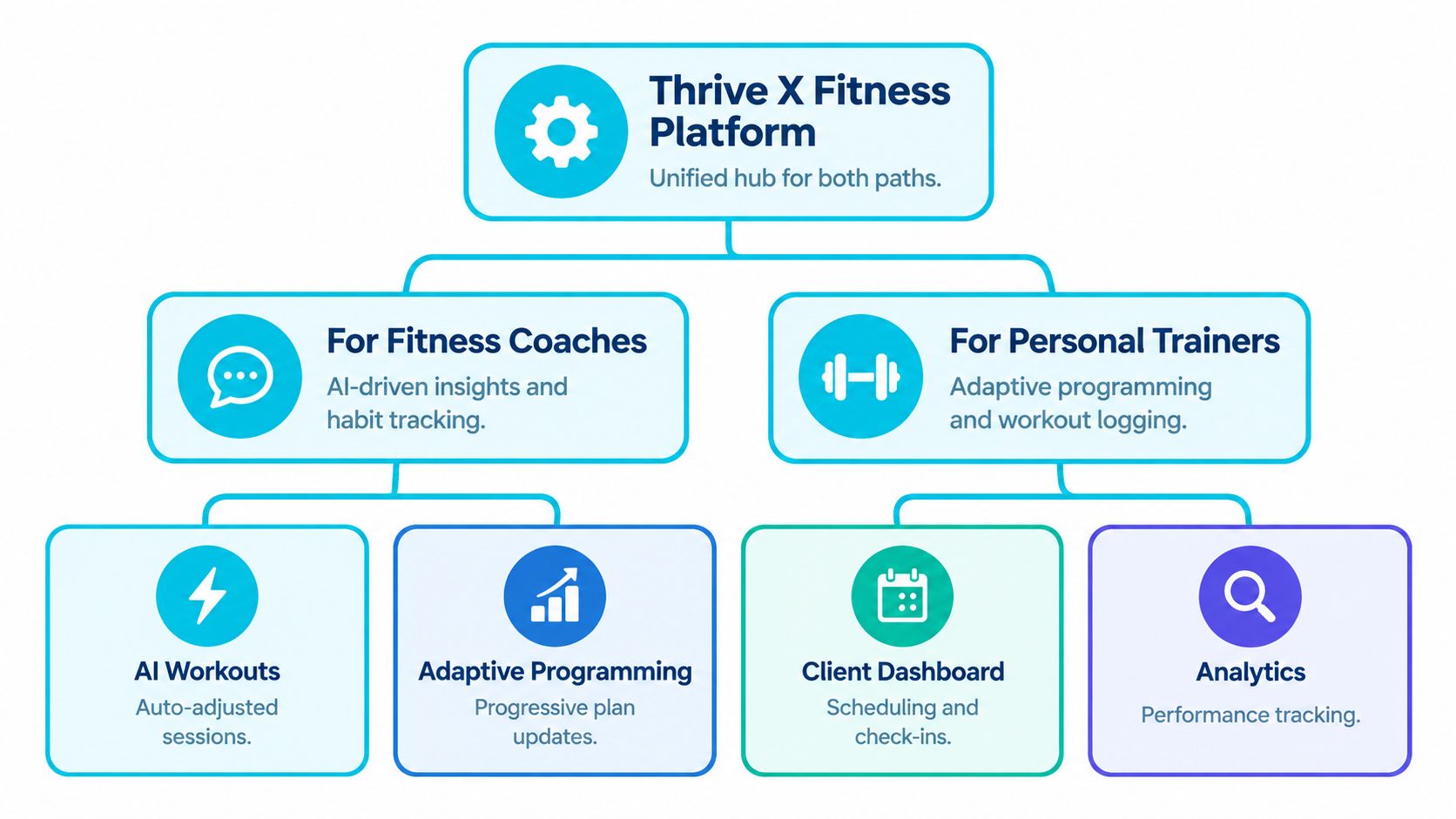
A platform should earn its place by solving a defined job. For a personal trainer, that job may be reducing repetitive programming work while preserving individualization. AI workouts and adaptive programming can help organize sessions and update plans, while the trainer remains responsible for assessment, judgment, coaching, and appropriate referrals.
For a fitness coach, the central job may be keeping the client engaged between formal sessions. Form-clip review, nutrition tracking, meal guidance, challenges, and check-ins can create useful touchpoints around the client's routine. Those tools support the coaching workflow, but they don't turn software into a substitute for professional scope or live observation when live observation is needed.
Tools for exercise delivery
A trainer can use AI workouts to create a starting structure, then adjust exercise selection, volume, and progression based on the client's response. Adaptive programming is useful when a client's schedule, performance, or available equipment changes. Workout logging gives both parties a record to discuss instead of relying on memory.
The AI Form Coach supports another distinct job. A client can upload an exercise clip for technique feedback, with review designed around a clip of about 60 seconds, as described on the Thrive X Fitness app page. That can complement in-person coaching or provide a remote checkpoint, but a coach should still identify situations that require direct assessment or referral.
Tools for behavior support
Nutrition features serve a different purpose from workout programming. Photo and barcode tracking, meal plans, and practical guidance can help a coach discuss patterns and reduce the friction of recording food. Challenges add a shared accountability layer, while a client dashboard can organize scheduling, check-ins, and progress conversations.
The marketplace also fits coaches and trainers who sell structured programs rather than relying only on live appointments. A solo coach can package workouts and nutrition support, while a personal trainer can extend an in-person relationship into a hybrid offer. The Thrive X Fitness partner API supports generating workout and meal plans for other applications, which is relevant to businesses building their own client experience.
Fitness Coach vs Personal Trainer Decision Checklist
Use this checklist before you compare packages or book a consultation. Start with the outcome, then examine how much direct supervision the outcome requires. A lower-contact model isn't automatically weaker, and hands-on training isn't automatically better. The service should match the behavior and skill the client must build.
| Factor | Personal trainer | Fitness coach |
|---|---|---|
| Main goal | Learn movements, improve form, build strength, or follow structured exercise | Build consistency, accountability, nutrition habits, recovery, and lifestyle routines |
| Available time | You can attend scheduled sessions and want live guidance | Your schedule changes and you need support between sessions |
| Learning style | You learn best through demonstration and immediate correction | You prefer prompts, check-ins, remote feedback, and self-directed practice |
| Budget priority | You're paying for individualized attention during live training | You want a broader package that can include remote support and app-based delivery |
| Technology comfort | Technology is useful for logging, but live coaching is central | You're comfortable using apps, uploads, tracking, and virtual communication |
| Best blended option | In-person assessment plus programmed sessions between visits | Coaching support plus occasional live technique reviews |
Ask yourself five direct questions:
- What keeps failing? If the answer is form, equipment, or exercise selection, start with a trainer. If it's follow-through, look for a coach.
- What happens outside the session? A plan that works only while someone stands beside you may not address the barrier.
- What does the professional include? Confirm whether check-ins, nutrition guidance, form review, and programming are part of the service.
- How will progress be reviewed? Look for a clear process involving logs, movement feedback, conversations, or plan adjustments.
- When should the service refer out? A responsible professional should explain boundaries around injuries, medical conditions, and specialized nutrition needs.
The most affordable service is the one that supports the behavior you can maintain, not simply the one with the lowest session price.
Next Steps for Clients and Coaches
Clients should begin with a consultation, not a purchase. Ask what credentials the professional holds, whether the certification is NCCA-accredited when relevant, how CPR/AED training is maintained, and what clients with similar goals typically receive. Ask for a clear description of the first assessment, between-session support, progress reviews, and referral boundaries.
Then test the delivery model against your week. If you need technique correction, schedule in-person work. If you need accountability around inconsistent routines, consider virtual or app-supported coaching. If both problems are present, ask for a hybrid plan rather than assuming you must choose one title.
Coaches should make the same assessment of their business. A trainer who spends most of the service time delivering live sessions may use AI workout planning and adaptive programming to organize the work that happens between appointments. A coach centered on habits may get more value from form-clip review, nutrition tracking, meal plans, challenges, and regular client check-ins.
Protect the relationship while adding technology
Technology should make the professional more observant, not less involved. Review the client's logs before changing a plan. Use uploaded form clips to identify questions for the next conversation. Treat nutrition data as a prompt for practical discussion, not as permission to diagnose or prescribe outside your qualifications.
Coaches expanding into hybrid delivery should define one clear client journey. It might begin with assessment, move into programmed training, use remote check-ins for accountability, and return to live review when technique or progress requires it. Trainers can sell structured plans through a marketplace, while coaches can use app tools to deliver a consistent service without shifting every conversation into scattered social-media messages.
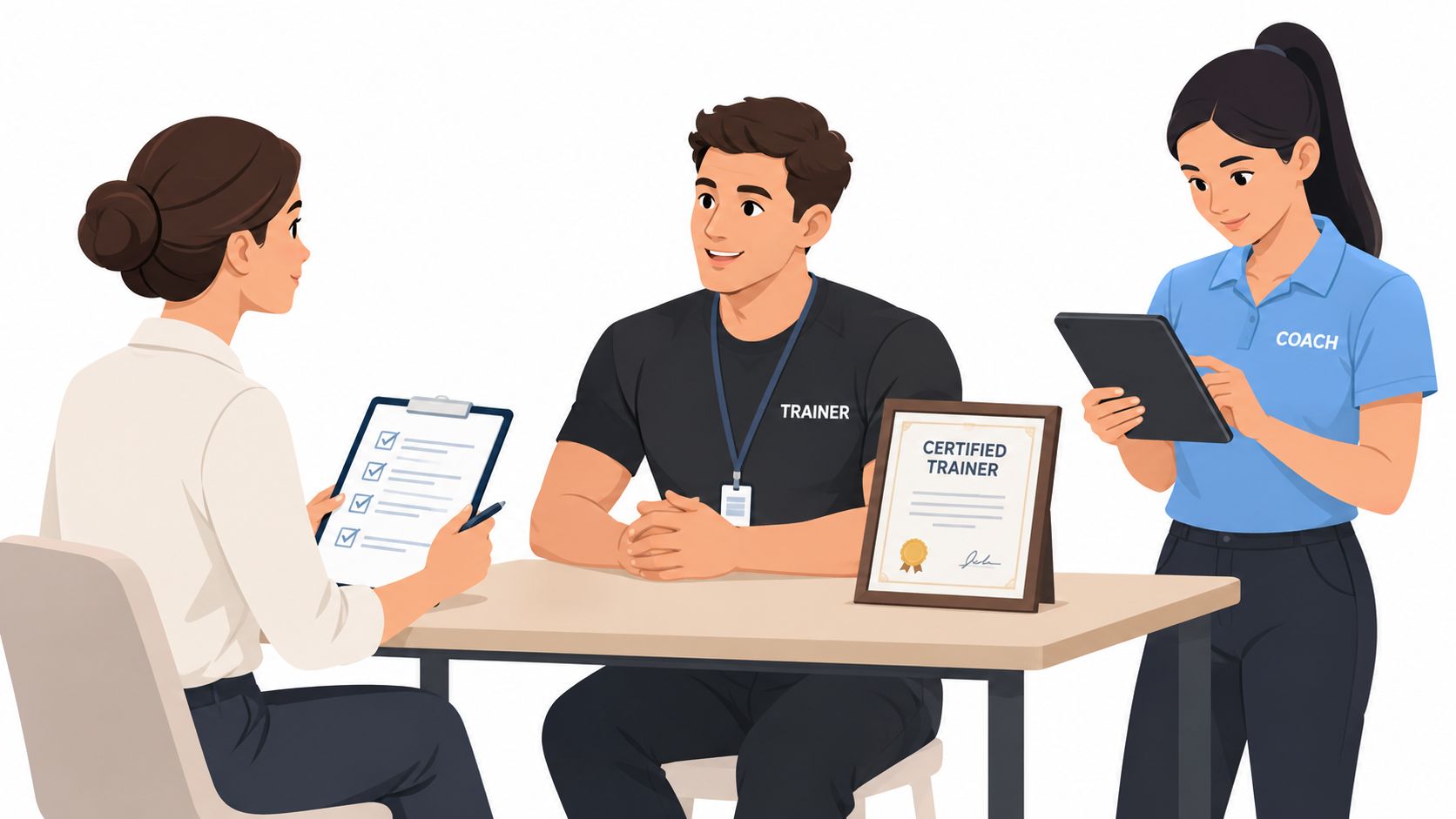
The decision remains straightforward. Choose a personal trainer for individualized exercise instruction and hands-on form support. Choose a fitness coach for broader accountability and habit work. Choose hybrid delivery when your needs cross both categories, then verify that the professional's credentials, scope, and tools match the service being promised.
Summary
A personal trainer typically focuses on individualized exercise programming, technique, progression, and supervised delivery. A fitness coach may extend support into accountability, behavior change, nutrition habits, recovery, sleep, stress, and lifestyle routines. Credentials, CPR/AED training, NCCA accreditation, scope of practice, and referral boundaries all deserve verification. Hybrid delivery can combine live instruction with virtual coaching, app guidance, form review, tracking, and check-ins. The best choice depends on whether your main obstacle is exercise skill, consistency, or both.
Frequently Asked Questions
Do personal trainers and fitness coaches need certification?
Certification expectations depend on the role and setting, but U.S. personal trainers are commonly expected to hold an NCCA-accredited credential along with CPR/AED training. Most fitness trainers also hold certification in the area they teach. A broad coaching title doesn't prove a particular qualification, so ask about education, certifications, emergency-response training, experience, insurance, and scope before hiring.
Is a fitness coach different from a personal trainer?
Yes, although the services can overlap. Personal training usually emphasizes exercise programming, movement instruction, form, and progression. Fitness coaching generally takes a broader view that can include habits, accountability, nutrition support within scope, recovery, sleep, stress, and lifestyle factors. Some professionals provide both, so the delivery model and actual service description matter more than the title alone.
Can coaching be delivered through an app?
Yes. Hybrid and virtual models can use app-based programming, workout logging, remote check-ins, wearable data, and uploaded form clips. This approach can suit clients who already understand basic exercise but need structure and accountability between live sessions. It doesn't remove the need for in-person assessment when technique, safety, or a client's limitations require direct observation.
Which option is better for a limited budget?
The answer depends on what support you need. One-to-one personal training concentrates individualized attention into live sessions. Coaching packages may distribute support across programming, check-ins, habit work, and remote communication. Compare what each service includes, how often you receive feedback, and whether the model fits your schedule. A hybrid arrangement may provide a practical balance when you need both supervision and continuity.
Can a fitness coach give nutrition advice?
A fitness coach may support general nutrition habits and meal planning when that work fits their education and scope. They shouldn't diagnose conditions, prescribe medical nutrition therapy, or replace a registered dietitian or doctor. Ask exactly what nutrition support includes and how the professional handles situations requiring a healthcare referral.
Should a beginner choose a personal trainer?
A beginner who feels uncertain about equipment, exercise selection, or technique will often benefit from hands-on personal training. The trainer can teach movements, observe form, manage intensity, and build a structured plan. For a simple overview of how beginners can start safely, the NHS exercise guidelines offer practical public health guidance. If the beginner's bigger issue is staying consistent outside sessions, adding coaching support or choosing a blended service may address the problem more completely.
ThriveXDNA offers Thrive X Fitness with AI workouts, form-clip review, nutrition tracking, meal plans, challenges, and marketplace tools for coaches delivering programs. Visit ThriveXDNA to explore an app-supported path that connects personal training with broader fitness coaching.