
Last reviewed: June 2026
If you sleep hot, you already know that no app can fix it. You can read a perfect readiness score in the morning and still have spent half the night pushing the covers off. That is the problem at the center of the Eight Sleep versus Oura Ring debate in 2026: these two products are not competing for the same job. You can find both listed in the AI health and wellness tools directory alongside other AI health tools, and that broader context makes the contrast sharper. One product tells you what happened to your body overnight. The other changes the physical conditions your body sleeps in.
Oura Ring Gen 4 is a biometric sensor worn on your finger. Eight Sleep Pod 4 is a water-cooled mattress cover that regulates bed temperature throughout the night. Framing them as rivals assumes you need to pick one lane, tracking or temperature control. But the real question is: which of those two problems are you actually trying to solve? This guide gives you a clear-eyed breakdown of what each product does well, where each one falls short, and the cases where using both makes logical sense.
Key takeaways
- Oura Ring Gen 4 is a passive biometric sensor that tracks sleep stages, heart rate variability, and recovery. It does not interact with your sleep environment in any way.
- Eight Sleep Pod 4 circulates temperature-controlled water through a mattress cover on a programmed schedule. Its AI AutoPilot feature adjusts temperature automatically based on learned sleep patterns.
- For sleep stage accuracy and HRV data, Oura’s finger-based PPG sensors are more precise than Eight Sleep’s ballistocardiographic mattress sensors.
- Eight Sleep starts around $2,195 for the cover system plus hub. Oura Ring Gen 4 starts at $349. Both require monthly or annual subscriptions for full feature access.
- If temperature disrupts your sleep, Eight Sleep addresses the root cause. If you want to understand your recovery trends and circadian patterns, Oura is the better dedicated tool. Both can run simultaneously without meaningful redundancy.
What Each Product Actually Does
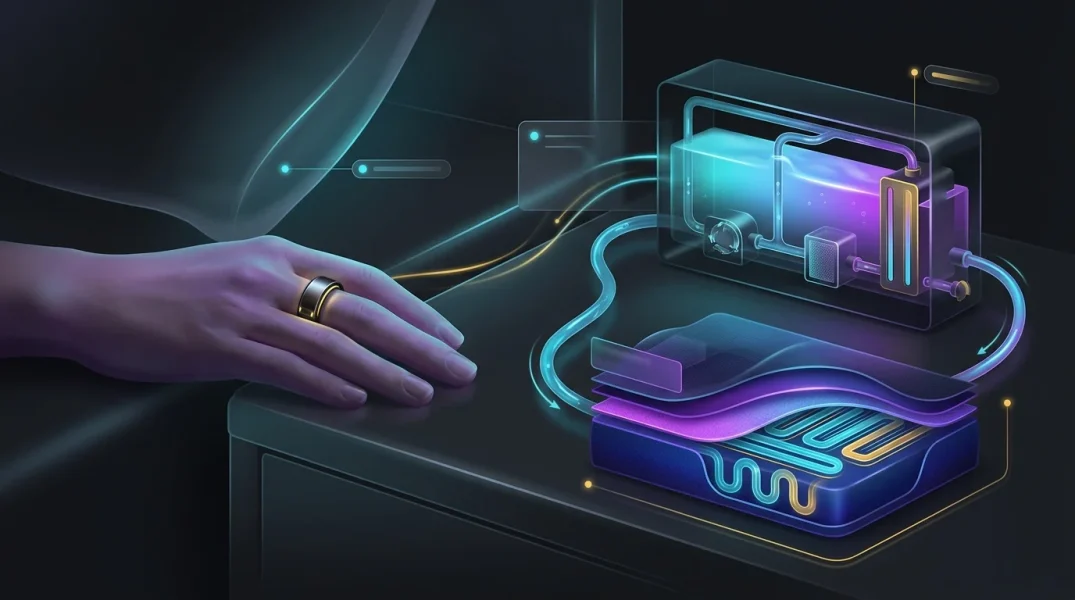
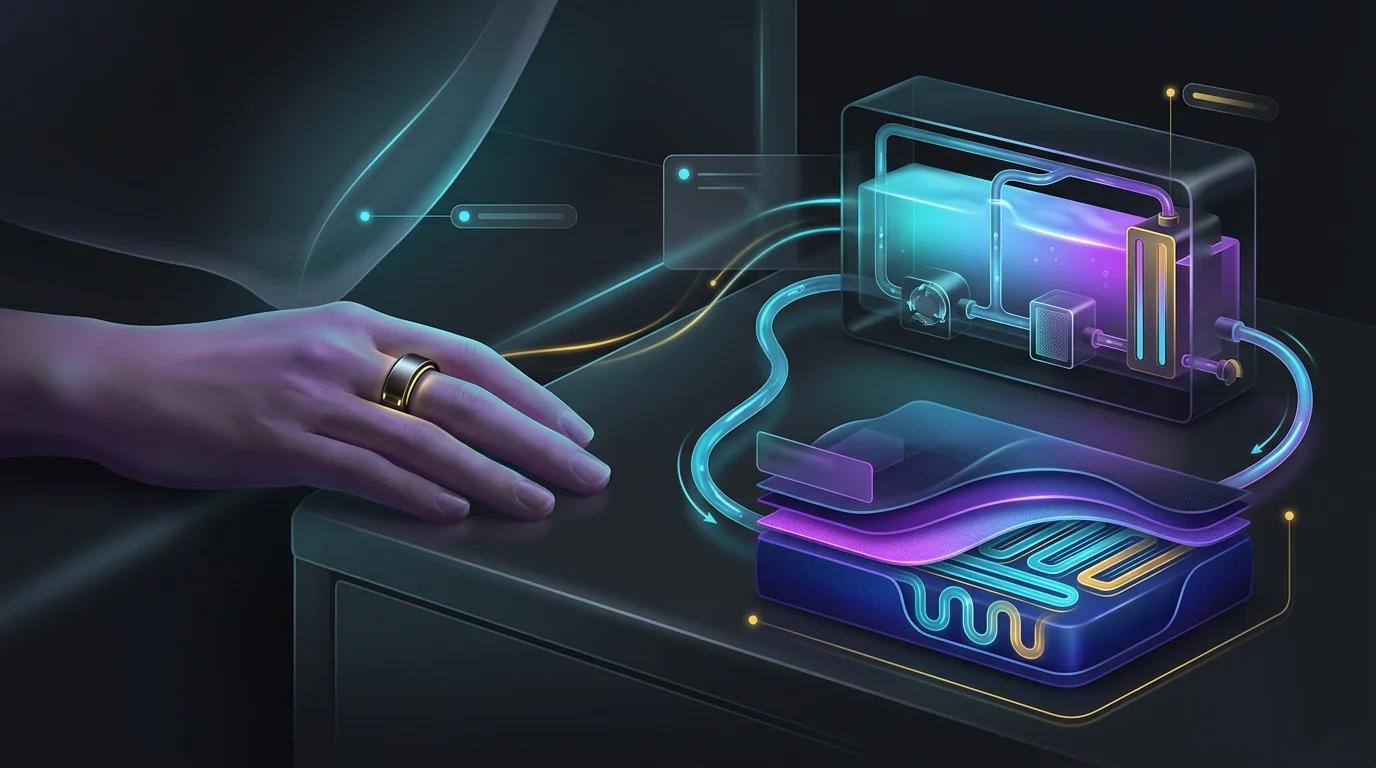
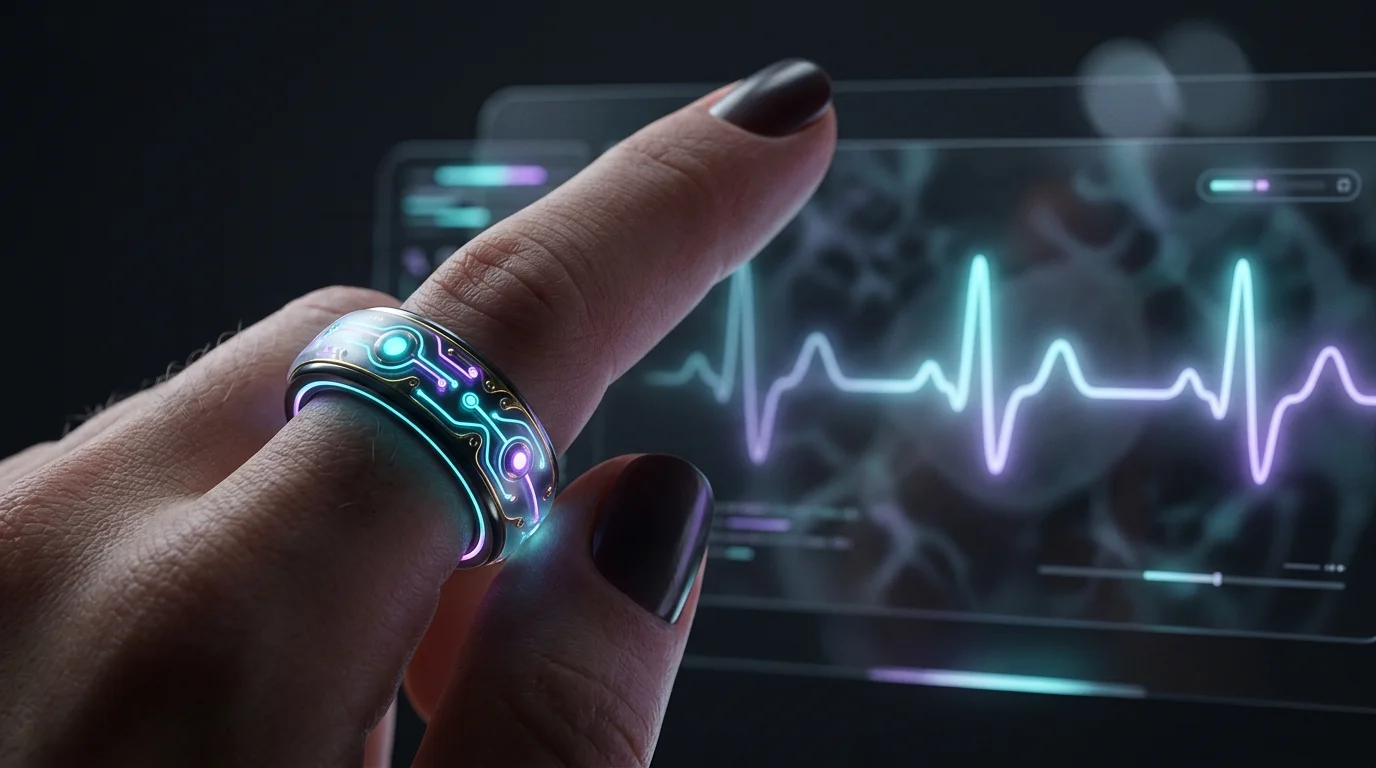
Oura Ring Gen 4 collects data from 3 main sensor types: an infrared photoplethysmography array reads your pulse from the palmar arteries at the finger, a set of temperature sensors tracks skin temperature deviation from your personal baseline, and a 3D accelerometer logs movement throughout the night. From those inputs, the app reconstructs your sleep stages, calculates resting heart rate and heart rate variability, estimates respiratory rate, and surfaces a readiness score each morning. Nothing in that process touches your bedroom environment. Oura watches and reports.
Eight Sleep Pod 4 works differently at the hardware level. A hub unit roughly the size of a nightstand water dispenser sits beside your bed, heats or chills water to a set temperature, and pushes it through channels embedded in a thin mattress cover. You program a temperature profile in the app, and the cover executes it across the night. The AutoPilot feature, which requires an active membership, uses an AI layer to adjust that profile based on patterns from your previous nights and your stated preferences. The Pod 4 also contains vibration and heart rate sensors that can detect your pulse and movement through the mattress surface, giving it basic sleep tracking. But that is secondary. The primary feature is thermal.
Understanding this architectural split is the most useful thing you can take from any comparison between these 2 products. If you buy Oura hoping it will help you sleep cooler, you have bought the wrong tool. If you buy Eight Sleep purely for sleep data, you are paying a large premium for tracking that a ring does better at a fraction of the cost.
Sleep Stage Tracking: Where the Finger Sensor Wins
Finger-based PPG is, at the moment, one of the stronger sensor placements for pulse accuracy in consumer wearables. The arteries at the finger sit close to the surface and move less during sleep than a wrist, which reduces motion noise in the signal. That cleaner pulse wave feeds into more reliable sleep stage estimation, since stage detection in consumer devices leans heavily on heart rate variability patterns across the night. See the National Institutes of Health for official guidance.
Gen 4 added a 5th PPG sensor compared to 4 in Gen 3, which Oura says improves accuracy for darker skin tones and people who run cold. The body temperature trend data from the ring also correlates with circadian phase shifts and early illness signals before you would consciously notice symptoms. The readiness score is a weighted composite: it factors in total sleep duration, sleep timing relative to your circadian midpoint, HRV versus your 30-day rolling average, resting heart rate, and temperature deviation. Oura does not publish the exact weighting of each variable, which is worth noting if you plan to use the score in medical decision-making rather than lifestyle guidance.
Eight Sleep’s sleep tracking uses ballistocardiography. The cover detects micro-vibrations from your heartbeat and breathing transmitted through the mattress. That approach works without skin contact, which is technically impressive, but it is noisier than a contact PPG sensor at the finger. If you care about reliable HRV trends or accurate REM staging, the Pod’s tracking is a weaker tool for that job. That is not a design flaw; it is a consequence of designing a product where the sensor layer is secondary to the thermal layer. If tracking accuracy matters to you, Oura is the right answer.
Temperature Control: What Eight Sleep Changes That No Ring Can
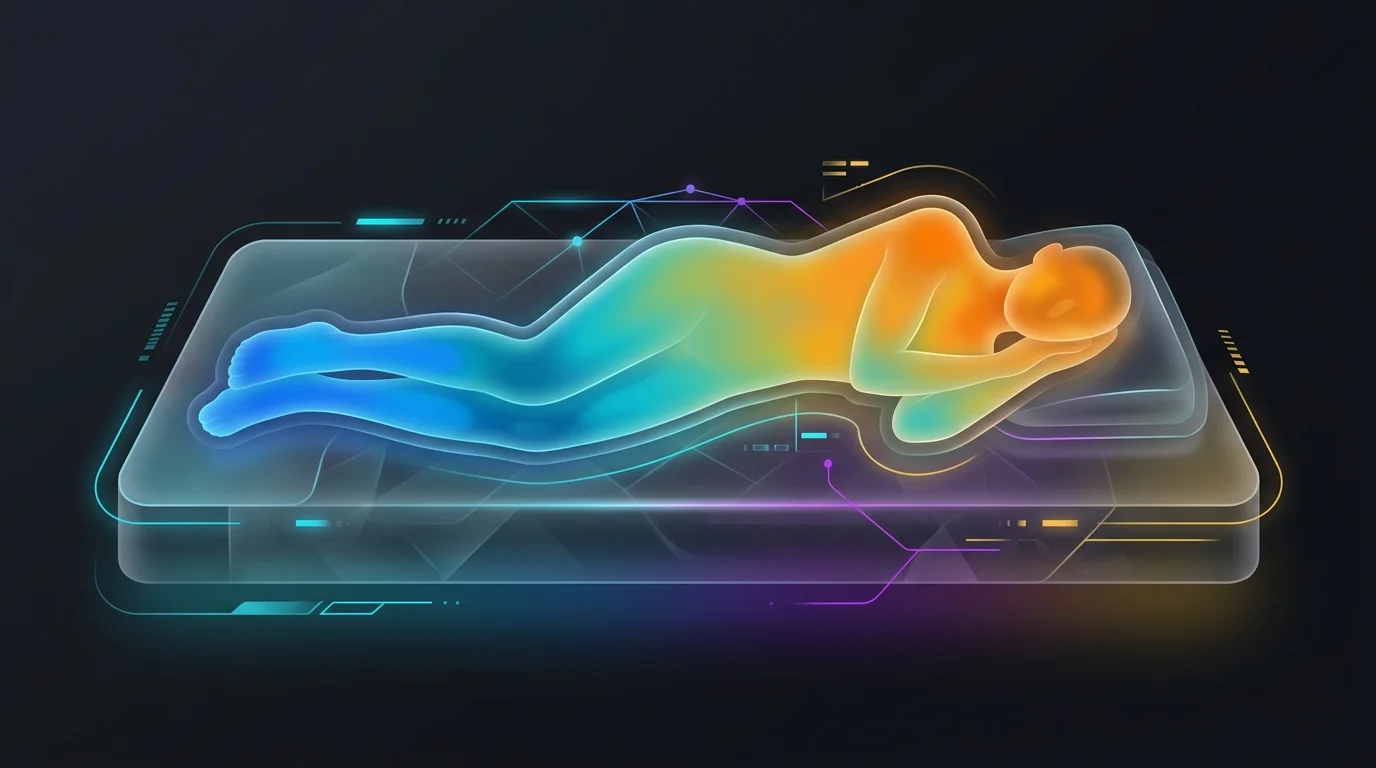
Core body temperature drops by roughly 1 to 2 degrees Fahrenheit during sleep onset and stays lower through the deep sleep phase before rising again in the early morning hours. That curve is not optional. It is a physiological pattern tied to circadian rhythms, and when your bed environment works against it by staying too warm through the night, you either struggle to fall asleep, cycle through lighter stages, or wake earlier than you should. The commonly cited comfortable range for most adults is 65 to 68 degrees Fahrenheit in the bedroom, though individual variation is real and meaningful.
Eight Sleep AutoPilot adjusts the mattress temperature automatically based on time of night, your historical preferences, and real-time feedback from the cover sensors. You can also override it manually with a schedule: cooler in the first half of the night to support sleep onset, slightly warmer in the pre-dawn hours to smooth the transition toward waking. On Pod 4 dual-zone versions, 2 people sharing a bed can each set independent temperature profiles on their respective sides. That dual-zone feature is one of the more practically useful differentiators in sleep tech right now, particularly for couples where one person runs warm and the other runs cold.
No wearable changes any of this. Oura can tell you that your body temperature was elevated during the night and that your deep sleep percentage was lower as a result. Eight Sleep can prevent the elevation from happening or correct for it in real time. Those are categorically different tools acting on different layers of the same problem.
Who Each Product Is Actually For
Oura Ring fits your situation when: you sleep in a comfortable thermal environment and want to understand how your recovery fluctuates with stress, training load, alcohol, illness, or travel. It also fits if you work with a coach or clinician who uses biometric trend data in their recommendations, or if you want a low-profile wearable that does not draw attention in professional or social settings. Battery life on Gen 4 runs 7 to 8 days on a single charge, so you are not charging it every night. If you want data without friction, this is the product.
Eight Sleep fits your situation when temperature is an identified obstacle, not a theoretical one. If you have ever kicked the covers off at 2 a.m., woken up sweating, or found yourself unable to fall asleep because the bed was holding heat after a warm evening, you already have the evidence. It also fits couples who disagree on bedroom temperature and have been managing that conflict with separate blankets or thermostat negotiations. If your bedroom lacks reliable air conditioning in summer, Eight Sleep can compensate. The price premium only makes sense when temperature is a real, documented problem in your specific sleep situation.
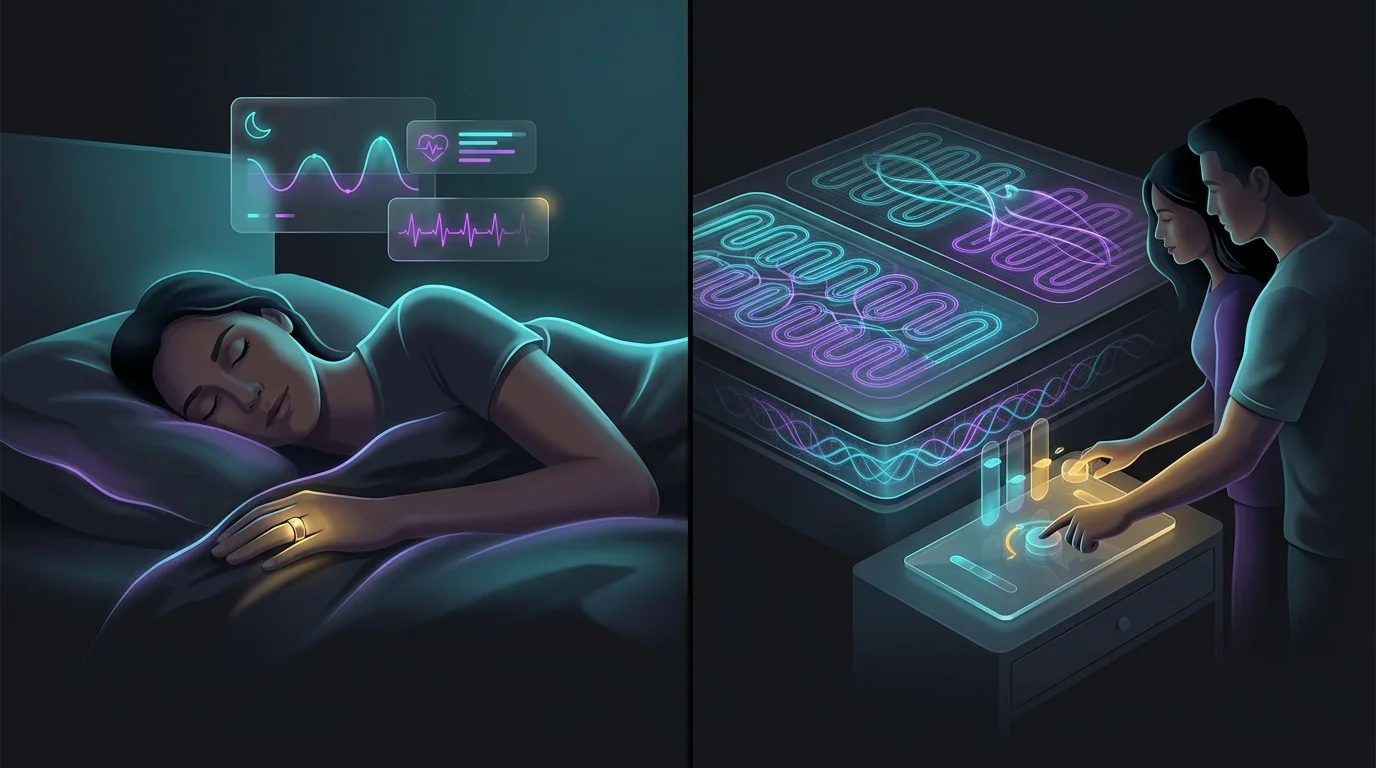
There is a third case worth naming directly: you want both. Some people wear an Oura Ring while sleeping on an Eight Sleep Pod 4. The ring captures high-quality biometric data while the Pod handles the thermal environment. That combination is logically coherent. Your Oura app handles body-level recovery analysis; your Eight Sleep app handles temperature management and gives you an environmental overlay. The data streams serve different purposes and most users treat them as separate dashboards.
Running Both at the Same Time
The concern people raise about using both products is redundancy in sleep tracking. You would have 2 apps generating sleep stage estimates from the same night, and they will sometimes disagree. In practice, users who run both tend to treat Oura as the primary biometric record and Eight Sleep as the thermal and environmental log. The interesting data that emerges from combining them is correlational: you can look at Eight Sleep temperature logs alongside Oura’s HRV and deep sleep data to see how specific temperature profiles affect your recovery metrics over weeks.
The practical arguments against combining them are cost and cognitive load. You are managing 2 subscriptions, 2 apps, and 2 scoring systems. If you already check the Oura app each morning and treat the readiness score as actionable, adding Eight Sleep adds another data stream to process. That is a genuine friction cost. If you are the kind of person who engages deeply with health data, the combination adds real signal. If you are already overwhelmed by the data you have, adding more sources makes the whole system harder to act on.
Cost Breakdown: What You Are Actually Paying For
Oura Ring Gen 4 starts at $349 for the Heritage Silver finish. Most color options land at $399, and the gold finish runs $499. The subscription is $5.99 per month, required to access health insights, readiness scores, and historical trends. Over 2 years, that subscription adds approximately $144 to the hardware cost. Total 2-year ownership runs roughly $493 to $643 depending on which ring you buy. That places it in the same range as a mid-tier fitness tracker or a year of a premium gym membership.
Eight Sleep Pod 4 starts around $2,195 for the cover and hub system in a queen size, with king and California King sizes higher. The AutoPilot membership runs approximately $17 per month or $199 per year, and without it you lose the AI-driven temperature adaptation that differentiates Eight Sleep from a simple heated mattress pad. At the annual rate, a 2-year total lands roughly in the $2,593 to $2,800 range, not counting the larger-size premium. That is closer to buying a new mattress than buying a wearable, and you should evaluate it with that framing. Eight Sleep also offers financing, which softens the upfront cost but does not change the total.
The cost difference is real and should inform your decision. Oura is accessible to most people who are curious about their sleep and health data. Eight Sleep is a considered purchase that makes financial sense only when the problem it solves, thermal discomfort, is a genuine obstacle in your specific life.
Limitations Worth Knowing Before You Buy
Oura’s limitations start with the accuracy ceiling on consumer sleep staging. Independent research has consistently found that consumer wearables, including Oura, overestimate total sleep time and have moderate accuracy distinguishing light sleep from REM. The readiness score is proprietary: the exact formula is not published, which makes it harder to evaluate when the score feels wrong. The ring form factor also excludes people who cannot wear rings comfortably due to profession, joint swelling, or personal preference. If you work in food service, manual trades, or any context where ring-wearing is unsafe, Oura is not practical for you.
Eight Sleep’s limitations are different in kind. The hub runs a pump, and some users in quiet bedrooms find the noise detectable, particularly at night. The cover adds a layer to your mattress surface that can subtly change how the mattress feels, and the channels in the cover are occasionally noticeable when you shift positions. The hub reservoir requires periodic water refills. If your bedroom is small, the hub is a real physical presence next to the bed. Eight Sleep’s sleep tracking, as noted above, is a secondary feature and should not be the reason you buy it.
Both products also carry ongoing subscription costs that accumulate over time. If you own either product for 4 to 5 years, the subscription totals become a meaningful part of the overall expense. Factor that into the decision alongside the upfront hardware cost.
How to Decide: A Practical Framework
Start with a concrete diagnosis of your actual sleep problem. If you lie in bed unable to fall asleep because you are too warm, or you wake at 3 a.m. and cannot get back to sleep because the bed has trapped heat, that is a thermal problem. Eight Sleep addresses it directly. No amount of biometric data changes the fact that your sleeping environment is working against your physiology. In that case, the cost of Eight Sleep buys a specific intervention for an identified obstacle.
If you fall asleep reasonably well in a comfortable environment but want to understand how your body responds to training, stress, alcohol, travel, or illness, Oura gives you that picture for a fraction of the cost. It travels with you in your gym bag, runs a week without charging, and fits into your life without adding equipment to your bedroom. The data it produces is genuinely useful for people who are willing to act on it, such as adjusting training load when HRV drops, or identifying behavioral patterns that correlate with poor recovery nights.
If you are trying to build the most thorough sleep optimization setup you can sustain, and your budget allows for it, both products running together is the logical combination. Use Oura for body-level recovery insight and Eight Sleep for environment management. But if you are deciding where to start, fix the most concrete problem first. Address the thing that is visibly and repeatedly disrupting your nights before adding measurement tools for a system that is already working adequately.
How these tools compare
| Feature | Oura Ring Gen 4 | Eight Sleep Pod 4 |
|---|---|---|
| Primary function | Biometric sleep and recovery tracking | Active mattress temperature control |
| Hardware cost | From $349 | From $2,195 (queen) |
| Subscription required | $5.99/month | ~$17/month or $199/year for AutoPilot |
| Sleep stage tracking | Yes, finger PPG (higher accuracy) | Yes, mattress sensors (lower accuracy) |
| Temperature control | No | Yes, water-based with AutoPilot AI |
| Dual-zone support | Not applicable | Yes, on dual-hub Pod 4 configurations |
| HRV tracking | Yes, detailed 30-day trends | Basic, via mattress sensors |
| Power source | Battery, 7 to 8 days per charge | Plugged-in hub unit |
| Form factor | Finger ring, wearable | Mattress cover and bedside hub |
Related guides
- What Is TrumpRx.gov? Good or Bad? Your Complete Guide to Lower Prescription Drug Prices in 2026
- Your Guide to the Best Cyber Liability Coverage Options That Won’t Break the Bank
- Best Identity Theft Protection Plans in 2025: Secure Your Personal Data Now
- Is the Eight Sleep Pod Worth It in 2026?
- Best AI Sleep Apps for Shift Workers in
- Is the Oura Ring Worth It in 2026?
- Whoop vs Oura 2026: Which Recovery Tracker Wins
- Best Oura Ring Alternatives 2026 Tested and Ranked
- Foods That Help You Sleep: What to Eat (and Skip) at Dinner
- Do Smart Rings Need a Subscription in 2026?
- 7 Best Whoop Alternatives 2026 (No Monthly Fee)
- Genetic Night Owl? 10 Sleep Hygiene Habits That Protect Your Health In
Sources
- National Institute on Aging on how sleep changes with age
- Physical Activity Guidelines for Americans
- additional detail from NIA’s six healthy sleep habits for better rest
- background reading: MedlinePlus overview of healthy sleep practices
Summary
If temperature swings wake you up at night, the Pod 4’s water-based cover addresses that directly with scheduled and AI-adjusted heating and cooling, while the Oura Ring focuses purely on measuring your sleep stages and recovery through its finger-based sensor without touching your environment. Choose Eight Sleep when comfort itself is the problem, and choose Oura when you already sleep fine but want clearer data on your HRV, recovery, and how factors like stress or travel affect you. If neither issue applies alone, running both is workable since they serve different jobs rather than duplicating the same one. Whichever you pick, expect an ongoing subscription on top of the upfront cost.
Frequently asked questions
Can Oura Ring control my sleep temperature?
No. Oura Ring is a passive sensor only. It records biometric data from your finger and surfaces that data in the app the next morning. It has no connection to your mattress, thermostat, or any part of your physical sleep environment. If temperature is disrupting your sleep, you need a separate product like Eight Sleep to address it directly.
Does Eight Sleep replace Oura Ring for sleep tracking?
Not if HRV and sleep stage accuracy are priorities. Eight Sleep tracks sleep through vibration and heart rate sensors embedded in the mattress cover, a technique called ballistocardiography. That approach works without skin contact but is inherently noisier than Oura’s finger-based PPG sensor. Eight Sleep provides useful trend data and temperature logs, but Oura’s biometric detail is more granular and more reliable for HRV analysis and stage classification.
Is the Eight Sleep AutoPilot membership actually required?
You can run basic manual temperature schedules without a membership, but AutoPilot, the feature that learns from your sleep and adjusts temperature automatically in real time, requires an active paid tier. Since AutoPilot is one of the primary reasons people choose Eight Sleep over a basic cooling topper or bedside fan, most buyers should budget for the subscription. The annual rate works out to roughly $199 per year, or about $17 per month.
Can you use Oura Ring and Eight Sleep at the same time?
Yes, and the combination is logically coherent rather than redundant. Oura handles body-level biometric data (HRV, sleep stages, readiness score) and Eight Sleep handles thermal management and provides an environmental log. Both apps produce sleep stage estimates, so you will have 2 sets of data from the same night, but most users treat Oura as the primary recovery record and Eight Sleep as the temperature and comfort layer.
Which product has a bigger impact on how you feel in the morning?
It depends on the root cause of any sleep disruption you experience. For people who sleep hot or share a bed with a partner who runs a different temperature, Eight Sleep’s thermal control tends to produce more immediate, noticeable improvement in sleep quality. For people already sleeping in a comfortable environment, Oura’s data is more actionable for making behavioral changes, like adjusting training intensity when HRV drops or going to bed earlier when your readiness score is low. Neither product universally outperforms the other; they address different causal layers.
How accurate is Oura Ring sleep tracking compared to a sleep lab?
Consumer wearables, including Oura, do not match clinical polysomnography. Independent research has found that wearables generally overestimate total sleep time and have moderate accuracy in distinguishing sleep stages, particularly between light sleep and REM. Oura is considered one of the more accurate consumer options available, but its data is best used for tracking trends and relative changes in your own patterns over time, not as a clinical diagnostic tool. Oura itself does not market the ring as a medical device.