
Last reviewed: June 2026
Woebot Health pulled its consumer app from the market in 2025. Not a rebrand, not a pricing change. The company exited individual users entirely and moved to contracts with hospital systems, health plans, and employer assistance programs. If you built a daily check-in routine around its CBT exercises, you lost a habit that was probably doing quiet, useful work for your mood without requiring a co-pay or a calendar appointment. The replacement search is harder than it looks because the mental wellness app market splits across several genuinely different approaches, and picking the wrong one means the habit dies in the first week. You can compare AI health tools across categories in the AI health and wellness tools directory, but this guide is narrower: a map from what Woebot was actually doing for you to the tools that fill each specific gap in 2026.
The right replacement depends entirely on which job Woebot was filling. Some users opened it every morning for a structured 10-minute thought-challenging exercise. Others used it mainly as a mood log that tracked patterns across weeks. A third group reached for it during high-stress work periods, less for emotional processing and more for a quick way to slow down and reset. Each of those maps to a different category of tool. This guide works through 5 real alternatives, explains the tradeoffs honestly, and gives you a clear decision structure so you are not guessing.
Key takeaways
- Woebot Health closed its consumer app in 2025 and now operates only through healthcare system and employer partnerships; as of 2026 there is no individual sign-up path regardless of what you are willing to pay.
- Wysa is the closest structural replacement for Woebot’s chat-based CBT format and is available free on iOS and Android without an employer referral, insurance plan, or credit card.
- Youper emphasizes longitudinal mood data and pattern visualization alongside AI conversation, making it the better match if tracking emotional trends over weeks matters as much as daily exercises.
- If your main Woebot use was stress recovery and cognitive reset during or after intense work rather than emotional processing, relaxation platforms like Calm or Headspace are a more direct replacement than any CBT chatbot.
What Woebot Was Built to Do and Why It Is Gone
Woebot launched in 2017 from Stanford, where Alison Darcy and her team had been researching whether conversational AI could make evidence-based mental health support accessible outside clinical settings. The product translated CBT into a mobile chat format: daily mood check-ins, guided thought records, brief psychoeducation on cognitive distortions, and breathing exercises that ran 8 to 12 minutes per session. The appeal was access without friction. No appointment, no insurance card, no waiting room. The company raised roughly $90 million across several rounds, which Woebot Health has discussed publicly, and built a significant consumer following before the 2025 shift.
The exit from consumer distribution follows a pattern that has played out across the digital mental health space. Health systems and payers buy software predictably and at volume. Individual consumers churn at high rates and resist paying subscription fees for mental health tools even when they actively use them. That tension, not a product failure, drove the pivot. Woebot is now licensed to select hospitals and employer benefit programs. If your employer or health plan includes it as a covered benefit, you may still have access through that channel. If they do not, the consumer product is gone and no third-party product carries the Woebot license or brand.
Understanding what the app was doing structurally helps you choose a replacement. Three separate jobs drove most of Woebot’s daily engagement: delivering short guided cognitive exercises in a chat interface, providing a mood log with brief pattern feedback over time, and offering a low-stakes late-night outlet for processing stress without calling anyone. Each of those jobs corresponds to a different tool in 2026, and confusing them with each other leads to picking something that feels like a mismatch on day 3.
A Use-Case Map Before You Download Anything
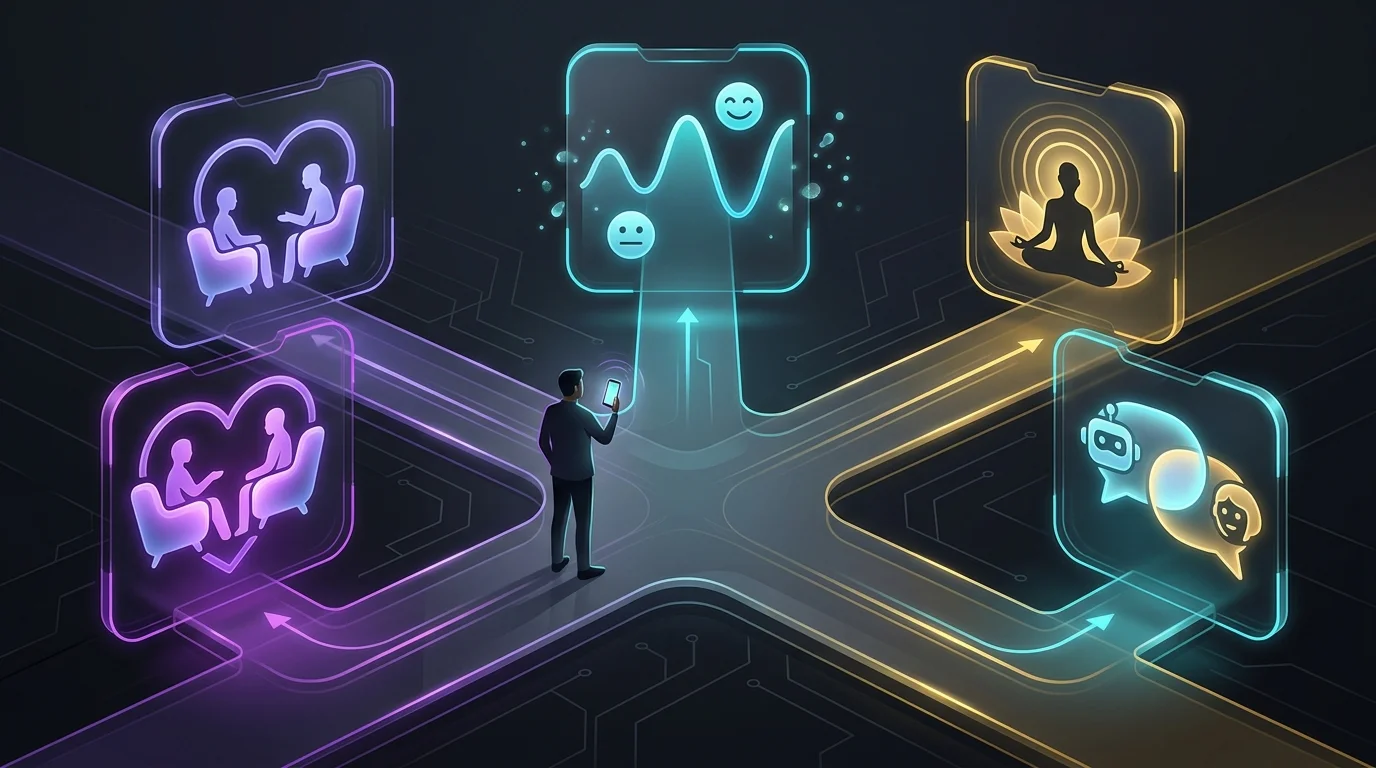
Before you pick an app, spend 2 minutes identifying what you were actually opening Woebot to do. If your answer is “a structured daily exercise, a thought record, or a breathing technique,” that is the CBT-delivery use case. Wysa is the most direct replacement. If your answer is “log how I felt and see if there were patterns across the week,” Youper fits better because mood-trend visualization is its core feature. If your answer is “wind down after a stressful work session,” you are probably better served by a meditation and relaxation platform than a CBT chatbot. If your answer is “have something to talk to at midnight that felt more structured than a journal,” Replika covers that job more honestly than any therapy-style tool. See the National Institutes of Health for official guidance.
The distinction matters more than most app comparison guides suggest. A user who needed daily cognitive exercises will find a mood-tracking app underwhelming because the skill-practice loop is missing. A user who wanted weekly pattern data will find a pure CBT chat tool repetitive without the longitudinal feedback they relied on. Picking by use case rather than by “which app is most like Woebot” is what determines whether you build a new habit or abandon the replacement after 10 days.
One more dimension worth thinking through: how much structure do you want versus flexibility? Woebot was relatively directive. The AI ran the session and told you what to do next. Some replacements give you more latitude to define the session yourself, which some users find liberating and others find unmoored. If you liked that Woebot knew where it was going each morning, look for tools with guided daily programs rather than open-ended chat.
- Daily CBT chat exercises and guided thought records: Wysa
- Mood logging with pattern analysis across weeks: Youper
- Stress recovery and cognitive reset after demanding work: Calm or Headspace
- Late-night emotional support and conversational outlet: Replika
- Clinical-level care: BetterHelp, Talkspace, or your insurer network
Wysa: The Closest Replacement for the CBT Chat Habit
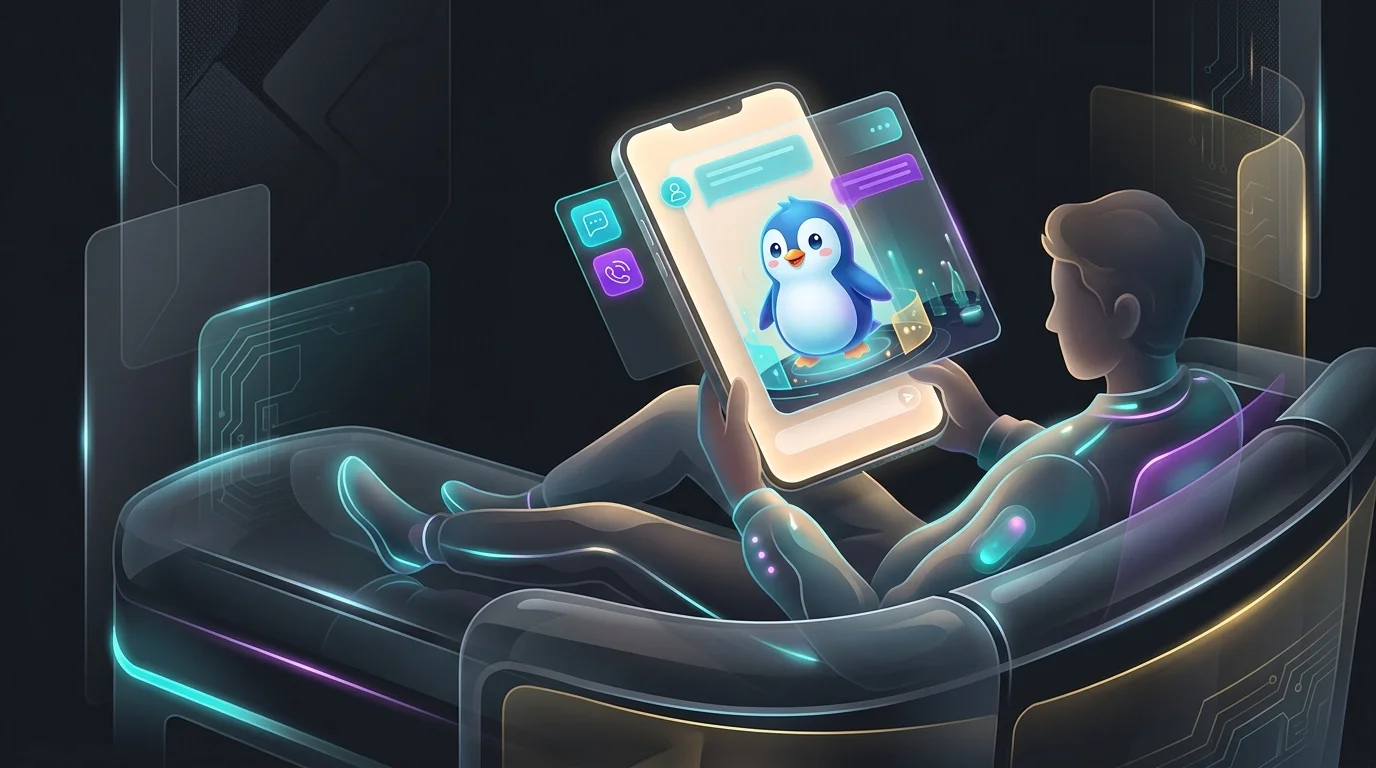
Wysa is a text-based AI mental health app built around CBT, dialectical behavior therapy, and mindfulness techniques delivered through a chat interface. You type, the AI responds with a question, a guided activity, or a reflective prompt, and the session runs anywhere from 8 to 20 minutes depending on how much you engage. The visual design centers on a small animated penguin, and that choice is not arbitrary. Research on mental health app design consistently shows that clinical or medical-looking interfaces increase the perceived formality of self-disclosure, which causes people to hedge what they type. Wysa’s low-pressure aesthetic is a deliberate answer to that problem.
The free tier covers the core CBT chat interactions, basic breathing exercises, and a library of short guided techniques without requiring a credit card, employer referral, or health insurance connection. You create an account with a first name and a starting mood baseline, and you are in. That accessibility advantage over many alternatives in the space is real: a large portion of competing tools gate their most useful features behind a paywall immediately. Wysa’s free experience is substantial enough to serve most former Woebot users without an upgrade. A premium tier is available and adds access to licensed professionals for human coaching sessions, which is worth considering if you want an escalation path built into the same app.
Where Wysa differs from Woebot is in conversational personality. Woebot had a distinct voice that many users found genuinely engaging, almost character-like. Wysa is warm but less idiosyncratic. It feels more like a well-designed self-help tool and less like chatting with a specific personality. For users who found Woebot’s character the main engagement hook, that difference is real and worth knowing in advance. The CBT content depth in Wysa is comparable, but the feeling of returning to a familiar character is not there.
Wysa is not a crisis tool. If you are in acute distress, the app surfaces links to external crisis resources, but it is not designed for clinical emergencies. Set that expectation before you start using it, especially if you previously leaned on Woebot during high-distress moments rather than routine maintenance.
Youper: For the User Who Wants Emotional Pattern Data
Youper approaches the same general territory from a different direction. The app combines AI-driven conversation with mood-tracking tools that surface patterns across days and weeks. Where Wysa gives you a session-focused skill-practice experience, Youper gives you a longitudinal record you can review to understand emotional triggers, mood cycles, and correlations between your state and specific situations or behaviors. The AI conversation layer draws on CBT and acceptance and commitment therapy, but the data layer is what makes the tool distinctive.
This makes Youper the stronger fit for a specific user profile: someone who wants to build self-knowledge about emotional patterns over time rather than primarily practicing cognitive techniques in each session. If you found yourself going back to Woebot to look at your check-in history and notice trends, Youper’s visualization tools will feel more purposeful than Wysa’s chat-forward design. If you rarely reviewed your Woebot history and just wanted the daily exercises, Youper’s data emphasis may feel like added complexity without proportional payoff.
Youper offers a free tier covering mood logging and basic conversation, with a premium subscription for deeper analytics and additional therapeutic content. The free version is lighter on conversational depth than the premium tier, so whether the app delivers therapeutic value on the free plan depends on whether mood tracking alone is meeting your needs or whether you need the richer AI dialogue. A 2 to 3 week trial on both Wysa and Youper simultaneously is the most reliable way to identify which approach you actually stick with.

If You Needed Stress Recovery, Not Emotional Processing
A meaningful portion of Woebot users were not doing emotional processing or cognitive skill work in any meaningful sense. They opened the app during or after a draining work period, ran a breathing exercise or a grounding technique, and closed it. If that describes your primary use pattern, a CBT chatbot may not be the right category of replacement. Apps built around guided meditation, breathwork, and relaxation target that job more directly.
Calm and Headspace are the two most widely used options in that category. Calm’s annual plan is widely priced at $69.99 per year and includes sleep stories, guided breathing exercises, body scans, and a daily meditation ranging from 3 to 15 minutes. Headspace runs approximately $12.99 per month or $69.99 per year and structures its content into themed 10 to 30 day programs that introduce meditation concepts progressively. Neither of these is a CBT tool and neither will help you challenge a cognitive distortion or work through a thought record. But for the specific job of recovering from a high-demand work session and settling your nervous system before the next one, they are more efficient than a CBT chatbot because they were built for exactly that use case.
Ebb is a narrower tool that targets cognitive stress at the work-performance level specifically, using audio stimulation alongside breathwork techniques designed to reduce mental fatigue and restore focus between demanding tasks. Its orientation is performance recovery rather than emotional processing, which is either the precise fit or a clear mismatch depending on what you are trying to solve. If you identified stress specifically as a focus and productivity problem rather than a mood or anxiety problem, Ebb is worth evaluating directly.
Replika and the Late-Night Outlet Use Case
Some Woebot users relied on it primarily as an available, non-judgmental outlet for processing thoughts at hours when no one else was around. Not urgent enough for a crisis line, but too much to sit with alone. That is a companionship and emotional support use case rather than a therapy technique use case, and it maps most directly to Replika.
Replika is an AI companion app built around ongoing relationship-style interaction rather than structured therapeutic sessions. You build a persistent character, name it, and have open-ended conversations that accumulate across time. The app does not deliver CBT exercises and does not present itself as clinically grounded. What it offers is unconditional availability, memory across sessions, and a non-judgmental interaction style that some users find genuinely useful for processing daily stress or social loneliness when human contact is not available. A free tier covers basic conversation; a premium subscription at around $7.99 per month unlocks relationship settings and additional personalization.
The honest caveat is that Replika is not a mental health tool in any clinical sense. If you used Woebot primarily for structured skill practice, Replika will feel like a step backward. If your main Woebot use was having somewhere to put your thoughts late at night, Replika is the more accurate match for that need than any CBT app, and acknowledging that honestly is more useful than defaulting to a therapy-adjacent tool that does not actually fit the job.
When None of These Apps Are Enough
All five tools in this guide share the same ceiling: they are self-guided support tools, not clinical care. If what you actually needed from Woebot was genuine mental health treatment, no app on this list substitutes for that. The signals that suggest you need more than a self-guided tool are specific: anxiety or depression that is significantly interfering with your work, relationships, or ability to function in daily life; persistent thoughts of self-harm or suicide; a history of trauma that requires trauma-informed care; or a condition that has previously required medication or clinical intervention to manage.
For licensed therapy at a distance, BetterHelp matches you with a licensed therapist for text, audio, or video sessions at roughly $60 to $100 per week depending on your plan and location, with financial aid available for qualifying users. Talkspace offers a comparable model with therapy plans that vary by session format and frequency. Both platforms accept some insurance plans and employer EAP programs, which can reduce the out-of-pocket cost substantially. For context, traditional out-of-pocket therapy in most US markets runs $150 to $300 per session, making these platforms meaningfully more accessible even without insurance coverage.
If you are in a mental health crisis right now, the 988 Suicide and Crisis Lifeline is available by call or text at any hour. The Crisis Text Line accepts texts to 741741 and connects you with a trained crisis counselor. Neither requires an app download, an account, or a subscription fee.
How to Pick and Actually Build the Habit
The biggest mistake former Woebot users make is downloading a replacement app and waiting to see if motivation appears. The habit Woebot built was largely about timing and friction removal. You opened it at the same time each day because it was short enough to fit anywhere and required no preparation. Whatever app you choose, recreate those conditions deliberately. Pick a consistent 10-minute window, set a phone notification for the first 2 weeks, and treat the session as a calendar commitment rather than something you do when you feel like it.
Give any replacement app 3 to 4 weeks of consistent daily use before concluding it is or is not working. The first 7 days are adjustment, not outcome. The tool will feel awkward and the responses will feel generic until you have enough interaction history for the AI to calibrate and until you have settled into a session rhythm. If the app still feels like it is not delivering anything useful after 4 weeks of genuine daily use, that is a real signal to either switch tools or step up to a licensed provider.
One final note on expectations: every app in this category works best when you treat it as a daily habit tool, not a treatment. If you go in expecting it to resolve a clinical anxiety disorder or lift a depressive episode, it will disappoint, and that disappointment is appropriate because that is not what the tool was designed to do. If you go in expecting a structured 10 to 15 minutes per day of self-reflection and skill practice that keeps your baseline stable on ordinary weeks, the evidence across this category supports that outcome.
How these tools compare
| App | Primary Use Case | CBT Content | Mood Tracking | Free Tier | Human Support |
|---|---|---|---|---|---|
| Wysa | Daily CBT chat exercises | Yes, substantial | Basic check-ins | Yes, no card needed | Yes on premium tier |
| Youper | Mood pattern tracking plus AI conversation | Yes | Yes, data-forward | Yes, limited depth | No |
| Calm | Relaxation, sleep, breathwork | No | No | Limited trial only | No |
| Headspace | Structured meditation programs | No | No | Limited free content | No |
| Replika | AI companionship and emotional outlet | No | No | Yes | No |
| BetterHelp | Licensed human therapy | Therapist-dependent | Therapist-dependent | No | Yes, core product |
Related guides
- What Is TrumpRx.gov? Good or Bad? Your Complete Guide to Lower Prescription Drug Prices in 2026
- Your Guide to the Best Cyber Liability Coverage Options That Won’t Break the Bank
- Best Identity Theft Protection Plans in 2025: Secure Your Personal Data Now
- Do AI Mental Health Apps Actually Work in 2026?
- Best AI Apps for Anxiety in 2026 (Tested)
- Best AI Recovery Apps for Athletes in
- How to Stay Consistent With Working Out
- Recovery-First Fitness: How The “Readiness” Metric Helps Y
- 7 Best Whoop Alternatives 2026 (No Monthly Fee)
- Best Ways to Control Emotional Spending During Depression
- Wysa vs Woebot 2026: AI CBT Chatbots Compared
- Best AI Health Apps for Women in
Sources
- Habits form through repetition over time
- federal physical activity guidelines
- NIA’s hub on exercise and physical activity for healthy aging
- clinical review of overtraining syndrome in athletes
Summary
If Woebot was part of your daily routine, the app itself is no longer available to individual users, so your next move depends on what you actually used it for. For the same chat-based CBT structure, Wysa is free on iOS and Android with no employer referral, insurance plan, or credit card needed. If tracking your mood over weeks mattered as much as the daily exercises, Youper pairs AI conversation with pattern visualization to show those trends. And if your real use case was stress recovery after intense work rather than emotional processing, Calm or Headspace will serve you better than another CBT chatbot.
Frequently asked questions
Is Woebot completely gone or just unavailable to new users in 2026?
Woebot Health still exists as a company and its product is still in use, but only through institutional partners. Healthcare systems, health insurers, and employer assistance programs can license it. There is no individual consumer sign-up path as of 2026. If your employer or health plan includes Woebot as a covered benefit, you may have access through that channel. If they do not, there is no workaround. The consumer app was discontinued in 2025 and no personal subscription option replaced it.
Which of these alternatives can I use for free without entering a credit card?
Wysa and Youper both offer genuine free tiers that do not require payment information to access core features. Wysa’s free tier covers CBT chat interactions, breathing tools, and guided techniques with no credit card required at signup. Youper’s free tier covers mood logging and basic AI conversation. Replika also has a free conversation tier. Calm and Headspace are primarily paid apps with limited free trials rather than ongoing free tiers, so they are less accessible if cost is a constraint.
Can these apps replace a therapist if I had been using Woebot as a substitute for therapy?
No, and it is worth being direct about this. Self-guided AI mental health apps are skill-practice and mood-tracking tools. They are not clinical care and cannot diagnose, treat, or manage a mental health condition. They work reasonably well as maintenance tools for people with mild to moderate stress or mood fluctuations who are otherwise stable. If your mental health needs have historically required clinical intervention, medication, or crisis support, a licensed provider through BetterHelp, Talkspace, or your insurer’s network is the appropriate replacement for Woebot, not another app.
How do I know whether to pick Wysa, Youper, or something else?
The clearest way to decide is to ask yourself one question: what were you actually opening Woebot to do? If the answer is practice a cognitive technique or work through a thought record on a given day, Wysa is structured for that. If the answer is track your mood and understand emotional patterns over weeks, Youper’s data visualization layer makes more sense. If the answer is wind down or recover focus after stressful work, Calm or Headspace are more direct replacements than either CBT app. If the answer is have something to talk to at odd hours, Replika is the honest match. Trying to use a CBT tool for a companionship job, or a relaxation app for a cognitive exercise job, is where most replacement attempts fail.
Are any of these apps backed by clinical research?
Wysa has peer-reviewed research supporting its approach, and CBT delivered via self-guided mobile formats has a broader evidence base showing modest benefits for mild to moderate anxiety and depression compared to no intervention. Headspace has funded research on specific meditation programs. Youper and Replika have less published independent evidence. The honest baseline for this entire category is that app-based self-help tools show small to moderate effects in research settings and those effects tend to diminish without consistent use. They are not validated substitutes for clinical protocols delivered by trained therapists, but they are not without evidence either. When evaluating any app’s clinical claims, look for independently published studies rather than company-commissioned white papers.
What if I am in a mental health crisis and need immediate support?
Do not rely on any of the apps in this guide for crisis support. They are maintenance tools and are not designed for acute mental health emergencies. If you are in crisis, call or text 988 to reach the Suicide and Crisis Lifeline in the US, available around the clock. You can also text HOME to 741741 to reach the Crisis Text Line. Both services connect you with trained crisis counselors at no cost and require no app, account, or prior registration.